When your driver’s license gets suspended, it can feel like your whole world grinds to a halt. Thankfully, Florida offers a hardship license, which acts as a critical lifeline to keep you moving for the most important parts of your life.
This isn’t a get-out-of-jail-free card; it’s a special, restricted permit. Think of it as a compromise that allows you to drive for essential purposes—like getting to work or a doctor’s appointment—while you serve your suspension. It ensures that a driving mistake doesn’t completely upend your ability to provide for yourself and your family.
The whole system is governed by Florida Statute §322.271, which tries to strike a balance between keeping the roads safe and recognizing that people need to earn a living. The first step, before you even think about applying, is to understand exactly why your license was suspended in the first place. This single detail will determine your eligibility and the path you need to take. For a deeper dive into the reasons for suspensions, check out our guide on what to do with a suspended license in Florida.
The Two Types of Hardship Licenses
Florida doesn’t have a one-size-fits-all solution. There are two very different types of hardship licenses, and picking the right one is crucial.
- Business Purposes Only (BPO) License: This is the one most people need. It’s more flexible and covers driving that’s essential to maintaining your livelihood. That means you can commute to work, drive as part of your job, get to school, attend church, or go to necessary medical appointments. A working parent, for instance, could use a BPO license to drive to the office, pick up their child from school, and then grab a prescription on the way home.
- Employment Purposes Only License: This one is much more limited. It literally only covers driving to and from your single place of work—and that’s it. No side trips. This might work for someone who just needs to get to one job site and back home, but it leaves no room for any other life necessities.
Key Takeaway: The “Business Purposes Only” license is far more practical for most people’s lives. It covers the broad range of activities needed to keep things running, not just the A-to-B work commute.
To help you decide which one might be right for your situation, here’s a quick breakdown.
Florida Hardship License Types at a Glance
This table compares the two hardship licenses so you can quickly see which one aligns with your needs.
| License Type | What Driving Is Permitted | Common Scenario |
|---|---|---|
| Business Purposes Only | Driving to and from work, on-the-job driving, educational, religious, and medical purposes. | A sales representative who drives to client meetings and also needs to take their child to the doctor. |
| Employment Purposes Only | Driving only to and from your place of employment. No other trips are allowed. | A factory worker who takes the same direct route to their shift and straight back home every day. |
Choosing the right license is the first step, but the application process itself is where many people run into trouble. It’s incredibly detailed, and there’s very little room for error.
Unfortunately, the system can be tough to navigate. It’s a sad fact that a huge number of license suspensions drag on for years simply because of confusion or mistakes in the reinstatement process. Shockingly, data from the Fines and Fees Justice Center shows that 75% of licenses suspended in 2016 were still suspended two years later. This often comes down to simple things like missing paperwork or a misunderstanding of the requirements, which is why getting it right the first time is so important.
Checking Your Eligibility for a Hardship License
Before you even think about filling out a single form, the first thing you absolutely have to do is figure out if you’re eligible for a hardship license. Not everyone with a suspended license in Florida gets one, and spinning your wheels on an application you can’t win is just a waste of time and money.
Whether you qualify really boils down to two things: why your license was suspended in the first place and what your driving record looks like.
First, Understand the “Hard Suspension” Waiting Periods
For many common suspensions, like a first-time DUI or getting too many points, you can often apply for a hardship license. But there’s a catch: you might have to serve a mandatory “hard suspension” period first. This is a set amount of time where you are absolutely not allowed to drive, no exceptions.
If you apply before this waiting period is over, your application will be denied on the spot. It’s a non-negotiable part of the process.
The length of this hard suspension completely depends on the violation:
- First DUI Conviction: You’re looking at a 30-day hard suspension. After that month, you can start the application process.
- Refusal to Submit to a Breathalyzer: This one’s tougher. For a first refusal, you’ll have to wait out a 90-day hard suspension period.
- Too Many Points: Here’s some good news. Suspensions from racking up too many points often don’t have a mandatory waiting period, so you can usually apply for a hardship license right away.
Think of this waiting period as the state’s way of enforcing a baseline penalty before they’ll even consider giving you a limited license.
Are You Automatically Disqualified?
It’s just as important to know if you’re automatically out of the running. Certain offenses will make you completely ineligible for a hardship license, no matter how compelling your story is. Knowing this from the start can save you a world of frustration.
Crucial Insight: The biggest red flag for the DHSMV is a history of multiple serious offenses. Florida law comes down hard on repeat offenders to protect everyone else on the road.
The most common automatic disqualifier is having two or more DUI convictions. Florida’s hardship license rules, laid out in Florida Statute §322.271, are really designed to give first-time offenders a second chance. The statute is very clear that repeat DUI offenders are not eligible during their mandatory revocation period.
This is especially true if you have a history of refusing a breathalyzer or other chemical tests. To dig deeper into the legal side of things, check out the specific eligibility requirements for a Florida hardship license.
The flowchart below gives you a quick visual to help you understand the different types of limited licenses you might qualify for.
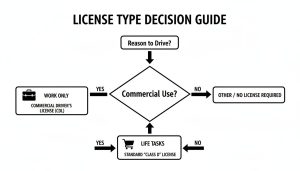
As you can see, you’ll need to figure out if your situation calls for a “Business Purposes Only” license or the more restrictive “Employment Purposes Only” license. Being able to clearly prove you need one of these is the key to getting your application approved.
Tackling the DUI School and Insurance Hurdles
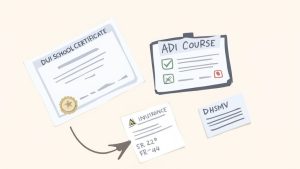
Before you even think about filling out the application, Florida has a couple of non-negotiable prerequisites you need to handle. You’ll have to get enrolled in a state-approved driver course and lock in some specific high-risk auto insurance.
Honestly, skipping these or getting them wrong is probably the single biggest reason I see hardship applications get delayed or flat-out denied. These are the foundations of your case, proving to the DHSMV you’re taking this seriously. Without them, you’re not going anywhere.
Finding the Right Driver Improvement Course
First things first, you need to sign up for the correct course based on why your license was suspended in the first place. If it was a DUI, you’ll need to enroll in a certified DUI school. For other reasons, like racking up too many points on your license, an Advanced Driver Improvement (ADI) course is typically what’s required.
Here’s a critical tip: make absolutely sure the program you choose is officially approved by the Florida DHSMV. I’ve seen people waste time and money on unapproved courses only to have to start all over. The good news is you only need proof of enrollment to submit with your application, not proof of completion, so you can get this part rolling right away.
On a personal note, these courses are more than just a box to check. DUI school, in particular, can help you develop better ways to handle things so you don’t end up in this situation again. It can also be a good time to learn about effective coping strategies for anxiety to manage the kind of stress that can lead to bad decisions.
Nailing Down the Correct High-Risk Insurance
The other major piece of the puzzle is proving you have the right car insurance. For drivers considered high-risk, Florida requires your insurance company to file a special form with the state. This is either an SR-22 or, for DUI-related cases, an FR-44.
These aren’t policies themselves—they’re just certificates your insurer sends to the state verifying you have the required liability coverage. The FR-44 is the more serious of the two and comes with much higher coverage minimums:
- $100,000 for bodily injury to one person
- $300,000 for bodily injury per accident
- $50,000 for property damage
You’ll need to find an insurance company that will issue this type of policy and file the form for you. After you pay for the policy, they’ll send the confirmation directly to the DHSMV.
Insider Tip: Don’t just go with the first quote you get for FR-44 insurance. The prices can be all over the map. Call around to different providers, especially those that specialize in high-risk policies, as they often have better rates. Make sure to ask if they file the form electronically with the state—it’s much faster. For more tips on dealing with the system, check out our advice here: https://bdischool.com/traffic-court-advice/
Getting these steps right is about more than just your application. When you think about it, since 90% of Floridians drive to work, suspended licenses have a massive ripple effect on the economy. It costs the state almost $500 million a year in lost consumer spending when people can’t get to their jobs.
Getting Your Hardship License Application Ready
When you’re applying for a hardship license in Florida, a well-prepared application isn’t just helpful—it’s everything. Think of it as making a solid case for yourself. The more organized and thorough you are, the better your chances are with the Bureau of Administrative Reviews (BAR). One missing document can get you an instant denial, and you’ll have to start the entire process from scratch.
Your main job before even thinking about scheduling a hearing is to assemble a complete and convincing application package. This means gathering not just the required forms, but also concrete proof that driving is absolutely essential for you to get by. The hearing officer needs to see a direct, undeniable connection between you driving and your ability to keep your life on track.
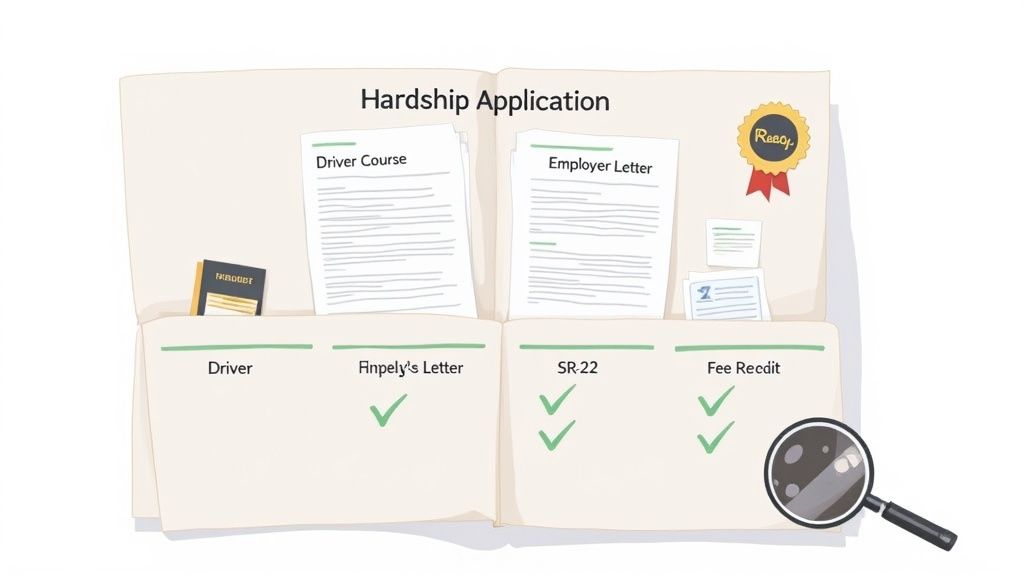
Your Must-Have Document Checklist
First things first, let’s cover the absolute non-negotiables. These are the core documents every single applicant needs to have. Make sure you have all of these in hand before you do anything else.
- Application for Hardship License (Form HSMV 78306): This is the official state form. Fill it out completely and make sure every detail is accurate. Incomplete forms are a top reason for rejection.
- Proof of DUI School or ADI Course Enrollment: You don’t need the final completion certificate just yet, but you must have proof that you’re officially signed up for the right state-approved course.
- Proof of SR-22 or FR-44 Insurance Filing: Your insurance company files this for you electronically, but you need your own copy of the certificate to bring to your hearing.
- The Application Fee: Fees can change, so it’s always smart to call your local BAR office to confirm the current amount. You’ll typically pay this when you go in for your hearing.
It’s also a really good idea to have a copy of your driving history with you. You can find out how to see your driving record in our detailed guide to make sure there are no surprises waiting for you.
Proving Your Hardship: Building a Strong Case
This is where you go beyond just checking boxes. “Proof of hardship” means collecting documents that clearly show why you desperately need to drive. Your goal is to paint a vivid picture of necessity for the person reviewing your case.
My Advice: The strongest applications show that public transportation or using Uber just isn’t a realistic option for you to keep your job, stay in school, or get essential medical care.
Here are the kinds of documents that can make a huge difference:
- A Letter from Your Employer: This should be on company letterhead and needs to spell out your job duties, your work schedule, and explicitly state that you need to drive for your job.
- Your Current Class Schedule: If you’re a student, your schedule is a simple, effective way to prove you need to get to and from campus.
- Medical Documentation: A letter from a doctor explaining that you (or a family member you care for) have regular appointments can be incredibly persuasive.
Don’t Get Tripped Up by These Common Mistakes
I’ve seen so many people get denied for simple, avoidable errors. Stay sharp and be mindful of these common issues.
A huge one is having a suspension for something unrelated to driving, like unpaid court fines. It’s more common than you’d think. A 2023 report found that debt-based license suspensions are a massive issue, with 716,383 such cases in 2022 alone. That’s one in every 24 adults in Florida. You can dig into the full Fines and Fees Justice Center report for more details.
This statistic drives home a critical point: you have to resolve every single underlying issue before your hearing. Make sure every fine is paid off, because an outstanding balance can completely derail your application before it even gets a fair look.
What to Expect at Your Hardship License Hearing
Heading into your hearing at the Bureau of Administrative Reviews (BAR) office is understandably stressful. It’s probably the most intimidating part of the whole process. But knowing what’s coming can take a lot of that anxiety away.
Think of this less like a formal courtroom trial and more like a serious administrative meeting. There’s no judge or jury—just you and a hearing officer whose job is to determine if your situation truly warrants a hardship license. Your one and only goal is to explain, clearly and honestly, why you absolutely must be able to drive.
Interacting with the Hearing Officer
The hearing officer will guide the conversation, usually by asking a series of direct questions about your application. They need to get a crystal-clear picture of your circumstances to justify granting you driving privileges when the state has taken them away.
You should be ready for questions like:
- “Tell me exactly where you work and your required hours.”
- “What route do you take to work? Explain why you can’t use public transportation or a rideshare service.”
- “Can you provide details on the medical appointments you need to get to?”
- “If we approve this, how can we be sure you’ll stick to the rules?”
The best approach is to have straightforward, honest answers ready to go. Don’t ramble. Have your documents—your employer’s letter, a class schedule, or a doctor’s note—organized so you can refer to them. Being respectful, calm, and sticking to the facts will get you much further than an emotional plea.
Pro Tip: Keep your case centered entirely on the essentials: your job, critical medical needs, school, or church. The hearing officer isn’t interested in your social life or running errands. They are looking for one thing: proof that you need to drive to maintain your livelihood.
Understanding Your Restrictions After Approval
If the hearing officer gives you the green light, don’t expect to walk out with your old license. You’ll be granted a restricted hardship license, and it’s absolutely crucial that you understand its limitations down to the letter. Any slip-up comes with serious consequences.
This isn’t a suggestion; it’s a legal order. Your hardship license will spell out exactly when and for what purpose you are allowed to be behind the wheel. There is zero wiggle room.
Common Hardship License Restrictions and Consequences
Violating the terms of your hardship license is a fast track to losing it for good and potentially facing new charges. Here’s a look at what to expect and what’s at stake.
| Restriction Example | What It Means | Penalty for Violation |
|---|---|---|
| Employment Purposes Only | You can drive a direct route from home to work and back. No side trips for groceries or anything else. | Your hardship license is cancelled on the spot. You could also face new criminal charges. |
| Business Purposes Only | This is broader, allowing driving for work, school, church, and medical reasons. Personal trips are still strictly forbidden. | The hardship license gets revoked immediately, and you will serve out the rest of your original suspension term with no driving privileges at all. |
| Ignition Interlock Device | Common for DUI suspensions, this requires you to blow into a breathalyzer device to start your car. | Driving a car without the device or trying to bypass it leads to immediate cancellation of the license and other penalties. |
The state views a hardship license as a privilege, not a right. Abusing that privilege will cause it to be taken away instantly. Your ability to eventually get your full license reinstated depends entirely on you following these rules without a single exception.
Answering Your Top Florida Hardship License Questions
Navigating the hardship license process in Florida can feel like a maze. Even when you think you have all the steps down, specific questions always pop up. It’s completely normal to feel a bit stuck on the details—that’s what this section is for.
Let’s clear up some of the most common points of confusion I see people run into. My goal is to give you straightforward answers so you can move forward with confidence.
Can I Still Get a Hardship License If I Refused a Breath Test?
This is a big one. The short answer is yes, you often can, but there’s a catch. Refusing a breathalyzer test triggers a mandatory “hard suspension” period, which means absolutely no driving for any reason.
For a first-time refusal, you’re looking at a 90-day waiting period. You can’t even start the hardship application until you’ve served that entire 90 days. Be aware that a second refusal will likely make you completely ineligible, so this is really a one-time consideration for most people.
What’s the Difference Between a BPO and an Employment-Only License?
Understanding this distinction is absolutely critical because it dictates where and when you can legally drive. They are not the same thing.
A Business Purposes Only (BPO) license is what most people are hoping for. It’s the more flexible of the two and allows you to drive for activities essential to supporting your family and yourself. Think of it as driving to maintain your livelihood. This generally includes:
- Your commute to work and any driving your job requires.
- Getting to and from school.
- Traveling to church or other religious services.
- Driving to doctor’s appointments for you or a family member.
An Employment-Only license, on the other hand, is extremely restrictive. It means exactly what it says: you can only drive directly to your job and directly home. No side trips for groceries, no swinging by the pharmacy, and no stopping at the bank.
Take the case of Jake, a delivery driver who got a six-month suspension. His job was on the line, but he was able to secure a hardship license after finishing DUI school and getting his SR-22 insurance. You can find more real-world examples of Florida hardship license eligibility on MuscaLaw.com. Jake’s situation perfectly illustrates the two license types: “business purposes,” which covers the essentials like work, school, and medical needs, versus the much stricter “employment-only” license.
What Happens If My Hardship Application Is Denied?
A denial can feel like a major setback, but it’s not necessarily the final word. The first thing you need to do is find out exactly why your application was rejected. The hearing officer should give you a specific reason.
Most denials come down to common mistakes: incomplete paperwork, forgetting to pay a fine, or not providing strong enough proof of your hardship.
Once you know the “why,” you can fix the problem. If you were missing a letter from your boss, go get it. If there was an unpaid ticket holding things up, you’ll have to settle that debt before you can be reconsidered. The key is not to give up—just address the issue head-on and try again.
At BDISchool, we know how overwhelming it can be to deal with traffic school and state requirements. Our Florida-approved online courses, like Basic Driver Improvement (BDI) and Advanced Driver Improvement (ADI), are built to be simple and straightforward. Enroll today at https://bdischool.com and take the next step toward getting your driving privileges back.