Improving your driving skills isn’t just about logging more hours behind the wheel. It’s about a combination of two things: a really honest self-assessment and then some very deliberate, focused practice. It all starts with taking a hard look at your current habits to pinpoint your weaknesses. From there, you can build a solid plan to become more confident and capable on the road.
Start With an Honest Look in the Mirror
Before you can get better, you have to know where you stand right now. This isn’t about reciting rules from the driver’s handbook; it’s about a candid look at how you actually perform in real-world situations. Let’s face it, most of us think we’re better drivers than we are, and that gap between perception and reality can be dangerous.
The first step is to simply notice what makes you nervous. Do your shoulders tense up when merging onto a packed highway? Do you circle the block five times just to avoid parallel parking? Acknowledging these specific triggers is way more productive than just vaguely deciding to “get better at driving.”
Pinpoint Your Growth Areas
Think back over the last month. What specific moments on the road felt a little shaky? Maybe it was trying to navigate a crazy multi-lane roundabout during rush hour, or judging your speed on a winding country road in the dark.
Jot these down, either mentally or on paper. This isn’t about beating yourself up; it’s about collecting personal data. Your list might look something like this:
- Braking smoothly and not tailgating in stop-and-go traffic.
- Staying perfectly centered in my lane on long trips.
- Feeling in control when driving through a downpour or thick fog.
- Actually using my car’s safety features, like blind-spot monitoring, instead of ignoring them.
Understand the Balance of Skill and Safety
It’s really important to distinguish between your physical driving skills (how well you control the car) and your safety mindset. Research has shown something interesting: while physical coordination can decline as we age, a driver’s commitment to safety often gets stronger. What’s more, just spending more time on the road doesn’t automatically make you a safer driver. That’s why taking a moment to formally assess yourself is so critical—it helps you spot any complacency that might have crept in.
To get started, this quick checklist can help you map out your personal strengths and weaknesses.
Quick Self-Assessment for Driving Skills
| Driving Skill Area | High Confidence (Minimal Practice Needed) | Moderate Confidence (Could Use Practice) | Low Confidence (Priority for Improvement) |
|---|---|---|---|
| Parking (Parallel, Angled) | ☐ | ☐ | ☐ |
| Highway Merging & Lane Changes | ☐ | ☐ | ☐ |
| Driving in Adverse Weather (Rain, Fog) | ☐ | ☐ | ☐ |
| Night Driving | ☐ | ☐ | ☐ |
| Navigating Intersections & Roundabouts | ☐ | ☐ | ☐ |
| Defensive Driving (Anticipating Hazards) | ☐ | ☐ | ☐ |
| Maintaining Safe Following Distance | ☐ | ☐ | ☐ |
Once you’ve gone through the checklist, you’ll have a much clearer picture of where to focus your energy.
By honestly identifying these opportunities, you can create a targeted improvement plan. Instead of just guessing, you’ll know exactly which skills need dedicated practice, turning abstract goals into concrete actions.
A great starting point for objective feedback is your official record. If you’re not sure how to see your driving record, pulling it can reveal patterns in past violations you might have completely forgotten about.
Master Your Vehicle and Road Awareness
Becoming a better driver isn’t just about memorizing the rules of the road. It’s about creating an almost instinctual connection with your car and staying tuned in to everything happening around you.
The goal is to move beyond jerky stops and last-minute turns. True confidence comes from handling your vehicle with smooth, deliberate control, turning driving into a proactive and fluid skill rather than a series of stressful reactions.
This journey begins with the basics: mastering your car’s controls. Start thinking of your gas and brake pedals less like on/off switches and more like sensitive dials. Head to an empty parking lot and practice smooth acceleration and gentle, controlled braking. Getting a real feel for how your car responds to subtle inputs builds the muscle memory you need to handle any situation calmly.
Think Like a Pro with SIPDE
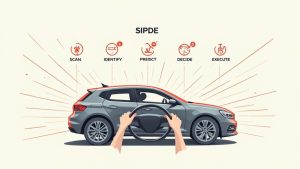
Seasoned drivers seem to have a sixth sense for trouble, but it’s not magic. It’s a well-practiced mental process. One of the best frameworks for this is SIPDE: Scan, Identify, Predict, Decide, and Execute. It’s a simple loop that trains you to stay ahead of the game.
Here’s how to put it into practice on your next drive:
- Scan: Keep your eyes moving! Look far down the road, then check closer, scan from side to side, and glance at your mirrors every few seconds. Never just fixate on the bumper in front of you.
- Identify: Spot potential hazards before they become real problems. See that kid playing with a ball near the sidewalk? Notice the car at the intersection that looks like it’s about to pull out? That’s what you’re looking for.
- Predict: Ask yourself, “What’s the worst-case scenario here?” Assume the child might dart into the road or that the other driver won’t see you. This prepares you for what could happen.
- Decide: Figure out your escape plan or defensive move ahead of time. Maybe it’s covering the brake, easing off the gas to create more space, or planning a safe lane change if needed.
- Execute: Now, carry out your decision with a smooth, controlled action.
Running this SIPDE mental checklist over and over again is what buys you those critical extra seconds to react. It fundamentally changes you from a passive passenger behind the wheel to the active manager of your own safety.
See the Bigger Picture
Great situational awareness boils down to two things: expanding your field of vision and using your mirrors like a pro. Consciously practice looking much farther down the road than you normally would. This lets you see traffic patterns forming and gives you plenty of time to adjust.
Your mirrors are your best friends. They’re not just for a quick check before changing lanes; they tell you the constantly evolving story of the traffic flowing behind and beside you.
Of course, your car has to be ready to respond when you are. Keeping up with routine checks is vital, and our guide to Florida vehicle maintenance covers the essentials. And just as important as what you do is what you don’t do—always remember the dangers of distracted driving.
Adopt Advanced Defensive Driving Tactics
Defensive driving isn’t just about being cautious; it’s a proactive strategy. Think of it as actively managing the space around your vehicle to buy yourself precious time and options when things go wrong. Mastering this approach is one of the biggest leaps you can make in your driving ability, especially on today’s unpredictable roads.
You’ve probably heard of the “three-second rule.” It’s a classic for a reason. As the car ahead of you passes a fixed object like a signpost or an overpass, start a slow count: “one-thousand-one, one-thousand-two, one-thousand-three.” If you pass that same object before you finish counting, you’re too close. Simple, but effective.
But that rule is just your starting point. You have to learn to adapt it on the fly.
Adjust Your Space Cushion for Any Situation
Perfect driving conditions are rare, so your following distance can’t be set in stone. That three-second gap is the absolute minimum for a clear, dry day. When the risks climb, your safety buffer needs to grow with them.
- Inclement Weather: In rain, fog, or on wet roads, you need to at least double that distance to four or five seconds. Slick surfaces dramatically increase your stopping distance, and that extra time can make all the difference.
- Large Vehicles: Tucked in behind a semi-truck or a bus? You can’t see what’s happening up ahead. Back off and give yourself a wider view. This also gives that massive vehicle the extra room it needs to brake safely.
- Tailgaters: It’s tempting to tap your brakes when someone’s glued to your bumper, but that’s a dangerous game. The smarter move is to gently ease off the gas and increase the distance in front of you. This creates a bigger buffer for both of you if traffic suddenly stops.
This kind of strategic space management is what separates an average driver from a great one. We see the benefits of these habits when we look at how targeted driving restrictions for teenagers have led to significant drops in accidents. It proves that building a safer mindset early on has a powerful, lasting impact. You can read more about these promising road safety approaches to see how they’re being applied globally.
Master Your Surroundings
Your safety bubble isn’t just in front of you—it’s a 360-degree space you need to constantly manage. Get in the habit of checking your mirrors every few seconds so you always have a mental map of who is beside and behind you.
A huge part of this is staying out of other drivers’ blind spots. Here’s a good rule of thumb: if you can’t see the driver’s face in their side-view mirror, they can’t see you. Don’t linger there. Either speed up a little or ease back to make yourself visible again.
By actively managing the space on all sides of your car, you create an escape route. This proactive positioning gives you options if another driver makes a sudden mistake, turning a potential collision into a non-event.
Dealing with unpredictable drivers is just part of being on the road. Whether it’s a chaotic four-way stop or someone weaving through traffic, a calm, strategic head is your best tool. One of the toughest situations is dealing with road rage. Knowing how to handle aggressive drivers is a critical defensive skill that’s all about de-escalation and putting your safety first. Create distance, refuse to engage, and stay in control of your vehicle and your emotions.
Create a Deliberate Practice Routine
You know the old saying, “practice makes perfect,” but when it comes to driving, that’s only half the story. Just putting in more hours on the road doesn’t guarantee you’ll get better. The real secret is deliberate practice. This means picking one specific skill, focusing all your attention on it, and practicing until it’s second nature. This is how you turn a routine drive into a powerful training session.
This focused approach is a game-changer. Just look at global driver training standards. In Australia, for instance, learners have to log a hefty 120 hours of supervised driving. Meanwhile, over 20 other countries have no minimum requirement at all. The data is pretty clear: nations with structured, demanding training tend to produce more capable, safer drivers.
Start in a Low-Risk Environment
Think of a big, empty parking lot as your personal driving lab. It’s the ideal place to get a feel for your car and build that crucial muscle memory without the stress of other traffic.
Before you start tackling busy streets, spend some quality time with these foundational drills:
- Figure-Eights: Grab two cones, water bottles, or anything you can see easily. Practice driving a smooth figure-eight around them. This simple drill is fantastic for mastering fluid steering and understanding how your car pivots at low speeds.
- Emergency Braking: Find a clear stretch, get up to about 20-25 mph, and then hit the brakes—hard. The goal is to feel how your car responds and to get used to the pulsing sensation of the Anti-lock Braking System (ABS). Knowing this instinctively can prevent panic when you have to do it for real.
- Parking Precision: Don’t just “get it in the spot.” Practice every kind of parking—parallel, perpendicular, and angled—until you can center the car perfectly every time. This sharpens your spatial awareness like nothing else.
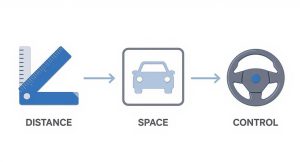
These drills aren’t just for beginners. They build a solid foundation of precise car control that every great driver relies on, especially when things get complicated on the road.
Transition to On-Road Scenarios
Once those parking lot skills feel solid, it’s time to take that same deliberate mindset onto the road. Start during off-peak hours when traffic is light.
Instead of just driving from A to B, give yourself an assignment for the trip. One day, you might focus only on making perfectly smooth lane changes on the highway. Another day could be dedicated to navigating a tricky roundabout until it feels completely natural.
By isolating and perfecting one skill at a time, you methodically build confidence and competence. This focused training is far more effective than mindless driving and is the fastest way to become a genuinely better driver.
And for anyone in Florida looking to brush up on traffic laws, satisfy a court order, or even lower their insurance, a state-approved BDI course is a great supplement. Pairing your hands-on work with the structured knowledge from self-paced online courses can round out your skills beautifully.
Sample Driving Skill Practice Plan
To give you a clearer idea of how to structure your practice, here’s a sample weekly plan. The goal is to mix low-risk drills with real-world application, ensuring you’re constantly building on what you’ve learned.
| Day | Focus Skill | Parking Lot Drill (20 mins) | On-Road Exercise (30 mins) |
|---|---|---|---|
| Monday | Smooth Steering | Drive slow, tight figure-eights, focusing on hand-over-hand steering without jerky movements. | On a quiet road with curves, focus on maintaining a consistent speed and smooth steering input through each turn. |
| Tuesday | Braking Control | Practice emergency braking from 25 mph. Progress to “threshold braking”—applying firm pressure just before ABS engages. | In light traffic, practice smooth, gradual stops. Focus on anticipating red lights and stop signs far in advance to avoid last-second braking. |
| Wednesday | Spatial Awareness | Practice parallel and perpendicular parking, aiming to be perfectly centered with minimal adjustments. | Drive through a neighborhood with parked cars, focusing on maintaining a safe, consistent distance from both sides. |
| Thursday | Lane Discipline | Set up cones to create a narrow “lane” and practice driving through it both forward and backward without touching them. | On a multi-lane road, practice lane changes. Use mirrors, signal, check your blind spot, and glide smoothly into the next lane without affecting speed. |
| Friday | Hazard Perception | (No drill) | Drive a familiar route but actively narrate every potential hazard you see aloud: “Pedestrian near crosswalk,” “Car waiting to pull out.” |
This kind of schedule makes your practice intentional. You’re not just driving—you’re training. Adjust the drills and focus areas based on what you feel you need the most work on.
Commit to Continuous Learning and a Safer Mindset
Technical skill—how smoothly you steer, brake, and accelerate—is only one part of the equation. Honestly, the biggest improvements you’ll see in your driving come from developing a safer, more patient mindset. This mental shift, from just operating a car to actively managing your safety, is what separates a decent driver from a truly great one.
Think about it: your attitude behind the wheel drives every decision you make. Are you the type to let it go when someone cuts you off, or do you feel that flash of anger and the need to “teach them a lesson”? Do you plan your trips with extra time built in, or are you always racing against the clock? A calm, courteous approach can defuse a dozen risky situations before they even have a chance to start.
Managing Your Mental State on the Road
Driving is a mental game, plain and simple. Stress, anger, and fatigue are your worst enemies out there, clouding your judgment and slowing your reaction time down to a crawl. Learning to spot these feelings in yourself and manage them is a non-negotiable part of becoming a better driver.
It all starts with being honest with yourself. If you’ve had a brutal day at work, you have to acknowledge that you’re probably going to have a shorter fuse in traffic. If you feel your eyelids getting heavy on a long drive, that’s not a sign to power through—it’s a signal to pull over.
Fatigue is a huge risk factor. It’s so important to understand the best ways to stay awake while driving to maintain a high level of alertness. A drowsy driver can be just as dangerous as an impaired one, with sluggish reaction times and terrible decision-making.
The safest drivers get one thing right: they know their emotional state directly impacts their performance on the road. They know when to push, but more importantly, they know when to back off or just stop for a break. That self-awareness is a skill you build with conscious effort.
Formal Training: The Mark of a Pro
The best drivers out there, from professional racers to ambulance drivers, all have one thing in common: they never, ever stop learning. They know that no matter how many years they’ve been on the road, there’s always something new to learn or a skill to sharpen. Committing to ongoing education is what really takes your driving to the next level.
This doesn’t mean you have to sign up for a high-performance racing school (though that does sound fun!). Formal training comes in a lot of practical forms.
- Advanced Driving Courses: These often zero in on specific skills, like handling a car on slick, icy roads or practicing advanced collision-avoidance moves. They put you in challenging, controlled scenarios that you could never safely replicate on public streets.
- Defensive Driving Programs: These are all about sharpening your hazard perception and learning how to strategically position your car to stay out of trouble. They give you a structured way to reinforce the proactive habits that keep you safe.
The Value of a State-Approved Refresher Course
Even if you have a perfectly clean record, an online refresher course has a ton of value. For drivers here in Florida, a state-approved Basic Driver Improvement (BDI) course is a fantastic tool for staying sharp.
These courses are built for convenience, letting you brush up on traffic laws and safety strategies right from home. They’re a powerful reminder of the rules of the road and best practices you might have forgotten over the years. Plus, the benefits are often very real.
Completing a BDI course can potentially:
- Dismiss a Traffic Ticket: If you get a ticket for an eligible violation, it can keep points off your license.
- Lower Insurance Premiums: Many insurance companies offer a nice discount for voluntarily completing a defensive driving course.
- Reinforce Safe Habits: It’s a structured review of the critical stuff, from right-of-way rules to what to do in an emergency.
At the end of the day, becoming a better driver is a journey, not a destination. By mixing deliberate practice with a real commitment to managing your mindset and seeking out formal training, you can make sure your skills stay sharp for a lifetime of safe driving.
Common Questions About Sharpening Your Driving Skills
Deciding to become a better driver is a great first step, but it’s natural for a few questions to pop up along the way. Let’s tackle some of the most common ones I hear from drivers looking to build confidence behind the wheel.
How Long Until I Actually Feel a Difference?
This really comes down to how you practice, not just how long. If you can dedicate even 30-60 minutes a couple of times a week to focused, deliberate practice, you’ll probably start feeling more in control and confident in just two to four weeks.
The real goal, though, isn’t hitting some imaginary finish line. Mastering advanced skills, like instantly spotting a potential hazard, is something even the best drivers are always working on. It’s about making steady, continuous progress. A little bit of focused driving often is much better than one long, exhausting session every few months.
Are Those Performance Driving Courses Just for Racers?
Not at all. While they have “performance” in the name, these courses are incredible for everyday drivers. They’re not about going fast; they’re about understanding how to control your car when things go wrong.
In a safe, controlled track environment, you learn how your vehicle reacts at its absolute limit. You get to feel what a skid is like and practice an emergency lane change without the risk of real traffic. That kind of muscle memory and confidence is something you can’t get on the street, and it translates directly to making you a safer commuter when the unexpected happens.
If I Could Change One Habit, What Should It Be?
Easy. The single most powerful habit for staying safe is maintaining a proper following distance. It’s the simplest thing you can do, and it gives you the two most critical assets in any emergency: time and space.
Think of your space cushion as the ultimate safety net. It buys you reaction time, protects you from the mistakes of other drivers, and gives you an out when traffic suddenly stops or road conditions change. If you master just this one thing, you’ll avoid a huge percentage of potential crashes.
How Do I Practice Safely in Bumper-to-Bumper City Traffic?
Jumping straight into rush hour is a recipe for stress. The trick to practicing in dense urban traffic is to build up to it gradually. Don’t overwhelm yourself.
Instead, try this approach:
- Start on “easy mode.” Drive your usual city routes on a Sunday morning or later in the evening. This lets you learn the flow of the intersections and the timing of the lights without the pressure of a hundred other cars.
- Focus on one thing at a time. On one trip, make your only goal smooth, gentle braking in stop-and-go traffic. The next time, concentrate entirely on checking your mirrors and blind spots before you make any move.
- Talk it out. Seriously, narrate your drive out loud as if you’re a co-pilot. Saying, “Okay, that van is drifting, I’m going to ease off the gas and create space” keeps your brain locked in and prevents the sensory overload that city driving can cause.
Breaking it down like this turns a chaotic environment into a series of manageable challenges, letting you build real skill and confidence.
Ready to solidify your knowledge with a structured approach? BDISchool offers Florida’s state-approved Basic Driver Improvement Course, which you can complete entirely online at your own pace. It’s the perfect tool for refreshing your grasp of traffic laws, handling a ticket, and even potentially lowering your insurance rates. Invest in your safety and enroll today at BDISchool.com.