After getting a traffic ticket, that slip of paper can feel a little overwhelming. But if you look closely, you’ll find one piece of information that matters more than anything else: the citation number.
Think of it as the unique tracking number for your specific violation. It’s what connects you, the officer who issued the ticket, the court system, and the DMV.
Your Ticket's Unique Tracking Number Explained
From the moment an officer hands you a ticket, that citation number springs into action, creating a new file in the system. It’s not just a random string of characters; it’s the official reference ID for your case from start to finish.
This single number is the key that unlocks the entire process for several different agencies:
- Law Enforcement: They use it to log the violation and officially report it to the county court.
- The Court System: The clerk’s office uses it to manage your case, from scheduling hearings to processing payments and recording the final outcome.
- The DMV: Your state’s DMV relies on this number to accurately update your driving record with any points or penalties resulting from the ticket.
Without it, trying to pay a fine or look up your case would be like trying to find a specific package in a warehouse with no tracking information—nearly impossible. Your ticket would be lost among the thousands of others processed every single day.
Every step you take to handle your ticket will require this number. The table below shows just how crucial it is for the most common actions you might take.
Why Your Citation Number Is Essential
| Your Next Step | How the Citation Number Is Used |
|---|---|
| Paying the Fine | It allows you to look up your specific case and payment amount on the county clerk's website. |
| Contesting the Ticket | The court uses this number to schedule your hearing and track all legal documents related to your case. |
| Electing Traffic School | You must provide this number to the school to ensure your completion certificate is sent to the correct court. |
As you can see, whether you're paying, fighting, or taking a defensive driving course, the citation number is the thread that ties everything together. It ensures every action you take is correctly credited to your case, protecting your driving record in the long run.
How to Find the Citation Number on Your Ticket
Staring at a fresh traffic ticket can be overwhelming. It’s a wall of text, checkboxes, and official-looking codes that can make your head spin. But don't worry—the single most important piece of information, the citation number, is usually easy to spot.
Police departments know you need this number for everything that comes next, so they typically place it somewhere obvious. Think of it as the unique account number for this specific incident.
Common Locations for the Citation Number
So, where should you actually look? While the design of a ticket can change from one county to the next, your citation number is almost always in one of a few key places.
Grab your ticket and scan these areas first:
- Top-Right Corner: This is the most common spot by far. You'll often see it printed in bold inside a dedicated box.
- Top-Center: Some agencies place it right at the top, sometimes next to the name of the court that will handle your case.
- Near Your Personal Information: Check the area around your name, address, and driver's license number. It’s often grouped with your identifying details.
For example, a standard Florida Uniform Traffic Citation puts the number right in the top-right corner, making it impossible to miss. No matter the layout, you're looking for a series of numbers (and sometimes letters) labeled "Citation No.," "Ticket No.," or something similar.
This one number is your key to resolving the ticket, whether you plan to pay it, fight it, or go to traffic school.

Once you've found the citation number, you're in control. You can now confidently use it to look up your case online, make a payment, or get the information you need to move forward.
The Journey of Your Citation Number Through the System
Ever wonder what actually happens after an officer hands you a ticket and you drive away? That piece of paper isn't just a fine—it's the starting point for a whole digital process. Your citation number is the key that links everything together, connecting the officer on the roadside, the county courthouse, and your state’s DMV.

The moment the officer finalizes that ticket, your citation number generates a new case file in the system. Think of it as a tracking number for your violation. That information is then sent electronically to the Clerk of Court in the county where you were ticketed, which officially opens a legal case.
How Each Agency Uses the Number
From that point on, the citation number is the single most important piece of information for your case. It ensures every agency involved is looking at the same record.
Here’s a quick breakdown of how it moves through the system:
- County Court System: The court uses this number for everything. It's how they schedule your court date, look up your case if you call, process your payment, and record the final outcome—whether you're found "guilty," "not guilty," or granted a "withheld adjudication."
- State DMV (like the FLHSMV): After the court case is closed, the clerk reports that outcome to the DMV using, you guessed it, your citation number. The DMV then updates your official driving record. This is when points might be added, your traffic school completion is noted, or a suspension is recorded.
This systematic tracking is more important than ever. With traffic congestion continuing to rise in cities across the U.S., the sheer volume of citations issued daily is immense. Without a unique identifier for each ticket, the administrative process would quickly become overwhelmed.
That simple string of digits is what keeps the entire system humming along accurately, making sure every violation is tracked from the initial stop all the way to your permanent driving record.
As you figure out how to handle your ticket, understanding what happens when you get a traffic ticket is the first step to protecting your license. That digital ID ensures that when you pay a fine or complete traffic school, the credit gets applied to the right case, finally closing the loop on your violation.
So, What Do You Do With That Citation Number?
Now that you've found your citation number, you can finally start to take care of that ticket. Think of that string of numbers and letters as your ticket's unique ID. It's the one piece of information you'll need for literally every single step you take from here on out.
Without it, you can't pay, you can't fight it, and you can't sign up for traffic school. It’s what connects you to your specific case in the court’s massive system. For a lot of people, the first thing they want to do is just get it over with and pay fines and reinstate drivers licenses online. That’s often the quickest route, but it's not your only one.
Your Options for Handling the Ticket
No matter what you decide to do, that citation number is your starting point. You generally have three paths you can take, and each one begins with providing that number.
Paying the Fine: This is the most straightforward option. Whether you pay online, over the phone, or send a check in the mail, the clerk needs the citation number. It’s how they look up your record and make sure your payment gets applied to the right ticket, officially closing the case.
Contesting the Ticket: If you believe you’re not guilty and want to fight the ticket, your citation number is what you'll use to request a court date. It essentially becomes your case number for all legal paperwork and court appearances. If you're leaning this way, it’s a good idea to know what to expect in traffic court before you walk in.
Electing Traffic School: In many cases, you can choose to attend a driver improvement course to keep points off your license. You'll need that citation number to enroll with a state-approved school. The school then uses it to report back to the court once you’ve completed the course.
It makes sense why this is so important when you think about it. Courts handle an incredible number of tickets every single day, especially with more cars on the road than ever. Unique tracking numbers are the only way to keep everything organized and accurate amid all that volume. You can discover more insights about these traffic trends at CarrierManagement.com.
Each of these choices leads to a different outcome, but they all start with the same thing: your citation number. It’s the tool that lets you interact with the system and move forward, hopefully with your driving record intact.
What to Do If You've Lost Your Traffic Ticket
It happens to the best of us. That little slip of paper—your traffic ticket—has vanished, and a wave of panic sets in. Don't sweat it. Losing the physical ticket doesn't mean you’ve lost your ability to deal with it.
Thankfully, you can still track down all the information you need, including that all-important citation number. Your best bet is to get in touch with the Clerk of Court in the county where the officer pulled you over. They're the official record-keepers for all traffic citations.

What to Have Ready
To help the clerk pull up your record without a hitch, you’ll need to confirm your identity. Be prepared to provide a few key pieces of information:
- Your full legal name
- Your date of birth
- Your driver's license number
With these details, the clerk can search their system and give you your citation number, the fine amount, and your deadline to take action.
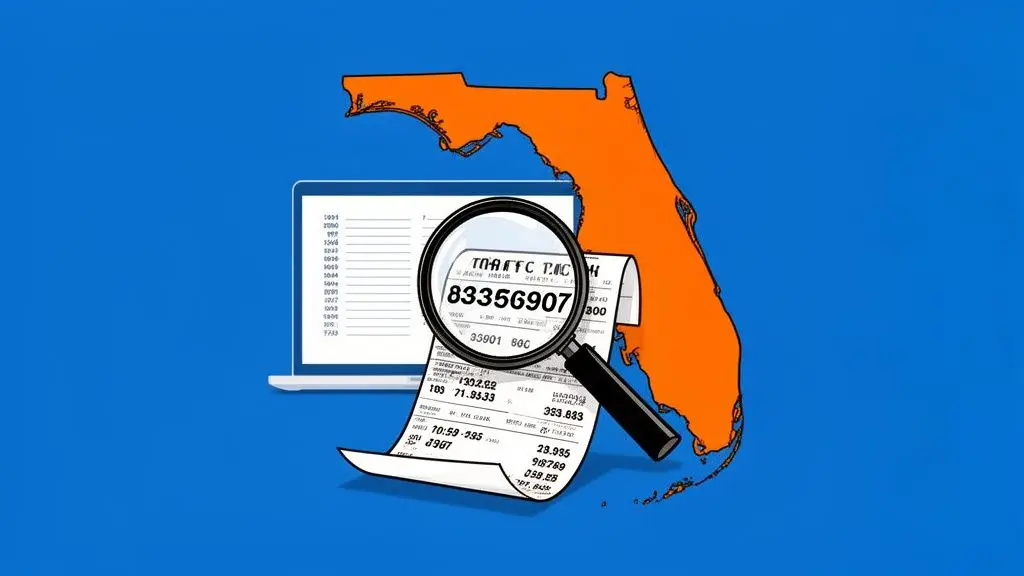
Many county clerk offices also offer an online search portal right on their website. This is often the fastest way to find your information without waiting on hold. You can typically find your ticket by searching with your name or driver's license number.
Once you have that number back in your hands, you’re ready to pay the fine, fight the ticket, or sign up for traffic school. For a step-by-step walkthrough, see our guide on how to perform a Florida citation number lookup.
Using Your Citation Number for Florida Traffic School
If you're eligible to take a Basic Driver Improvement (BDI) course in Florida, it's almost always the right call. Going this route is how you stop points from hitting your license and, just as importantly, keep your insurance company from jacking up your rates.
To make it happen, that little citation number on your ticket becomes the single most important piece of the puzzle. Think of it as the official handshake between your traffic violation and your traffic school. You'll need to have it ready when you sign up.
How Schools Use Your Number
When you enroll with a state-approved traffic school, they use your citation number to report your course completion to the right people. This isn't just for their records; they send it directly to two key places:
- The Clerk of Court in the specific county where you got the ticket.
- The Florida Department of Highway Safety and Motor Vehicles (FLHSMV).
This reporting is what officially resolves your ticket. It’s the final step that confirms you've met the requirements and ensures your driving record stays clean. The whole system is designed to promote safer driving habits and reduce accidents.
These courses dig into important safety topics, which makes sense when you look at traffic data. For a broader perspective on traffic patterns, TomTom’s global index offers some eye-opening insights.
Choosing a reliable online traffic school course handles all this for you, making sure your completion certificate gets filed correctly and on time.
Common Questions About Traffic Citation Numbers
Alright, so you understand the basics of a citation number. But when you're actually holding a ticket, a whole new set of practical questions usually pops up. Let's get into some of the most frequent ones we hear from Florida drivers.
Can I Look Up a Florida Ticket with My License Plate?
It's a question we get all the time: "Can't I just use my license plate to find my ticket online?" It seems like it should work, but unfortunately, the answer is no.
Think of it this way: the ticket is tied to you, the driver, not just the car. That's why county court systems are set up to search for your case using your citation number or your driver's license number. For the fastest and most accurate search, that citation number is always your best bet. If you've misplaced it, using your full name and date of birth is the next best thing.
How Long Do I Have to Respond to a Ticket in Florida?
This is one deadline you don't want to miss. In Florida, you have exactly 30 calendar days from the date the officer issued the ticket to take action.
Within that 30-day window, you need to make a choice. You have three main paths you can take:
- Pay the fine and accept the points.
- Choose to attend traffic school to avoid points (if you're eligible).
- Plead not guilty and schedule a hearing to contest the ticket in court.
What Happens If I Ignore a Ticket?
Simply hoping a ticket will go away is one of the worst things you can do. The consequences for ignoring a traffic ticket in Florida are serious and can snowball quickly.
If you don't respond within those 30 days, the state can suspend your driver's license. On top of that, you'll be hit with late fees, and the original fine will likely be turned over to a collection agency, which can really hurt your credit score.
Takeaway: Ignoring the problem will only make it worse. Always take action within the 30-day window to protect your license and avoid extra penalties.
If you've received a ticket, don't wait. BDISchool offers state-approved online courses that can help you keep points off your license and protect your driving record. Enroll today at https://bdischool.com.