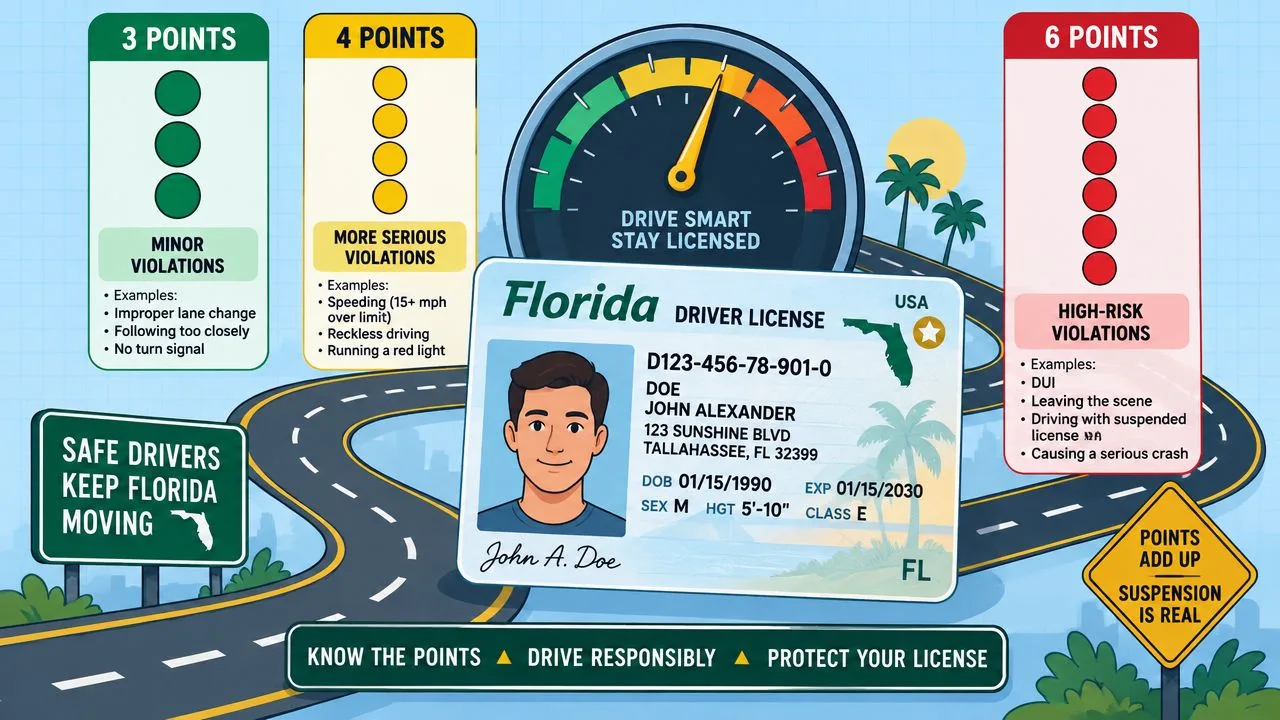
You're probably here for one of two reasons.
You tried to find a 4 hour drug and alcohol course Florida free option because you're applying for a license and don't want to overpay. Or you got a citation, saw ads promising a “free” course, and now you're trying to figure out what counts with Florida.
That confusion costs people time every day. They sign up for the wrong course, assume the court or DMV will sort it out, then find out the provider wasn't approved, the reporting never happened, or the course they picked didn't match their situation.
My advice is simple. Stop chasing the word “free” first. Start with approved, accepted, and reported correctly. If the course doesn't satisfy Florida's rules, it's not cheap. It's wasted money.
Why a Free 4 Hour Drug and Alcohol Course Florida Is Crucial
The worst time to learn the rules is at the counter.
A first-time Florida driver shows up to move forward with licensing, only to hear that the application can't proceed because the required drug and alcohol course isn't on file. Another driver gets a moving violation, sees a low-cost ad online, signs up fast, then learns the court won't accept that course for the purpose they needed. Both thought they were saving money. Both ended up losing time instead.
That's why the search for a 4 hour drug and alcohol course Florida free option matters. People aren't just bargain hunting. They're trying to avoid a delay that can block a license, derail a permit plan, or create extra hassle with a citation.
Practical rule: If a course isn't state-approved and reported the way Florida requires, the price doesn't matter.
There's also a hard truth most ads skip. “Free” and “valid” usually aren't the same thing in this space. Some offers are limited, some apply only in narrow situations, and some fail to meet the reporting and approval standards that Florida expects.
A better goal is this. Find the lowest-friction compliant option. That means a provider that fits your exact requirement, discloses fees clearly, and sends completion information properly so you don't get blindsided later.
Understanding the 4 Hour Drug and Alcohol Course Florida
A lot of Florida drivers get tripped up by the name alone. They search for a “4 hour drug and alcohol course,” see a cheap ad or a free offer, and assume every version satisfies the same rule. It doesn't.
The course Florida is talking about is the Traffic Law and Substance Abuse Education course, also called TLSAE or the DATA course. Under Florida DHSMV TLSAE provider guidance, first-time adult drivers must complete this course before applying for an initial license, and the state must be able to verify completion through proper electronic reporting.

What the course actually covers
TLSAE is not a random alcohol-awareness class. It is a state-defined entry course for new drivers. It covers Florida traffic laws, the risks of impaired driving, and how alcohol or drugs can reduce judgment, attention, coordination, and reaction time.
That last part matters. Drivers who do not understand how substances affect the brain tend to underestimate risk. For extra background on depressant effects, the Nexus Recovery Centers guide to depressants is a useful plain-English reference.
Why the “free course” claim causes problems
The core issue is compliance, not marketing language. A course only counts if it matches the Florida requirement and the provider is approved to deliver and report it.
That is where people waste time. They sign up for a course that sounds right, finish all four hours, and still cannot use it because the provider was not approved for TLSAE or did not report completion correctly. If you want a provider built for this exact requirement, review the Florida TLSAE course details.
Use this rule before you register. Confirm the course is specifically listed as TLSAE or DATA, confirm the provider is state-approved, and confirm completion is transmitted in the way Florida expects.
The course serves two purposes. It teaches the safety material Florida requires, and it creates the record your license application depends on.
Here is the practical takeaway:
- TLSAE is the specific 4-hour course Florida requires for qualifying first-time drivers.
- A “drug and alcohol course” label by itself means nothing unless the provider is approved for TLSAE.
- The free-course myth falls apart when the provider cannot meet Florida's reporting and approval standards.
Florida TLSAE Eligibility and Legal Requirements
People get in trouble when they assume every Florida driving course serves the same purpose. It doesn't.
The first question to answer is simple. Why are you taking the course? Your reason determines which rule applies, what the course needs to do, and whether “free” is even realistic.
Who needs TLSAE
Florida requires TLSAE for several specific situations.
- First-time adult license applicants: Florida requires the 4-hour TLSAE course before the initial license application.
- Teens seeking a learner's permit: applicants ages 15 to 17 must also complete the course before applying.
- Certain under-21 drivers with a suspension tied to low BAC: TLSAE can also be part of the reinstatement path in that situation.
If you're trying to sort out permit preparation and next steps, the Florida learner's permit guide is a useful starting point.
What most adults should expect to pay
Here's the part people don't like, but they need to hear it. A completely free, state-provided TLSAE course for adult applicants is not standard. The Nation's Traffic School TLSAE pricing overview says the market benchmark for approved online providers ranges from $22.95 to $29.95 plus state fees, with those charges covering certificate processing and FLHSMV data transmission.
That pricing reality is normal in compliance-focused education. If you've ever seen how other regulated training gets built and delivered, this overview of how AI simplifies compliance training helps explain why structured reporting and standardized content matter so much.
When TLSAE is not the course you need
Some drivers aren't dealing with first-time licensing at all. They're handling a moving violation and want to keep points off the record. In that situation, the relevant course is often Basic Driver Improvement, not TLSAE.
The Florida BDI course explanation from a Florida traffic law blog states that Basic Driver Improvement is a mandatory 4-hour program established by state law as the shortest course allowed for ticket dismissal for a non-criminal moving violation.
That distinction matters. Don't buy a TLSAE course if your real goal is ticket dismissal. Don't buy a BDI course if your issue is first-time licensing. The cheapest wrong course is still the wrong course.
How to Verify Approved Free or Low Cost Providers
If a website shouts “free” but stays vague about approval, reporting, and fees, move on.
That's the core problem with the 4 hour drug and alcohol course Florida free search. Too many offers are built to win the click, not to get you accepted by the state or the court.

The verification checklist that actually matters
Use this checklist before you register anywhere.
Check that the provider is listed as approved
Start with Florida's approved-provider framework, not with ad copy. If approval isn't clear, don't guess.
Match the course to your reason
Licensing, learner's permit, low-BAC reinstatement, and ticket dismissal can lead to different course needs. The provider should state exactly what the course satisfies.
Confirm electronic reporting
If the provider can't clearly explain how completion gets transmitted, that's a red flag. Florida relies on electronic reporting for compliance in these situations.
Read the fee disclosures carefully
“Free” headlines often collapse once certificate handling and required reporting charges appear at checkout.
A practical option to review when comparing providers is this approved online traffic school page, which helps clarify how approved online courses are presented.
The myth you should stop believing
The biggest myth is that any “free” version will work if it covers similar material. It won't.
The Certus Florida drug and alcohol course page makes the point clearly: while some schools advertise free TLSAE for permit applicants, court-ordered versions through state-approved vendors carry fees ranging from $22.95 to $45, so there is no free option for point dismissal.
If your course needs to satisfy a court or formal state requirement, approval beats marketing every time.
That's why I recommend a simple standard. Pick providers that are transparent about course purpose, approval status, reporting method, and total charges. If a site hides any of those, it hasn't earned your trust.
Enrollment and Completion Process for 4 Hour Course
Once you know which course you need, the process gets much easier. Most problems happen because drivers skip one administrative step and assume enrollment alone solves everything.
It doesn't.
For drivers handling a ticket-related course election, timing matters first. The Certus defensive driving course page states that to elect the BDI course for ticket dismissal in Florida, you must notify the Clerk of Court listed on the citation within 30 days of receiving it, and enrolling alone does not notify the court.
To keep the process visual, use this flow as your checklist.

Step one matters more than people think
If your situation involves ticket dismissal, contact the clerk first and make the election properly. Don't assume the provider will handle that notice for you. They usually won't.
If your situation is first-time licensing instead, your first move is simpler. Choose an approved TLSAE provider and register under your correct legal information so the completion record matches your state file.
The practical online sequence
Once you're in the right course, the online process is usually straightforward:
- Create your account: use your legal name and accurate identifying details.
- Complete the modules: work through the lessons in order and don't rush past required screens.
- Finish any required assessment: follow the provider's instructions carefully.
- Keep your confirmation details: save your receipt, account email, and completion page.
One available course source is through BDISchool's course catalog, and another is through DriverEducators' course catalog. Both sites list the available programs, which helps if you're comparing based on your exact need rather than a generic ad.
Here's a quick video if you want a visual sense of the online process before you register.
Common mistakes that slow people down
The most common error is signing up before confirming the course type. The second is entering personal information carelessly. The third is assuming the state or court automatically knows what you did.
Avoid those with this short checklist:
- Before paying: verify the course purpose.
- Before starting lessons: verify your name and identifying details.
- Before your DMV or court follow-up: verify reporting or completion status.
Don't make the classic mistake of treating registration like completion. Florida cares about the finished and reported record, not your shopping cart.
Examples of Course Experience
Maria is 17 and wants her learner's permit without dragging the process out. She chooses a self-paced online course because she can log in after school, finish a section, stop, and return later without losing momentum. What she likes most is that the material feels tied to real driving choices, not just memorization.
Thomas has a different problem. He's balancing work, family, and a moving violation he wants to handle cleanly. He compares providers, checks whether the course is approved for his purpose, reads the fee disclosures, and registers only after he's sure the course fits his situation.
Their paths are different, but the smart habits are the same.
What Maria gets right
Maria doesn't chase the flashiest ad. She focuses on whether the course satisfies the state requirement tied to her permit path. That keeps her from wasting time on a site that sounds cheap but doesn't line up with Florida's rules.
What Thomas gets right
Thomas treats the course like a compliance task, not an impulse purchase. He verifies the provider, confirms the right course type, and finishes the work before moving on to the next step with the court.
The lesson from both examples is simple. Drivers who move fastest aren't the ones who find the loudest “free” ad. They're the ones who choose the right approved course the first time.
Certificate Issuance and FLHSMV Reporting
Finishing the course isn't the finish line. Reporting is.
For some Florida drivers, that reporting step has direct legal consequences beyond first-time licensing. The State of Florida DATA course page explains that the TLSAE course also serves as a reinstatement condition for drivers under 21 whose licenses are suspended for low BAC infractions, and providers must transmit the completion certificate electronically to FLHSMV before records are updated.

What happens after you finish
The provider sends your completion data electronically. Then FLHSMV updates the relevant record. That's the part that allows the next step, whether that's licensing progress or reinstatement movement.
Some providers also give you access to your certificate or completion proof for your own records. Keep it. Even when electronic reporting is standard, your own documentation is still useful if there's a mismatch or delay.
If you want to understand how completion records are typically handled, the online driving certificate information page is a helpful reference.
Keep a copy of every confirmation email and certificate screen until your record shows correctly. That small habit saves a lot of stress.
What to do if your record doesn't update
Start with the provider's support team. Ask whether the course was fully completed, transmitted, and accepted into the reporting flow.
Then check your identifying details. A small mismatch in personal information can cause a bigger delay than is typically anticipated.
Costs Alternatives and Final Recommendations
Here's the honest summary.
A free option may appear in limited contexts, but a fully free, broadly usable Florida solution usually isn't what people think it is. For adult TLSAE applicants, standard approved online pricing commonly falls in the $22.95 to $29.95 plus fees range, as noted earlier. For court-related point-dismissal situations, the “free course” idea is even weaker because compliant options still carry required charges.
So don't shop by headline. Shop by outcome.
Use this decision rule:
- If you need first-time license or permit compliance, choose an approved TLSAE provider.
- If you need ticket dismissal, make sure you're taking the right improvement course and that you notified the clerk on time.
- If a site is vague about approval or reporting, leave.
The fastest path is usually the boring one. Verify the provider, register, complete the course, and confirm the reporting.
If you want a straightforward next step, register through BDISchool and choose the course that matches your actual Florida requirement. You'll avoid the free-course trap, stay focused on a state-compliant option, and move your license or citation issue forward without unnecessary delays.