You looked down at the ticket, saw the county name, the fine, and the deadline, and your stomach dropped. That reaction is normal. Most Florida drivers don’t care about traffic school until they need it fast.
The good news is that a ticket usually isn’t the end of the story. In many Florida cases, a defensive driving course for ticket dismissal is the cleanest way to keep a simple mistake from turning into points, insurance trouble, and a longer headache than the original citation deserved.
I’ve seen the same pattern over and over. Drivers panic, Google too fast, sign up for the wrong course, or assume the school handles everything for them. That’s where people get burned. Florida gives you a workable path, but you have to follow the process in the right order.
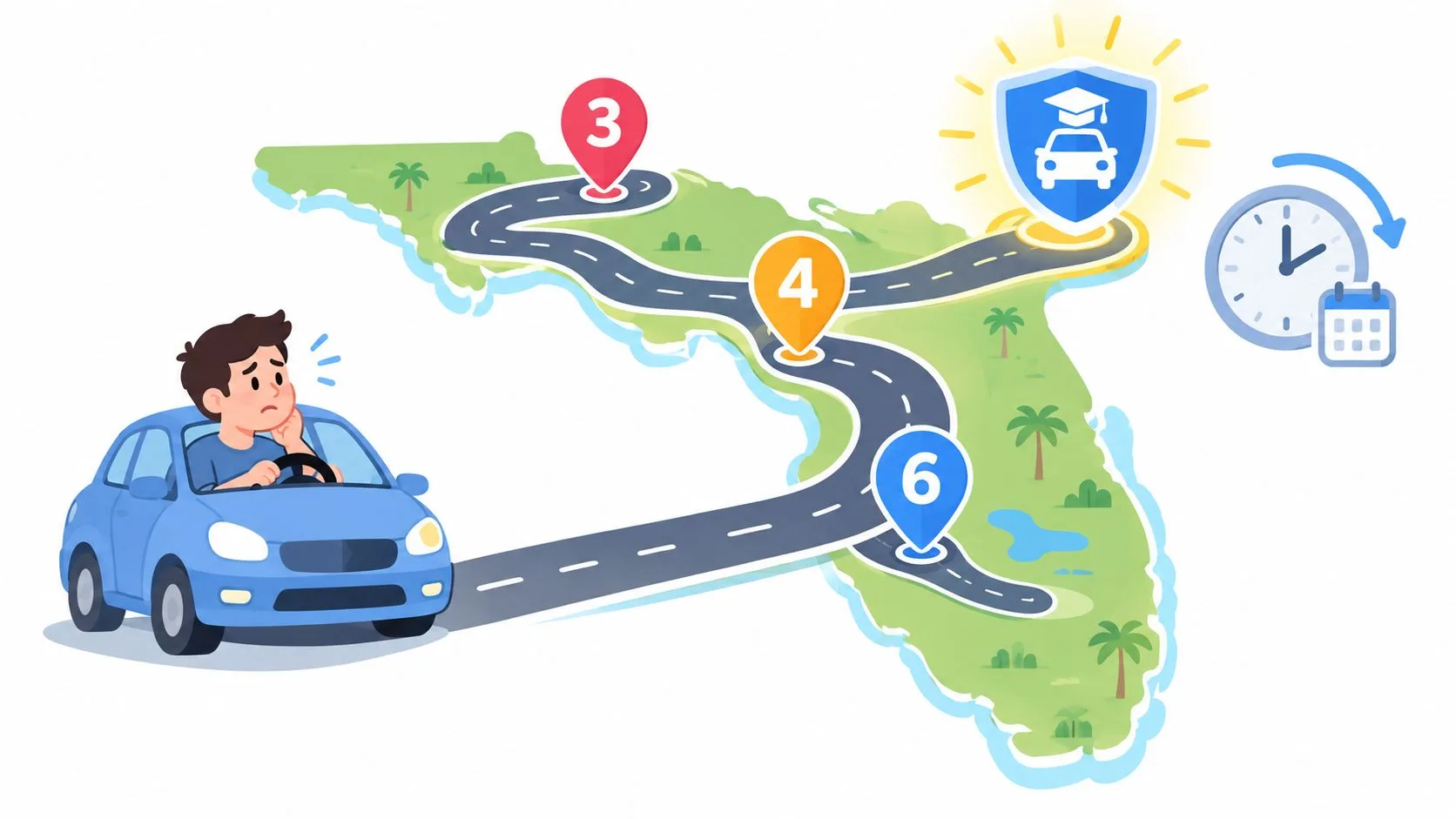
This guide keeps it simple. Check if you’re eligible. Elect the right option with the clerk. Choose a Florida-approved school. Finish the course. Submit what the court needs. Then confirm the case is closed.
The ‘I Got a Florida Ticket, Now What?’ Moment
The first mistake people make is treating the ticket like a bill they should just pay and forget. In Florida, paying a moving violation without thinking it through can be the expensive choice. If you’re eligible, electing traffic school can turn a frustrating ticket into a manageable task.
A lot of drivers hear “traffic school” and think punishment. I don’t. I think strategy. If your ticket qualifies, using a defensive driving course for ticket dismissal is often the smartest move because it gives you a way to deal with the citation without letting it follow you around on your driving record in the usual way.
What you should do first
Before you enroll anywhere, pull out the citation and look at the deadline and county. Then check the court’s instructions for electing traffic school. If you want a quick breakdown of the option itself, this Florida traffic ticket guide is a useful starting point.
Then keep your focus on these immediate actions:
- Read the violation carefully: You need to know whether it’s the kind of moving violation that can be handled through traffic school.
- Check the response deadline: Missing that date creates bigger problems than the ticket itself.
- Decide before paying blindly: The way you respond matters. Don’t assume every payment choice leads to the same outcome.
A Florida ticket feels urgent because it is. But it’s usually still fixable if you act before the deadline instead of after it.
Stop doing these three things
Drivers waste time when they:
- Enroll before confirming eligibility
- Choose a random online course without checking approval
- Assume the certificate will somehow “automatically” solve the court case
That last one causes more trouble than it should. A course can help, but only when you use the proper Florida process. Handle it step by step and this becomes a solved problem, not a lingering one.
First Step Confirming Your Eligibility to Dismiss the Ticket
Before you spend a dollar or an hour on coursework, find out if Florida will let you use the traffic school option. This is the checkpoint that matters most. If you skip it, you can end up paying for a course that doesn’t help your case.
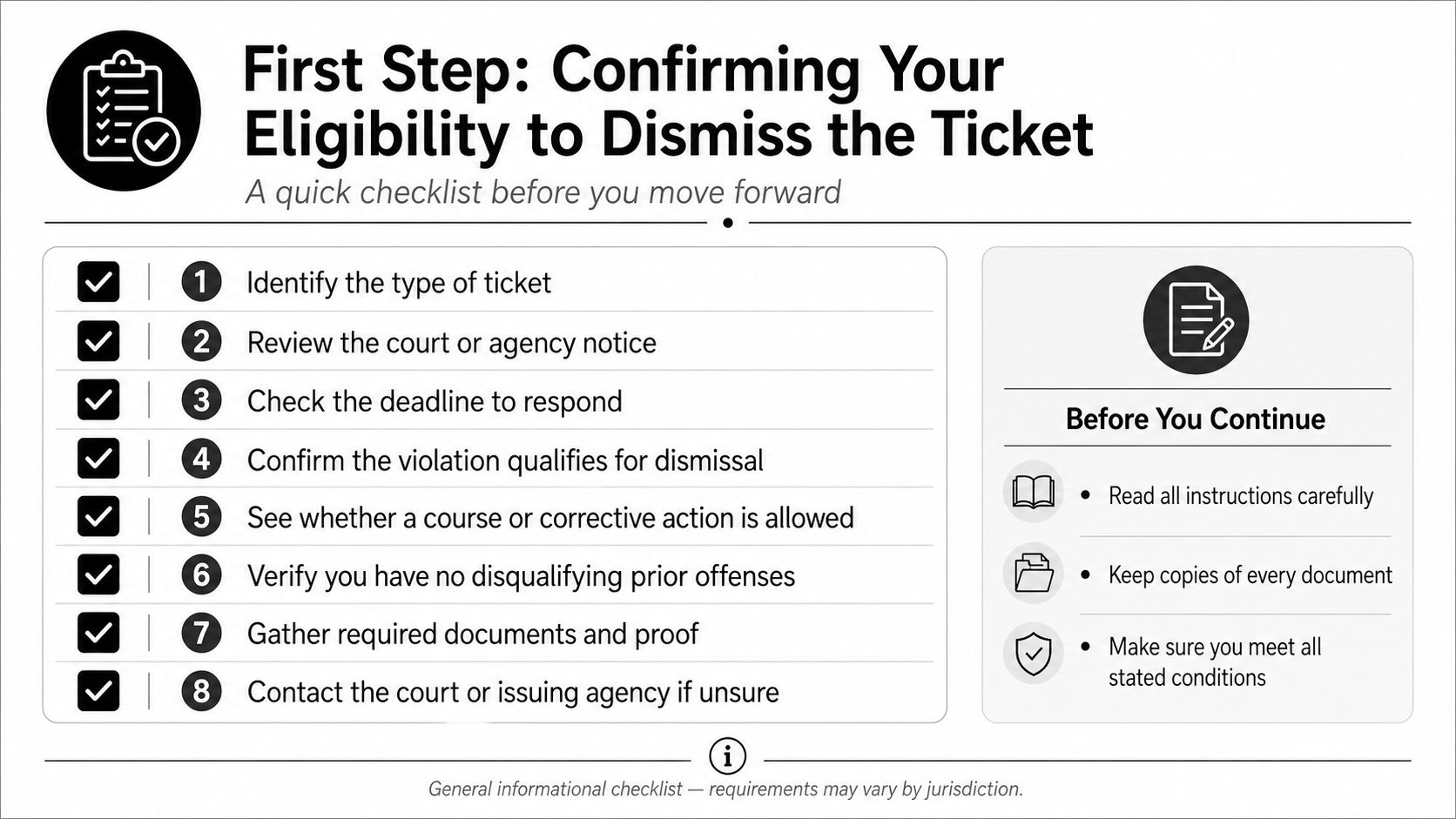
For most drivers, the question is simple. Is this an eligible moving violation, and are you still allowed to use the election?
The quick Florida eligibility screen
Start with this checklist:
- Your ticket is for a non-criminal moving violation: If the citation involves something more serious, traffic school may not be your path.
- You do not hold a commercial driver license: CDL issues are treated differently.
- You are electing the option on time: Waiting too long can shut the door.
- You have not already used your election too recently: Many drivers get tripped up by this specific limitation.
- You’re following the clerk’s instructions for your county: Florida process is statewide in principle, but clerks still control how your case gets handled procedurally.
If you need a course after confirming you qualify, this Florida traffic ticket class page shows the type of course drivers usually look for.
The 12-month window is not something to waste
One of the most overlooked parts of this whole process is timing. As noted by FLHSMV on eligibility window, this 12-month eligibility window in Florida is a finite resource. That matters a lot more than most drivers realize.
Here’s my blunt advice. Don’t think about traffic school as a magic button you can press every time you get cited. Think of it as a limited-use tool. If you drive a lot for work, have a long commute, or already know your record isn’t spotless, using that election now may affect what options you have later.
Practical rule: If you’ve taken traffic school before, stop and confirm the date before you do anything else.
Questions to ask yourself before electing
This is the part generic guides usually skip. Ask yourself:
- Was your last ticket recent? If yes, verify whether your election window is still available.
- Do you drive for work every day? Then preserving future flexibility matters.
- Are you already worried about points stacking up? If so, don’t guess about eligibility. Confirm it directly with the clerk.
Some drivers have multiple citations over time and burn their election on the least important one. That’s bad planning. If you’re inside the window and still eligible, great. Use it carefully and use it correctly. If you’re not eligible, don’t enroll anyway hoping the court will overlook it. Courts don’t reward wishful thinking.
Choosing the Right Florida-Approved Driving Course
Once you know you’re eligible, the next decision is simple in theory and messy in practice. You need the right course, not just any course that says “traffic school” on the homepage.
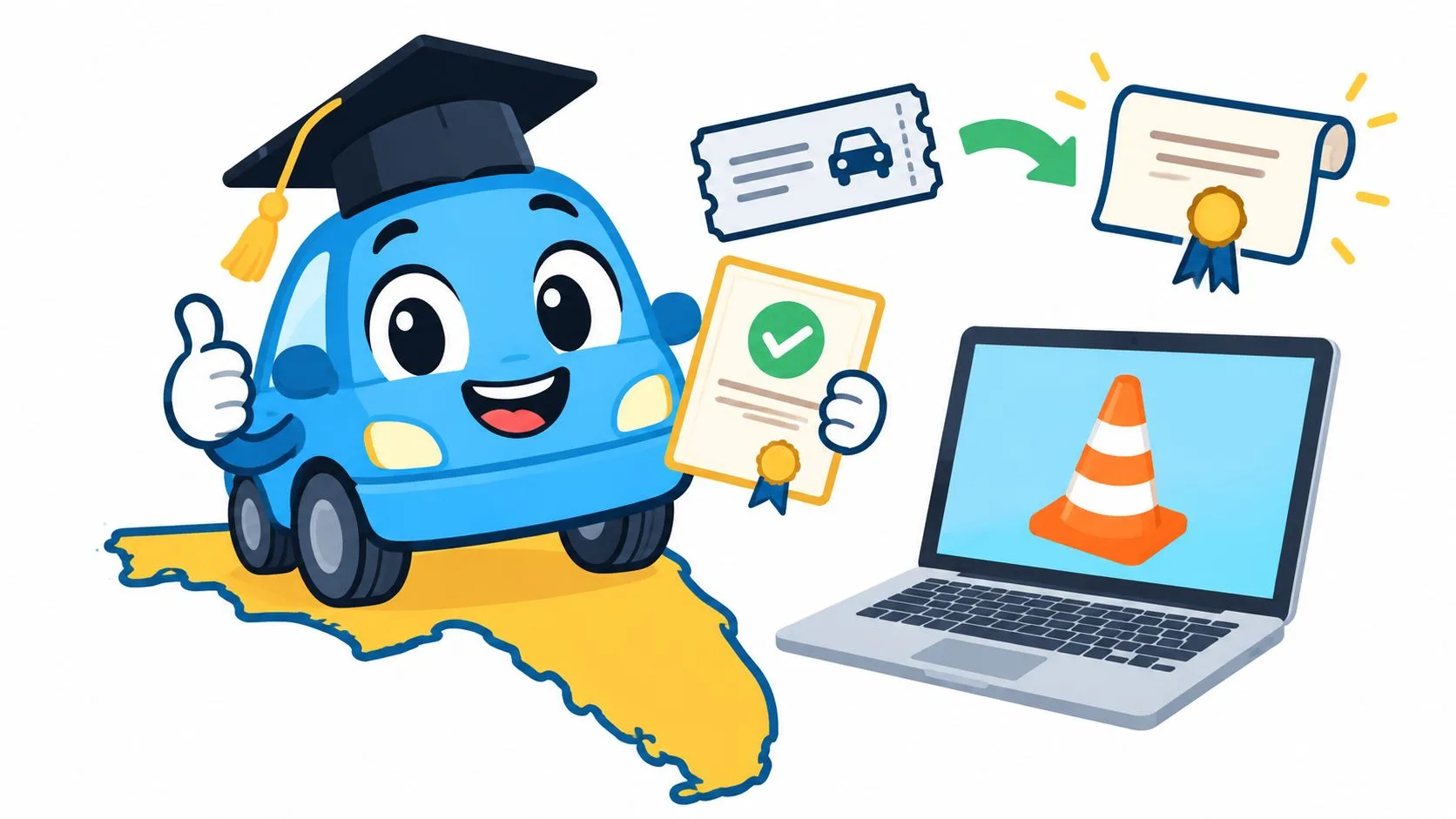
In Florida, the biggest divide is between the standard 4-hour Basic Driver Improvement (BDI) course and the 8-hour Intermediate Driver Improvement (IDI) course. Drivers mix these up all the time. Taking the wrong one can cost you time and leave your ticket unresolved.
The approval issue matters more than price or design
The single most important filter is state approval. According to DriverEducators’ summary of traffic school certification rules, Florida requires traffic schools to obtain FLHSMV certification to operate legally, and drivers need to verify current state approval because a non-compliant provider offers zero legal standing for ticket dismissal.
That means this is not the time to shop based on flashy ads, vague promises, or a suspiciously polished landing page. If the course isn’t Florida-approved, it doesn’t matter how cheap or convenient it looks.
If the provider cannot clearly show Florida approval, move on.
BDI vs IDI at a glance
| Feature | 4-Hour BDI Course | 8-Hour IDI Course |
|---|---|---|
| Typical use | Voluntary election for an eligible traffic ticket | Usually required when the court orders a longer course |
| Who usually takes it | Drivers trying to avoid the standard consequences of a qualifying moving violation | Drivers with a court order or a more serious compliance requirement |
| Main question to ask | “Am I electing traffic school for this ticket?” | “Did the court specifically order an 8-hour course?” |
| Risk if you choose wrong | You may finish a course the court didn’t require | You spend more time than necessary or still fail to satisfy the case |
How to pick without overthinking it
Use this decision logic:
- If you are voluntarily electing traffic school for a regular qualifying ticket: You’re usually looking at the 4-hour BDI course.
- If your court paperwork specifically says 8-hour IDI: Follow the order exactly.
- If you’re unsure: Contact the clerk before enrolling. Don’t let a course provider guess for you.
One example of a provider in this space is Florida-approved online traffic school options, which includes online state-approved courses such as BDI and IDI. That’s the kind of distinction you want to see clearly spelled out before you sign up.
What a good provider should make obvious
A provider doesn’t need fancy marketing to be useful. It needs to answer these questions clearly:
- Is it currently Florida-approved?
- Is this BDI or IDI?
- Is the course fully online and self-paced?
- Will you receive a completion certificate promptly?
- Is the material available in the language you need?
If the website makes you hunt for basic compliance details, that’s a bad sign. Good providers make the legal essentials easy to verify because that’s what drivers need.
Navigating Enrollment and Course Completion
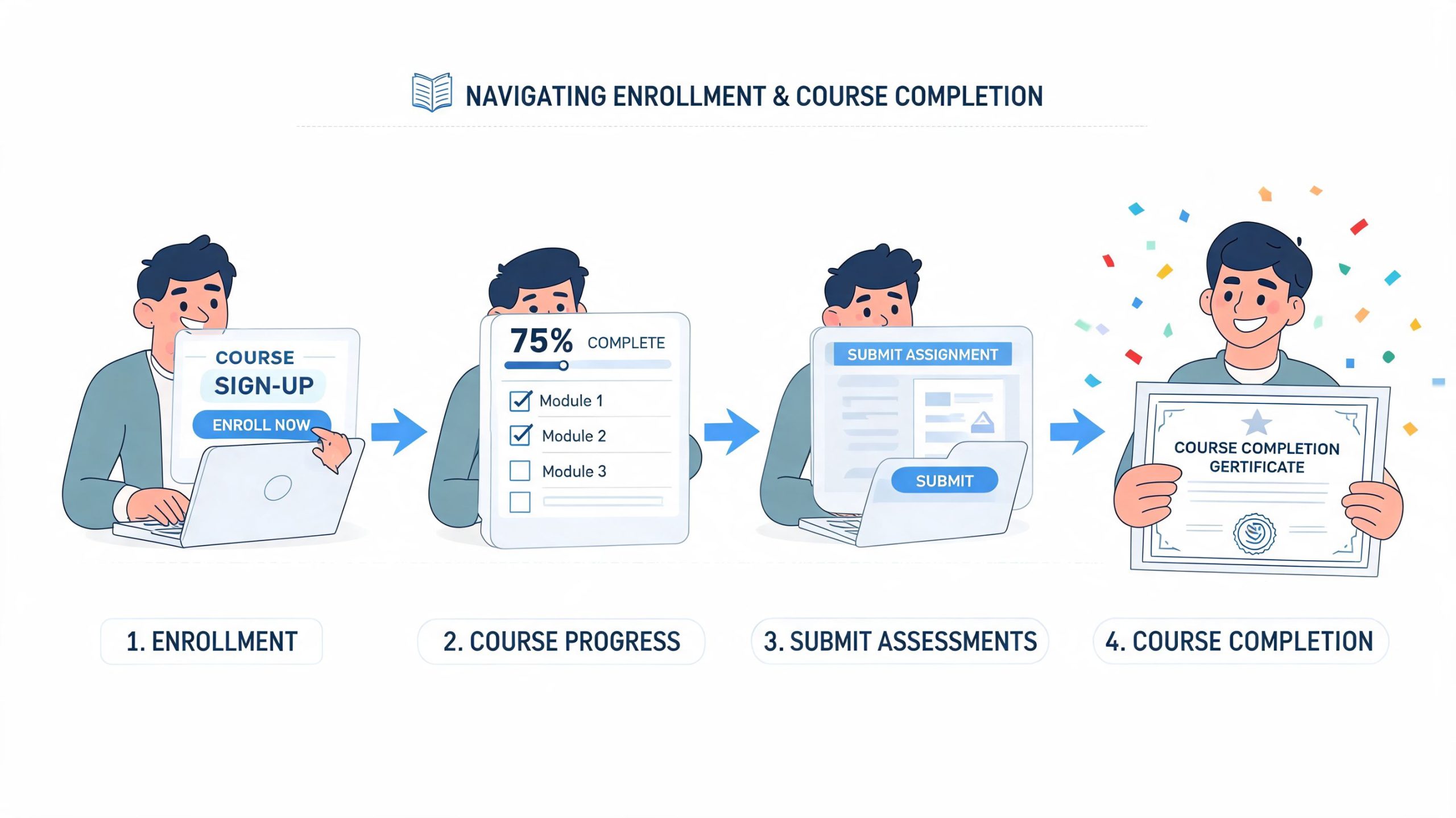
This part should be straightforward, but people make it harder than it needs to be. The cleanest process is to handle the court side first, then the school side, then the completion paperwork. Keep that order and you’ll avoid most problems.
Handle the clerk first, not last
Before you sit through a minute of coursework, make your election with the clerk and pay whatever the court requires for that choice. Drivers often do this backward. They enroll first because it feels productive. Then they learn they never properly elected the option in the case.
That’s avoidable. Your school can provide the course. The court controls whether the course counts for your citation.
Use this order:
- Review the ticket deadline
- Notify the clerk that you are electing traffic school if eligible
- Pay the required court amount tied to that election
- Enroll in the correct Florida-approved course
- Complete the course before the court deadline
- Submit what your county requires and confirm the case is closed
What the online course experience usually looks like
Modern online traffic school is built for normal working adults. You log in, move through modules, answer questions, and complete the required material at your own pace. It isn’t hard, but it does require attention.
Defensive driving courses, standardized 4-hour and 8-hour courses are linked to measurable safety outcomes. Recent research reports collision rates can improve by up to 10%, and separate research found an 11.1% improvement in violation reduction after defensive education. That matters because the course is not just bureaucratic filler. Done properly, it reinforces safer driving habits.
How to finish without dragging it out
Individuals don’t fail because the material is too difficult. They fail because they treat the course casually and let the deadline creep up.
Use these habits instead:
- Block real time on your calendar: Don’t assume you’ll “fit it in later.”
- Use a stable device and connection: Technical interruptions are annoying, even when the course saves progress.
- Read carefully instead of clicking fast: Rushing usually creates repeat work.
- Finish early if possible: Leaving the course until the final day is reckless.
Give yourself a cushion. A completed course on the last possible day still feels stressful, and any submission issue becomes your problem.
If you’re wondering what happens after you finish, Florida online driving certificate details can help you understand the certificate side of the process. The important point is this: finishing the course is a milestone, not the final step.
Submitting Your Certificate and Finalizing Dismissal
Drivers lose easy cases when they complete the course, feel relieved, and assume the matter is over. It isn’t over until the court has what it needs and your case reflects completion.
The key distinction is simple. A school’s reporting obligations and your court obligations are not the same thing.
What the school does and what you still must do
Traffic schools often report completion information to the state system. That helps with compliance. But your county court may still require you to submit the certificate or ensure it reaches the clerk through the approved method for that case.
That means you need to verify two separate things:
- The course was completed successfully
- The court received what it requires before the deadline
Don’t blur those together. A driver can finish the course and still have a mess on their hands if the clerk never gets proper proof.
The safest way to handle submission
Use the method your county accepts. That may be an online portal, mail, email, or in-person filing. The exact method varies, which is why reading the county instructions matters.
Here’s the practical approach:
- Download or save your certificate immediately
- Submit it using the clerk’s approved channel
- Keep proof of submission
- Check the case status afterward
If the county has an online case lookup, use it. If not, call the clerk and confirm the file shows completion. Don’t stop at “I sent it.” You want “the clerk has it and the case is updated.”
Common errors that cause preventable trouble
These are the mistakes I see most often:
- Waiting until the deadline day to upload or mail the certificate
- Sending the certificate to the school instead of the clerk
- Assuming FLHSMV reporting means the court case is automatically closed
- Failing to keep a copy for your own records
Completion alone doesn’t close the loop. Confirmation closes the loop.
If your case status still looks open after submission, act fast. Contact the clerk, provide your proof, and get a clear answer on what’s missing. Don’t let a simple paperwork issue turn into a missed compliance deadline.
The Aftermath Your Points, Insurance, and Driving Record
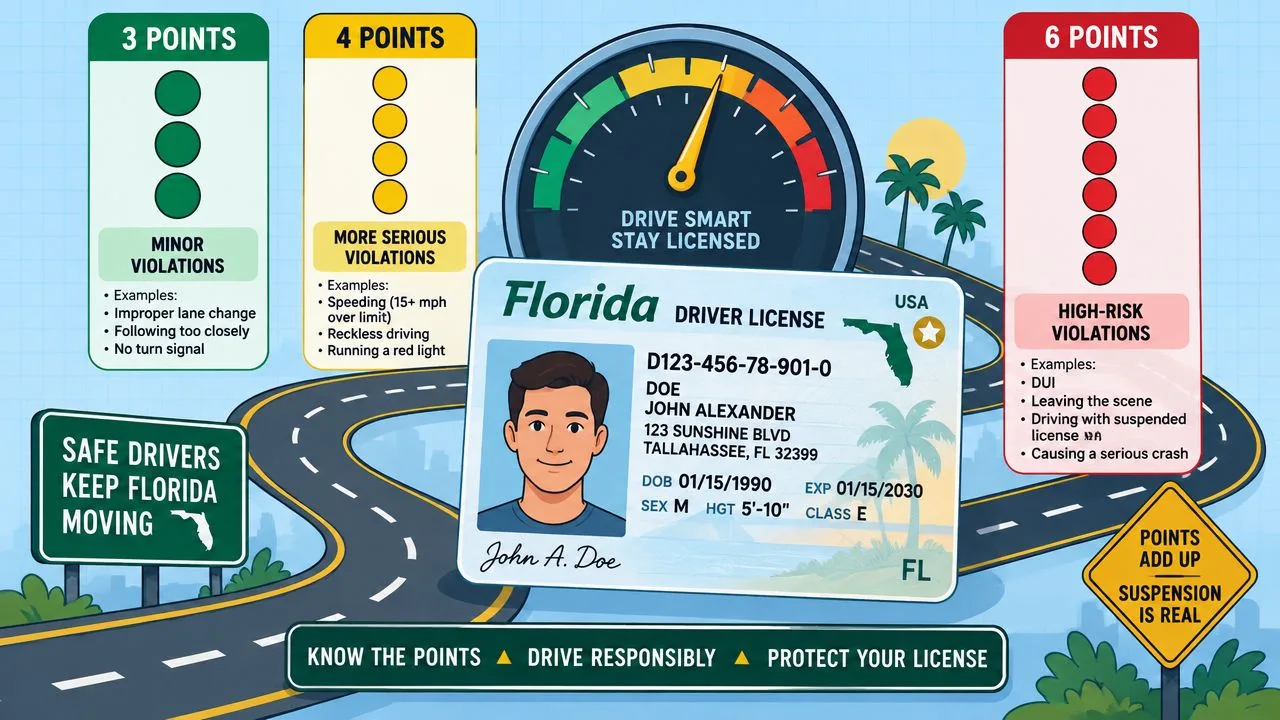
When you complete the process correctly, the payoff becomes evident. You’ve taken a citation that could have followed you around and turned it into a contained issue.
The biggest practical benefit is record protection. Drivers usually care about this for two reasons. They want to avoid points, and they want to avoid insurance consequences that can outlast the memory of the ticket itself.
Why the process is worth doing right
A properly handled election can help keep a qualifying ticket from becoming the kind of record problem that creates downstream costs. That’s why I’m so strict about not skipping steps. The value isn’t in “taking a class.” The value is in the legal outcome tied to taking the right class and filing the right paperwork on time.
If you blow the deadline or choose the wrong course, you lose that benefit. Then you’re back to dealing with the citation the hard way.
Don’t assume the insurance discount is automatic
A lot of drivers hear that defensive driving can lead to an insurance discount and stop there. That’s lazy planning. As explained by Progressive’s defensive driving discount guidance, discount eligibility and the amount vary by insurer and state, and drivers should contact their insurance agent before enrolling to verify whether the specific certificate is accepted and what discount applies.
That’s the move I recommend every time. Call before you sign up, not after you finish.
Ask your insurer:
- Do you accept a Florida defensive driving or traffic school certificate for a discount?
- Does my age affect eligibility?
- Does this have to be a specific type of approved course?
- How do I submit proof of completion?
What smart drivers keep after completion
Once your case is closed, keep a simple file with:
- Your certificate
- Proof you submitted it
- Any confirmation from the clerk
- Any communication from your insurer about discount eligibility
That file saves you time later if a record question pops up.
The other reason this matters is strategic. If Florida’s election window is limited, you want a clean memory of when you used it. Drivers who can’t remember when they last elected traffic school often create their own confusion on the next ticket.
Florida Defensive Driving Course FAQs
What if I missed the court deadline
Act immediately and contact the clerk in the county where the ticket was issued. Don’t enroll in a course first and hope it smooths things over. Once the deadline passes, your options usually get narrower, and the court controls what happens next. You need current instructions from the clerk, not guesses from the internet.
What if I fail or can’t finish the course right away
Don’t panic. Start by logging back in and checking what the provider allows for retakes, module access, and progress. Then compare that with your court deadline. The danger usually isn’t the course itself. It’s running out of time while assuming you’ll sort it out later.
How do I verify a school is legitimate in Florida
Look for current Florida approval and don’t settle for vague wording. If a provider talks around the issue instead of stating approval clearly, that’s enough reason to walk away. You want a school that is explicit about FLHSMV approval, course type, and certificate process. Anything less is an unnecessary risk.
Can I use an out-of-state course for a Florida ticket
Don’t assume you can. Florida cases should be handled with a course that satisfies Florida’s requirements. A course accepted elsewhere may not help you here. If you got the ticket in Florida, use a Florida-approved option unless the court gives you different written instructions.
Do I need the 4-hour course or the 8-hour course
Most drivers electing traffic school for a regular qualifying ticket are looking at the 4-hour BDI course. The 8-hour IDI course is commonly tied to a court order. If your paperwork doesn’t make that obvious, ask the clerk before enrolling.
Does finishing the course automatically close my case
No. Finishing the course is only part of the job. You still need to make sure the court gets what it requires and that the case reflects completion. Always confirm the final status.
If you need a Florida-approved online option, BDISchool offers courses for drivers handling ticket-related requirements, including BDI and IDI formats, with online access and electronic certificate delivery. If you’re dealing with a fresh ticket, the smartest move is to confirm your eligibility first, elect traffic school with the clerk on time, and then choose the exact course your case requires.