You're in the left lane, traffic's moving, and the car behind you starts flashing its high beams. You speed up a little. The driver behind you gets closer, and now you're both reacting to each other instead of the road.
That's how most trouble starts. Road rage rarely begins with a crash or a confrontation, because it usually begins with small, deliberate signs that you can learn to spot early.
The scale will probably surprise you. In 2025, 96% of U.S. drivers reported engaging in at least one aggressive-driving or road-rage behavior during the previous year, according to the AAA Foundation for Traffic Safety research page. That doesn't mean nearly everyone is violent, but it does mean these habits are common enough to become normal if you don't catch them.
Aggressive driving means operating a vehicle in a way that endangers people or property. Road rage is the extreme end of that pattern, where anger turns into intimidation or even criminal conduct.
Each sign below comes with a safe response for the moment and a habit that stops it starting. If frustration builds before you even turn the key, problem-solving strategies for everyday frustrations can help you reset, though they won't replace the in-car decisions that follow.
Spot the sign. Create space. Don't compete.
1. Tailgating and Following Too Closely
Tailgating means following so closely that you can't stop safely if the vehicle ahead brakes. It's one of the clearest signs of road rage because drivers often use closeness as pressure, not as an accident.
You can see the difference between a tight gap in slow traffic and deliberate following below.
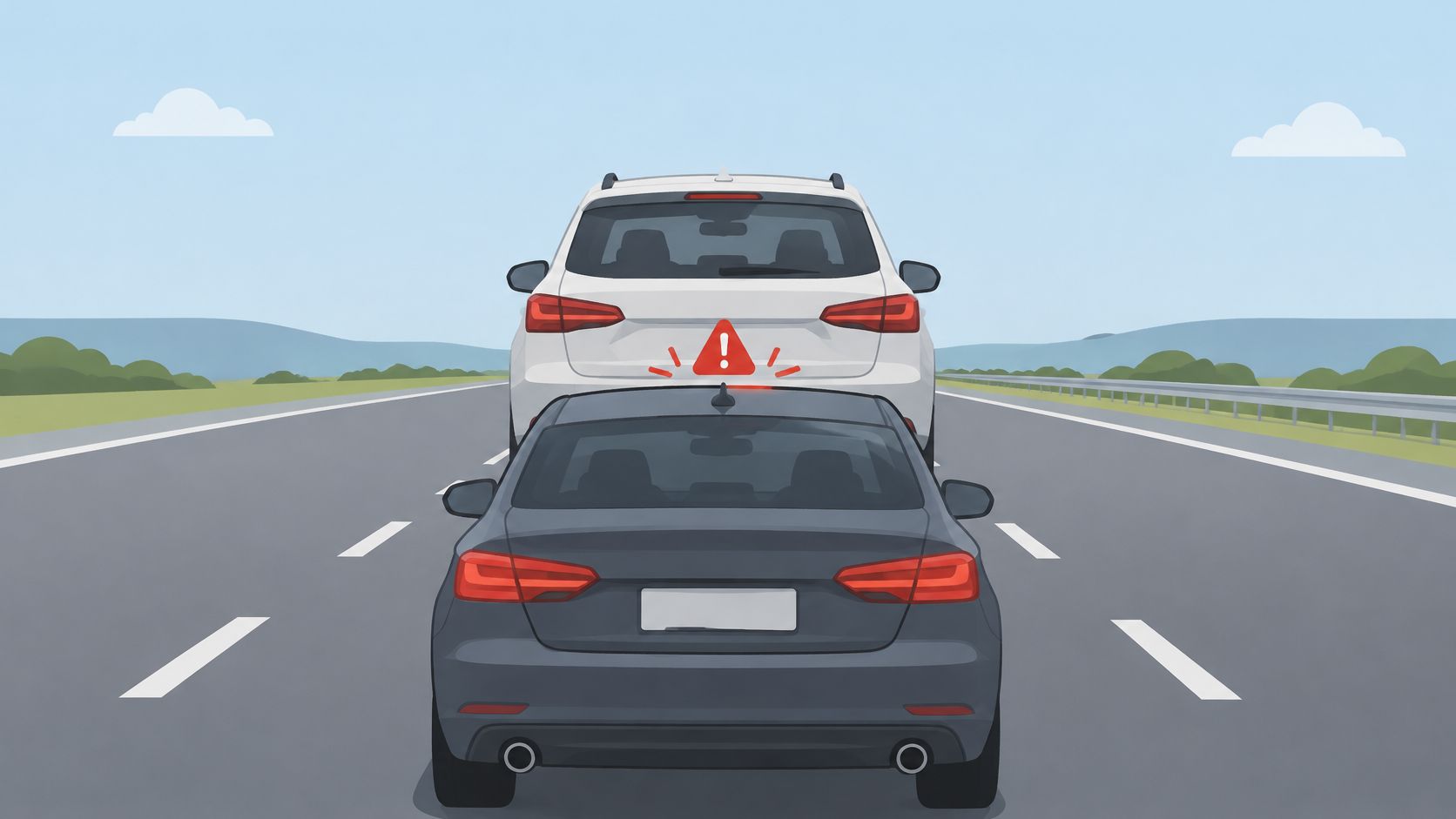
In a nationally representative survey of 2,705 licensed drivers, 50.8% reported purposeful tailgating in the previous year, according to the AAA Foundation prevalence fact sheet. That's intent, and intent is what makes it dangerous.
Say a driver follows a slower car at one car length in the left lane, trying to force it right. The lead driver taps the brakes, traffic compresses, and nobody behind has time to react. The same thing happens after a lane change dispute when a driver stays glued to a bumper to make a point.
What works in the moment
Keep at least a three-second gap in normal conditions, and add time in rain or at night. Our guide to safe following distance shows how to count that gap against a fixed roadside object.
If someone tailgates you, move right when it's safe and let them pass. Don't brake suddenly to punish them, because you're trading a small win for a rear-end crash risk.
Watch how quickly a short gap disappears when the lead vehicle brakes.
The preventive habit is simple. Leave earlier and count your gap before you feel annoyed. If you want structured practice, compare the options in our online course catalogue and at Driver Educators courses, then pick the one that matches your citation or court requirement.
2. Rapid Lane Changes and Weaving
A car darts from the right lane to the left, squeezes back right, then cuts across two lanes for an exit. Every driver nearby brakes or swerves. That's weaving, and it means changing lanes frequently, often without signalling, to get ahead.
The image below shows the problem with a sudden swerve. Other drivers get no warning and no space to adjust.
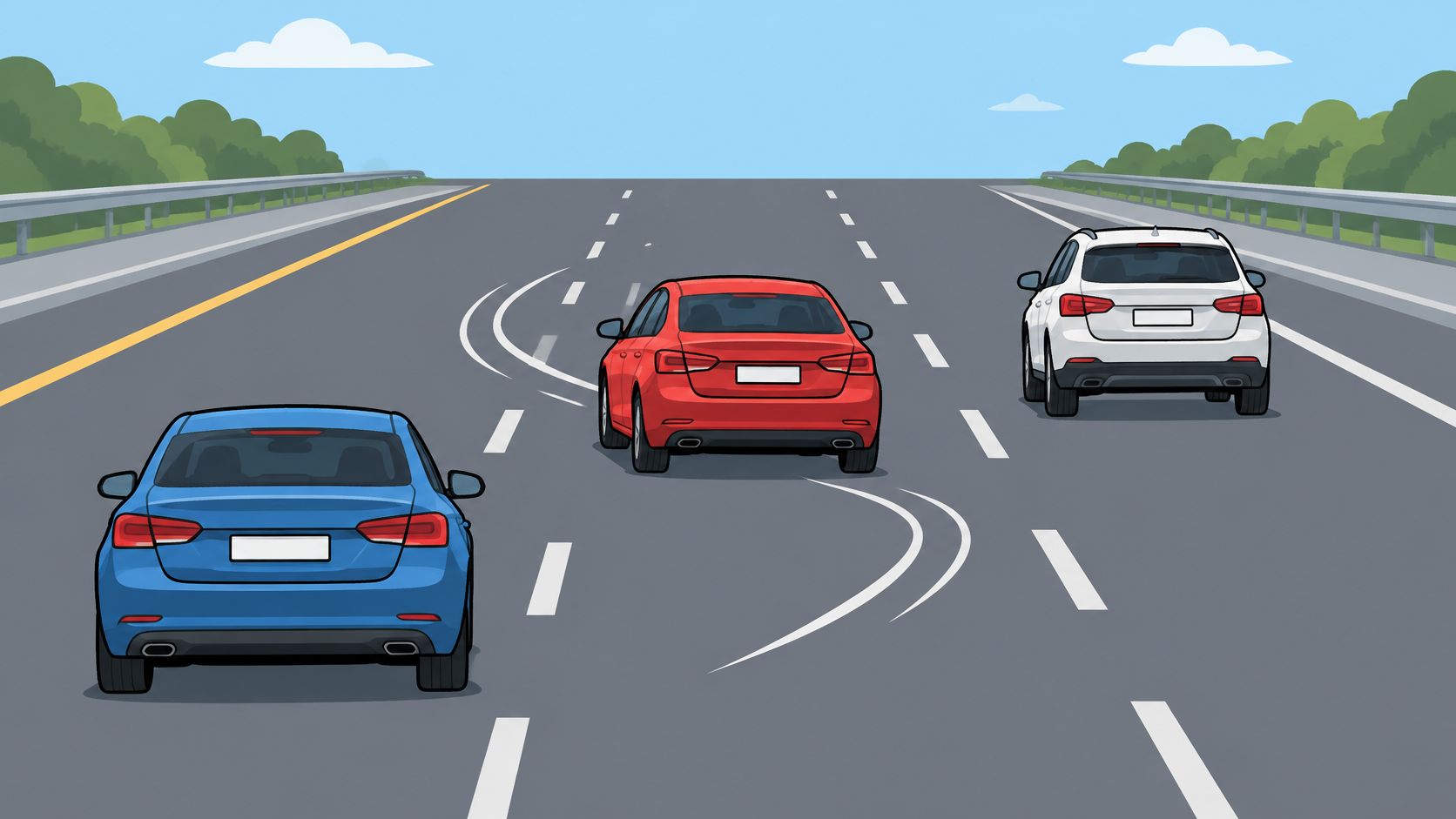
Florida treats combinations of these moves seriously. Under Florida Statute 316.1923, aggressive careless driving consists of committing two or more specified acts simultaneously or in succession, including unsafe or improper lane changes and following too closely. One careless move is a problem, while a pattern can meet the legal definition.
On a congested interstate, weaving rarely buys more than a few car lengths. You pay for that tiny gain with blind spot risks, hard braking behind you, and a much higher chance that another driver retaliates.
A calmer lane change routine
Signal early, check mirrors, glance over your shoulder, then move once into a clear gap. Our step by step guide on how to change lanes properly breaks that sequence down for highway and city driving.
- Signal before you steer: Give drivers behind you time to read your intention.
- Change one lane at a time: Settle, recheck your mirrors, then decide again.
- Stay put in heavy traffic: Frequent changes don't beat the flow by much.
If you're the driver being cut around, ease off the accelerator and rebuild your space. Don't chase or block the weaver. A Florida approved refresher through Driver Educators courses can help you replace rushed lane habits with a repeatable routine.
3. Excessive Horn Use and Flashing Headlights
Your horn is a warning device. It isn't a punishment button, and your high beams aren't a way to order another driver out of your path.
Excessive honking means using the horn to express anger or annoyance rather than to warn of danger. Repeated flashing does the same thing with light, and it can blind or distract the driver ahead at the exact moment they need to make a decision.
The habit is widespread. In an AAA survey of 2,714 licensed drivers aged 16 and older, 32% reported rude gestures or angry honking in the previous 30 days, according to the AAA aggressive driving summary.
This illustration captures the moment a horn stops being information and becomes a challenge.
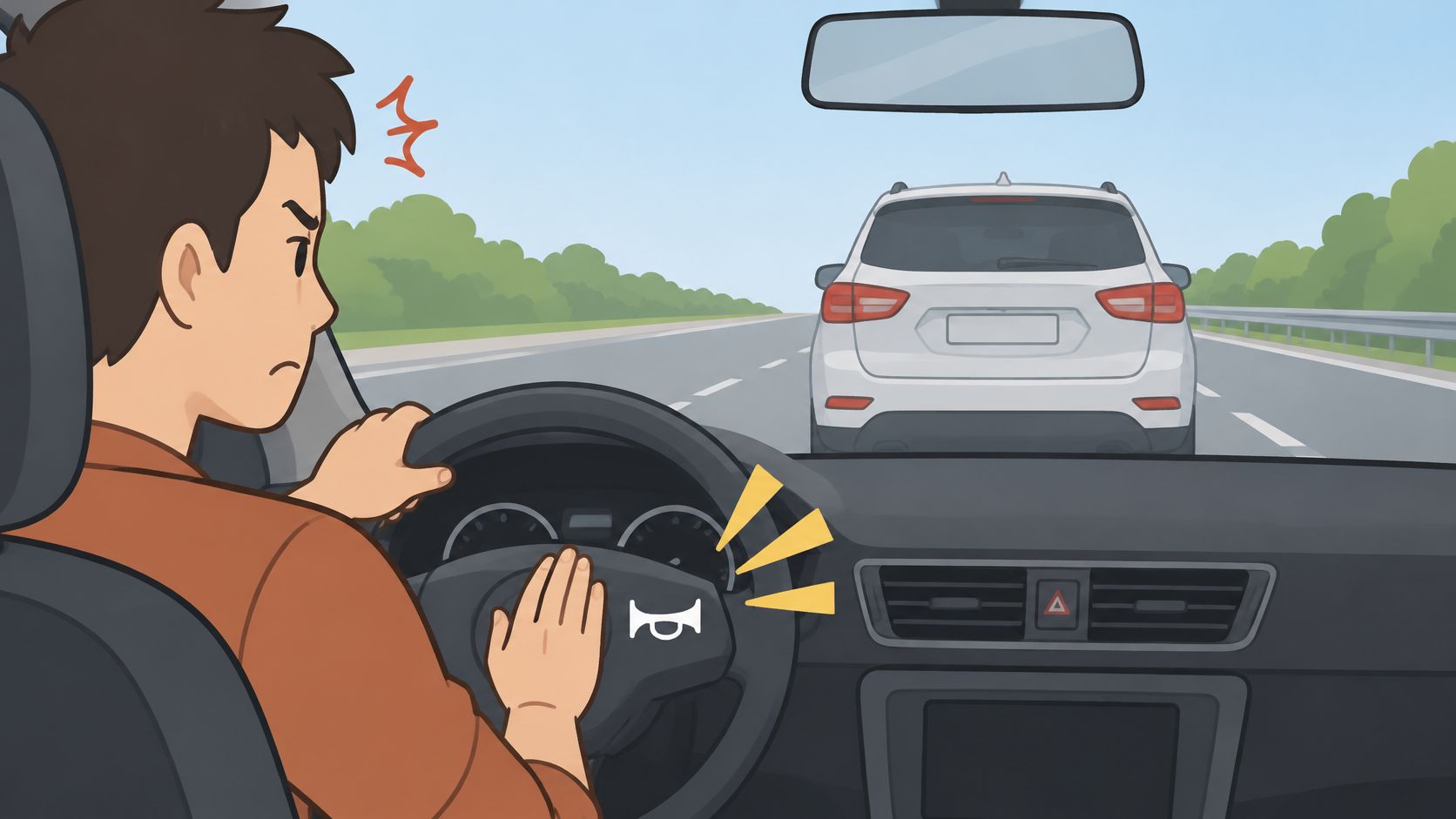
Say a driver leans on the horn because the car ahead waited a moment at a green light. The startled driver rushes into the intersection without checking properly. Or say a driver flashes high beams repeatedly at a slower car in the passing lane until it moves over, while traffic behind bunches up.
Use signals that inform, not signals that provoke
Give one short tap only when another road user may not see danger. If someone honks at you, check your surroundings, correct any real hazard, and don't answer with your own horn.
Practical rule: If you're honking after the danger has passed, you're arguing, not warning.
Dim your headlights when another car is close and keep your eyes on your lane position. Building that restraint is part of defensive driving, and you can work on it in a BDI course through our online courses.
4. Speeding Up to Block or Prevent Passing
Another car signals and starts to pass. Instead of holding speed, the driver being passed accelerates and turns a routine pass into a race.
Blocking means deliberately preventing another vehicle from passing, merging, or changing lanes. It's an attempt to control someone else's driving, and it raises speed while shrinking reaction time for everyone nearby.
This isn't rare. Approximately one-quarter of drivers said they had purposely blocked another driver from changing lanes, according to figures reported in a National Highway Traffic Safety Administration document on aggressive driving.
Say you're on a two-lane road and a faster car moves out to pass. If the lead driver speeds up, the passing driver is trapped in the opposing lane longer than planned. On an interstate ramp, racing a merging car and closing the gap can force that driver onto the shoulder or into hard braking.
Let the pass happen
Hold a steady speed and let faster drivers go when it's safe to move over. Our guide to speed management explains how steady pacing protects your stopping distance and keeps traffic predictable.
- Don't compete for position: A lane isn't a prize you have to defend.
- Ease off if needed: A small lift off the accelerator opens a merge gap quickly.
- Pull over if you're rattled: A short stop beats an escalating contest at speed.
If you notice yourself accelerating to teach other drivers a lesson, I recommend behaviour change training rather than willpower alone. The Aggressive Driver Course listed in our course catalogue is built for exactly that pattern.
5. Brake Checking
Brake checking means braking suddenly to punish or scare a driver behind you. It's deliberate, and it's one of the fastest ways to turn tailgating into a rear-end collision.
A driver tailgates for several miles on a highway. The lead driver finally slams the brakes to send a message, and the following car can't stop in time. Another common version happens in traffic after a close pass, where a driver brakes hard for revenge and triggers a chain reaction.
The close following in this image shows why a sudden brake leaves no margin for error.
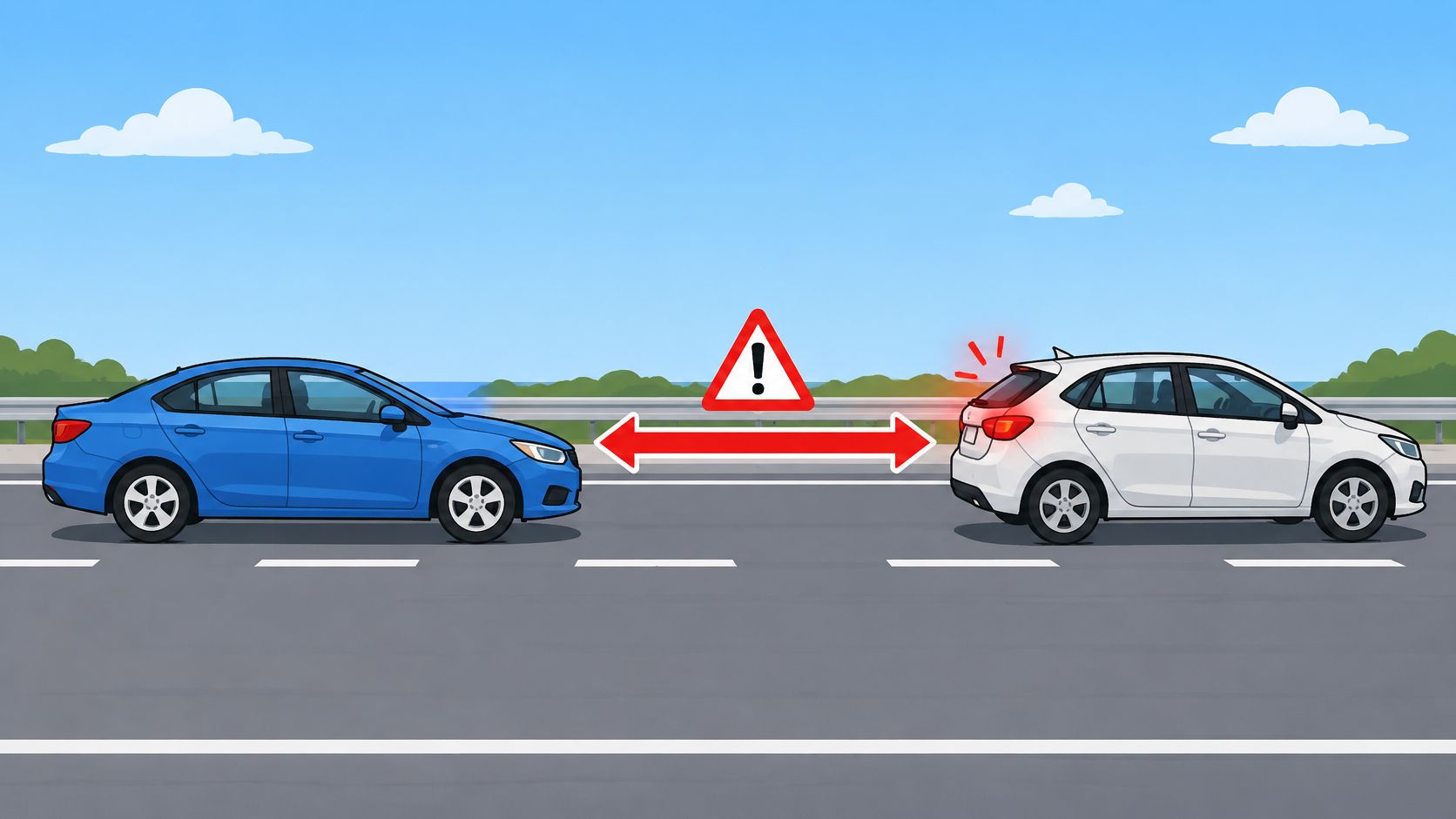
Florida law draws a hard line at deliberate danger. Florida Statute 316.192 defines reckless driving through willful or wanton disregard for the safety of people or property. Using your brakes as a weapon fits the kind of deliberate disregard that legal standard is aimed at.
If you're tempted to brake check
Don't. Increase your gap to the vehicle ahead instead, so you can brake gently if traffic slows. That extra space protects you from the tailgater behind and the traffic in front at the same time.
Braking to punish someone gives the most dangerous driver on the road control over your next move.
Change lanes when it's safe and let the tailgater pass. If the behaviour continues and there's an immediate danger, report it to local law enforcement from a safe place. The preventive habit is leaving space early, before irritation builds into retaliation.
6. Verbal Aggression and Obscene Gestures
Shouting through a window, cursing at another driver, or making an obscene gesture doesn't move traffic. It does invite a response, and that response is where risk climbs.
Verbal aggression means hostile communication aimed at another road user. It distracts the person doing it, startles the person receiving it, and often pulls both drivers into chasing, stopping, or arguing.
AAA researchers group these behaviours into themes drivers view as aggressive, including expressing displeasure, provoking a reaction, and attempting to control another driver's behaviour, according to the AAA Foundation aggressive driving report summary. A gesture sits early in that chain, but it can push an encounter toward control or violence.
Say a driver cuts you off and you shout and gesture at the next light. That driver shouts back, follows you through the intersection, and a two-second error becomes a moving confrontation. Yelling at a pedestrian who crosses in front of your car carries the same problem, because your attention leaves the crossing.
Don't feed the exchange
Keep your windows up and doors locked if you feel threatened. Avoid eye contact, don't gesture back, and drive away from the situation when you can.
Our guide on how to handle road rage gives you a disengagement sequence for exactly these moments. Use it before you need it, so the steps feel automatic under stress.
If shouting has become your default response, practise a neutral script instead. Name the action, not the person, then refocus on your gap and mirrors. Anger management and defensive driving practice through Driver Educators courses can help you make that script stick.
7. Ignoring Right-of-Way and Cutting Off Other Drivers
Right-of-way means the legal priority to proceed before another vehicle or pedestrian at an intersection, merge, or crossing. Ignoring it means forcing your way through when someone else should go first.
Cutting off means moving into another driver's path so closely that they must brake or swerve. Drivers do it to get ahead or show dominance, especially at merges and yield signs.
The behaviour is measurable. In the AAA Foundation 2014 prevalence study, 11.9% of drivers reported intentionally cutting off another vehicle in the previous year. Intentional is the key word, because that manoeuvre can trigger braking, swerving, or retaliatory pursuit.
Say a driver forces into a merge lane and makes the car beside them brake sharply. Or a driver runs a yield sign to beat another car through an intersection. Both drivers now arrive at the same space at the same time, and courtesy is no longer the issue. Physics is.
Yield early and merge with space
Yield when another vehicle or pedestrian has the right-of-way, even if you think you could squeeze through. Leave a clear gap when merging and accept that a few seconds of waiting are cheaper than a collision and the strategies for injury claim compensation that can follow one.
- Approach merges at traffic speed: Match the flow instead of forcing a gap.
- Make eye contact with pedestrians: Confirm they've seen you before proceeding.
- Give up a contested gap: Arriving second is not arriving late.
If right-of-way rules feel fuzzy, review them properly. Florida approved options in our course catalogue cover intersections, merges, and pedestrian priority with real scenarios.
8. Pursuing or Confronting Other Drivers
Following another driver after a dispute, blocking their car, or getting out to argue is the most serious sign on this list. At this point aggressive driving stops being a traffic problem and becomes a personal safety emergency.
Pursuit means following a vehicle to intimidate its occupants or force a confrontation. It can lead to assault, vehicle damage, or a fatal crash, and it removes the safe option of letting the moment end.
Recent AAA findings reported by the Colorado Department of Transportation found that 11% of surveyed drivers admitted violent actions such as intentionally bumping another vehicle or confronting another driver. That minority carries a disproportionate share of the danger.
Say a driver follows another car for several miles after an argument and tries to force it to stop. Or a driver gets out at a red light because someone honked. In both cases, nobody is solving the original traffic problem anymore.
Treat pursuit as an emergency
If you're being followed, don't drive home. Head for a police station or a busy public place, stay in your car with the doors locked, and call 911 if there's an immediate threat.
- Don't get out to argue: Your locked car is protection.
- Don't retaliate or make eye contact: Disengagement denies the confrontation oxygen.
- Create distance first: Change route toward people and light, not isolation.
If you recognise pursuit or confrontation in your own driving, get help now rather than after a citation or crash. Our Aggressive Driver Course, available through the course catalogue, focuses on responsibility and behaviour change for high risk patterns like these.
How Each Road Rage Sign Compares by Trigger, Danger, and Safest Response
| Behavior | Common Trigger | Main Danger | Safest Response |
|---|---|---|---|
| Tailgating and Following Too Closely | Pressure to make the vehicle ahead move over | Rear-end crash from too little stopping distance | Let the driver pass when safe; do not brake suddenly |
| Rapid Lane Changes and Weaving | Trying to get ahead in traffic | Sudden braking, swerving, or collisions | Signal, check mirrors and blind spots, and stay in lane when traffic is heavy |
| Excessive Horn Use and Flashing Headlights | Frustration with another driver | Escalating conflict and distracting drivers | Use the horn only to warn of danger; do not retaliate |
| Speeding Up to Block or Prevent Passing | Another driver attempts to pass | Higher speeds and reduced reaction time | Maintain a steady speed and let the driver pass when safe |
| Brake Checking | Tailgating or a lane dispute | Rear-end collisions and pileups | Avoid retaliation; create distance and let the other driver pass when safe |
| Verbal Aggression and Obscene Gestures | A minor traffic conflict | Distraction and further confrontation | Ignore the provocation, keep distance, and drive away |
| Ignoring Right-of-Way and Cutting Off Other Drivers | Rushing or trying to get ahead | Collision with vehicles or pedestrians | Yield when required and merge only when there is enough space |
| Pursuing or Confronting Other Drivers | A road dispute or perceived slight | Assault, vehicle damage, or fatal crash | Do not confront; go to a police station or busy public place and call 911 if threatened |
Replace Road Rage Habits With a Calmer Way to Drive
Spotting these eight signs is the first step. Changing the habit underneath them is the step that actually protects your licence, your insurance costs, and the people in the car with you.
You're not imagining that the roads feel angrier. In 2024, 27% of Americans said they saw drivers displaying road rage extremely or very often, while another 45% said they saw it sometimes, according to Pew Research Center. That constant exposure matters, because behaviour you see every day starts to feel acceptable.
Everyday habits feed the cycle too. In 2025, 82% of surveyed drivers admitted speeding up when a traffic light was changing from yellow to red, according to AAA Northeast magazine reporting on AAA research. Racing a light, racing a merge, and racing another driver all come from the same rushed mindset.
What should you do when signs become an emergency
When do road-rage signs become an immediate safety emergency? Treat deliberate blocking or pursuit, intentional contact, attempts to force you off the road, a driver exiting their vehicle, or a displayed weapon as an emergency. Don't retaliate, create distance, drive to a police station or busy public location, and call emergency services.
Is one rude gesture the same as a violent incident? No. A single gesture is hostile communication, while repeated controlling behaviour, pursuit, or contact signals escalating danger. You also can't always know another driver's intent, since an error or unfamiliar road design can look reckless from your seat.
What's the fastest self check while driving? Watch for two or more intentional behaviours in one trip, especially tailgating combined with blocking, unsafe passing, or hostile signalling. That's your cue to slow down, increase your gap, and disengage completely.
Build the replacement habit with training
Calm driving is a trained skill, not just a personality trait. Athletes use mental routines to perform under pressure, and approaches like sport psychology in Grande Prairie show how structured mindset work changes reactions. Driving asks for the same kind of deliberate practice, applied to following distance, lane changes, and right-of-way choices.
We offer Florida's Basic Driver Improvement Course, which you can register for and start online for drivers who've recently received a moving violation. It helps drivers avoid points on their driver licence and helps maintain the Excellent Driver safe driver status discount.
Our courses are fully online and self paced, with material available in English, Spanish, and Portuguese, so busy professionals and first time or returning drivers can study from any device. Certificates are issued electronically and reported directly to the Florida Department of Highway Safety and Motor Vehicles.
Start today and practise safer following, calmer lane changes, and cleaner right-of-way decisions on every drive. The next time another driver flashes their lights or closes your gap, you'll have a plan instead of a reaction.
If tailgating, blocking, or heated exchanges have become part of your driving, BDISchool offers Florida approved online courses, including Basic Driver Improvement and the Aggressive Driver Course, that turn calmer habits into daily practice. Visit us today, register for the course that fits your citation or court requirement, and start protecting your licence and your safety on your next drive.