You got the ticket, you’re looking at the date on the notice, and you’re trying to figure out whether Spanish-language driving classes can help or if it’s just another expense. In Florida, that decision matters fast, because the wrong move can mean points, a higher insurance bill, or a court deadline you miss while you’re still calling around for help.
The smart move is to treat this like a record-protection decision, not a language search. If you need clases de manejo en espanol, you need a Florida-approved path that fits your violation, your schedule, and your paperwork deadline. That usually means one of four course types, and the key question is which one fits your situation today.
The Moment a Florida Driver Needs Spanish Classes
A lot of Spanish-speaking drivers in Miami, Orlando, Tampa, and Jacksonville land in the same spot. They get a moving violation, the paper says they have a limited window to act, and they start asking whether a course can keep the damage off their record.
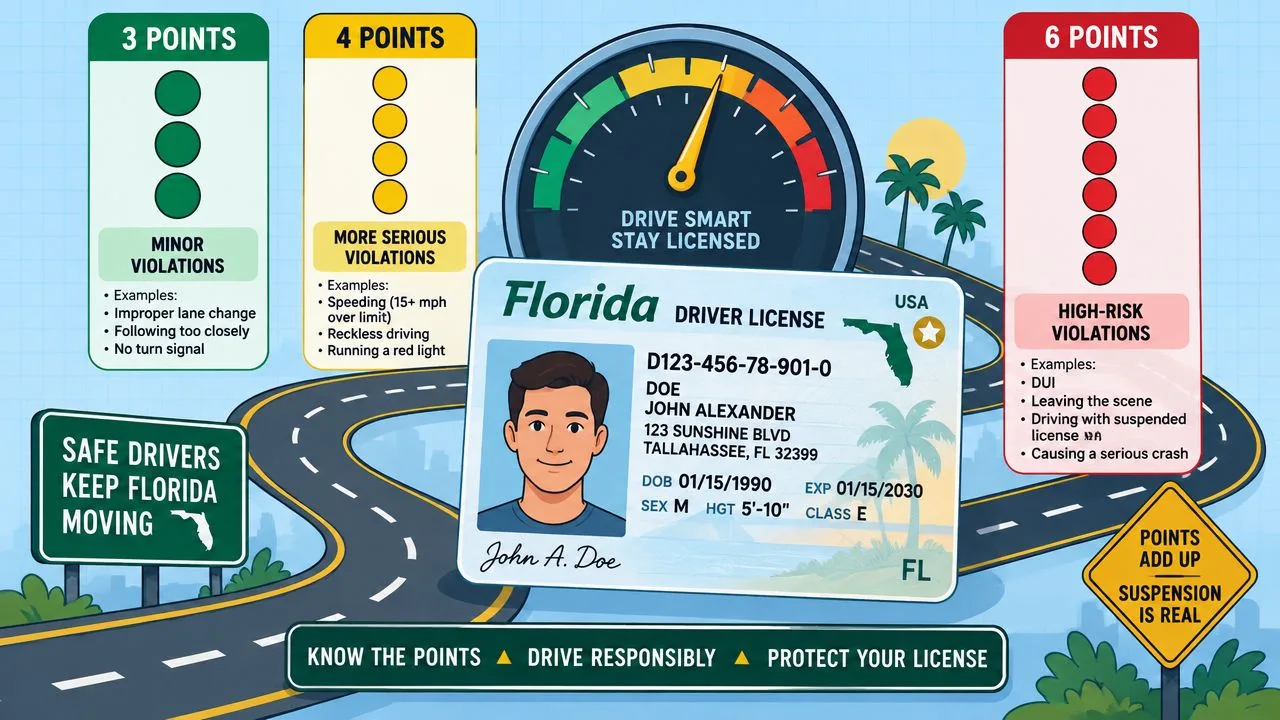
That’s the right question. In Florida, doing nothing is usually the most expensive choice, because a citation can turn into points, insurance trouble, and, in some cases, a court requirement that you can’t ignore.
What changes the minute you get cited
If the ticket qualifies, a state-approved traffic school course can help you protect your driving record and keep the violation from becoming a bigger financial problem. That’s why drivers who search for clases de manejo en espanol are usually not looking for casual driving tips. They’re looking for a fix that works inside Florida’s system.
Practical rule: if the ticket is recent, act first and research second. Deadlines matter more than perfection.
The good news is that Florida has a real course structure for this. You’re not guessing between random videos and generic test prep. You’re choosing between BDI, IDI, Aggressive Driver, and Mature Driver courses, then deciding whether online self-paced or in-person classroom makes more sense for your life.
If you want a straight ticket-handling overview before you enroll, start with this Florida traffic ticket guide. It gives you the basic sequence without wasting time.
What Florida Traffic School Actually Covers
A Florida-approved traffic school, also called a driver improvement course, is not just a driving vocabulary lesson in Spanish. It’s a state-recognized curriculum approved by the Florida Department of Highway Safety and Motor Vehicles, FLHSMV, and the content has to address how people drive on Florida roads.
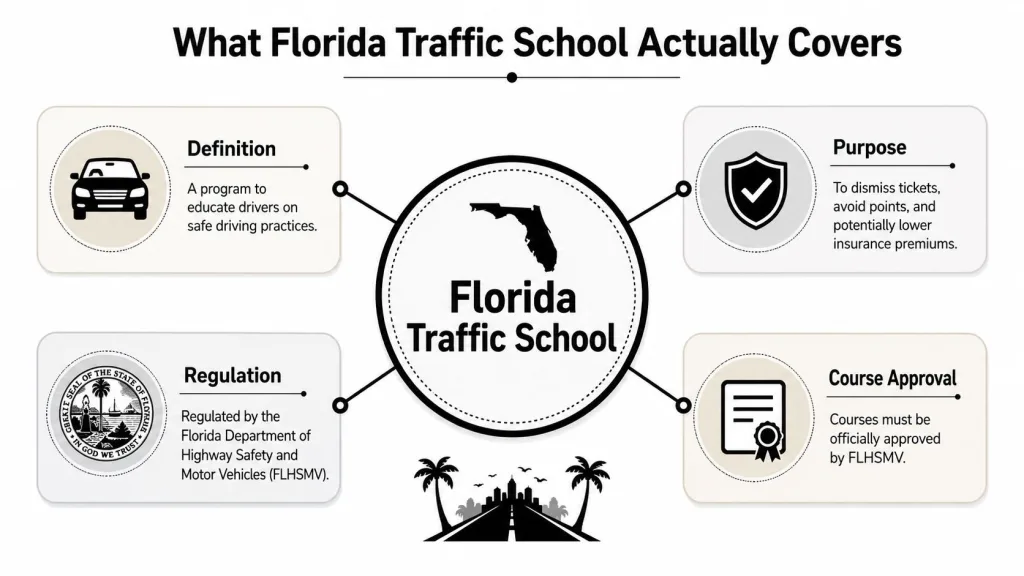
The approved course is built to teach the habits that keep citations from turning into worse problems. That includes Florida traffic laws, defensive driving techniques, safe following distances, right-of-way rules, the dangers of aggressive and distracted driving, impaired driving prevention, crash avoidance strategies, and how your attitude changes the decisions you make behind the wheel.
Why approval matters
Approval is the dividing line between useful instruction and paperwork that goes nowhere. If a course is FLHSMV-approved, completion can be reported electronically, which is the part that matters when you’re trying to satisfy a court or protect your record.
Generic Spanish driving-content sites usually stop at test vocabulary. They teach words, signs, and memory tricks. A Florida-approved course teaches the rules and the judgment behind the rules, which is why it matters for ticket dismissal and insurance-related outcomes.
Bottom line: a real traffic school course is a compliance tool, not just study material.
That’s also why course format matters. The right provider should offer a clear curriculum, a certificate of completion, and direct reporting, so you don’t get stuck mailing papers and hoping a clerk receives them on time.
The Four Florida Course Types Explained
Different drivers need different courses, and picking the wrong one wastes both time and money. The mistake I see most is people choosing based on length alone instead of choosing based on what the violation, court order, or age-related insurance goal requires.
Match the course to the situation
| Course | Length | Best For | Main Benefit |
|---|---|---|---|
| BDI | 4 hours | Drivers with a single moving violation | Helps with ticket dismissal and point avoidance |
| IDI | 8 hours | Court-ordered cases or drivers who need deeper review | Satisfies broader driver improvement needs |
| Aggressive Driver Course | 8 hours | Habitual offenders or road-rage related situations | Focuses on behavior correction and compliance |
| Mature Driver Course | 6 hours | Drivers 55 and older | Supports insurance discount maintenance |
The BDI, or Basic Driver Improvement course, is the one commonly associated with traffic school. If you got a minor moving violation and want the cleanest path forward, this is usually the first course to check.
The IDI course is longer because it’s built for a different need. If a court ordered extra instruction or your situation calls for more than the standard violation response, don’t try to squeeze it into a shorter course just to save time.
The Aggressive Driver Course is for drivers whose record or citation points to a behavior problem, not just a one-off mistake. That distinction matters, because the course is about changing the habits that caused the citation in the first place.
The Mature Driver Course is different again. It’s not about ticket dismissal. It’s about helping older drivers stay current and preserve an insurance advantage that can matter more than people expect.
If you’re still deciding between format options after choosing the course type, the next question is how you want to take it.
Online Self-Paced vs In-Person Classroom
Most working adults should choose online. It’s the cleanest fit for night shifts, child care, and anyone who can’t afford to sit in traffic twice just to learn how to avoid a ticket next time.
The case for online self-paced
Online self-paced courses let you study on any device, pause and resume, and come back when your head is clear. That matters for a tired parent after a long shift, because a 15-minute session is more useful than forcing a Saturday classroom when your attention is already shot.
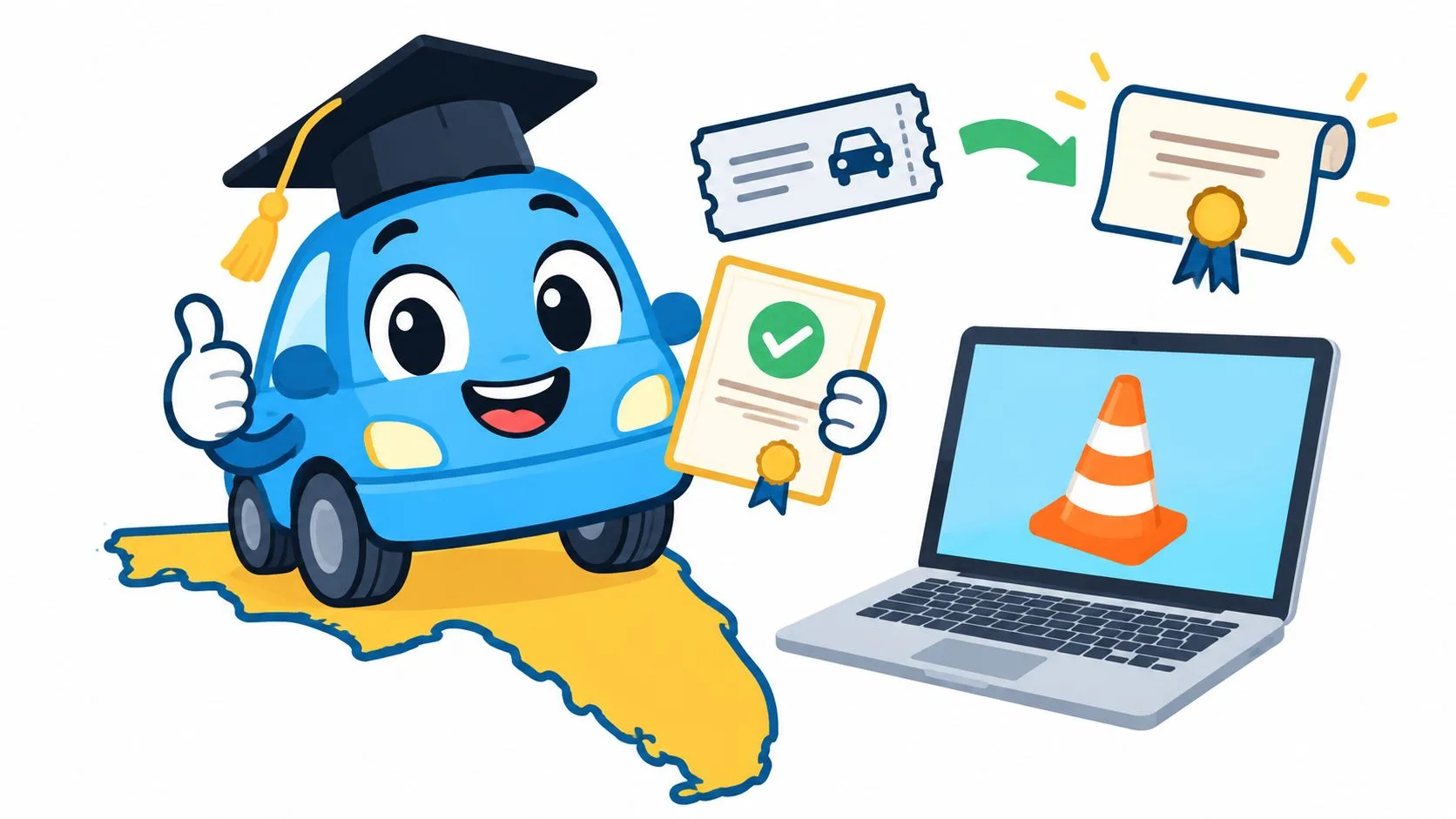
The language angle matters too. A strong provider can offer the course in English, Spanish, and Portuguese, which removes friction for newcomers who need more than translated study notes. The certificate is issued electronically and the completion is reported electronically, so the process stays simple.
When in-person still makes sense
In-person classroom instruction still has a place. Some nervous first-time drivers need live accountability, a fixed start time, and the chance to ask questions in real time without clicking through modules alone.
That said, in-person should be the exception for most Florida drivers who need a citation-related course. If your life is busy, if you’re juggling work, or if you’re trying to avoid missing a deadline, online is usually the better fit.
Driving mechanics matter too. Independent instruction on cockpit setup shows that keeping your shoulders against the seatback, arms extended but not locked, and wrists near the upper steering wheel rim helps reduce fatigue and improve pedal control during early lessons. That kind of practical guidance is exactly why classroom content can feel helpful, especially for anxious beginners.
If you want a Florida-approved online option that keeps the paperwork simple, see this online traffic school overview.
How to Enroll, Study, and Get Certified
Enrollment should be simple. If a school makes it hard to start, hard to study, or hard to prove completion, you’re paying for friction you don’t need.
The process that actually works
Start by creating an account on a Florida-approved site and selecting the correct course. Then complete identity verification, pay the fee, and begin the course modules at your own pace.
After you finish the lessons, you pass the final exam and receive an electronic certificate by email. The school then reports completion directly to the FLHSMV, which is what gets the process moving on the state side.
What to expect after you finish
The key benefit of electronic delivery is simple. You don’t have to mail paperwork to Tallahassee and hope it arrives on time. You also don’t have to wonder whether a clerk will scan the document properly, because the school handles the reporting step.
If you’re managing this around a renewal, a license question, or a vision-related appointment, it can help to keep your records clean on every front. For drivers who need a separate eye-health checkpoint, comprehensive eye care from Style Site Optical is a useful reference for the license-renewal side of the process.
Practical rule: finish the course, keep the certificate, and confirm the reporting step. Don’t assume someone else will chase the paperwork for you.
If you want the certificate process laid out in one place, review the online certificate page. That’s the part most drivers care about after they’ve already started.
What Florida Traffic School Really Costs
The cheapest course is not always the cheapest outcome. If a ticket leads to points or an insurance increase, the cost comes later, and that’s where drivers get surprised.
Looking past the sticker price
Florida traffic school costs are usually best judged against what they prevent. A BDI course can help you avoid points, and a Mature Driver course can help preserve an insurance discount, which is the kind of return people feel later when the policy renews.
The money problem with doing nothing is bigger than most drivers expect. Court costs can stack on top of the citation, and a moving violation can also affect how your insurer sees you. That’s why the small course fee is usually the rational move.
The kitchen-table test
If you’re debating this at the kitchen table, ask one question. Does paying once for a course solve a problem that would otherwise keep costing you later?
For most drivers, the answer is yes. The course fee is the controlled cost. The unknown cost is everything that happens if the violation stays open, the deadline passes, or the insurance company notices the ticket first.
That’s why Spanish-speaking drivers looking for clases de manejo en espanol should stop comparing only by price and start comparing by outcome. The right course protects your record, your time, and your wallet.
Choosing the Right Spanish-Language Provider
Choose a Florida-approved provider that offers the full course catalog in Spanish and reports completion electronically. That is the cleanest setup for most drivers, because it solves the core problem instead of just translating a few pages.
The checklist is straightforward. Make sure the school is approved in Florida, offers the course in Spanish, issues an electronic certificate, includes direct FLHSMV reporting, shows pricing clearly, and answers support questions without sending you in circles.
A site that only translates PDFs is not enough. Neither is an out-of-state school that can’t clearly connect its certificate to a Florida court’s requirements.
If you want a Spanish-language option built around Florida compliance, start with traffic school in Spanish. Then choose the course that matches your violation, not the one that sounds easiest.
Questions Spanish-Speaking Florida Drivers Ask Next
How long after I finish does FLHSMV show the course on my record?
Usually, the reporting step happens electronically after completion, but you should still verify that your record reflects it before your deadline or insurance renewal date. Don’t wait and assume the system caught up.
If I take BDI now and get another ticket within 12 months, am I still eligible?
Don’t treat BDI as unlimited. If you’ve already used that option recently, ask the clerk or the school which course fits your current situation before enrolling again.
I got an out-of-state citation while driving in Florida, does a Florida-approved course still help?
Sometimes it can help on the Florida side, but the issuing state may still have its own process. Handle both sides, because one course doesn’t automatically clear an out-of-state matter.
Can a parent enroll a teenager in Spanish-language driving classes?
Yes, parents often use these courses to support a teen’s first-license preparation, not just ticket dismissal. The important part is choosing a Florida-approved provider with the right format and support for beginners.
BDISchool offers Florida-approved driver improvement courses in Spanish, with online access, electronic certificates, and direct reporting tied to the state process. If you’re ready to handle a ticket, protect your record, or choose the right course for your situation, visit BDISchool and enroll in the course that fits your needs today.