A revoked license is a complete loss of driving privilege, not a temporary pause, and in many cases the driver has to reapply and retest before getting a new one. In fatal-crash research, 8,030 drivers a year were definitely or possibly driving with an invalid license or no license, which is why this status gets treated as a serious public-safety problem, not a paperwork issue.
You usually find out the hard way. A traffic stop, a court notice, or a driving-record check suddenly turns into a legal problem that can affect your job, your insurance, and your daily routine. If you’re in Florida, the smart move is to stop guessing, figure out the exact reason for the revocation, and start the reinstatement process the right way.
Understanding What a Revoked License Really Means
A revoked license means your driving privilege has been legally voided. It isn’t sitting on hold, and it isn’t something you can fix by waiting a little longer or paying a small fee.
If you pull your record and see revocation status, treat it as a reset button on your driving privilege. The license no longer functions until you satisfy the state’s reinstatement requirements, and in many cases that means reapplying and sometimes retesting before a new license is issued. Colorado DMV definitions put that plainly, and that’s the right way to think about it.
Practical rule: if the state says revoked, stop driving immediately and start solving the root problem. Driving on a revoked license only adds another layer of trouble.
This is why people get burned when they confuse revocation with a short administrative hold. A revoked license is a stronger penalty because the state has terminated the privilege itself. You’re not waiting out a clock, you’re rebuilding eligibility.
That’s also why the fix has to be deliberate. You need to know what triggered the revocation, what the DMV or court wants from you, and which course or document closes the gap. If you’re in Florida, that usually means taking the reinstatement process seriously from day one.
Revoked vs Suspended vs Canceled License Differences
People mix up these three terms all the time, and that mistake leads to bad decisions. The differences matter because each status sends you down a different path.
A revoked license is a canceled license tied to a serious violation, and the driver generally has to meet state requirements before applying for a new one. A suspension is temporary. A cancellation usually means the license was issued in error or is no longer valid for another administrative reason. The legal result is not the same, so the repair process isn’t the same either. PMC driver-record research
| License Action Comparison | Revoked License | Suspended License | Canceled License |
|---|---|---|---|
| Core meaning | Driving privilege is terminated | Driving privilege is temporarily withdrawn | License is voided for an administrative or issuance issue |
| Typical recovery path | Reapply, satisfy state conditions, often retest | Wait out the period and complete requirements | Correct the issue and obtain a valid license path |
| Severity | Most severe of the three | Less severe than revocation | Depends on the reason, but it is not the same as a temporary pause |
| Common example | Repeat DUI or serious traffic offense | Unpaid ticket or non-driving-related penalty | License issue created by error or ineligibility |
If you want a clean explanation of the temporary side of the spectrum, read what a suspended license means. That keeps you from treating every license problem as if it works the same way.
Revocation means the state wants a full correction, not a shortcut.
That’s the practical takeaway. Suspension is usually about time plus compliance. Revocation is about proving you’re eligible again.
Common Causes That Lead to License Revocation
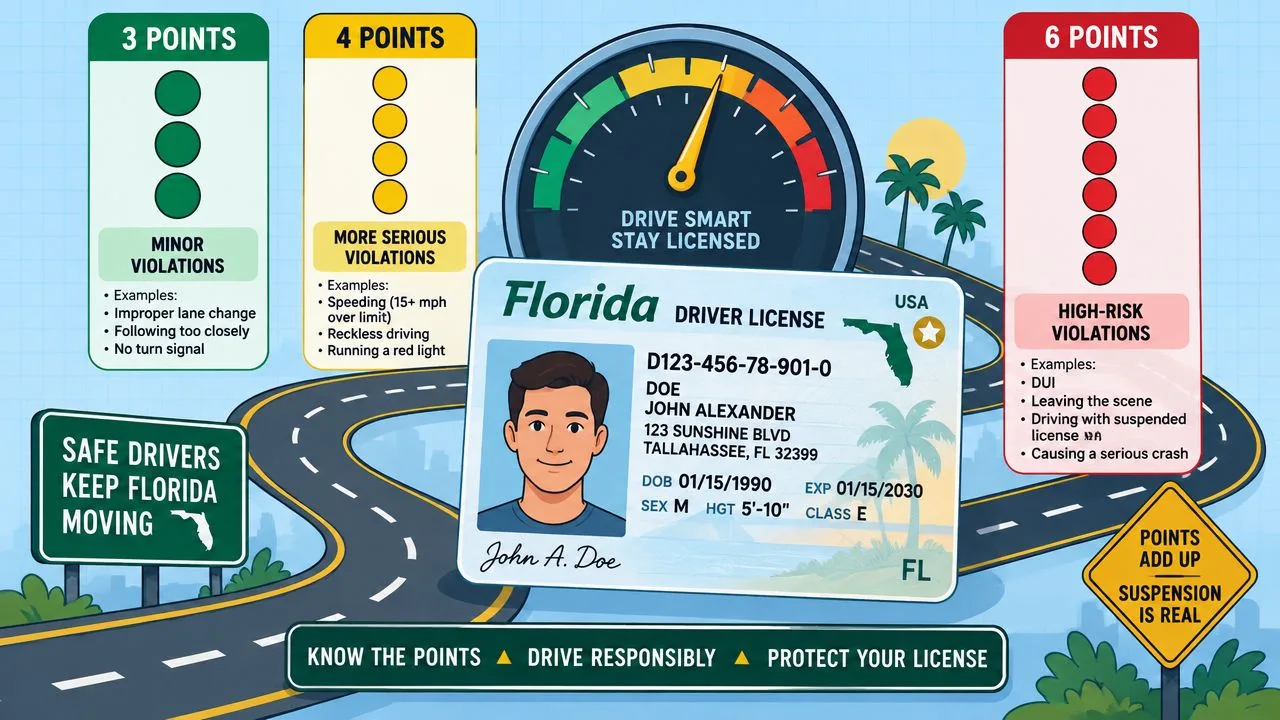
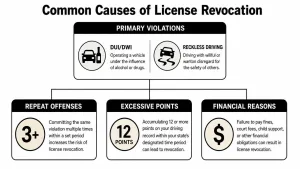
Revocation usually follows a serious offense or a repeated pattern that convinces the state the driver should not keep the privilege without a full review. A single bad day rarely leads there. The issue is usually conduct that shows the driver has ignored earlier warnings or failed to meet legal requirements.
The big triggers
Repeat DUI or DWI convictions are the clearest example. Serious traffic offenses can also push a case from suspension territory into revocation territory. State rules treat revocation as the heavier response, especially after repeat impaired-driving offenses or other conduct that shows the driver is not fit to keep driving. National Highway Traffic Safety Administration guidance
Other triggers include habitual traffic offenses, driving without insurance, and major violations that show the state the driver has not fixed the underlying problem. Some states also revoke after a driver ignores court orders, fails to complete required steps, or keeps driving after earlier penalties. If you want a Florida-specific reference point, review Florida suspended license reasons.
Florida drivers also need to pay close attention to the reinstatement side of the process. Once revocation is on the record, the fastest clean path back is usually to correct the trigger, complete any required education, and meet the state’s filing and testing rules before getting back behind the wheel.
The point is simple. The state is not reacting to one ticket in isolation. It is deciding whether the driver has shown enough disregard for traffic law and public safety to lose the privilege until the problem is corrected.
My advice: do not start by debating labels. Identify the exact revocation trigger, then work backward from the requirement that clears it.
That approach saves time. Once you know why the license was revoked, the reinstatement path becomes much easier to follow.
Legal and Practical Consequences of Driving Revoked
Driving on a revoked license is a bad gamble, and the fallout usually grows every time someone tries to “just get through” one more trip. The legal system sees that as a new decision, not a harmless mistake.
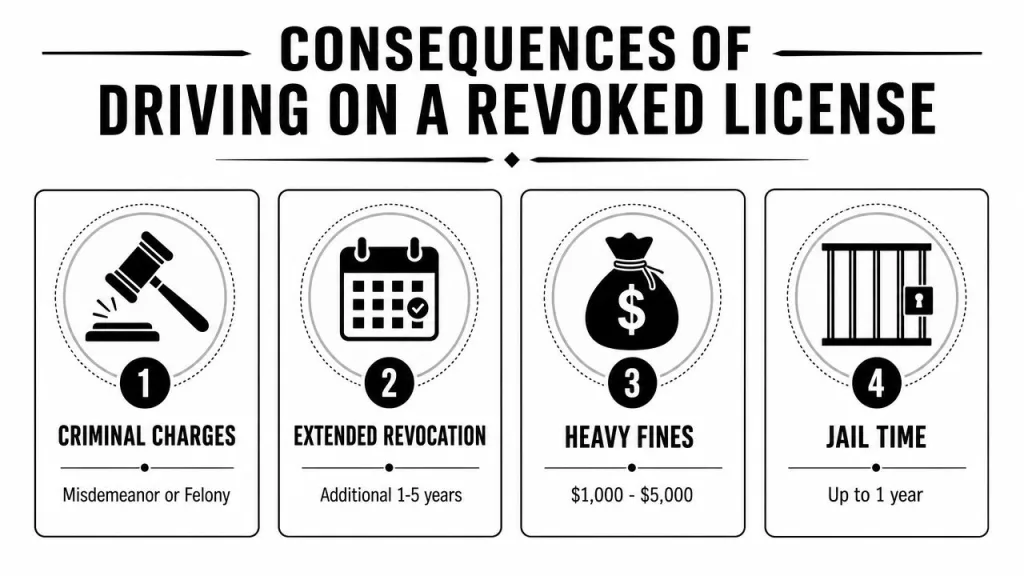
A national research update found that, on average, 8,030 drivers involved in fatal crashes each year were definitely or possibly driving with an invalid license or no license, representing 13.7% of all drivers involved in fatal crashes. That same report linked those drivers to 7,679 fatal crashes and 8,801 deaths, which is exactly why states treat this status so seriously. Unlicensed to kill research update
The practical fallout is just as real. A revoked record can create problems with employment, insurance, and future driving opportunities. It also follows the driver across states through national record-sharing systems, so this isn’t something you outrun by crossing a border.
If you’ve been charged after driving while revoked, get informed before you act again. A resource like legal defense against suspended license arrests from Brian Hansford Law can help you understand how these cases are challenged, even though your reinstatement work still has to happen through the proper state process.
One more thing. The state is not impressed by excuses like “I only had to go a short distance.” The legal risk and the safety risk are both real.
Florida License Reinstatement Steps and Requirements
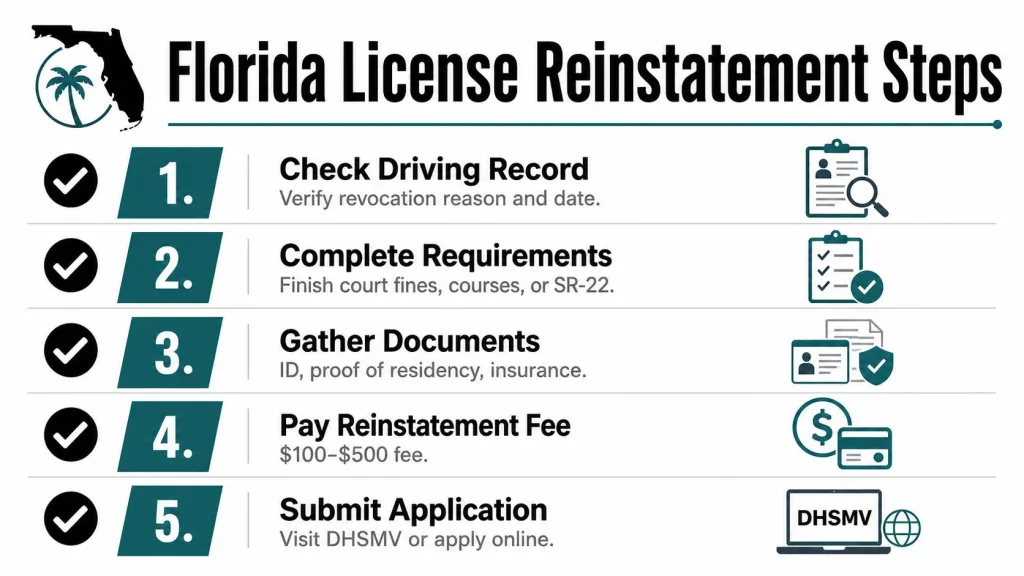
Florida reinstatement starts with the record, not the paperwork. Check the exact revocation reason first, because the reason tells you which requirements matter and which ones are just noise.
The sequence that saves time
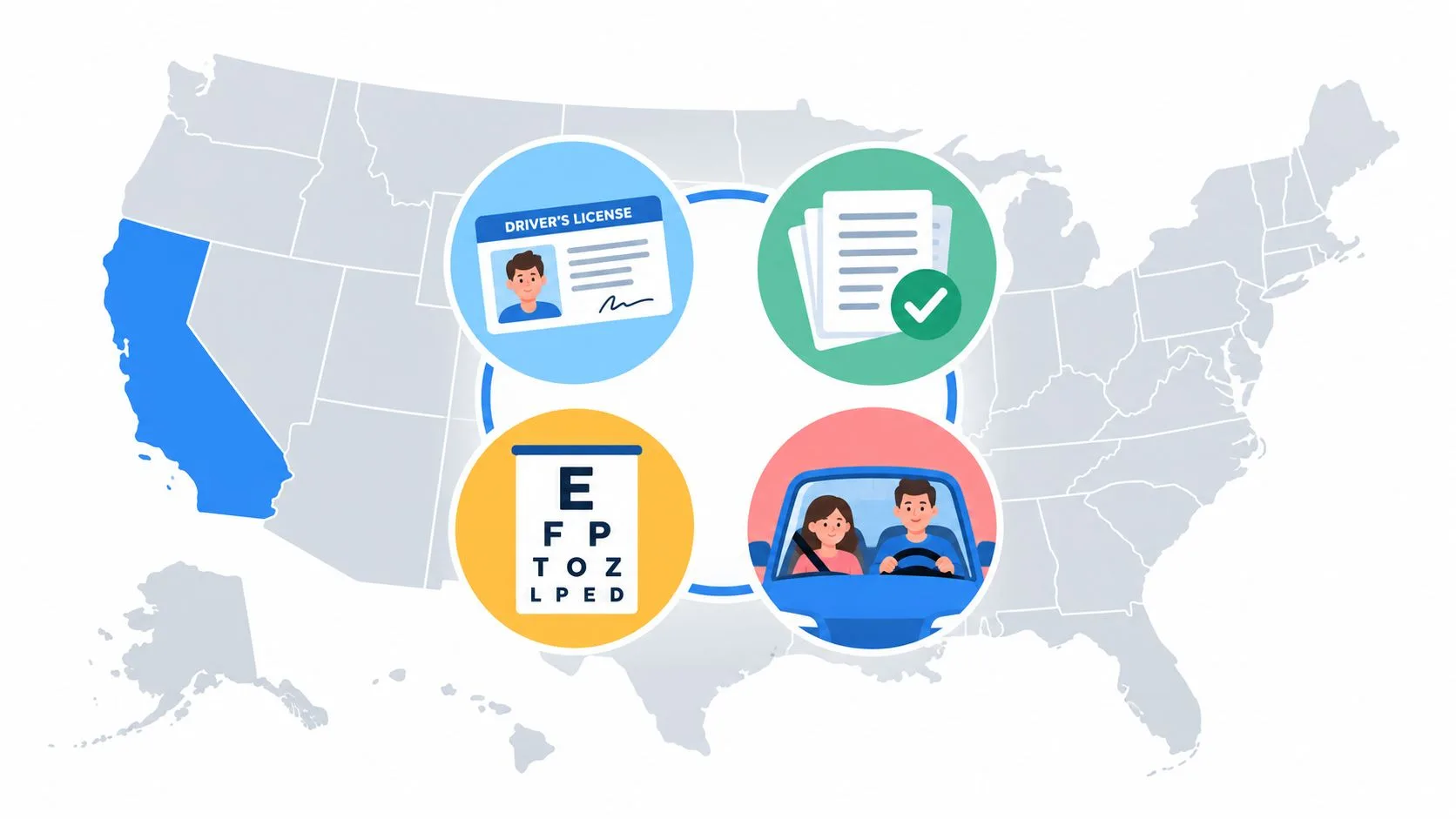
Start by clearing every court issue tied to the revocation. Then finish any required waiting period, gather the documents the state wants, and satisfy the DMV conditions tied to your case. Florida drivers may also need an SR-22, written and vision testing, proof of insurance, and reinstatement fees before a new license can be issued. The process often requires more than paying a fee. Florida DHSMV reinstatement requirements spell out the official path.
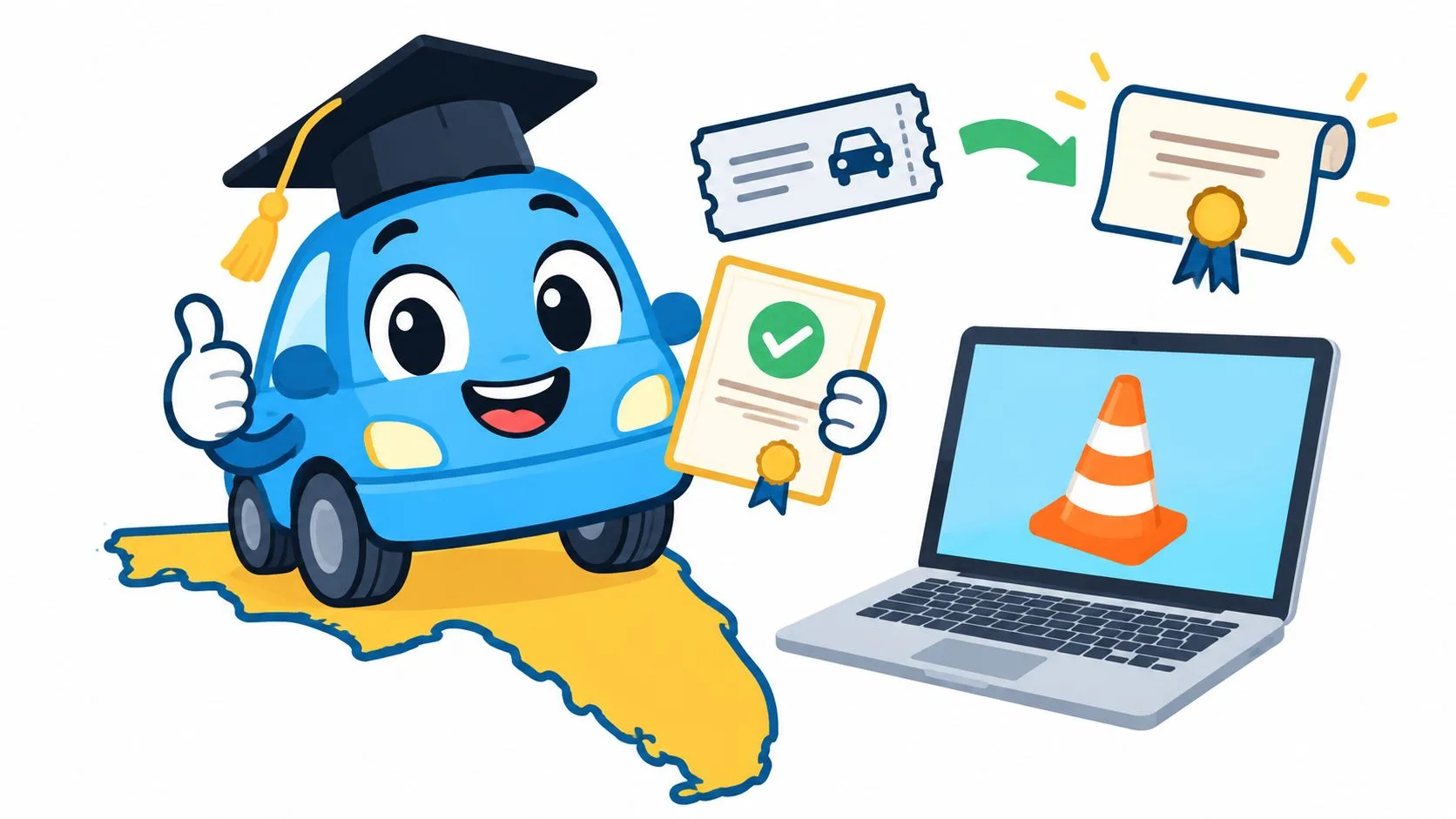
If your case requires a course, do that step early. A state-approved driver improvement course is often part of the compliance package, and BDISchool offers Florida-approved options that match different situations, including the Basic Driver Improvement (BDI) 4-hour course, the Intermediate Driver Improvement (IDI) 8-hour program, and the Aggressive Driver Course. These courses are online, self-paced, and available in English, Spanish, and Portuguese.
Use this as your working checklist:
- Check your driving record. Confirm the revocation reason and the date it took effect.
- Clear court and DMV requirements. Finish fines, programs, or other ordered steps.
- Gather proof. Bring ID, residency documents, and insurance proof if your case needs them.
- Complete the course. If Florida requires driver improvement, enroll in the right approved class.
- Submit the reinstatement request. File with the Florida DHSMV or follow the path your case requires.
For a Florida-specific walkthrough, use how to reinstate a suspended license in Florida. It matches the paperwork to the problem and keeps the process organized.
Best move: do not wait until every other detail is perfect. Start the course and the record review at the same time, because that is how people cut wasted time.
How BDISchool Courses Help You Regain Your License
A lot of drivers get stuck because they treat the course as an afterthought. That’s the wrong order. In a revocation case, the right course can be the piece that turns a pile of requirements into a completed reinstatement file.
One Florida driver I’d expect to see in any real-world training scenario gets the revocation notice, checks the reason, and enrolls in the matching course instead of guessing. A moving-violation case points toward BDI, a court-ordered situation may point toward IDI, and an aggressive-driving history can call for a different state-approved program. The driver finishes the class, keeps the certificate, and uses it as part of the reinstatement package.
That’s the practical value of a structured course path. The course doesn’t replace court compliance, but it does remove one of the biggest obstacles to getting back on the road legally.
If alcohol or drug issues are part of the case, the driver should look at the required screening and related DMV steps as early as possible. Alcohol and drug test DMV requirements can matter in those situations, and waiting only slows everything down.
A clean process beats a rushed one every time. Finish the right course, keep your documentation organized, and submit everything in the sequence the state expects.
Your Action Plan to Start Reinstatement Today
Today, pull your driving record and identify the exact revocation reason. Tomorrow, clear any court obligation or missing document, then enroll in the course that matches your situation instead of waiting for the “right time.”
During the first week, gather proof of insurance, ID, and any reinstatement paperwork the state asks for. If your case needs a Florida-approved class, start it now so you’re not losing days later when everything else is ready.
Over the next month, keep moving the file forward until the state requirements are satisfied. If you need a course catalog, review the available options at BDISchool courses and choose the path that fits your record, not the one that sounds easiest.
BDISchool gives Florida drivers a clear way to finish state-approved course requirements and move their reinstatement forward without wasting time. If you’re dealing with a revoked license, visit BDISchool and start the course that fits your case today.