If your North Carolina license is lost or stolen, you can usually replace it online or in person for $14.00, and the online route is usually the fastest and least annoying option. The key is knowing whether you need a legal replacement card or you’ve run into the much bigger problem of holding licenses in more than one state.
That distinction trips people up all the time. You search for Duplicate License NC, but the DMV uses “duplicate” in two very different ways. One is routine. You lost your card, changed your address, or need a replacement. The other can turn into a compliance mess if you still have a valid license floating around from another state.
Your wallet vanished, your card cracked, or you moved and need your information updated. Fine. Handle it quickly, use the easiest path available, and keep your driving record organized so a small hassle doesn’t become a bigger one.
Your Guide to Replacing a North Carolina License
You reach for your wallet before work, and your North Carolina license is gone. Or the card is cracked, the address is old, or your name changed and the information no longer matches. In NC, that usually means one thing. You need a duplicate license as a replacement card.
That simple meaning matters because the phrase “duplicate license” also gets used for a very different problem. A legal replacement card is routine. Holding licenses from more than one state is not. Keep those separate in your head from the start, and the DMV process gets a lot easier.
What a duplicate license means in NC
For everyday drivers, a duplicate license is a replacement credential for an existing North Carolina license. It covers the practical situations people run into all the time:
- Lost, stolen, or damaged card: The physical card is missing, broken, or unreadable.
- Name or address update: The card needs to match your current legal information.
- Age-related photo background change: The DMV may require an updated card format.
- Post-revocation card replacement: Your revocation period has ended, and your original license term is still active.
The smart move is to treat this like basic record maintenance. Fix it fast. A missing or outdated card creates avoidable problems during traffic stops, car rentals, job paperwork, and any situation where your ID needs to match what the state has on file.
One clean rule helps here. If you already have a valid NC license and only need another card issued, you are dealing with an administrative replacement.
Start with the method that wastes the least time
Online is usually the best first move. If that works for your situation, use it and move on with your life.
If you suspect you will need to show documents in person, review this checklist of what to bring to the DMV before you leave home. Showing up unprepared is how a ten-minute task turns into a lost afternoon.
The same lesson shows up in other licensing systems too. If you want a plain-English comparison, this guide to replacing a lost UK driving licence makes the point well. Different country, same lesson. Act quickly, follow the official replacement process, and do not let missing ID sit unresolved.
Why this deserves quick attention
Drivers get into trouble when they treat license issues as minor clutter. Your license is tied to your identity, mailing address, insurance paperwork, and driving record. If one part is outdated, the rest gets messy fast.
Stay current, keep your card secure, and fix small DMV issues before they turn into bigger ones. That habit saves time, money, and stress.
The Quickest Path a Duplicate License Online
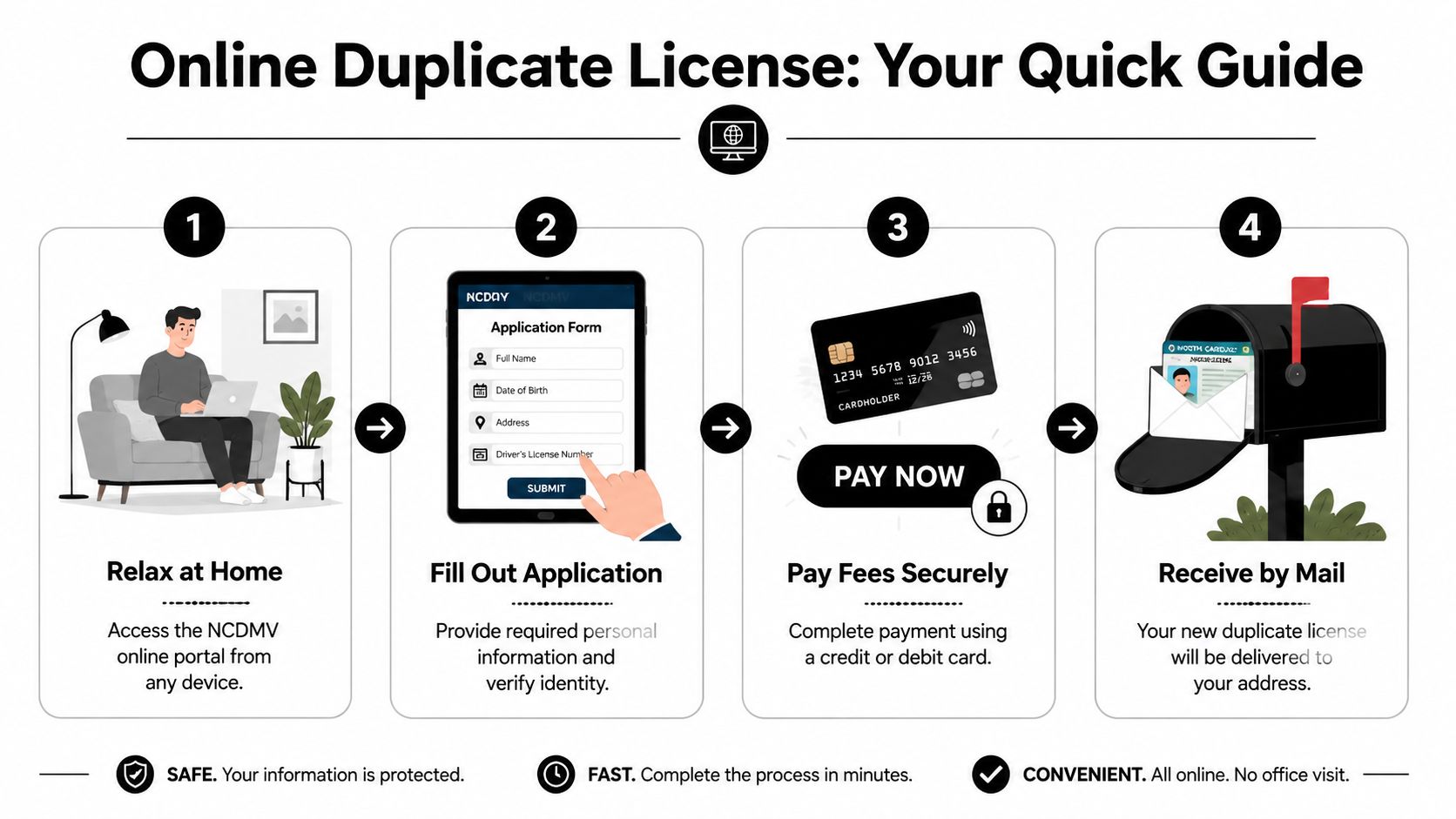
You reach for your wallet before work, and your North Carolina license is gone. In that moment, you need to sort out one thing first. Are you replacing your current NC card, or are you dealing with the separate and much more serious issue of holding a second license from another state? This section covers the simple replacement card. That is the problem the online system is built to solve.
If your NC license record is already in good shape, the online route is the fastest way to get a duplicate card and move on. Use it for the ordinary headaches: a lost license, a stolen wallet, or a card that is cracked, faded, or unreadable.
What to have ready before you start
Do the prep first. The DMV portal goes faster when you already have your details in front of you.
Have your full legal name, date of birth, license information, current mailing address, and a payment card ready. Use an address where you can receive mail securely. A typo or stale address is how a quick replacement turns into another round of DMV cleanup.
Keep this simple:
- Personal details: Full legal name, date of birth, and license information
- Identity verification info: Whatever the portal asks you to confirm
- Payment method: A credit or debit card
- Mailing address: Your current, secure address
When online replacement is the right move
Online works best when nothing about your record needs review. You are not changing your identity details. You are not fixing a bigger licensing problem. You just need another copy of your valid NC card.
That distinction matters. In North Carolina, a duplicate license usually means a replacement card. It does not mean getting a second valid license from somewhere else. People mix those up, and that confusion can lead to real trouble later.
If you want to avoid wasting half a day, check the best day and time to go to the DMV before you start. Even if your online request fails, you will know the smartest backup plan.
A quick visual walkthrough can also help before you start:
Order the replacement as soon as you notice the card is missing, because waiting doesn’t improve anything and can leave you scrambling when you need ID unexpectedly.
When online may not work
The online system is fast, but it is picky. If your information does not match DMV records, if your credential type needs extra review, or if the system cannot verify your identity, stop fighting the screen and handle it another way.
That is not unusual. It just means your case is no longer a basic replacement card request.
And this is the bigger lesson. Small license problems have a habit of turning into larger record problems when drivers ignore them. Handle the missing card quickly, keep your information current, and make sure your driving record stays clean and consistent. Life is easier when your ID, your address, and your state record all match.
When to Visit an NC DMV Office in Person
Sometimes the couch isn’t enough. You need the counter, the clerk, and your paperwork in hand.
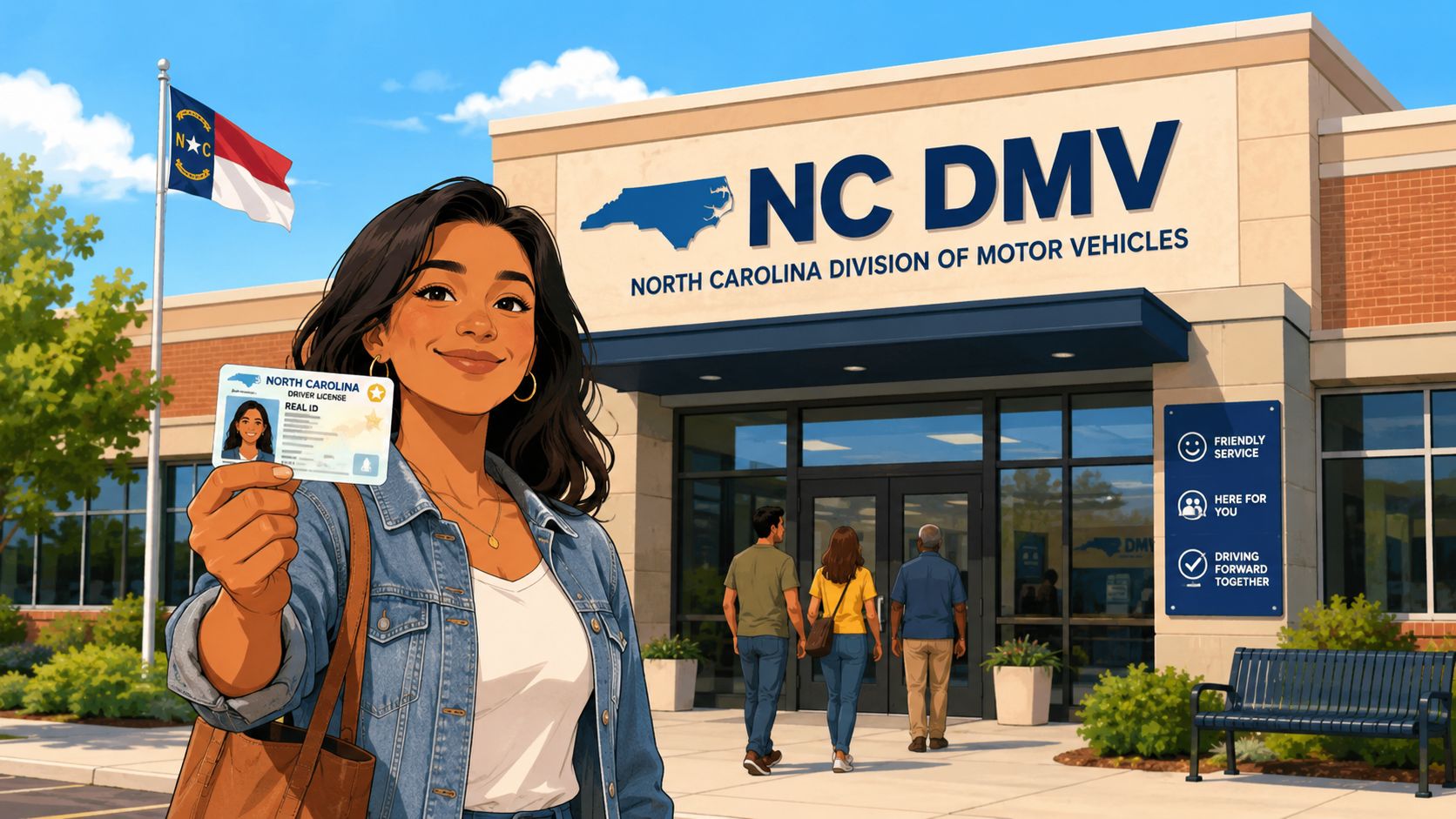
That’s usually the case when your situation is more than a plain replacement. If your record needs manual review, if your card category involves extra proof, or if your online attempt gets blocked, go in person and go prepared.
Signs you should go in person
Use the office if any of these apply:
- Your online request won’t go through: The system can’t verify you or rejects the transaction.
- Your details changed significantly: Name changes and other record updates may require document review.
- You’re dealing with a more complex license issue: Commercial status, youth-driver requirements, or identity questions often need face-to-face handling.
In-person service is slower, but it’s better than fighting an online error loop for an hour.
What to bring
Bring more than you think you’ll need. That’s the DMV survival rule.
A smart stack usually includes:
- Proof of identity: Bring the document that best establishes who you are.
- Proof of address: Use documents that match your current residence information.
- Social Security documentation: If your transaction requires it, have it ready.
- Any supporting paperwork tied to the change: Court orders, name-change documents, or restoration paperwork if your case involves them.
If you want to cut down your wait and pick a less painful visit window, this guide on the best day and time to go to the DMV is practical and worth using.
Show up with originals when possible, keep everything in one folder, and double-check names and addresses before you leave home.
How to make the visit less miserable
Appointments beat walk-ins when available. Early-day visits usually feel less chaotic than showing up after lunch when everyone else has already had the same idea.
Be polite, be organized, and answer only what’s asked. DMV transactions go smoother when your documents are clean and your story is simple.
Special Cases Minors REAL ID and Commercial Licenses
A duplicate license in North Carolina is not always a simple reprint. Age, credential type, and federal ID status can change the rules fast. This is also where people mix up two different problems. One is replacing a card. The other is holding more than one active license record, which becomes a compliance mess later if you stay sloppy.
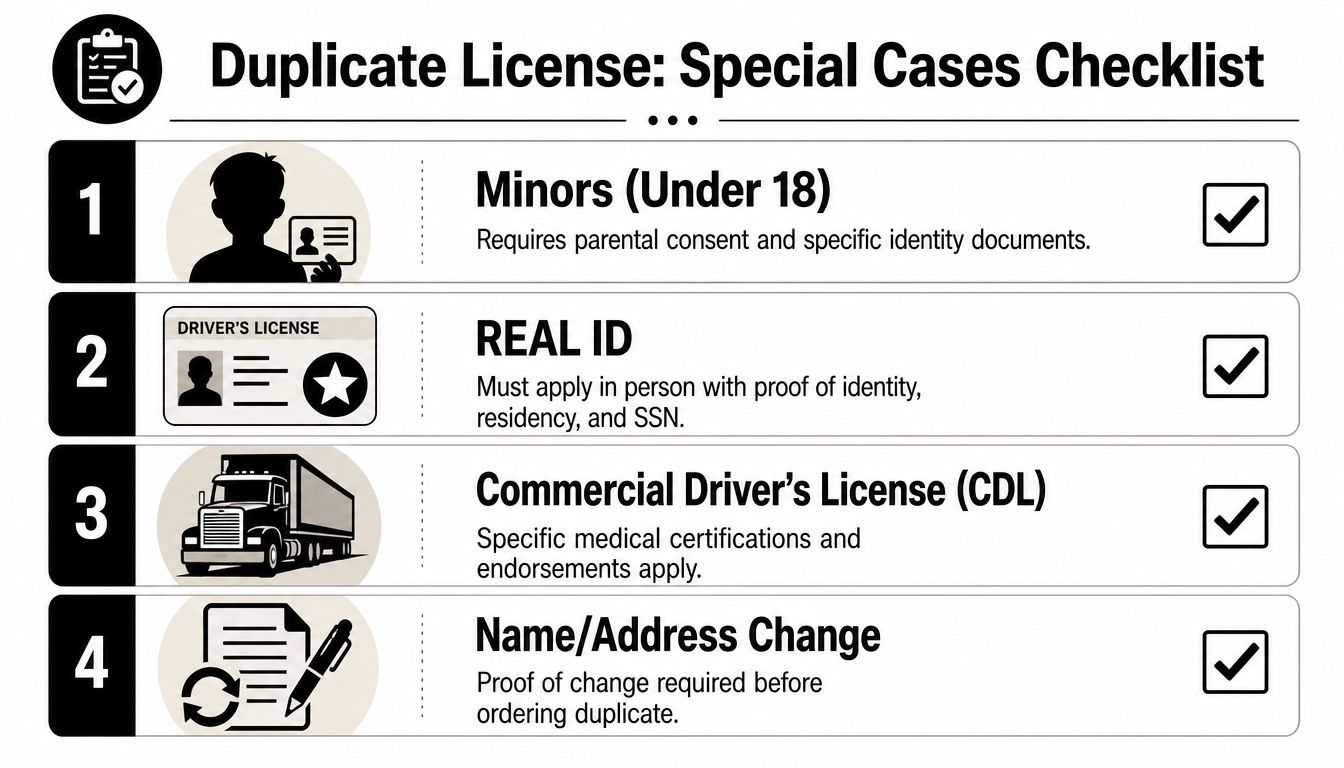
Minors under 18
Teen drivers and parents need to slow down and treat this like a file check, not a quick reprint request. North Carolina expects supporting school and driver education records for younger applicants, as noted earlier in the article. If those papers are missing, outdated, or inconsistent, the DMV can stop the transaction right there.
Use this checklist before you leave home:
- Driver Eligibility Certificate: Make sure it is current and ready to present.
- Driver education proof: Have records showing required classroom and behind-the-wheel training completion.
- Graduation or GED documentation: Bring it if it applies to the teen’s status.
- Matching personal details: Names, addresses, and school records should line up with DMV records.
Parents should keep copies of every youth-driver document in one folder. That habit saves time now and prevents bigger record problems later.
REAL ID timing
REAL ID changes the strategy. If you just need another physical card because yours was lost or damaged, handle that problem first. If you also need a REAL ID upgrade soon, stop guessing and decide whether it makes more sense to do the full document review in one trip.
A lot of drivers waste time by solving the immediate card issue and then returning later for the stronger credential. If your timeline allows it, combine the work and bring the full identity package. If you need to drive right away, get the replacement card, then schedule the REAL ID upgrade with a clean plan.
The confusion is real, and you can see it in public driver discussions like this North Carolina Reddit thread about license questions. Do not rely on forum guesses. Use them to spot common pain points, then verify your own case before you show up.
Commercial licenses and training records
Commercial drivers should treat every license issue as a work issue. A problem with your credential can affect your job, your endorsements, and your schedule. Keep your medical certificate, identity documents, and any status updates organized before a duplicate card is ever needed.
If you are comparing how stricter commercial rules tend to be across states, this guide to the Florida CDL testing process gives useful context. The point is simple. CDL paperwork gets more scrutiny, and careless recordkeeping costs you.
There is also a practical privacy angle here. Commercial drivers, teens, and anyone dealing with identity documents should think about digital reputation protection if personal information ends up exposed online after a lost wallet or document issue. Replacing a card is one problem. Cleaning up the fallout from exposed personal data is another.
Stay organized now. It makes every future DMV issue easier, and it keeps small paperwork problems from turning into license, employment, or identity headaches.
The Other Duplicate License Problem in NC
This is the part many drivers don’t see coming. A Duplicate License NC search can point you toward a legal replacement card, but it can also point to something illegal: holding a North Carolina license and another valid state license at the same time.
North Carolina moved hard on that issue. The NC DMV’s State-to-State Verification Service (S2S) was implemented to enforce a one driver, one license rule, targeting more than 210,000 drivers estimated to hold a valid license from another state, and the system automatically cancels the older license, as reported by the News & Observer’s coverage of the NC DMV S2S rollout.
What that means in plain English
You don’t get to collect active licenses across state lines. If you moved, got relicensed, and still think the old one is hanging around as a harmless extra, that’s exactly the kind of thing this system is built to catch.
The S2S upgrade connects state systems through SPEXS, which the same report says was successfully implemented by AAMVA in July 2015. The point is verification. Before a new license is issued, states can electronically check whether you already hold one somewhere else.
If you move states, clean up your driver record fast. Old licenses don’t become souvenirs if they’re still active in a database.
Why this matters beyond the DMV
A duplicate cross-state record can create the kind of confusion that spills into employment checks, insurance questions, and identity headaches. That’s one reason it’s smart to stay alert about where your personal data shows up online and in public databases.
This isn’t bureaucratic trivia. It’s a reminder that your driving identity follows you. Keep it clean, current, and tied to one valid license only.
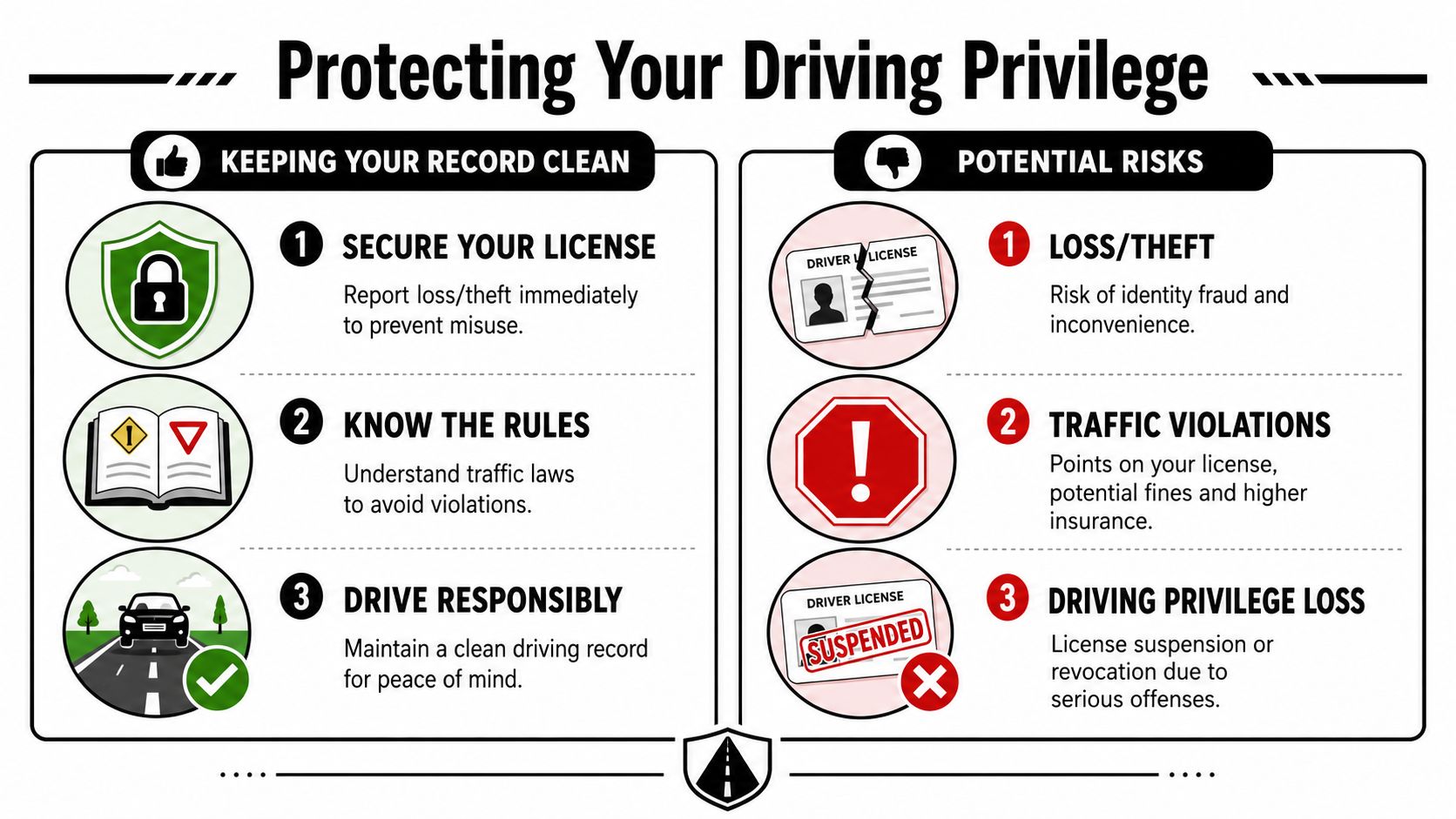
Keep Your License Secure and Your Record Clean
Replacing plastic is easy. Protecting your driving privilege is the part that matters.
A lost card is annoying. A suspended license changes your life. Work gets harder, errands get complicated, insurance problems pile up, and every traffic stop feels heavier than it should.
The smartest long-term move
Drive like your record matters, because it does. If you’ve picked up a moving violation, don’t treat it as random bad luck and move on without learning anything from it.
In many states, drivers can take a state-approved 4-hour Basic Driver Improvement (BDI) course to avoid points on their license after a moving violation, and it can also help qualify for insurance discounts.
That kind of course matters because it turns a ticket into a warning shot instead of the start of a pattern.
Why clean records save headaches
Traffic tickets don’t just cost money. They can affect how courts, insurers, and employers see your driving history. If you’ve ever wondered how a citation can turn into something more serious, Fiscella Law explains traffic convictions in a way most drivers can understand.
A few habits make a real difference:
- Check your driving history: Errors happen, and old issues can stay unnoticed longer than they should. This guide on how to see your driving record is a good place to start.
- Handle tickets promptly: Ignoring paperwork is how minor problems become license problems.
- Refresh your traffic knowledge: Defensive driving isn’t just for teenagers or court orders. Adults forget rules too.
A clean record buys freedom. You spend less time in offices, less money on consequences, and less energy worrying about what’s hanging over your license.
Frequently Asked Questions About Duplicate Licenses
Can I get a duplicate North Carolina license if I lost my card?
Yes. If your license was lost or destroyed, North Carolina allows a duplicate replacement under state law.
How much does a duplicate license cost in NC?
The standard fee is $14.00 under the state statute cited earlier.
Is a duplicate license the same thing as a second valid license?
No. A legal duplicate is a replacement card for the same credential. A second active license from another state is a different issue and can create compliance problems.
Should I replace it online or go to the DMV?
Use online replacement first if your situation is simple and the system accepts your request. Go in person if your records need review or your case involves extra documentation.
What if I’m under 18?
Bring the school and driver education records required for youth licensing matters. Missing that paperwork is where many teen applications get stuck.
Does replacing a card fix ticket or suspension problems?
No. A duplicate card replaces the physical credential. It doesn’t erase violations, suspensions, or record issues.
If you want to protect more than just the plastic in your wallet, take a look at Driver Educators. Their online driving courses are built for people who want to stay eligible, informed, and ahead of the kind of mistakes that make DMV problems a lot worse.