You’re in the middle lane, the car ahead taps the brakes, and a bike slips into your blind spot at the same time. Your eyes catch it, your hands need to react cleanly, and if your steering input or brake pressure is late by even a moment, you’ve got a near-miss that sticks with you all week.
That’s hand eye coordination improvement in the world. It’s not a party trick and it’s not “natural talent,” it’s the skill that lets you scan, judge, and move the wheel or pedals without freezing up under pressure.
Why Hand Eye Coordination Matters Behind the Wheel
A close call usually doesn’t start with a dramatic mistake. It starts with a tiny delay, a late mirror check, a sloppy lane-centre correction, or a brake press that arrives after your brain has already seen the hazard.
Driving demands that your eyes and hands work as one system. You’re scanning mirrors, tracking the car’s position, watching the road edge, and adjusting steering angle at the same time, often while traffic keeps changing around you.
That’s why hand eye coordination matters so much in driving. It sits inside every part of the task, from smooth parking to merging, and from keeping a steady gap to correcting a drift before it becomes a problem.
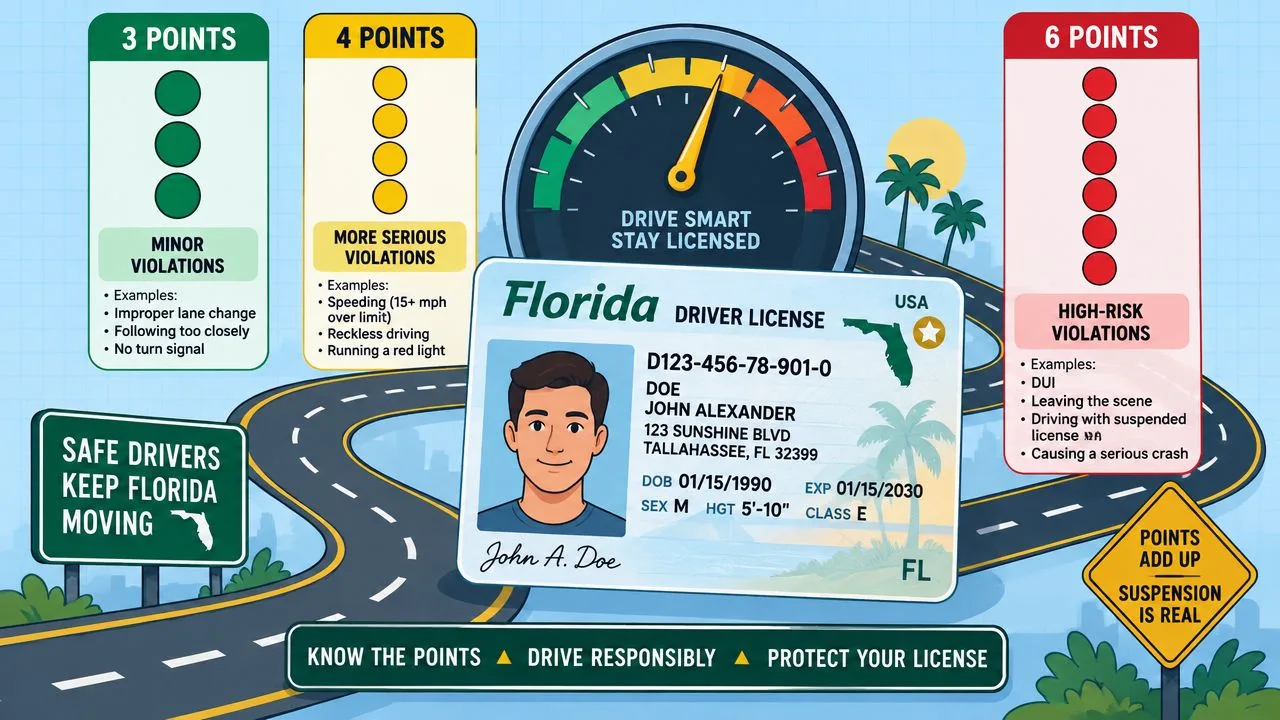
A useful way to think about it is this, the better your visual-motor timing, the fewer unnecessary corrections you make. That matters for confidence, and it matters for cost too, because mistakes behind the wheel often lead to citations, claims, or higher insurance friction.
Practical rule: if you keep making jerky corrections, you don’t need more fear. You need cleaner coordination practice.
This is also where people get it wrong. They blame “bad nerves” when the issue is poor visual tracking, weak timing, or a lack of repeatable practice. For some drivers, especially private hire drivers who want to stay sharp, a regular checkup can be as important as practice, and a resource like private hire driver health checks can help frame that conversation properly.
For crash prevention habits, it’s also worth reading about what causes most car accidents, because coordination problems rarely exist in isolation. They often show up alongside distraction, impatience, or weak scanning.
Foundational Exercises You Can Do Anywhere
You don’t need a gym or fancy equipment to build cleaner reactions. A tennis ball, a wall, and a timer are enough to start improving the visual-motor link that driving depends on.
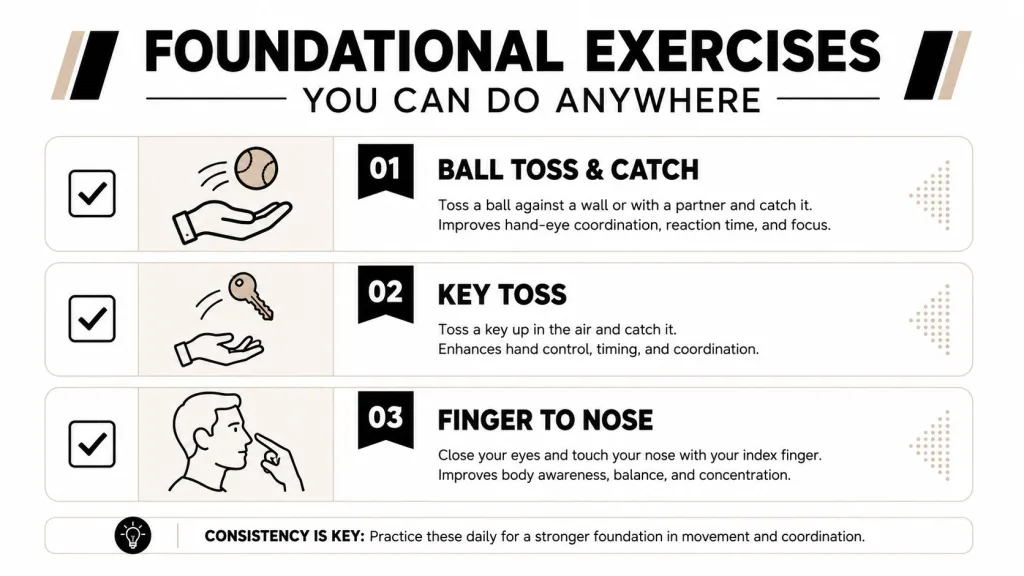
Start with single-ball toss and catch. Stand a few feet from a wall, toss a tennis ball with one hand, catch it with the same hand, then switch. Do 20 catches per hand without rushing, and only increase speed when your catches stop wobbling.
Next, use a wall-rebound drill. Throw the ball at chest height, catch it on the rebound, and keep your shoulders relaxed. Once that feels easy, step farther back or use alternating hands so your eyes have to track a moving object and your hands have to reset faster.
A solid third drill is juggling progression. Begin with two balls if three is too much, then move to three when your patterns stay controlled. Juggling is valuable because it forces your brain to predict the next hand position before the ball arrives, which is exactly the kind of timing driving needs.
You can also add a stroboscopic visual challenge after the basics feel stable. The point is to make visual input less predictable so your coordination has to work harder, and there’s evidence that acute stroboscopic exposure can improve eye-hand coordination performance in a measurable way. That’s not a magic trick, it’s a controlled way to stress visual processing.
For extra exercise ideas that fit into a simple home routine, the practical movement drills at practical motor skill exercises are a useful companion. They pair well with the kind of short, repeated practice that sticks.
Don’t practice until you’re tired. Practice until your form gets clean, then stop.
If you want a broader driver skill refresher, pair these drills with how to improve driving skills. The point is to build steadier hands before you try to handle more complex road situations.
Driving Drills for Teens Adults and Mature Drivers
Teen drivers, adult drivers, and mature drivers don’t need the same drill. A new driver needs clean habits first, while an experienced driver usually needs sharper scanning and less overcorrection.
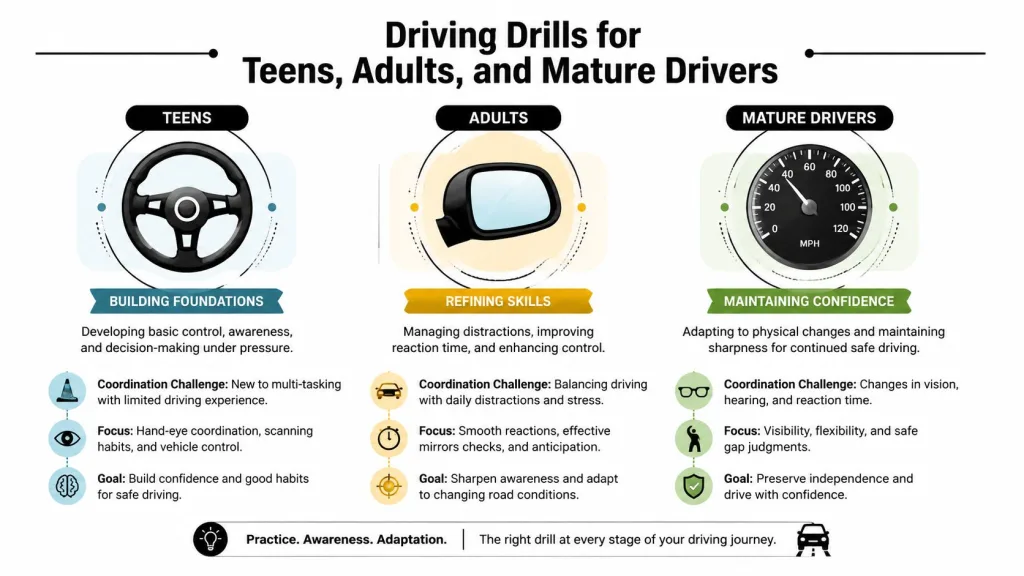
Teen drivers
Teen practice should start in an empty lot or quiet neighborhood. Pick one lane line, keep the steering smooth, and call out what you see in mirrors before every turn or lane change.
A good teen drill is scan, signal, steer. Check the mirror, name the hazard out loud, then make the move with one clean steering input. If the wheel keeps getting “fished” back and forth, the driver isn’t ready for busier traffic yet.
Adult drivers
Adults usually struggle with divided attention, not basic car control. Practice with a navigation route set, one passenger speaking normally, and a rule that the driver must still narrate mirrors, speed, and lane position.
The best adult drill is controlled multitasking. Drive a familiar route, then add one task at a time, like a map prompt or a brief conversation, and keep the steering calm. If focus collapses the moment a second task appears, the driver needs more repetition before taking on dense traffic.
For a structured training option, driver education courses give adults a cleaner environment to rebuild confidence without improvising every lesson.
Mature drivers
Mature drivers should train compensatory habits, not just faster reactions. Use wider scanning, earlier mirror checks, and larger following gaps so there’s more time to respond.
The simplest mature-driver drill is mirror sequence discipline. Rearview, left mirror, right mirror, road ahead, then move. That habit keeps decisions deliberate instead of reactive, which is exactly what you want when traffic gets busy.
A helpful reference for drivers looking at age-related support is Mature Driver Course, especially if you want a refresher that feels organized instead of random.
How Much Practice Actually Produces Results
Random practice doesn’t hold. The drivers who improve are the ones who repeat the same movements often enough for them to become automatic.
The clearest evidence points to structured motor intervention done 2 to 3 times per week and continued long enough to exceed roughly 720 minutes total exposure. In a 2025 meta-analysis in Frontiers in Physiology, that kind of program improved hand-eye coordination with a standardized mean difference of 0.45 and improved fine motor skills with SMD = 0.74. The same analysis also found stronger gains with moderate-to-high intensity work and when total training time passed 720 minutes (Frontiers in Physiology).
Short, repeated task blocks are the right move. That lines up with an intervention using 30-minute sessions, 3 times per week for 8 weeks, which produced lasting gains and showed no significant drop at 3- and 6-month follow-up (PMC study).
A simple weekly structure works well:
- Monday and Thursday: 10 to 15 minutes of ball work or wall rebound.
- Tuesday and Friday: 20 to 30 minutes of controlled driving drills in low-stress traffic.
- Saturday: one combined session where you review steering, mirrors, and lane position.
- Sunday: rest and self-check, because sloppy fatigue practice teaches sloppy habits.
Practical rule: if your reps get messy, the session is over. Clean reps beat long reps.
The 2013 longitudinal study of children also supports repeated practice over time. It found median eye-hand coordination improved from 18 to 32 in boys and from 9 to 24 in girls across two years, with better coordination linked to better fitness (PubMed). The point is simple, repetition changes performance, but only if the repetitions stay deliberate.
When Poor Coordination Signals Something Deeper
Some coordination problems are practice problems. Others are screening problems.
If the issue is new, getting worse, or clearly worse on one side than the other, stop treating it like a normal training gap. That kind of pattern deserves an eye exam or a medical review, because coordination is affected by both visual and motor systems, not just repetition (Harvard Health).
Adults often ignore this until driving confidence drops. That’s a mistake, because vision change, neurological change, and general slowing can all show up first as clumsy steering, missed cues, or a late response to an obvious hazard.
Use this as the decision filter:
- New clumsiness: get checked.
- One-sided weakness or awkwardness: get checked.
- Sudden difficulty with tasks that used to feel automatic: get checked.
- Stable, long-term awkwardness that improves with practice: train it.
If a learning difference or accommodation issue is part of the picture, learning disability accommodations is a useful starting point for understanding support without shame. The key is matching the response to the cause, not forcing every problem into the same bucket.
When drivers keep pushing through a real medical issue, they waste time and raise risk. When they get evaluated early, they usually get a clearer path forward, whether that means treatment, vision correction, or a more appropriate training plan.
Your Weekly Coordination Plan and Next Steps
Use an eight-week plan and keep it boring. Boring is good, because boring means repeatable, and repeatable means measurable.
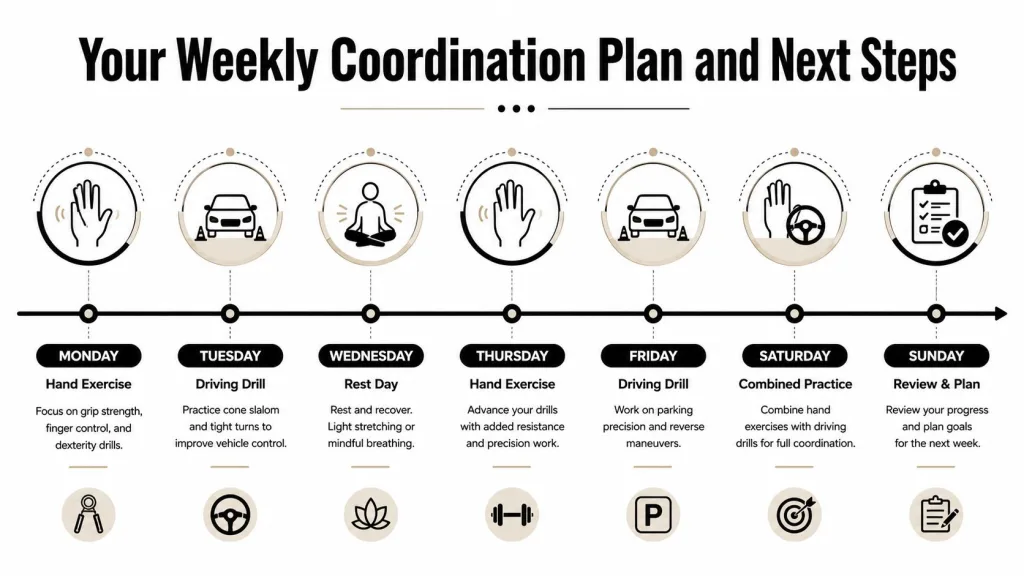
Monday, do ten minutes of ball toss and wall rebound. Tuesday, drive a short route and focus on mirror sequence, lane holding, and smooth braking.
Wednesday is rest. Thursday repeats the hand drills, and Friday repeats the driving drills with one added distraction, like navigation prompts or a passenger speaking normally.
Saturday is your combined day, where you connect the off-road work to the car. If your hands feel rushed, slow the pace down instead of forcing speed.
Sunday is review. Write down whether your steering was smooth, whether your mirror checks were consistent, and whether you caught yourself overcorrecting.
One more off-road habit helps here. Solo drills in other sports, like the kind covered in build BJJ technique without a partner, show the same principle, practice the movement cleanly before you ask it to hold up under pressure. Driving works the same way.
Here’s the bottom line, hand eye coordination improvement is trainable, but only if you practice with structure. If you want a more complete path, BDISchool’s courses give you a clear framework for safer driving, better habits, and the kind of confidence that comes from real instruction. Visit BDISchool and pick the course that fits your goal, whether that’s a refresher, point dismissal, or a more disciplined reset behind the wheel.