Florida usually makes you go to court if you want a speeding ticket dismissed, and a Basic Driver Improvement course can still keep points off your license while you fight. That means the smartest move is usually to enroll in BDI early, then challenge the ticket in parallel instead of waiting and hoping the clerk or the judge will save you.
You’re probably reading this with a citation in hand, your stomach still tight from the stop, and a clock already ticking. That’s the right moment to get serious, because the first choices you make after the flashing lights matter more than anything you say weeks later in front of a hearing officer.
What to Do in the First Hour After the Stop
Blue lights on I-4, a deputy at your window, traffic rushing by, and your mind going blank. That’s normal. The most important decision in the first hour is simple, say less than you think you should, because roadside admissions can follow you into court, while a clean record of facts can help you later.
A speeding stop is not the time to explain yourself. Legal guides consistently warn drivers to avoid statements like “I was speeding” or “I was in a hurry”, because those words can be used against you later NerdWallet’s guidance on fighting a speeding ticket.
Practical rule: Be polite, hand over what you’re required to hand over, and stop talking.
Use the next few minutes to create your own paper record. Write down the exact location, time, weather, traffic conditions, posted speed, the officer’s name and agency, and whether the officer mentioned radar, lidar, pacing, or another method. If you can safely see any device, note that too.
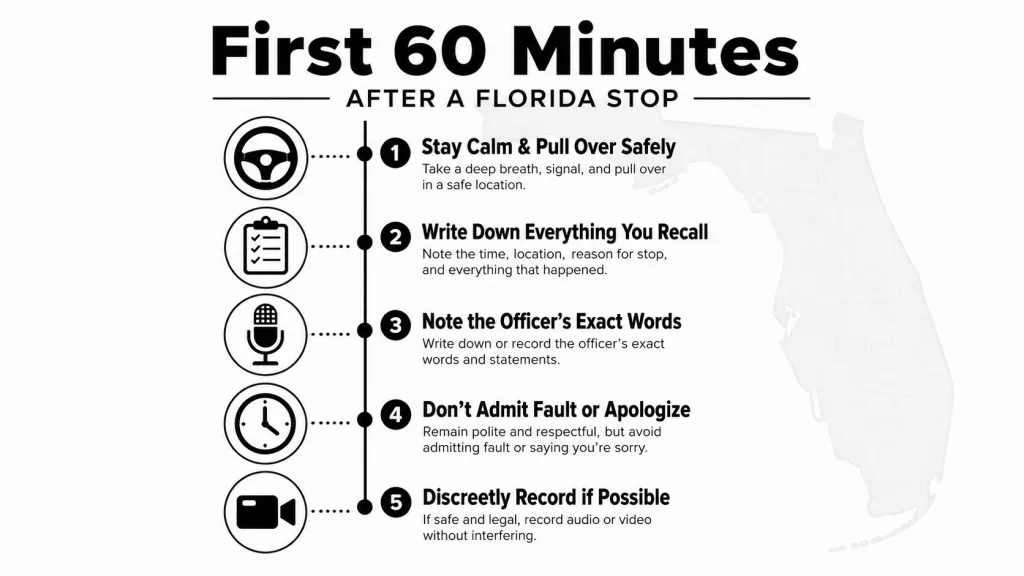
The reason this matters is blunt. Most of the fight later turns on whether the state can prove the speed reading and the paperwork trail, not on whether you remember feeling nervous. A one-page note made now beats a messy recollection made three weeks from now.
Keep your notebook or phone notes focused. If you need a reference for the citation itself, including where to find the number on the ticket, use this guide to the citation number on a ticket.
Understanding Your Florida Plea Options
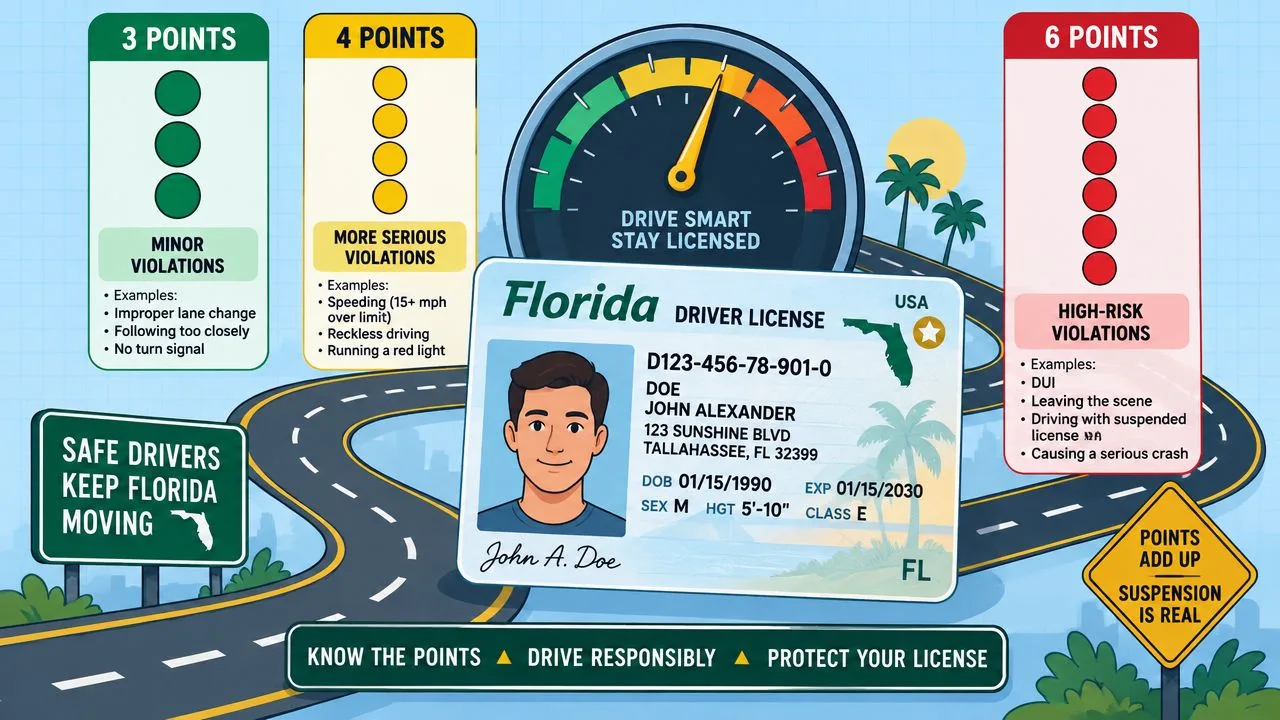
Once you’re home and the adrenaline has dropped, you have three real choices. You can pay the fine, fight the ticket in court, or elect a Basic Driver Improvement course so points don’t attach while you deal with the case.
Paying is not neutral. In many jurisdictions, paying a traffic fine is treated as a guilty plea, and in Florida that usually means the conviction lands on your record. That can trigger points and insurance trouble, which is why “just pay it” is usually the most expensive lazy answer.
The better move depends on the facts. If the alleged speed is close to the limit, the officer used radar, and there are no aggravating factors, I’d normally tell a driver to contest the citation and elect BDI at the same time if eligible. That keeps pressure on the state while protecting the license from points.
Florida drivers should also understand the practical difference between the hearing and the school. Florida-focused legal guidance says the only available way to get a speeding ticket dismissed is to challenge it in court, which makes the hearing the dismissal mechanism, not the school Florida speeding-ticket guidance.
For a plain-language breakdown of the available paths, use this Florida ticket options guide.
Bottom line: Don’t sit on the citation. Pick a lane fast, and if you’re eligible, use BDI as your point shield while you fight.
Gathering Evidence That Actually Moves the Needle
The state wins these cases when drivers rely on memory instead of paper. Your job is to build a file that answers one question, can the officer prove the speed the way the law requires?
Start with discovery. That means requesting the officer’s notes, calibration or maintenance records, training records, and any dashcam or bodycam video. In plain English, you want the paper trail behind the stop, because the weakest citations are often the ones with a broken chain of proof.
The measurement method matters
A speeding citation can be built on pacing, aircraft observation, radar, lidar, or VASCAR. Each one has different weak points, so the first smart question is not “How do I prove I wasn’t speeding?” It’s “How did they measure it, and was that method reliable?”
Radar and lidar cases often turn on whether the device was properly calibrated, certified, and maintained at the time of the stop. Pacing cases depend more on distance, traffic flow, and whether the officer could hold a stable speed. Aircraft observations and VASCAR bring their own proof issues, especially if the setup or timing is fuzzy Nolo’s overview of beating a speeding ticket.
Keep your own evidence equally concrete.
- Dashcam footage: Shows lane position, traffic flow, and what happened before and after the stop.
- GPS logs or phone timeline: Helps anchor your route and approximate driving behavior.
- Photos of the roadway: Captures blocked signs, curves, hills, weather, or sightline problems.
- Witness statements: Useful when another driver or passenger saw the same conditions.
- Google Maps or similar location records: Helps confirm where you were and what the road layout looked like.
If you want a useful comparison point on how evidence is handled in another traffic context, the jail process for jaywalking in Oxnard is a reminder that traffic cases often live or die on procedural details, not just the driver’s story.
One more thing. Bodycam often catches roadside admissions that drivers think nobody will remember. If you said you were late, distracted, or trying to make time, assume the officer can bring that up.
Building Your Courtroom Strategy
A Florida traffic docket is not the place to improvise. Walk in with a simple structure, because judges and hearing officers respond better to a clean story than to a stressed-out speech.
Start with credibility, not drama. Bring your citation, discovery printouts, notes, and any physical proof in a paper folder, then open with a calm statement that tells the court what you’re challenging and why. After that, move straight into the device, the paperwork, and the officer’s ability to support the reading.
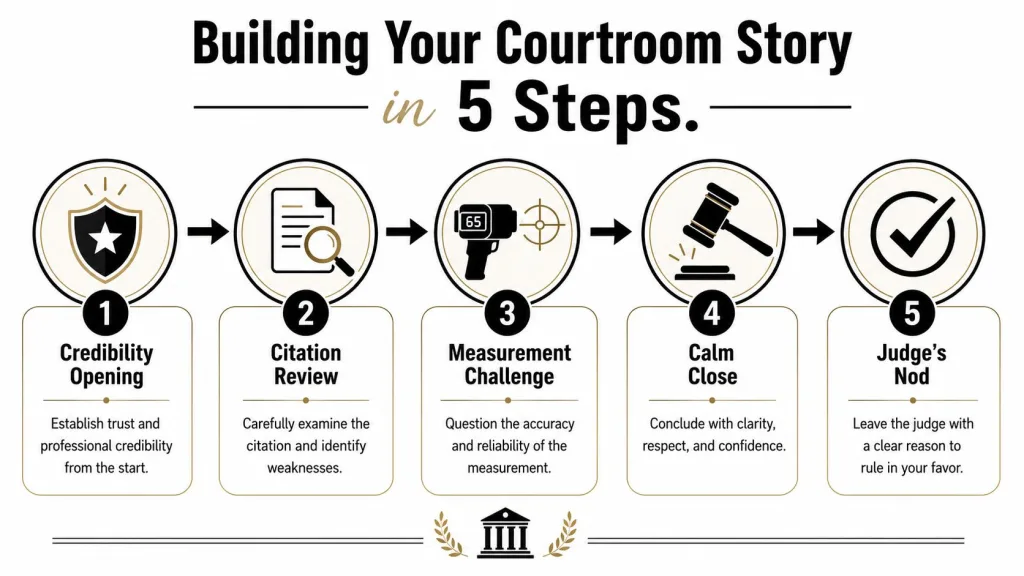
Three questions do most of the work for you.
- When was the device last calibrated?
- Was it tested before or after the shift?
- Was anything blocking the line of sight?
Those questions are short on purpose. They force the officer to answer with specifics instead of general confidence, and they keep you from wandering into broad “why” questions that only help the state. The point is to challenge the measurement method, not get into a roadside debate about your personality.
Arrive early and dress like the court matters, because it does. Courts run short dockets, officers may not appear, and the way you handle that moment can decide the case before you even speak.
For a practical overview of what happens when you get there, review what to expect in traffic court.
If the speed was high, the paperwork is messy, or you drive a CDL vehicle, hire a traffic lawyer. Local counsel often negotiates reductions, continuances, and procedural wins that self-represented drivers miss, and that becomes worth the money when your livelihood is on the line.
A separate example of how compliance-heavy transportation systems are handled can be useful too. The Fleetalyse speed monitoring guide shows how seriously documentation and monitoring get treated when speed is tied to accountability.
Why a Florida BDI Course Is Your Safety Net
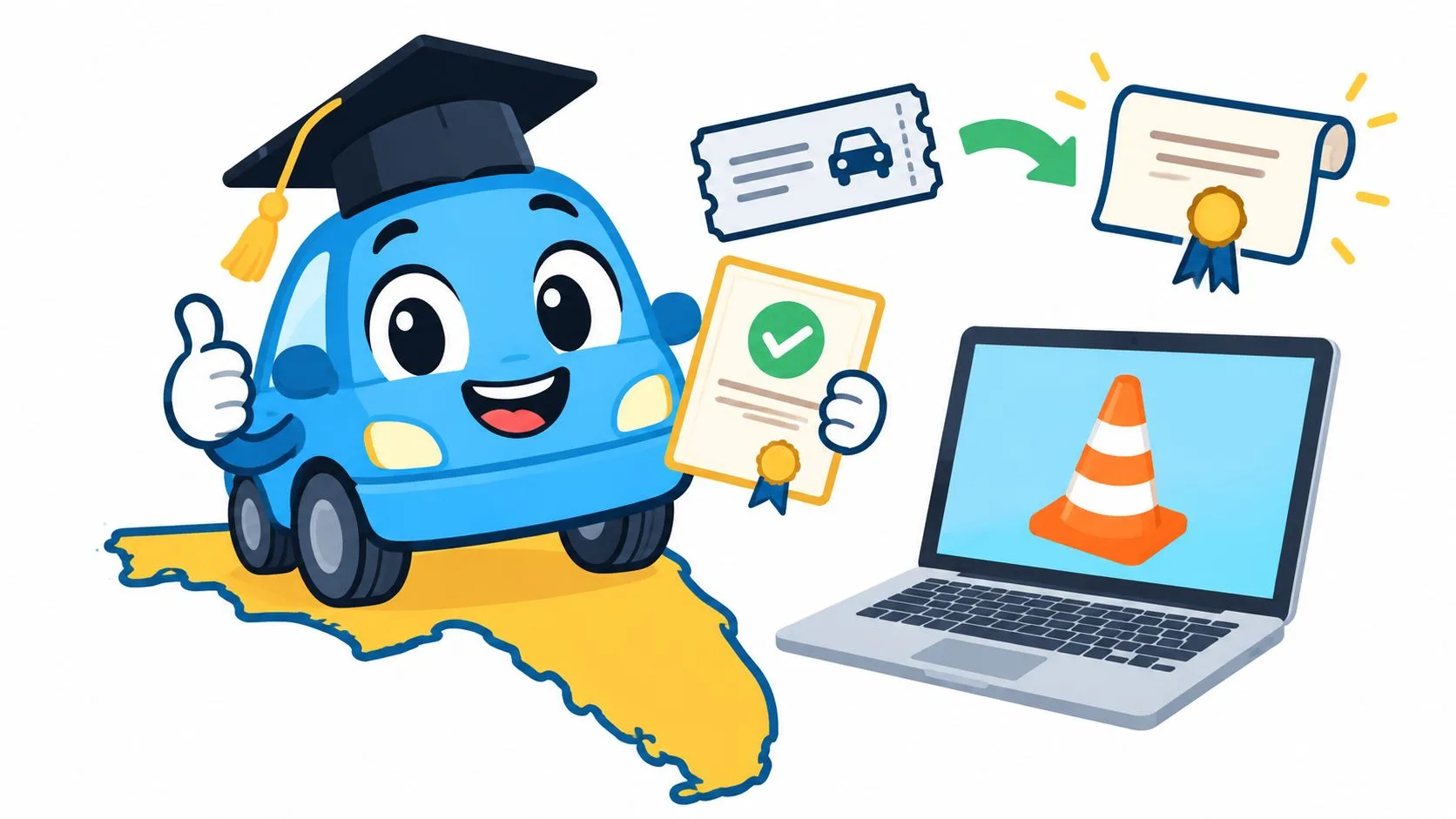
A Florida-approved Basic Driver Improvement course is the safety net most drivers should use the moment a speeding ticket lands in their hands. It’s a 4-hour course for moving violations, and when you elect it properly, it helps keep points off the license while you keep fighting the citation.
That separation matters. BDI is not the same thing as surrendering in court. It’s a parallel track, and it gives you protection while the hearing process plays out.
The common objection is emotional, not legal. People worry that enrolling looks like an admission. It doesn’t. It looks like a smart driver protecting the record while the court process runs its course.
If you want a modern online version of that safety net, BDISchool’s Florida BDI course online is built for self-paced completion and reported electronically to the FLHSMV. The school also offers study in English, Spanish, and Portuguese, which matters if you don’t want language to become another barrier.
BDI is the right fit for a routine speeding ticket. The longer Intermediate Driver Improvement, Aggressive Driver, and Mature Driver courses serve different situations, so don’t confuse them with the standard ticket response. If your goal is to keep points off after a moving violation, BDI is the track to use.
Enroll early, finish on time, and keep the completion record with your court papers. When a hearing officer sees a driver who handled the school requirement promptly, it usually helps the overall picture.
Simple rule: Fight the citation in court, but do not leave your license exposed while you wait.
Mistakes That Cost Florida Drivers the Case
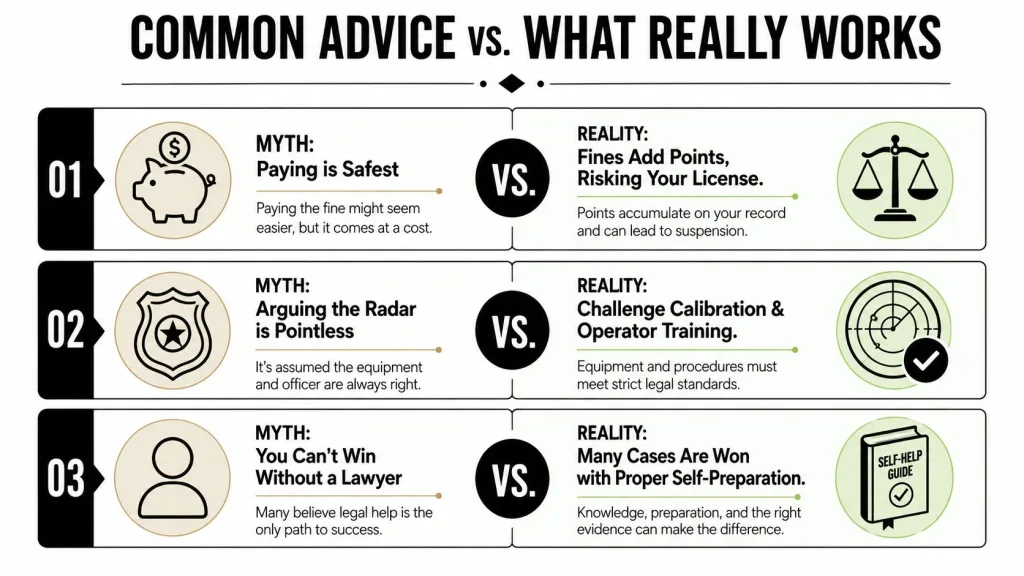
The worst advice sounds safe. Paying the ticket, talking your way out of it, or waiting to see what happens are all easy ways to lose control of the case.
Paying is the most expensive mistake because it usually functions as a conviction. In Florida, that means you’re not just settling a bill, you’re accepting the record consequence that comes with it. That is why “just pay it” is not neutral advice.
Explaining yourself to the officer is another trap. Once you’ve said you were late, tired, or in a hurry, the state has a clean admission and your defense gets harder. Silence, combined with proper paperwork, is much stronger than a roadside speech.
The third bad habit is underestimating how few drivers contest tickets. The available source material says only about 5% of drivers fight their tickets in court, which means about 95% pay them historical speeding-ticket context. That low contest rate doesn’t mean the ticket is unbeatable, it just means drivers never force the state to prove its case.
The mistakes that show up in court are predictable.
- Missing discovery: You cannot challenge what you never requested.
- Waiting too long to elect BDI: That leaves points exposed.
- Posting the stop online: It creates evidence for the other side.
- Showing up without the citation: That slows you down and makes you look unprepared.
Florida drivers should also remember the state-specific rule from earlier. The courtroom is the dismissal mechanism, not the school. If dismissal is your goal, the hearing has to be part of the plan.
Your 30-Day Florida Speeding Ticket Timeline
Day 0 is the stop. Day 1 through 7 is when you write everything down, request discovery, and decide whether the citation is worth fighting on the facts. Day 30 is the deadline you should treat as real, because that’s where paperwork, school election, and court response all need to be handled without excuses.
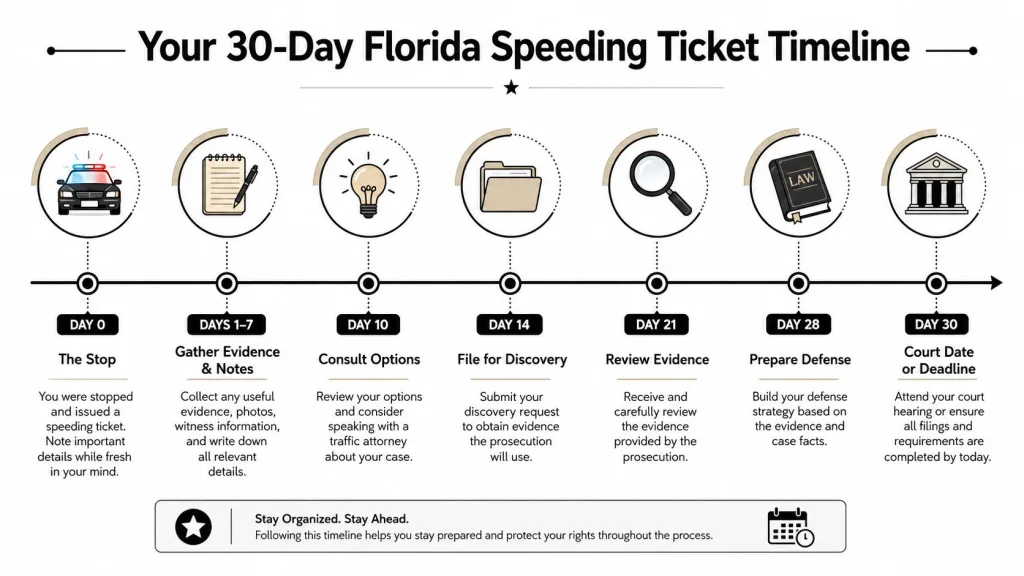
Don’t wait until the hearing date to enroll in BDI. Start it in the first week if you’re eligible, because that keeps the point issue from hanging over your license while you build the defense.
Here’s the practical rhythm I’d use.
- Day 0 to 1: Write down the stop details and save any video or GPS data.
- Day 2 to 7: Request discovery and compare the citation against your notes.
- By the first week: Enroll in BDI if you want the point-protection safety net.
- Before the deadline: Decide whether to pay, contest, or both.
- Before court: Organize the folder, print everything, and prepare short questions.
For planning purposes, expect the overall cost picture to be a mix of ticket, school, and possibly counsel. Typical Florida speeding fines vary by case, BDI is a separate course fee, and contested hearings can justify attorney time if the situation is serious. If your job depends on a clean record, cheap is the wrong lens.
Document fast, elect the school early, contest when the evidence supports it, and never let the fine go unpaid.
Florida’s own legal guidance says the only available option to get a speeding ticket dismissed is to challenge it in court, which makes the hearing the central dismissal mechanism in the state Florida speeding-ticket dismissal guidance.
BDISchool gives Florida drivers a practical way to handle the point side of a speeding ticket while they fight the citation in court. If you want to protect your record and keep moving forward, visit BDISchool and enroll in the Florida-approved course that fits your case.