In Florida, online traffic school is usually 4 hours if you're taking the standard Basic Driver Improvement course for a ticket, but the required length can range from 4 to 12 hours depending on why you're being sent. Most online courses are self-paced, so you can split that time across multiple sessions instead of sitting through it all at once.
That's the part most drivers want to know first. The part that matters is this: if you pick the wrong course, the hours you spend online might not count.
I've seen the same mistake over and over. A driver gets a ticket, Googles how long is online traffic school, sees “4 hours,” signs up fast, and only later finds out the court wanted an 8-hour or 12-hour program. The smart move isn't finding the shortest course. It's matching the course to the legal reason you need it.
There are really two clocks you need to manage. One is the required seat time inside the course. The other is the deadline from the court or county to get it done and reported. If you understand both, this process is simple. If you ignore either one, you can waste time and money.
The Short Answer on Florida Online Traffic School Length
You get a ticket, search for the fastest Florida traffic school, and see "4 hours" everywhere. Then the court notice shows up and points to a different course. That is where drivers waste time and money.
Here is the short answer. Florida online traffic school can run from 4 hours to 12 hours, and the right number depends on why you were ordered or allowed to take it, not what sounds quickest. The Florida Department of Highway Safety and Motor Vehicles lists approved driver improvement schools, and the standard ticket course for many drivers is the 4-hour Basic Driver Improvement course.
The duration question has two timelines.
First, there is the course seat time Florida requires. Second, there is the deadline on your ticket, court order, or county instructions. Drivers who focus on only one of those timelines are the ones who end up taking the wrong class or missing the filing window.
The range is 4 to 12 hours
Florida-approved course options commonly fall between 4 and 12 hours, depending on the legal trigger. A general Florida course-length breakdown outlines the usual formats, including 4-hour BDI, 6-hour DETS, 8-hour intermediate or aggressive-driver programs, and 12-hour advanced driver improvement.
Use this rule:
- 4 hours fits many standard moving-ticket situations.
- 6, 8, or 12 hours usually means a court order, a repeat issue, or a license-related requirement.
- Online only changes the format. It does not reduce the state-required hours.
My recommendation: Match the course to the wording on your citation or court notice. If the paperwork names a specific program, take that exact program.
Self-paced changes your schedule, not the legal requirement
Self-paced online traffic school gives you flexibility, not a shortcut.
You can usually log in, complete part of the course, save your spot, and finish later. That helps if you are fitting traffic school around work or family. It does not let you turn a state-required course into a quick click-through session. Florida-approved providers still have to enforce the minimum instructional time.
Keep the two-clock rule in mind:
- Seat time is the number of hours built into the course.
- Deadline time is the date by which the court or county expects completion.
- Your schedule is how you spread the work across those available days.
If a site suggests you can finish a legitimate Florida traffic course in a few minutes, skip it.
Florida Course Durations by Type and Purpose
The question isn't just how long is online traffic school. The better question is, which Florida course are you required to take?
Florida drivers get tripped up when they assume every online program is the same. It isn't. Course length follows the legal trigger.
The 4-hour course most ticketed drivers need
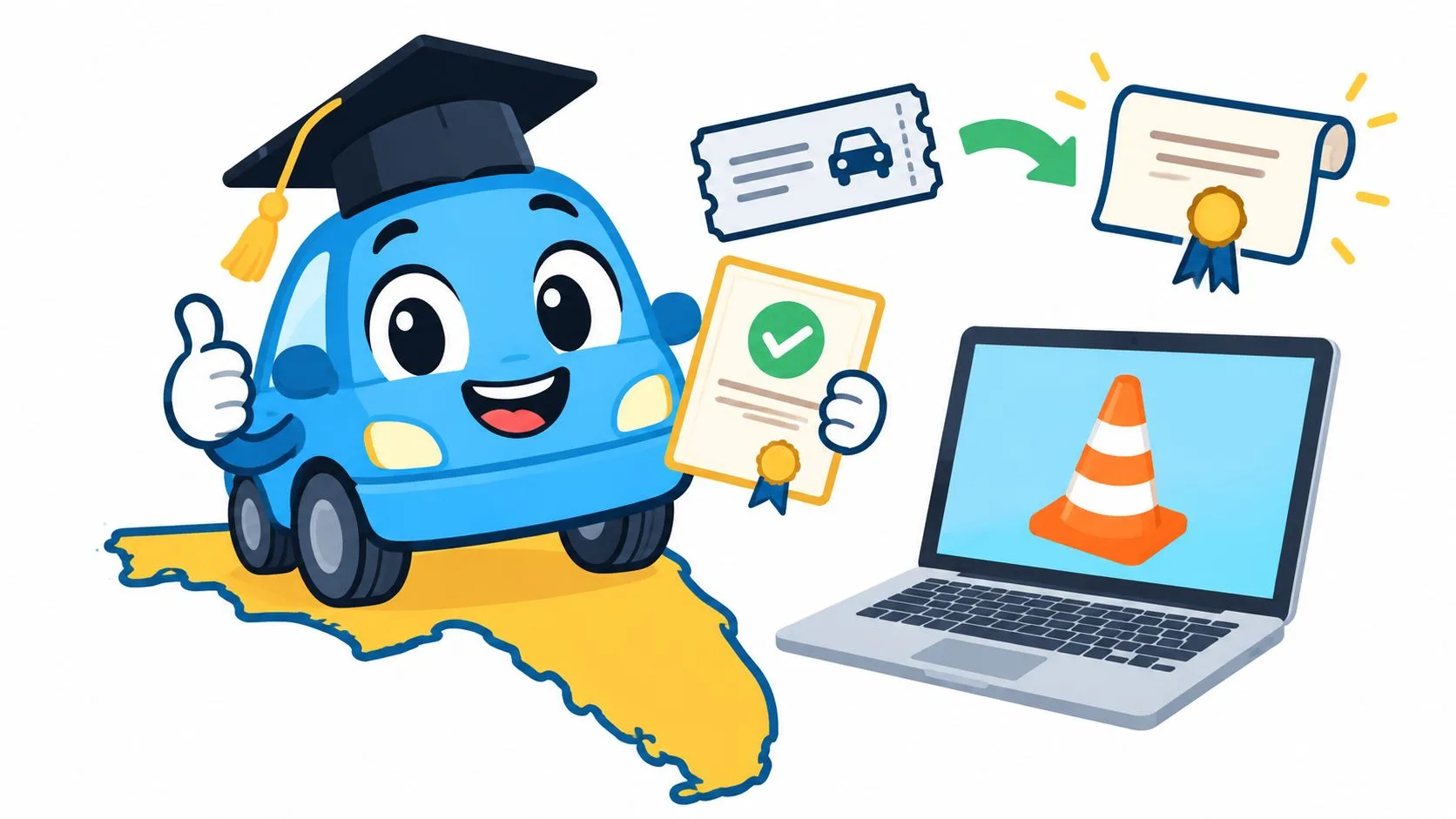
For many moving violations, the standard choice is the 4-hour Basic Driver Improvement course. Florida says drivers seeking the point-prevention benefit must elect BDI within 30 days of the citation date, tell the clerk of court in the county where the citation was issued, and complete the course through an approved provider, according to the FLHSMV BDI provider guidance.
If that sounds like your situation, this is the course typically meant when they ask about Florida's 4-hour online driving course.
The longer courses exist for a reason
Florida also separates more serious or court-directed cases into longer formats. State-aligned sources note 8-hour and 12-hour pathways for judge-ordered, repeat-offender, or license-related situations, and they make the important point that finishing the wrong course can fail compliance even if you did complete something online, as explained in the American Safety Council Florida traffic school FAQs.
That's why I tell drivers not to shop by price or speed first. Shop by legal fit.
- 8-hour programs fit drivers sent to an intermediate or aggressive-driver track.
- 12-hour programs fit advanced driver improvement cases, often tied to reinstatement or serious court direction.
- 6-hour mature driver programs are a different animal entirely. They're generally for older drivers seeking an insurance-related refresher, not ticket dismissal.
Drivers who feel stressed behind the wheel often do better when they slow down and rebuild confidence first. If anxiety is part of the issue, these lessons for nervous drivers in Melbourne offer useful defensive-driving ideas that apply well beyond Australia.
My recommendation by situation
Use this simple filter:
- Got a normal moving ticket and want the standard school election option? Look at 4-hour BDI.
- Got paperwork from a judge that names intermediate, aggressive, or advanced improvement? Take the exact course ordered.
- You're over 55 and looking at an insurance-discount style refresher? That's the 6-hour mature driver lane, not court traffic school.
If you're guessing, stop and verify before you enroll.
Comparing the Standard Florida Traffic School Options
Most confusion disappears once you line the options up side by side. Florida traffic school is easier when you treat it like a matching exercise instead of a guessing game.
Florida Online Traffic School Courses at a Glance
| Course | Hours | Typical Trigger | Who It's For | Key Florida Rule |
|---|---|---|---|---|
| Basic Driver Improvement | 4 | Standard moving violation election | Drivers trying to avoid points after an eligible citation | Must be elected properly with the clerk and taken through an approved provider |
| Mature Driver | 6 | Insurance-related refresher | Drivers age 55 and older seeking an insurer-recognized course | Voluntary and not the same as ticket dismissal traffic school |
| Intermediate or Aggressive Driver Improvement | 8 | Court-ordered or higher-risk driving situation | Drivers told to complete an 8-hour program | The course type must match the court or legal trigger |
| Advanced Driver Improvement | 12 | Reinstatement or serious court-directed requirement | Drivers facing advanced corrective requirements | Used for more serious licensing or compliance situations |
How to use the table without overthinking it
If you got a standard speeding ticket and nothing on your paperwork mentions a longer program, you're probably looking at the 4-hour option.
If your notice refers to an 8-hour requirement, don't try to force a BDI course into that slot. An 8-hour Florida driver improvement course exists for exactly that reason.
The shortest course is only the right course when your citation or court notice actually allows it.
Fast elimination works better than research rabbit holes
Ask yourself these three questions:
- Was this just a regular moving citation?
- Did a judge or clerk specify a longer program?
- Am I taking this for a ticket, for reinstatement, or for insurance?
Those answers usually narrow the choice immediately.
People waste hours reading generic traffic school pages because those pages flatten everything into “4 hours.” That's incomplete advice. Florida uses different course lengths because different problems call for different corrective tracks.
State Minimums and Legal Deadlines You Need to Hit
Florida traffic school runs on two separate timelines. Ignore either one and you can end up noncompliant even if you meant well.
First clock is the seat time minimum
The course hours are not suggestions. Florida's traffic-school ecosystem is built around required clock-hour formats, and practical guidance for students consistently points to 4-hour, 8-hour, and 12-hour pathways depending on the legal trigger, with the standard BDI route at 4 hours, as summarized in this Florida traffic school picker guide.
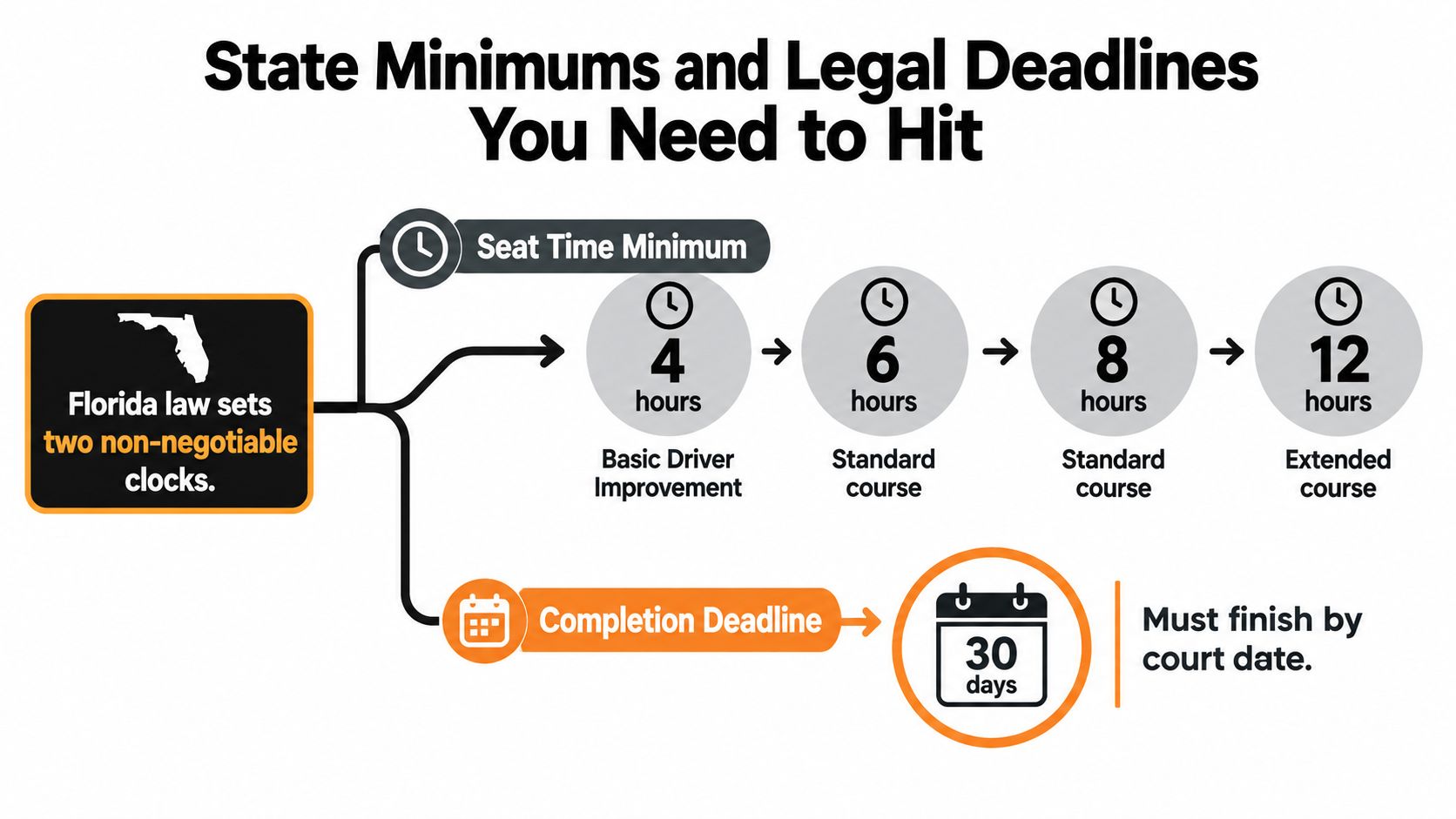
You can break the course into chunks, but you still have to complete the required seat time. That's the internal clock.
Second clock is your outside deadline
The external deadline matters just as much. Florida says BDI election must happen within 30 days of the citation date, and the driver must notify the clerk before attending, according to the same FLHSMV BDI election instructions.
Separate student guidance also notes that county deadlines to complete and submit the certificate can range from 60 to 120 days, which is why you should treat your court paperwork as the final word, as explained in these Florida Safety Council BDI FAQs.
- Internal deadline: Finish the required hours inside the course.
- External deadline: Finish and report it before your county or court deadline.
- Smart move: Don't finish on the last day. Leave buffer in case anything needs verification.
Most traffic-school problems aren't caused by the course. They're caused by drivers waiting too long to start.
If you enrolled already, check both clocks today.
How Self-Paced Online Courses Actually Work
You sign up on Tuesday night, knock out 45 minutes, log back in Thursday during lunch, and finish the rest over the weekend. That is how self-paced traffic school is supposed to work.
The key is simple. Self-paced changes your schedule, not Florida's required seat time. You control when you log in and out. The provider tracks your progress until you finish the full course.
What self-paced means
Florida online traffic school is built for stop-and-start use. You can complete one session at a time, leave, come back later, and pick up where you left off. That makes it a good fit for drivers with work shifts, kids, travel, or an unpredictable week.
If this is your first time enrolling, read this plain-English overview of how Florida traffic school works online before you register.
Here's the part drivers get wrong. “Self-paced” does not mean “finish whenever you feel like it” in the legal sense. It only means you can spread the work across multiple logins. Your court or county deadline is still sitting there on a separate clock.
That two-timeline setup matters. One timeline is inside the course. You must complete the full required hours. The other timeline is outside the course. You must finish early enough for your certificate to be processed and accepted before your deadline.
How to use the flexibility well
Treat the course like an appointment, not a tab you leave open all week.
Drivers finish more cleanly when they plan two or three real work blocks instead of ten scattered mini-sessions. Long gaps create drag. You waste time remembering where you left off, and distractions pile up fast.
Use this approach:
- Pick your best hours: If you focus better in the morning, do it then. Do not save it for late night if you know you will be tired.
- Work in bigger chunks: A couple of solid sessions beat constant stopping and restarting.
- Stick to one device if you can: It reduces login hassles and keeps your progress easier to track.
- Keep moving: Read the lesson, answer the question, and continue. This is traffic school, not the bar exam.
Why online usually beats the classroom
For a Florida driver trying to meet a deadline, online is the practical choice. A classroom locks you into someone else's calendar. A self-paced course lets you fit the required time around your own schedule while still meeting the same legal trigger for your case.
That is advantage. You get control over the calendar without losing compliance.
Smart Ways to Finish Faster Without Cutting Corners
You can't cheat the timer. You can stop wasting time around it.
Drivers who struggle with online traffic school usually don't fail because the material is too hard. They fail because they start distracted, stop constantly, and leave themselves no cushion before the deadline.
The myths that waste the most time
Three bad assumptions keep showing up.
- “I can probably click through fast.” You can't if the provider is following Florida's required timing structure.
- “Online school is a scam.” Approved providers exist for a reason. The issue isn't legitimacy. It's whether you chose the correct approved course.
- “It'll take forever.” It only feels that way when you drag a short course across too many interrupted sessions.
A better way to finish cleanly
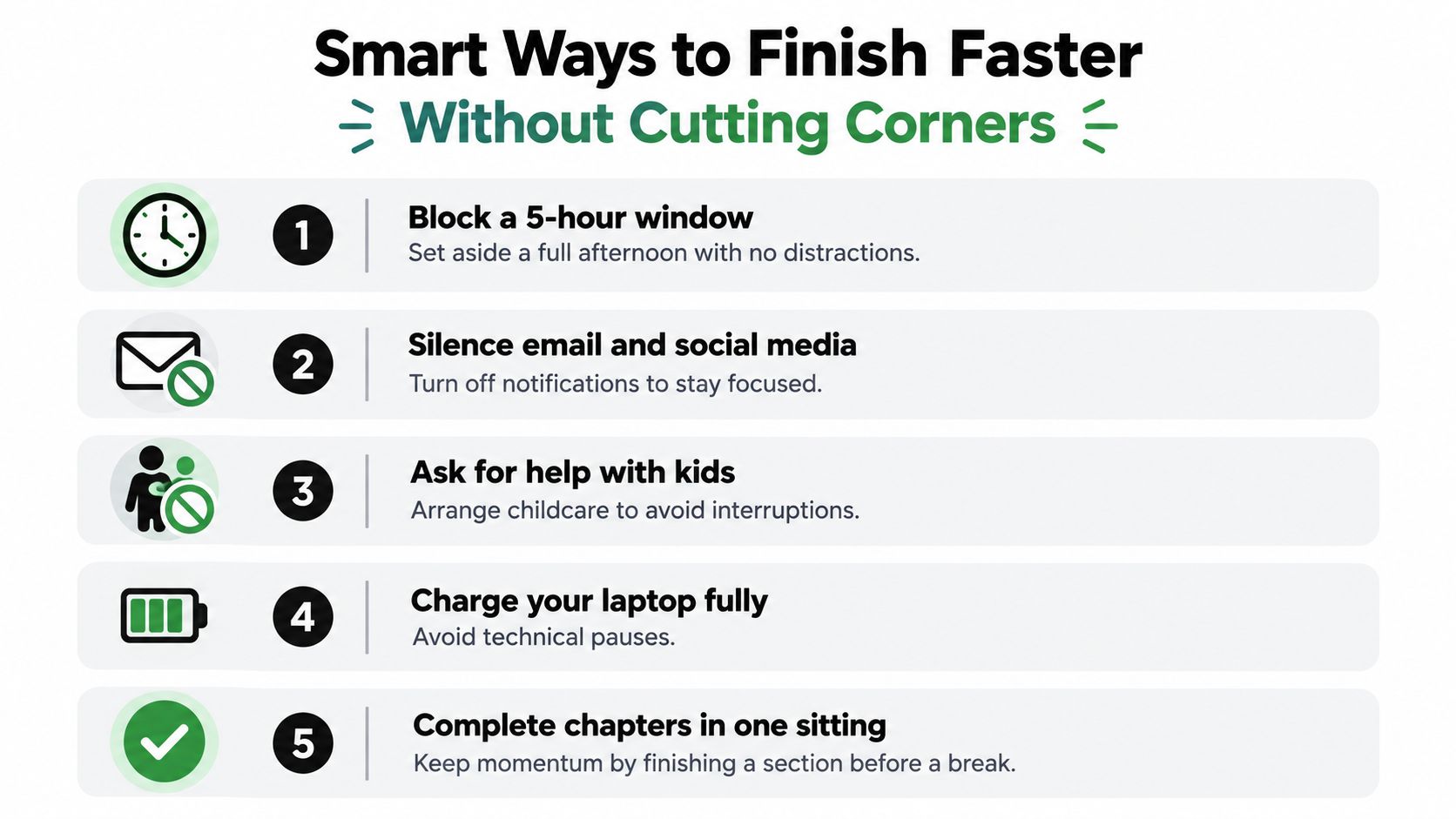
Use a simple completion plan:
- Block a real window. For a 4-hour course, reserve more than the bare minimum so interruptions don't wreck your pace.
- Kill distractions. Silence email, mute group chats, and close extra tabs.
- Use stable internet. Dropped sessions create frustration even when progress saves.
- Finish early. Give yourself room in case you need to recheck reporting or review a result.
Here's a quick visual reminder of the approach most busy drivers should follow.
If you want the shortest possible calendar timeline, protect your study block like an appointment. Don't squeeze it between five other things.
Common Myths About Online Traffic School Duration
A driver gets a ticket on Monday, signs up for the first “fast” course they find on Tuesday, and misses the deadline on Friday. That mistake happens for one reason. People treat traffic school as one timing question when it is really two. You have seat time inside the course, and you have a court or county deadline outside the course.
That is why the “shortest course” mindset causes trouble.
Myth: online traffic school is fake
Wrong. Florida uses approved providers, and the state gives drivers a way to verify completion through its electronic traffic school completion check.
The risk is not legitimacy. The risk is taking the wrong course for the legal trigger on your paperwork.
Myth: self-paced means you can finish in minutes
Wrong again. Self-paced means you choose when to log in and out. It does not cancel the required hours for the course you were assigned.
If your case calls for a 4-hour BDI course, you still need the full 4 hours. If a court ordered 8 hours or 12 hours, that longer clock controls.
Myth: every Florida traffic course is four hours
This confuses one common course with every course.
A standard moving violation may point you to a 4-hour Basic Driver Improvement course. Court orders, aggressive driving requirements, or certain license-related issues can point you to a different program with a different time requirement. Pick by trigger first, length second.
Myth: enrollment handles everything for you
No. Enrollment starts the process. It does not fix a bad course choice, wrong citation details, or a missed filing deadline.
Drivers run into problems when they finish the seat time but ignore the outside deadline, or when they meet the deadline with the wrong course. Both errors count against you.
The workflow drivers should follow
Use this order:
- Read the citation, clerk notice, or court order for the exact course trigger
- Match that trigger to the correct Florida course
- Give yourself enough calendar room to finish the full seat time
- Confirm completion reached the court, clerk, or state system that needs it
That is the clean way to avoid wasting hours on the wrong program.
From Sign-Up to Certificate in a Few Simple Steps
Drivers do best when they treat this like a checklist. Not a research project. Not a legal puzzle.
The clean workflow that works
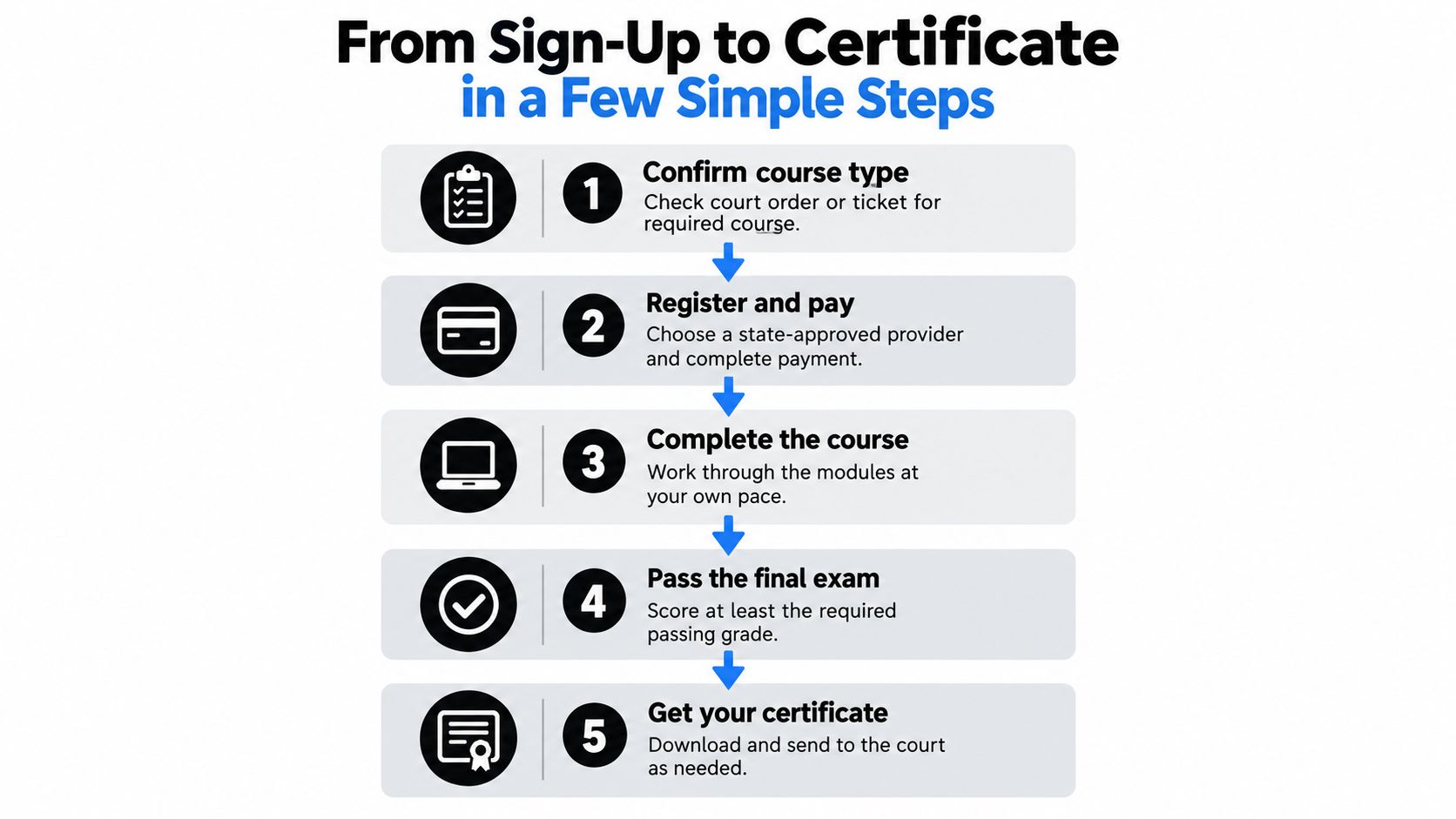
- Confirm the exact course you need. Read your citation, clerk notice, or court order carefully.
- Choose a Florida-approved provider. If you want to compare options, Florida course listings are available through BDISchool course pages and Driver Educators course pages.
- Register with accurate information. Use your driver license number, citation details, and county exactly as listed.
- Complete the course at a steady pace. Don't rush. Don't drag it out.
- Save proof and verify reporting. Keep your completion record and confirm the state system reflects it.
My blunt recommendation
If you've got a standard moving violation and you're eligible for BDI, start now and get it off your list. If your paperwork names an 8-hour or 12-hour course, stop searching for shortcuts and enroll in the right one the first time.
How long is online traffic school? In Florida, the honest answer is easy. It's however many hours your legal trigger requires, and the right move is picking the correct course before the deadline starts squeezing you.
BDISchool offers Florida-approved online traffic school options that match the course-length question drivers care about, including the standard 4-hour BDI path and longer formats for other situations. If you want a self-paced course that fits Florida's required timing structure and can be completed on your schedule, visit BDISchool and choose the course that matches your ticket or court order.