20,000 fighting troops per mile was once normal for holding a defensive position, while later armies could defend ground with about 250 men per mile, which is roughly 1% of that older density. In driving, the same idea applies, defensive posture is the active blend of body position, scanning, following distance, speed control, and attitude that gives you time to avoid trouble instead of reacting after it starts.
You’re probably not thinking about military history when you merge onto I-95, roll up to a busy intersection, or notice a car drifting toward your lane. You’re thinking, “How did that get so close so fast?” That’s where defensive posture matters, because it changes the way you manage space, attention, and pressure before a mistake becomes a violation or a crash.
A Moment Most Florida Drivers Recognize
A gray sedan slips into your lane without signaling. A tourist hesitates in the middle lane like they’re reading the road signs for the first time. Ahead of you, a pickup taps its brakes for no clear reason, and now everybody around you is adjusting at once.
That’s the Florida driving moment people remember later, because it never feels dramatic while it’s happening. It feels ordinary until you realize you’ve got one second to decide whether you’ll ease off, change lanes, or hold your line and hope everyone else behaves.
The split second that matters
Defensive posture is what gives that split second some room to work. If your seat is set, your hands are ready, your eyes are moving, and your gap is already open, you’re not scrambling for a rescue plan.
If you’re relaxed, distracted, or following too closely, the road forces the choice for you. That’s when a small surprise turns into hard braking, a horn blast, or a citation that starts with “I just didn’t have time.”
Practical rule: The safest driver in a surprise moment is usually the one who was already prepared before the surprise showed up.
That’s why defensive posture isn’t only about avoiding collisions. It’s about making steady choices early enough that you don’t need luck to stay out of trouble.
What Defensive Posture Really Means for Drivers
Defensive posture means you drive in an active alert state. Your body, eyes, space, speed, and attitude all work together so you can anticipate hazards instead of only reacting to them.
That’s different from reactive driving. Reactive driving waits until the danger is obvious, then asks you to fix it in a hurry. Defensive posture starts earlier, before the lane drift, before the hard brake, before the light turns yellow and everyone around you gets indecisive.
Why the term matters in plain English
In military doctrine, a defensive operation is meant to defeat an attack, gain time, economize forces, and create conditions for later action, and the U.S. Army identifies area defense, mobile defense, and retrograde as the basic types U.S. Army doctrine on defensive operations. That same logic translates cleanly to driving, because you’re also trying to protect space, preserve options, and keep control long enough to make the next good move.
The point isn’t to freeze. The point is to stay ready while the situation is still manageable.
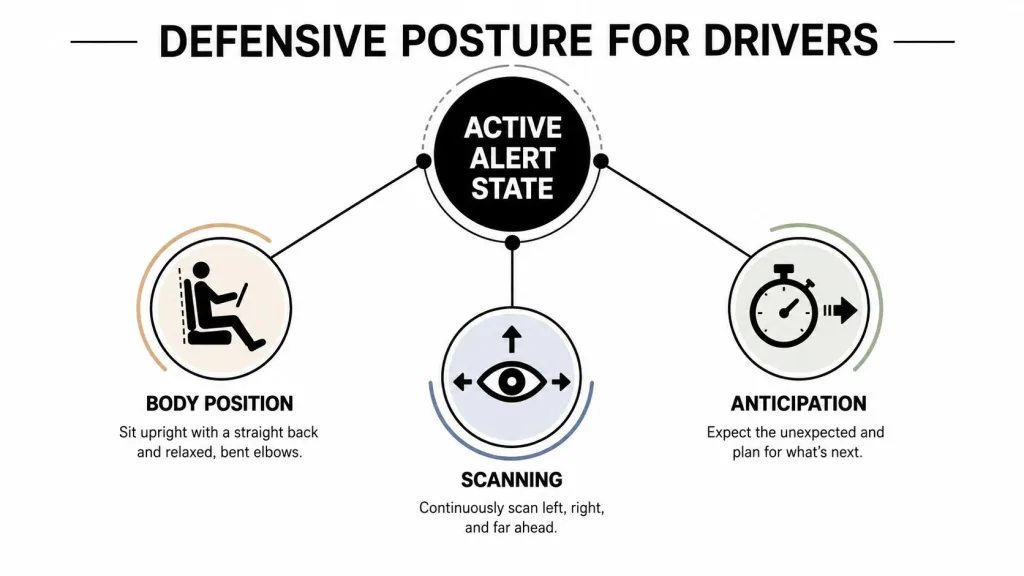
A helpful way to think about it is this, defensive posture is not a pose, it’s a system. You don’t “set it and forget it,” because traffic, weather, and driver behavior keep changing every minute.
If you want a truck-focused version of that mindset, the fleet manager defensive driving guide is a useful resource because it treats defensive driving as a work habit, not a one-time reminder. For a broader skills review, the defensive driving techniques overview gives the same idea in a more general Florida-driver format.
The Five Components Every Driver Controls
Defensive posture gets easier when you stop treating it like one big personality trait. It’s really five separate controls working together, and each one gives the others more room to help you.
1. Seat and hand position
Your seat should put you close enough to steer cleanly, brake firmly, and see well without reaching. Your hands should feel steady, not stretched, because awkward posture delays reaction.
Setting up a desk before you start working is like this. If the chair is wrong, everything takes more effort.
2. Active scanning
Scanning means you keep moving your attention across the road, mirrors, sides, and far ahead. You’re looking for clues, not just hazards, because clues usually show up first.
That includes checking for lane drift, sudden brake lights, pedestrians near crossings, and drivers who look unsure. In city traffic or on Florida’s tourist-heavy roads, that habit matters more than a quick glance straight ahead.
3. Following distance
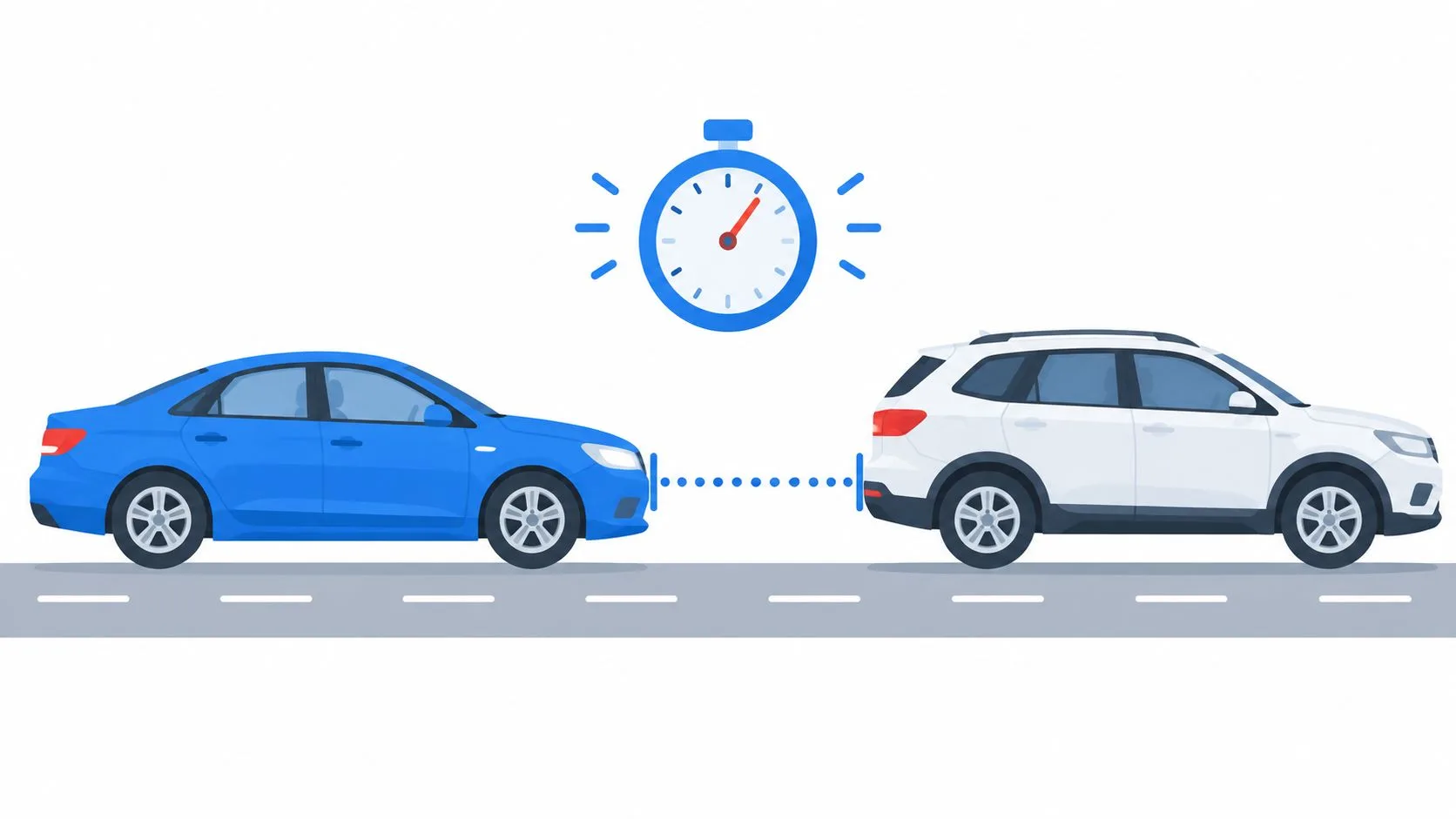
A safe following gap gives you time to brake or steer, not just room to feel comfortable. Florida guidance emphasizes enough space to avoid a crash, and Pennsylvania’s driver manual says a 4-second gap on dry pavement gives enough room to steer or brake safely, while a shorter gap means you’re following too closely Florida defensive driving guidance.
That gap is a control variable, not a preference. If rain, darkness, traffic, towing, or fatigue are in the mix, you need more of it.
4. Speed management
Speed management means matching your pace to the road, not to the cars behind you. If water is pooling, sightlines are poor, or traffic is bunching up, easing off early is smarter than proving you can keep up.
The safest speed is the one that leaves you enough time to see, decide, and act.
5. Driver attitude
Attitude is the part people underestimate. A rushed, irritated, or competitive mindset makes every other control weaker because it narrows your attention.
Slow mind, clean hands, clear eyes. That combination keeps small traffic problems from turning into big ones.
Here’s the quick version of how these five work together.
| Component | What It Controls | Driver Cue |
|---|---|---|
| Seat and hand position | Reach, control, and comfort | Adjust before you move |
| Active scanning | Early hazard detection | Keep eyes rotating |
| Following distance | Time to react | Hold a full 4-second gap on dry roads |
| Speed management | Stopping distance and decision time | Ease off before conditions force you to |
| Driver attitude | Judgment and patience | Reset before frustration takes over |
A related stopping-distance explanation is available in the how to calculate stopping distance guide, which pairs well with this habit because distance and time are really the same conversation from two angles.
A Two-Minute Drive That Shows the Posture in Action
On a rainy Florida morning, one driver leaves too late, sits low in the seat, and reaches for the wheel with stiff arms. The windshield wipers are working hard, traffic is moving unevenly, and a sedan ahead keeps edging toward the lane line.
The driver is already tense, so every brake tap feels sharper than it should. The gap closes, the light turns yellow sooner than expected, and the whole trip becomes a series of recoveries.
The same road, handled differently
A second driver makes the same commute with a different routine. The seat is adjusted before moving, the mirrors are checked, and the shoulders stay loose. The driver sees pooling water early, eases off the accelerator, and opens a 4-second gap before the traffic starts bunching up.
That driver isn’t driving slower for the sake of being cautious. They’re buying time. They also keep the phone out of reach, which matters because a calm cabin makes a calm decision easier.
By the time the boulevard gets crowded, the choice has already been made. The driver is no longer asking, “How do I fix this?” They are staying inside the space they already created.
That’s the key difference between a stressful trip and a controlled one. The road didn’t change, the driver did.
Short Drills You Can Practice on Your Next Trip
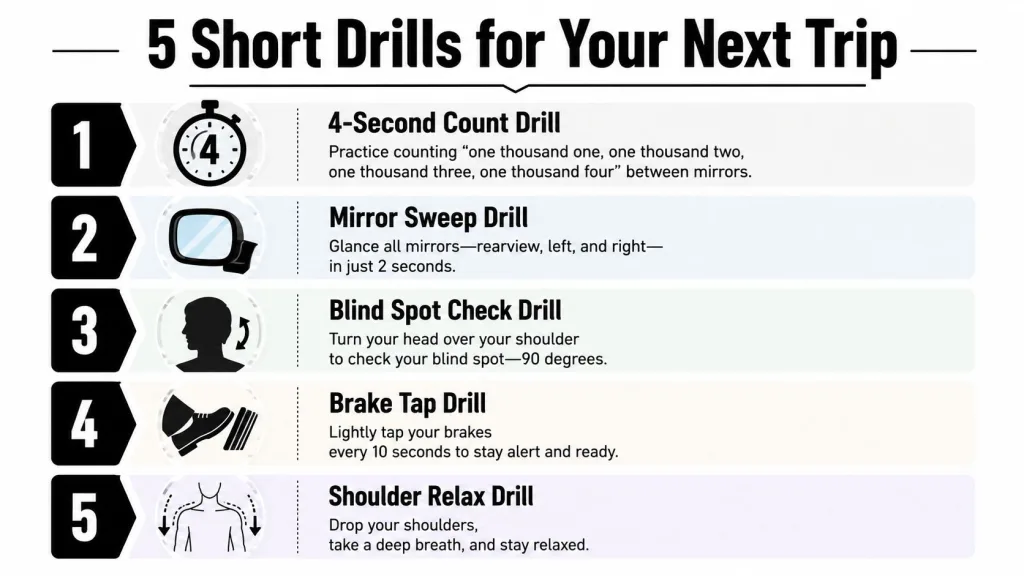
Small drills work because they fit into real life. You don’t need a free afternoon to build a safer habit, you need a routine you’ll consistently repeat.
Five quick practices
- 4-Second Count Drill: Pick a fixed object, then count the seconds between the car ahead of you passing it and your own front bumper reaching it. If the count is under four on a dry road, back off and reset.
- Mirror Sweep Drill: Each time you come to a stop, scan rearview, left mirror, and right mirror in one smooth sweep. The goal is to know what’s around you before you move again.
- Seat-and-Hand Check: Before you pull out of a parking spot or stoplight, make sure you’re sitting upright and your hands feel controlled, not cramped.
- Gentle Speed-Drop Drill: Before curves, wet pavement, school zones, or crowded merges, ease off a little earlier than feels necessary. You should feel the car settle before the hazard arrives.
- Breathing Reset: If you feel impatient, take one slow breath and relax your shoulders before the next lane change or turn. A calmer body usually makes a cleaner decision.
The hand-eye coordination improvement guide fits naturally with these drills because defensive posture depends on eyes, timing, and smooth control working together.
Useful pattern: Short drills done often beat big practice sessions done rarely, because the road rewards habits you can use without thinking.
If you want to know whether a drill is working, watch for fewer rushed corrections. You should feel more prepared, not more busy.
Florida Benefits, Points, and Insurance Savings
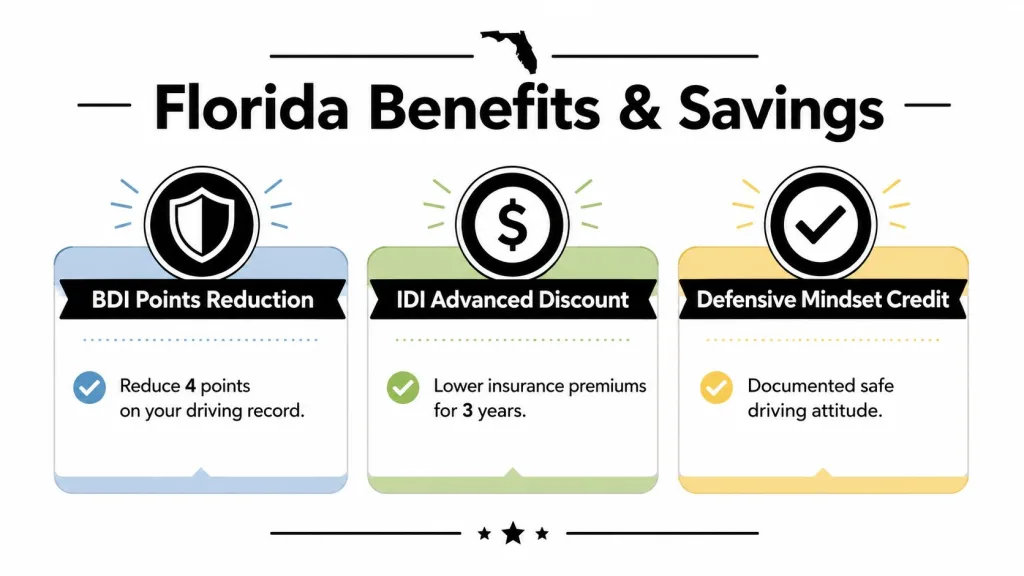
Florida drivers usually care about two things after a ticket, the record and the cost. Defensive posture supports both, because the same habits that keep you out of trouble also line up with course goals in Basic Driver Improvement (BDI) and Intermediate Driver Improvement (IDI).
Florida-approved coursework is designed to satisfy court requirements where eligible, support point dismissal when that option applies, and meet insurance discount criteria with participating carriers. BDISchool’s courses follow FLHSMV guidelines, and certificates are reported electronically, which makes the process easier to complete without extra paperwork.
A driver looking to improve skills after a citation may also find the motor vehicle accident prevention course resource useful because it explains how safer habits connect to post-ticket learning. The important idea is simple, learning defensive posture isn’t just about being careful, it can also protect your time, your record, and your premium.
Why the mindset matters after a violation
A moving violation usually means the state now sees a driving habit that needs correction. Defensive posture addresses that habit directly, because it changes how you behave before the next decision point arrives.
That’s also why the right course matters. A mature driver, a court-ordered driver, and a driver who wants ticket-related relief may need different course formats, but they all benefit from the same underlying skill, driving with space, patience, and attention.
If you’re comparing options, the defensive driving insurance discount overview is a practical place to check how that learning can connect to savings.
Turning Posture Into a Long-Term Habit
Defensive posture works best when you treat it like part of your normal driving identity, not a rescue plan after something goes wrong. Seat position, scanning, following distance, speed control, and attitude all need to stay flexible enough to match weather, traffic, and your own mood.
Choose one drill for this week and repeat it on every drive. That small commitment usually does more than a long, forgettable reset.
If you’re ready to turn that mindset into a Florida-approved step, explore the courses at BDISchool. The right course can help you build safer habits while also supporting point dismissal, insurance discount goals, or court-related requirements when those apply.
Florida Drivers’ FAQ on Defensive Posture
How often should I check my defensive posture? Check it at the start of every drive, then reset it whenever traffic, weather, or your mood changes. If you’re tense or rushing, that’s your cue to slow down mentally before you speed up physically.
Do BDI and IDI courses teach this? Yes, they cover the habits behind safer driving, including space management, attention, and decision-making. The details vary by course, but the core idea is the same.
Which course fits my situation? A moving violation often points to BDI, while court-ordered or more advanced needs may point to IDI or another assigned option. If you’re unsure, match the course to the notice you received.
Can defensive posture help with insurance discounts? Yes, when the course you take is accepted by your insurer and completed properly. The habit matters, but the paperwork does too.
If you need a Florida-approved path after a ticket or just want to sharpen your driving habits, BDISchool offers courses built around safer decision-making, point-related needs, and insurance-focused goals. Visit the course options, choose the one that fits your situation, and start building a calmer, more controlled driving routine today.