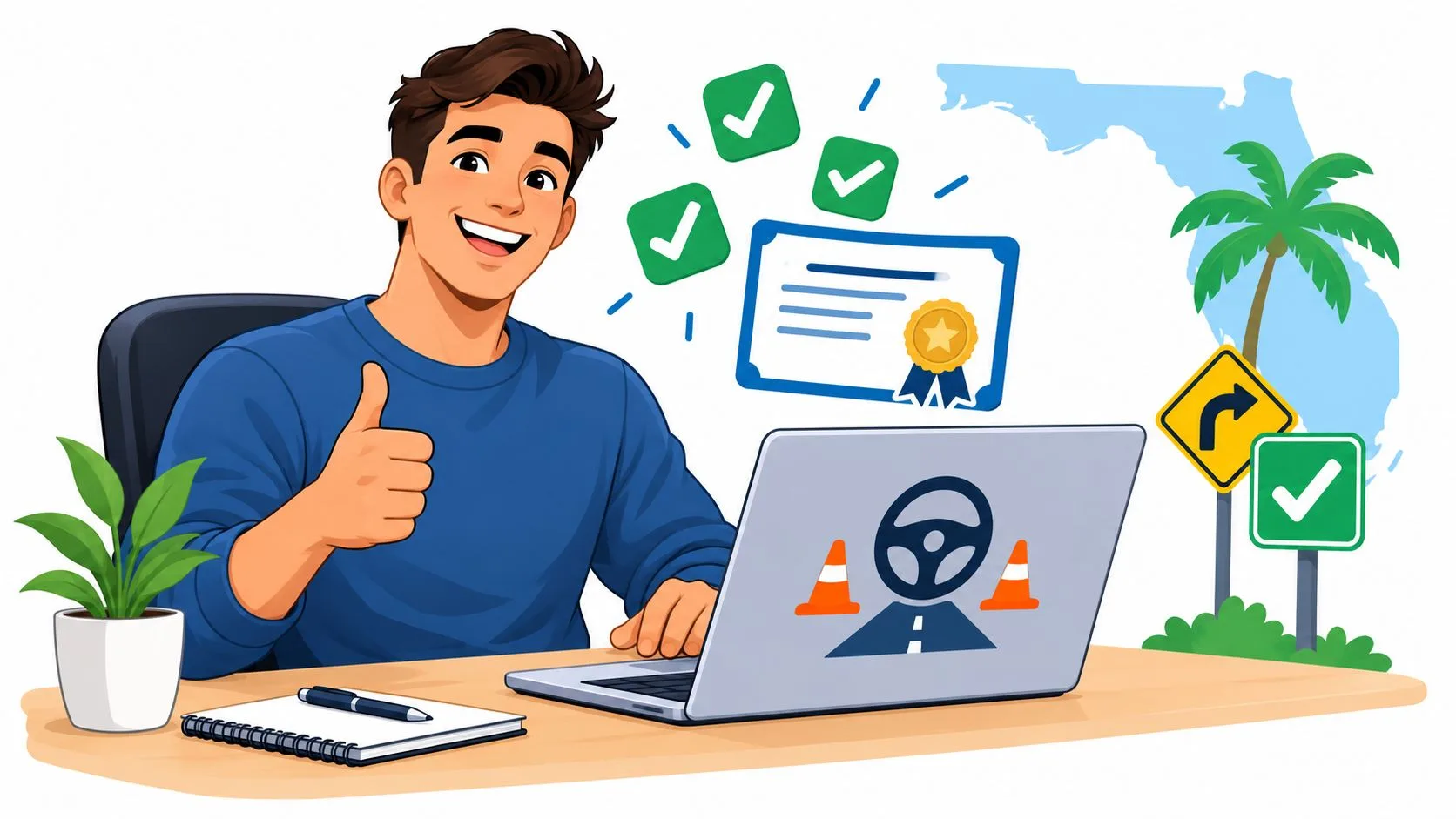
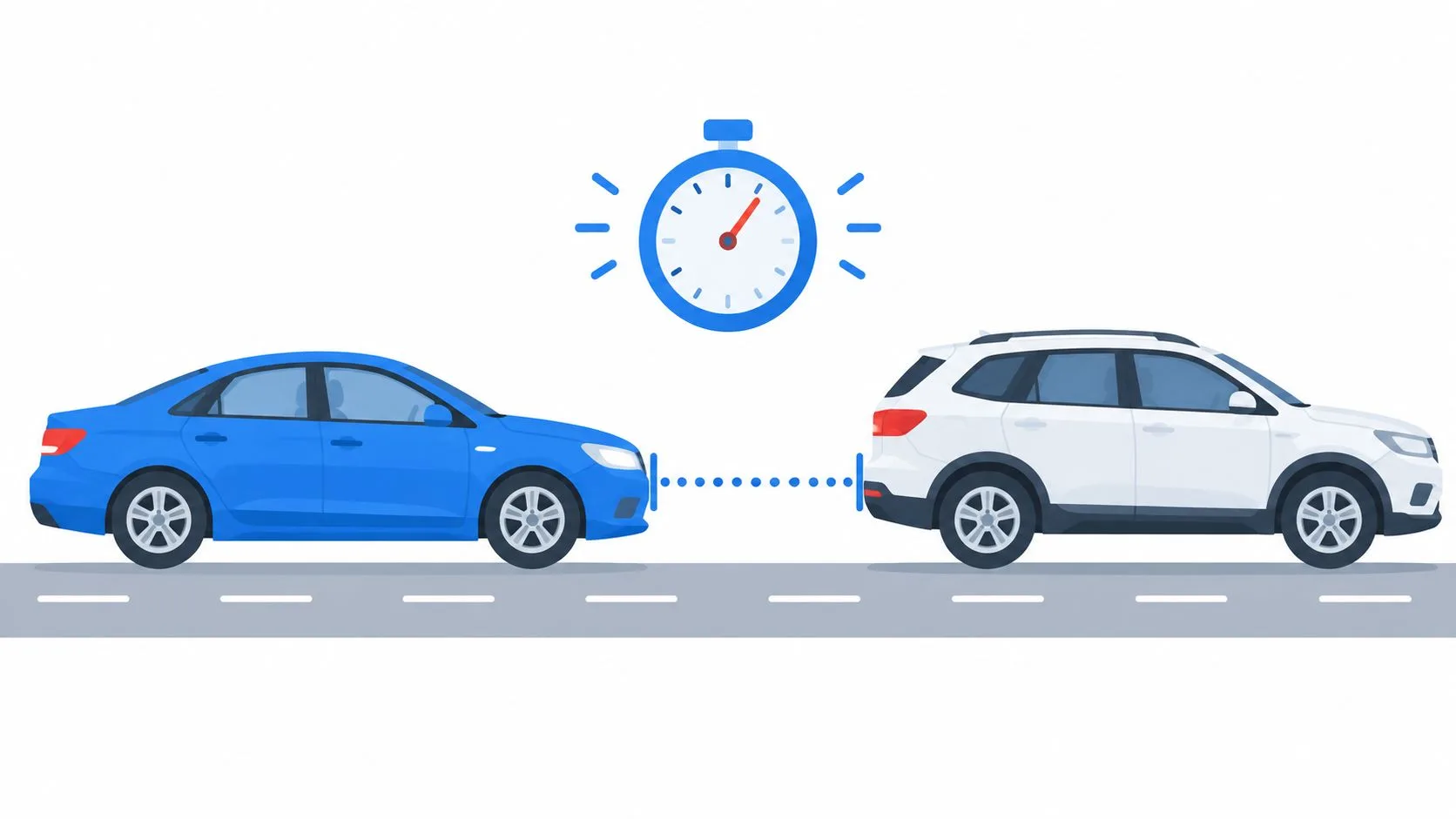
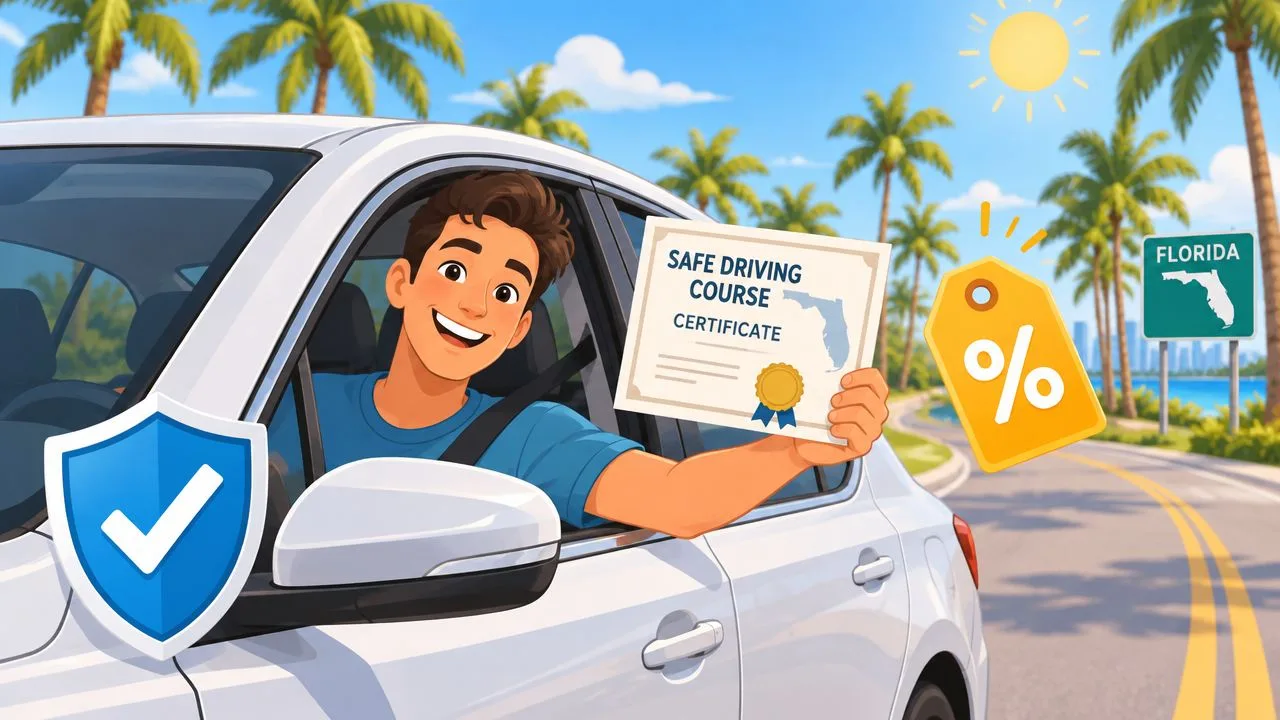
You've just received a moving violation in Florida. The citation is on the table, the deadline is approaching, and a search for “driving school online test” produces plenty of quizzes but few clear answers about what you're buying.
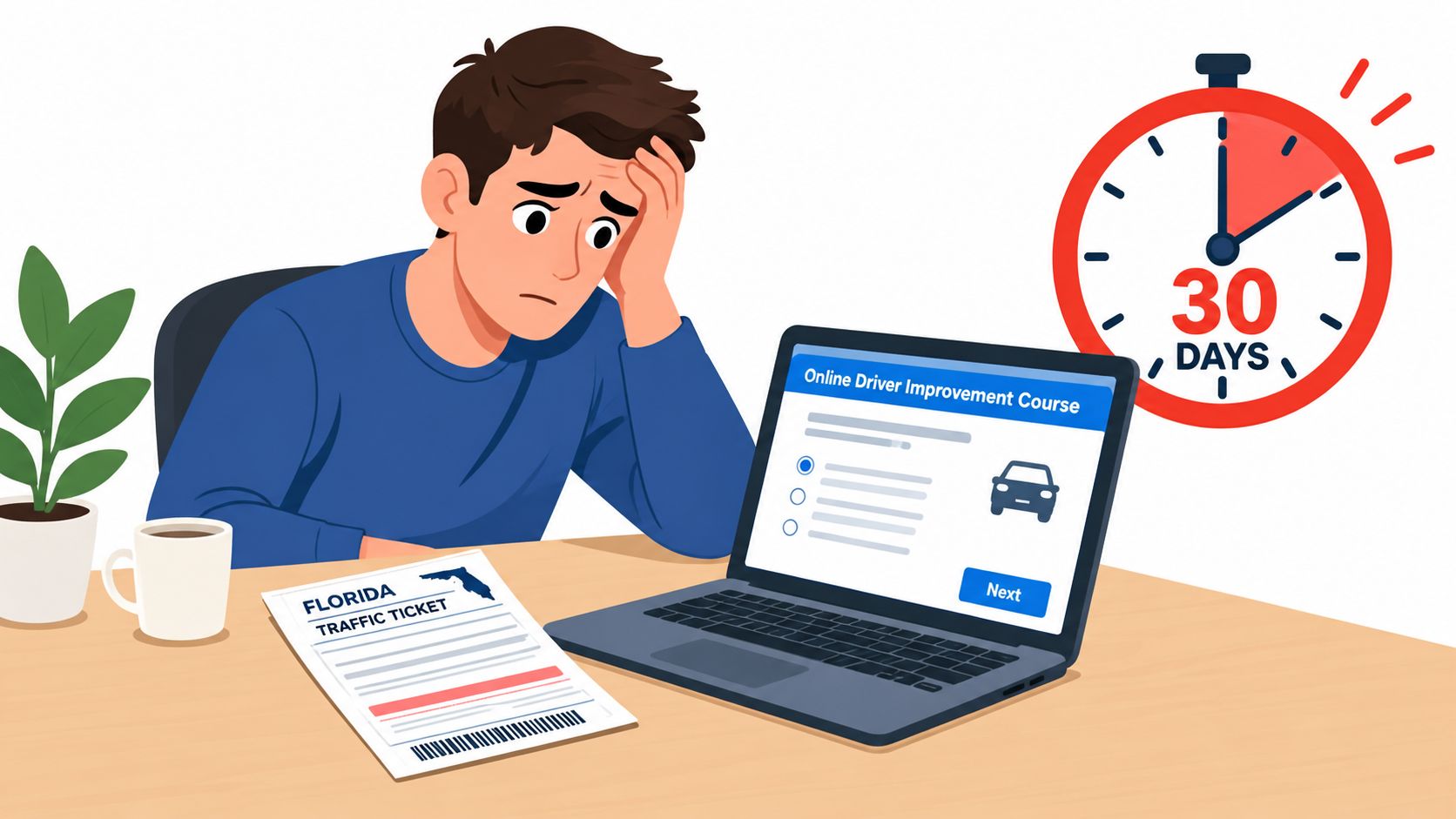
Florida drivers often confuse three different products: a practice quiz, an official knowledge exam, and a state-approved traffic school course with a completion assessment. They serve different purposes, create different records, and may have different eligibility rules. Choosing the wrong one can waste time, especially when Florida gives eligible drivers 30 days to elect Basic Driver Improvement school after a citation. If the election isn't made within that period, the right to elect school is forfeited and points are assessed, according to Florida's official driver improvement guidance.
What Is a Driving School Online Test
You receive a Florida moving violation, open a driving app, and start answering questions. The first question is not whether you can pass the quiz. It is whether the quiz produces the document you need.
A driving school online test is the assessment attached to an approved education program. It records your progress through that course and checks your understanding before completion is issued. A generic phone app can help you practise, but it does not automatically document an approved course or replace the official written exam for a learner's permit.
For a Florida driver with a non-criminal moving violation, the usual purpose is to finish Basic Driver Improvement school and receive proof of completion. Eligibility and election rules still apply, so confirm them before registering rather than relying on a general quiz or app.
Three tests that drivers commonly mix up
A practice test is a study tool. It may ask about signs, right of way, defensive driving, or impaired driving prevention, but its result does not prove that you completed a state-approved course.
A course completion exam belongs to the traffic school program. At BDISchool, the assessment follows the required learning material rather than appearing as an unrelated quiz. You work through the assigned modules, then reach the completion assessment after the course requirements are met. That sequence matters because answering sample questions alone is not the same as completing the education record.
The Class E Knowledge Exam is the official written permit test. BDISchool also provides information about an online permit package for teenagers that combines the TLSAE course with the online Class E Knowledge Exam through an approved third-party provider. That package serves a different purpose from traffic school after a citation.
Practical rule: Identify the document you need before registering: point-related completion, a court requirement, an insurance certificate, or a learner's permit exam.
Online access does not remove every licensing step. Virginia requires an online classroom component and an in-person final exam before behind-the-wheel training, according to Virginia DMV's online driver training requirements. Florida pathways may also separate education, testing, identity checks, and practical driving.
Before paying, verify the course name, approval status, eligibility rules, certificate process, language options, and whether completion is reported to FLHSMV. For background on completion records, see the CertSeal certification guide.
How Online Driving Tests Work at BDISchool
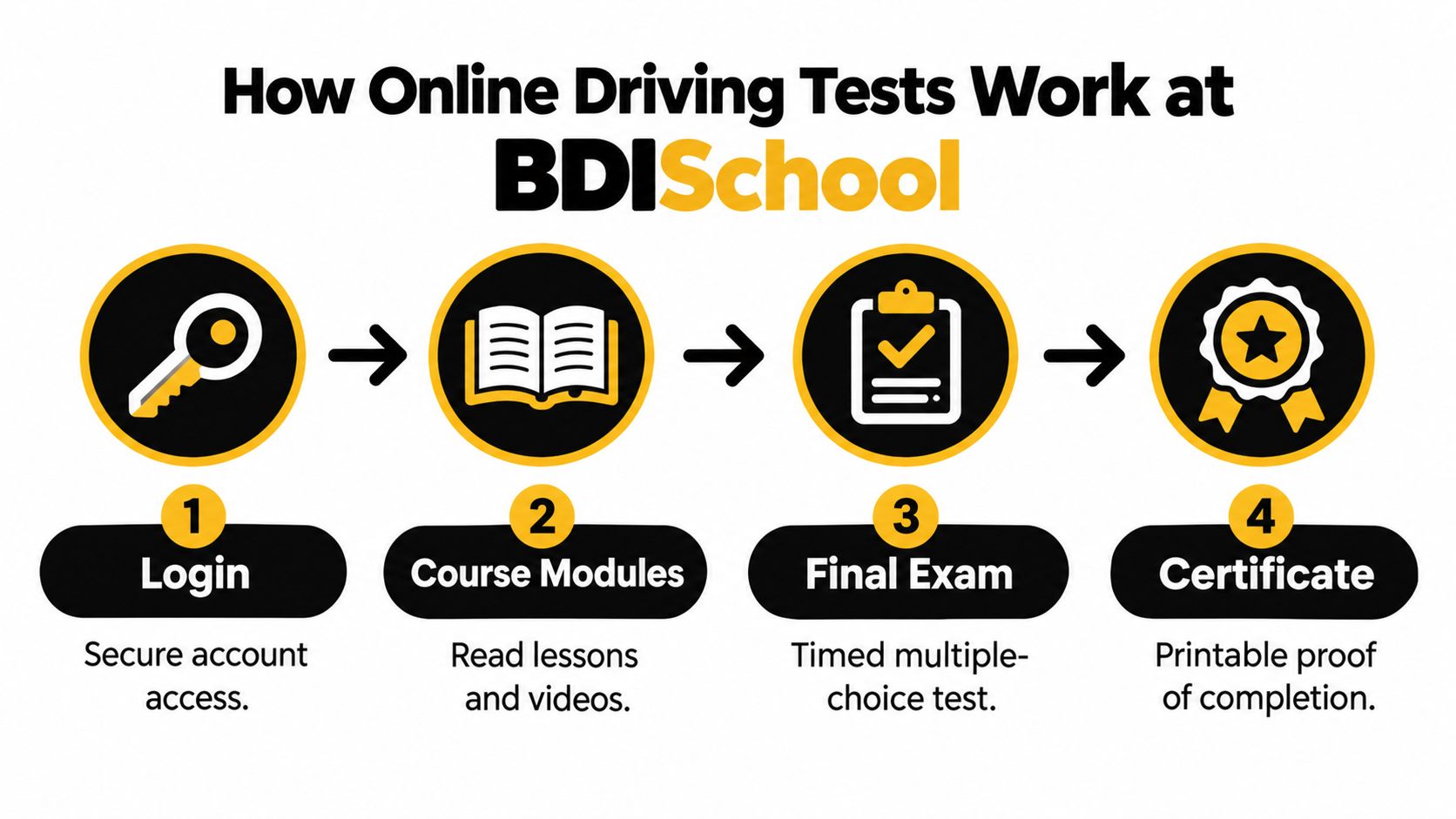
A Florida-approved online assessment usually follows a controlled sequence. You create an account, complete the assigned lessons, take the final assessment, and receive electronic proof of completion when the provider confirms that all requirements are satisfied.
Login and course access
Start with an account that uses your own identifying information. Keep your email address accessible because course notices, account recovery, and certificate communications may depend on it.
BDISchool's online format is self-paced and available in English, Spanish, and Portuguese. That gives a busy professional the ability to study around work, while a learner more comfortable in Spanish or Portuguese can review safety concepts in a familiar language. Language support improves access, but it doesn't remove the need to understand Florida's rules and complete the required assessment yourself.
Use a compatible device with a reliable internet connection. Close unrelated browser tabs, keep your device charged, and avoid beginning the final exam while traveling or using an unstable connection. A lost session can create unnecessary frustration even when you know the material.
Modules, questions, and security
The lessons combine explanations, visual material, and real-life driving situations. You may encounter content about following distance, lane positioning, right-of-way, impaired driving prevention, distraction, and defensive decision-making.
Secure testing matters because a certificate has value only when it represents the correct student's work. Stronger systems can verify identity at the beginning of a session, render questions in a way that makes copying difficult, and preserve response records. Maryland's rules, for example, require secure quiz and test delivery, prohibit students from downloading or copying questions, and require schools to store recorded quizzes and answers, as summarized by Integrity Advocate's identity verification resource.
Those controls aren't there to make the course harder. They protect students, schools, insurers, courts, and licensing authorities from answer sharing or identity substitution.
Completion and certificate delivery
After you finish the lessons and pass the required assessment, the provider issues an electronic certificate and reports completion directly to FLHSMV when the program requires that process. Check your personal details before submitting anything, then save the certificate email and a copy of the document for your records.
For a practical registration walkthrough, use BDISchool's guide to registering for online traffic school.
This short video provides another visual introduction to the online course experience:
Sample Question Formats and Exam Structure
Most online driving school exams use multiple-choice questions, but the strongest preparation focuses on judgment rather than memorizing isolated words. A question might ask what a driver should do near a stopped vehicle, how to respond to a developing hazard, or why a complete stop matters before proceeding.
Recognize the question's purpose
A basic recall question checks whether you recognize a traffic rule or safety term. An application question gives you a situation and asks you to choose the safest response.
For example, a course may test whether you understand:
- Following distance: Choose a response that gives you time to react instead of maintaining a fixed position behind another vehicle.
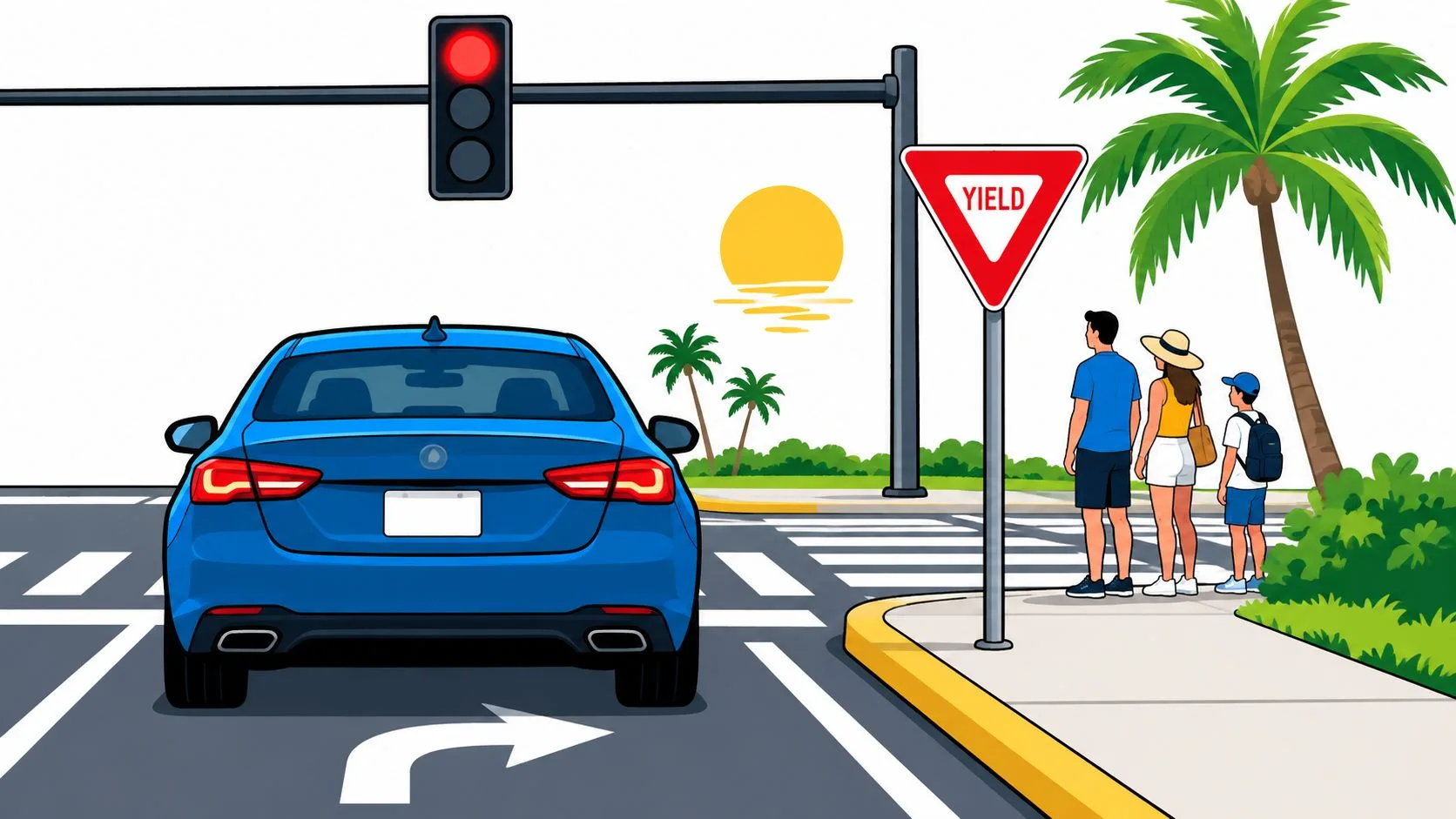
- Right of way: Identify which road user should proceed and why yielding prevents conflict.
- Impaired driving prevention: Select the responsible decision before impairment affects judgment.
- Defensive driving: Anticipate another driver's mistake rather than assuming every road user will behave predictably.
Read every option before choosing. The first answer that sounds familiar may describe a legal possibility without being the safest response in the scenario.
Use a four-step study routine
Read the lesson before opening practice questions. Skimming can make familiar words feel understood when you haven't learned how the rule works in traffic.
Explain the rule in your own words. If you can say what the driver should do and why, you're more prepared for an applied question.
Review every missed answer. Don't just memorize the correct letter. Identify the decision error, such as failing to yield, rushing through a stop, or ignoring a developing hazard.
Practice without distractions. Treat a practice session as preparation for the assessment itself. Put away your phone and give each question enough attention.
The free Florida driver license practice test can help you become familiar with common knowledge areas before you begin or finish your approved course. A practice tool supports preparation, but it doesn't replace the course or its required assessment.
How to handle uncertain questions
Slow down when two answers appear plausible. Eliminate choices that encourage speed, aggression, distraction, or reduced visibility, then compare the remaining options against the safest lawful action.
Don't guess based on what another driver usually does. Online tests reward careful reading, and real roads reward the same habit.
Choosing the Right BDISchool Course for Your Needs
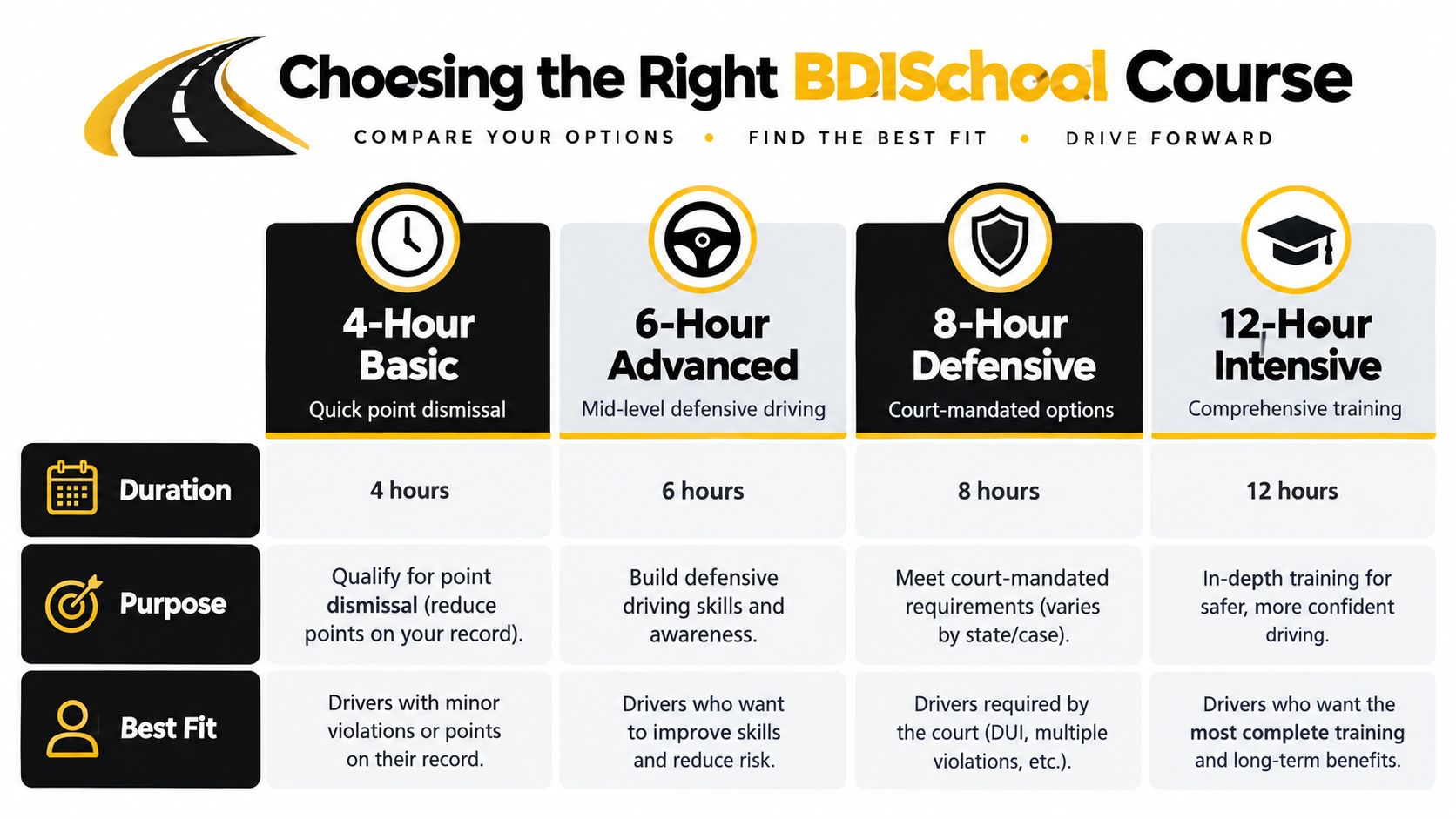
The right course depends on why you're enrolling. A driver responding to a ticket shouldn't automatically choose the same program as someone completing a court order or seeking an insurance discount.
Match the course to the requirement
| Your situation | Course to investigate | Main purpose |
|---|---|---|
| You received an eligible moving violation | Basic Driver Improvement, BDI | Complete an approved point-related driver improvement course |
| A court or authority requires more education | Intermediate Driver Improvement, IDI | Build a deeper understanding of defensive driving |
| Your situation involves repeated aggressive behavior | Aggressive Driver Course | Address road rage, responsibility, and behavior |
| You're age 55 or older and want an insurance certificate | Mature Driver Course | Refresh safety knowledge and submit completion proof to an insurer |
The BDI course is four hours, while the IDI course is eight hours, according to the BDISchool program description. The Aggressive Driver Course is also eight hours, and the Mature Driver Course is six hours. Confirm the required course with the court, citation instructions, or insurer before registering, because finishing the wrong program may not satisfy your obligation.
Consider the Mature Driver option separately
Florida's Mature Driver Discount Insurance course is authorized under Florida Statute 627.0652 for drivers age 55 or older, according to Florida's mature driver information. The certificate can be provided to an insurance company, and the discount typically lasts three years if the driver isn't at fault in a crash and isn't convicted of a moving violation.
The course is a six-hour state requirement. Published examples describe typical reductions of about 3% to 10% for three years, with some insurers offering up to 15%, but the amount is set by each insurance company, as explained by Florida mature driver course information. Ask your insurer whether it accepts the course and what documentation it needs.
Choose for comprehension, not just speed
A Spanish-speaking driver may learn more effectively through Spanish instruction. A Portuguese-speaking learner may prefer Portuguese explanations. A busy employee may need self-paced access, while a parent helping a teenager may need the separate TLSAE and Class E Knowledge Exam pathway.
Review the available Florida driving courses and compare the course title with the requirement on your citation or official notice. Course duration, eligibility, certificate destination, and deadline should all match before you submit payment.
Proven Strategies to Pass Your Online Driving Test
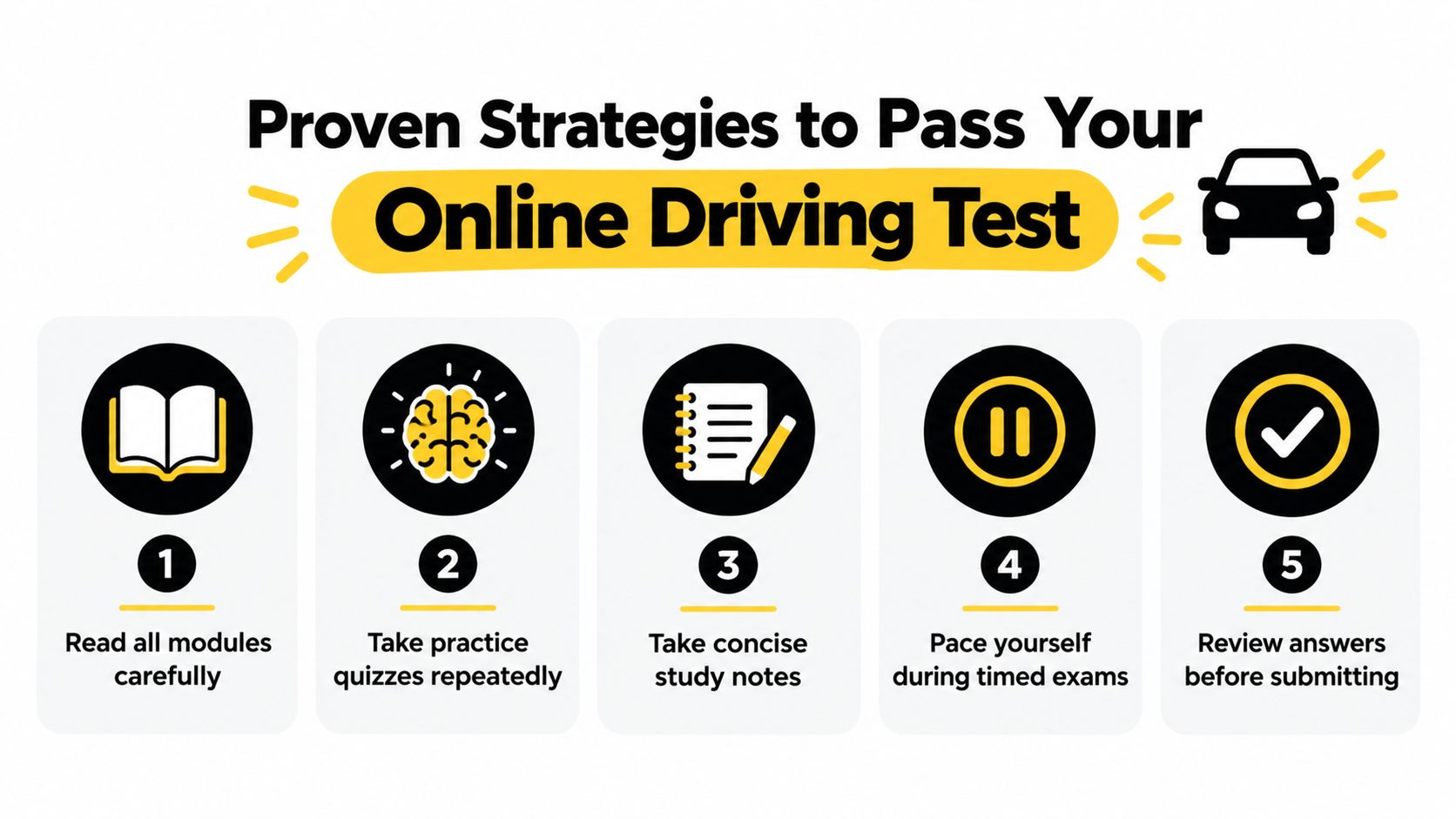
Passing starts with active learning, not fast clicking. A secure online platform can protect the assessment and organize the material, but your results still depend on whether you read, practice, and apply the rules.
Build a study rhythm
Read one module with the goal of understanding the driver's decision. Then pause and explain the rule without looking at the screen. This simple recall step exposes weak areas faster than rereading the same paragraph.
Create brief notes under practical headings such as right of way, stopping, following distance, distraction, and impaired driving prevention. Keep the notes short enough to review before the final assessment.
Practice again after a break. Spacing review helps you determine whether you remember the rule or only recognize it because you just saw it.
Instructor's advice: If you can explain why an answer is safe, you're learning the habit. If you can only remember its position in a quiz, review the lesson again.
Make the test environment boring
A quiet room is better than a crowded kitchen. Use a stable connection, silence notifications, and place your phone out of reach. Have identification or account information available if the platform requires verification, and don't open another tab to search for answers.
Read slowly enough to notice words such as “first,” “safest,” “not,” and “best.” Those terms often change the question's meaning.
Use the platform's structure to your advantage
BDISchool combines self-paced modules, visual explanations, scenario-based instruction, and an electronic certificate process. That structure is more useful than a generic driving app when you need a course tied to Florida requirements, because a random quiz doesn't establish that you completed the approved education.
The broader safety question still deserves honesty. A Virginia DMV review reported that stakeholders couldn't reach consensus on remote online end-of-course testing and recommended continuing in-person, proctored testing to protect security and integrity, as documented in the Virginia DMV end-of-course testing study. Online completion proves education was completed, but it doesn't prove that a driver has mastered every practical skill behind the wheel.
For extra preparation guidance, follow these steps for preparing for a driving test. Use the advice to close knowledge gaps, not to rush through the assessment.
Start Your Drive to Safety Today
A driving school online test should lead to more than a certificate. It should help you understand why Florida drivers must manage speed, space, attention, and attitude before a risky situation develops.
Start by identifying the requirement in front of you. A moving violation may point you toward Basic Driver Improvement, a court order may require Intermediate or Aggressive Driver education, and an insurance question may point an eligible older driver toward the Mature Driver Course. Teenagers preparing for a permit may need the TLSAE and Class E Knowledge Exam pathway instead.
Next, confirm the deadline and course eligibility. Florida's online testing history shows that digital driver education can operate at meaningful scale. Minnesota launched online knowledge testing on October 5, 2020, after legislation was signed on July 23, 2020, and reported 152,587 online tests initiated and 115,264 completed with results by November 29, 2021, according to the Minnesota online testing reference. California reported more than 537,000 online tests completed in 2023 and nearly 200,000 no-fail eLearning courses, according to the California traffic school market report. Those examples show that online testing has become part of broader licensing and education workflows, not merely a quiz feature.
Register for the course that matches your legal or insurance purpose, study in the language that helps you retain the material, and take the final assessment when you can focus. Then keep your electronic certificate and confirm that the required reporting or submission has been completed.
The most valuable result is more than avoiding points, satisfying a court requirement, or requesting an insurance discount. It's making better decisions when traffic changes quickly, another driver acts unpredictably, or a moment of distraction creates danger.
BDISchool offers Florida-approved online traffic school programs, including BDI, IDI, Aggressive Driver, Mature Driver, and permit-related options, with self-paced learning in English, Spanish, and Portuguese. Visit BDISchool to choose the course that matches your requirement and begin preparing for your online driving school test.