A Class A license is the commercial license required to drive a combination of vehicles with a gross combination weight rating of 26,001 pounds or more when the towed unit is more than 10,000 pounds. If you’re looking at tractor-trailers, truck-and-trailer combinations, tankers, livestock carriers, or many flatbeds, you’re looking at Class A territory.
You’ve probably seen those rigs on I-4 or I-75 and thought the same thing a lot of serious candidates think. Could I do that for a living? The answer is yes, but only if you treat it like a profession from day one.
That’s the right way to think about what is a Class A license. It isn’t just permission to sit higher in the cab. It’s a career credential tied to bigger equipment, tighter safety standards, and more opportunity than a standard license will ever give you.
If you want the broadest path into commercial driving, start with Class A and train properly. If you want a local Florida starting point, review the available CDL classes in Tampa and learn what the training path looks like before you waste time guessing. And once you move from training to earning, you’ll also need to protect your trucking business with the right insurance setup, because professional driving isn’t just about getting licensed. It’s about staying compliant and staying in business.
Your Gateway to a Professional Driving Career
Many individuals first ask, “what is a Class A license?” because they’re trying to decode what kind of truck they need to qualify for. Fair enough. But that question is usually hiding a bigger one.
They’re really asking whether this license can change their working life.
Why Class A matters more than most people realize
A Class A CDL sits at the top of the U.S. commercial license structure. It covers heavy combination vehicles, and in practical terms that means the kind of equipment typically associated with professional freight hauling.
That matters because bigger equipment usually means broader job options. It also means more responsibility, more scrutiny, and less room for sloppy habits.
Practical rule: Don’t chase the truck first. Chase the training that makes you safe and employable in that truck.
The right mindset before you start
If you’re serious about becoming a driver in Florida, stop thinking like someone shopping for a permit test shortcut. Start thinking like a professional operator.
A Class A path makes sense for people who want access to the widest range of heavy commercial vehicles. It also makes sense for people who want flexibility later, because the strongest license gives you more room to pivot.
That’s why smart candidates don’t ask only what the license is. They ask what it lets them build.
Defining the Class A Commercial Driver License
A Class A commercial driver’s license is required for any combination of vehicles with a gross combination weight rating of 26,001 pounds or more when the towed unit is more than 10,000 pounds, and Class A holders are also qualified to operate Class B and Class C vehicles, according to Pennsylvania’s CDL license classifications.
That definition is the one you need to memorize because it draws a bright line. If the vehicle setup crosses that combination threshold, you’re in Class A territory.
What vehicles fall under Class A
This license commonly applies to equipment such as:
- Tractor-trailers: The classic semi setup typically pictured first.
- Truck-and-trailer combinations: A broad category that catches many work and freight applications.
- Tankers: Often used for specialized hauling, depending on the cargo and endorsements.
- Livestock carriers: Combination vehicles built for agricultural transport.
- Many flatbeds: Common in freight, equipment, and material hauling.
Think of the CDL classes like ladders, not labels. Class C is narrower. Class B is heavier but usually simpler in configuration. Class A is the combination-vehicle license that opens the widest operating range.
CDL classes at a glance
| License Class | Vehicle Type | Example Vehicles |
|---|---|---|
| Class A | Heavy combination vehicles | Tractor-trailers, tankers, livestock carriers, flatbeds, truck-and-trailer combinations |
| Class B | Heavy single vehicles | Straight trucks, large buses, dump trucks, box trucks |
| Class C | Smaller commercial vehicles that don’t fit A or B but may involve passengers or certain cargo | Passenger transport vehicles and certain specialized commercial vehicles |
The easiest way to keep this straight is simple. Class A is about heavy combinations. Class B is about heavy single vehicles. Class C covers smaller commercial use cases.
Why this definition matters on the ground
This isn’t trivia for a handbook exam. It determines what training you need, what vehicle you test in, and which jobs you can legally take.
If your goal is the broadest professional path, Class A is the smart choice. It gives you room to drive more than one type of commercial vehicle and avoids the mistake of training too narrow, then having to upgrade later.
Florida’s Specific Class A Requirements
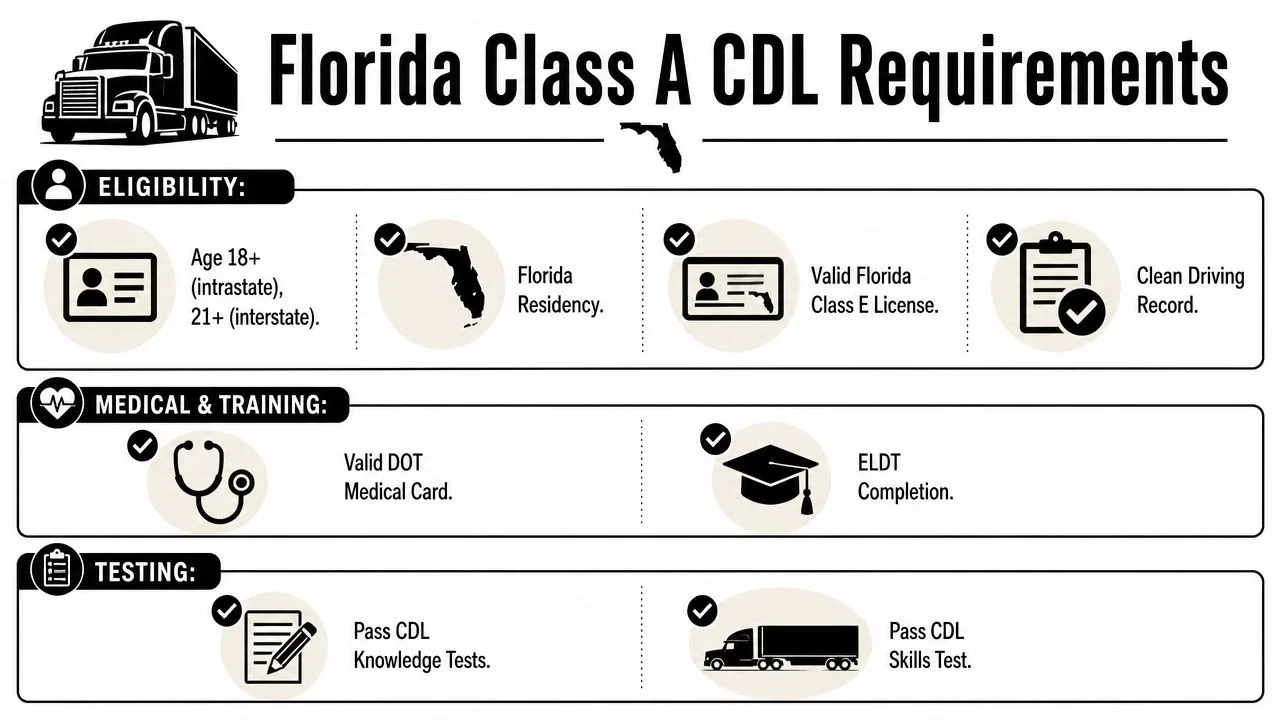
Florida candidates need to think in checklist form. If you don’t have the basics lined up, you’re not ready to move forward.
Your basic eligibility checklist
Start with the age rule. The minimum age commonly noted in state licensing rules is 18, based on state CDL guidance aligned with the federal framework. If you plan to stay within Florida, that’s the first threshold to know.
Beyond age, Florida applicants should have their paperwork and status in order before they ever sit down to study.
- Valid current license: You should already hold a valid Florida driver license.
- Florida residency: Be prepared to prove where you live.
- Legal presence documentation: You need the identity and status documents the state requires.
- Driving record awareness: If your record is messy, deal with it early instead of hoping it won’t matter.
Medical and training requirements
A Class A path carries a higher compliance burden than ordinary driving. That’s the point.
You should expect to handle these items before final licensing:
- Medical qualification: You’ll need a valid DOT medical card.
- Vision screening: Your ability to see clearly is part of the approval process.
- Entry-level training: If you’re a new applicant, proper training isn’t optional.
- Knowledge and skills readiness: Written testing and hands-on testing both matter.
Bring every required document the first time. A lot of applicants don’t fail because they’re incapable. They fail because they show up unprepared.
What Florida applicants should do first
Before you spend money, verify your identification, residency documents, and license status. Then confirm your medical readiness.
That simple order saves frustration. It also keeps you from paying for training before you know you can complete the licensing process cleanly.
Navigating CDL Testing and Medical Exams
The process exposes weak preparation. The state isn’t handing out a Class A CDL because someone wants a new job. It’s issuing that license only after the applicant proves they can handle a heavy combination vehicle safely.
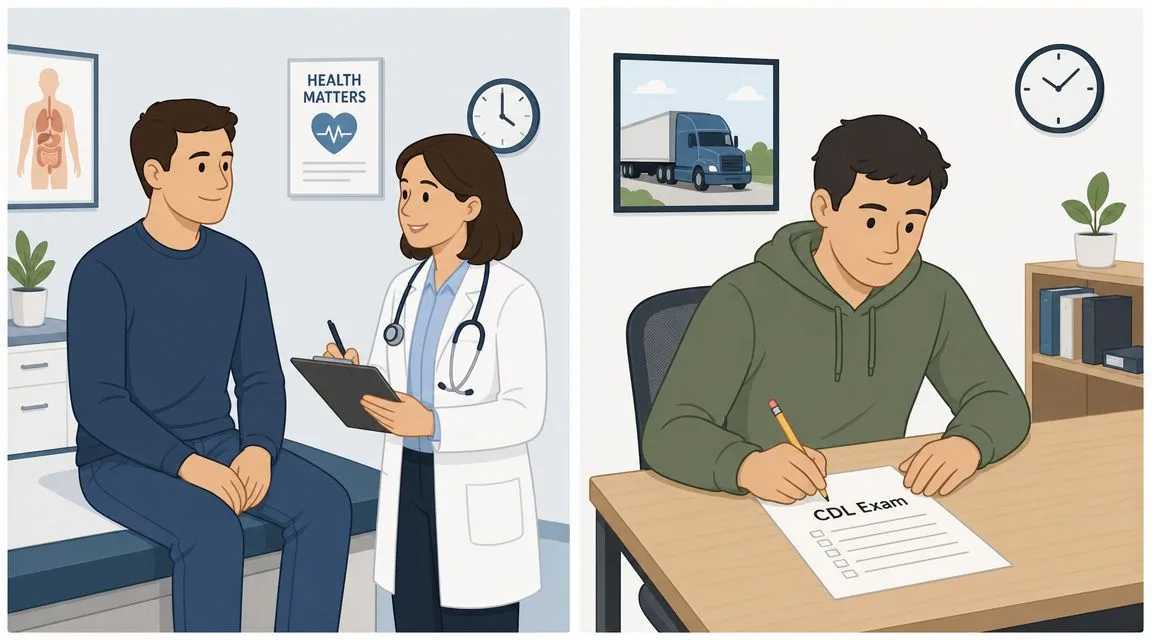
The standard is higher for a reason. The FMCSA says commercial motor vehicle operation requires a higher level of knowledge, experience, skills, and physical abilities, and state CDL processes require a vision test, medical certification, written knowledge testing, and a vehicle-specific skills test, as outlined in this summary of Class A CDL application and testing requirements.
The medical side comes first
If you can’t pass the medical requirements, nothing else matters yet. Get that done early.
Reviewing the federal DOT physical rules before you schedule your exam is a smart move. It helps you understand what the examiner is looking for and what issues may need attention ahead of time.
The written tests are not a formality
Most Class A applicants will need to prepare for core commercial knowledge topics tied to the permit phase. That usually includes the material tied to operating combination vehicles and, depending on the vehicle, air brake knowledge as well.
Don’t rely on random quiz apps and fragmented notes. Use structured preparation and practice with the exact type of testing flow you’ll face in Florida by reviewing Florida CDL test preparation resources.
You don’t “wing” CDL written exams. You study until the language, safety logic, and vehicle rules feel familiar.
After you’ve built that knowledge foundation, this walkthrough is useful to watch before test day:
The skills test is where training proves itself
The road test isn’t just driving around the block. You’ll have to demonstrate control of the vehicle the way a professional should.
Expect the practical side to include:
- Pre-trip inspection: You need to identify and explain key vehicle components and safety checks.
- Basic vehicle control: Backing, positioning, and control under tight conditions quickly expose poor habits.
- Public road driving: Lane use, turns, braking, observation, and judgment all get evaluated.
Here’s my blunt advice. If you try to shortcut hands-on instruction, the skills test will punish you. Good training turns a confusing process into a repeatable system. Bad training leaves you guessing under pressure.
Unlocking Jobs with Endorsements and Restrictions
A Class A CDL is powerful, but it isn’t a blank check to drive everything. That’s where many new drivers get confused.
Official and training-oriented explanations make this clear. A Class A CDL covers heavy combination vehicles, but it does not automatically authorize every truck type or cargo category. Some uses still require separate endorsements, as explained in this guide to CDL license types and endorsements.
The endorsements that matter most
If you want more specialized work, endorsements expand your options.
- T endorsement: Used for double and triple trailer operation where allowed.
- N endorsement: Needed for tank vehicles.
- H endorsement: Required for hazardous materials.
- X endorsement: Combines tank vehicle and hazardous materials authority.
These aren’t decorative letters. They affect the kind of freight or equipment you can legally handle.
Restrictions can limit you fast
Restrictions are the other side of the equation. A common one is the kind that limits what braking systems or vehicle types you’re cleared to operate if you didn’t test appropriately.
That’s why your training vehicle matters. Your testing strategy matters too. If you train too narrowly, you can walk away licensed but boxed in.
Check your record before you plan your path
If you don’t know what’s already sitting on your record, fix that first. Use a practical guide on how to see your driving record so you’re not blindsided during the licensing process.
The license gets you in the door. Endorsements shape the work you can actually take.
Your Roadmap to Earning a Class A License
A lot of drivers get serious about a Class A license the day they realize a regular license won’t get them into the work they want. Better pay, better equipment, more responsibility. That career path starts with doing the process in the right order and getting trained the right way.
Step one through step three
Start with the foundation. If you skip these basics, everything after them gets slower and more expensive.
- Confirm eligibility in Florida. Make sure your license status, identification, residency documents, and medical readiness are in order before you spend money on training or testing.
- Get medically qualified. Handle the DOT physical early. A medical issue found late can stall your entire timeline.
- Prepare for the permit phase. Study with purpose so you can earn your Commercial Learner’s Permit and understand the language of inspections, safety rules, and vehicle systems. If you are still at the permit stage, review the Florida CDL permit process before you schedule anything.
The step that separates future professionals from casual applicants
- Complete professional training.
This is the point where a career either starts correctly or gets built on bad habits.
A Class A license is more than a definition on paper. It puts you on the path to operating heavy combination vehicles in real traffic, around real people, with real consequences for every mistake. That demands backing control, pre-trip discipline, shifting skill, space management, and sound judgment under pressure.
You do not build those skills by memorizing test answers. You build them through repetition, correction, and time behind the wheel with qualified instruction. Good training shortens the learning curve, improves your test readiness, and makes you safer on day one of the job.
Finish strong
- Schedule and pass the skills test. Show up prepared, use the habits you practiced in training, and treat every portion of the test like part of the job.
- Add endorsements that match your goals. Pick them based on the freight, equipment, or routes you want to handle.
- Keep learning after licensure. Your license gets you hired. Your professionalism keeps you employable.
The drivers who last in this field respect the process early. Get trained properly, test with intent, and treat your Class A license like the start of a profession, not just permission to drive.
Frequently Asked Questions
Is a Class A license the same as a CDL?
A Class A license is a type of CDL. CDL is the broad category. Class A is the top class for heavy combination vehicles.
What can you drive with a Class A license?
You can drive combination vehicles that meet the Class A threshold, and official state guidance also notes that Class A holders are qualified to operate Class B and Class C vehicles. That’s one reason many candidates choose it first instead of limiting themselves early.
Do endorsements come automatically with a Class A CDL?
No. Endorsements are separate qualifications for certain vehicle types or cargo. If you want to haul hazardous materials, drive tank vehicles, or handle other specialized work, you may need additional testing and approval.
Do you need medical certification for a Class A CDL?
Yes. Medical qualification is part of the process. Commercial driving has a higher safety standard, so applicants should expect a medical exam, vision screening, and other required checks before licensing is complete.
How long does it take to get a Class A license in Florida?
It depends on your preparation, your training schedule, how quickly you complete your medical and permit steps, and how soon you can book testing. Some people move quickly because they show up organized. Others drag the process out because they try to improvise.
How much does it cost to get a Class A CDL in Florida?
Costs vary by school, testing needs, medical exam requirements, and endorsement choices. Don’t trust anyone tossing out a neat number without showing exactly what’s included. Ask for a full breakdown before you commit.
Can you use a Florida Class A CDL in other states?
CDLs operate within a national framework, so a properly issued Florida CDL is generally recognized across states. What matters is keeping the license valid, staying compliant, and making sure any endorsements or operating requirements match the work you plan to do.
What’s the biggest mistake first-time applicants make?
They underestimate the training. They think the challenge is paperwork or the written test. It isn’t. The primary challenge is developing the habits to inspect, control, and operate a heavy combination vehicle safely every single time.
If you’re ready to move from “what is a Class A license” to building your next step as a driver, start with clear education and a real plan. BDISchool offers Florida-approved online driver education courses that help students handle licensing, compliance, and safer driving habits with flexible access in English, Spanish, and Portuguese.