Your hands are tight on the wheel. A lane change feels bigger than it should. If you recently got a ticket, the next drive can feel worse, not better.
That reaction is normal.
A good confidence building course doesn’t fill your head with slogans. It gives you structure, practice, and a clear sense of what to do next. For drivers, that matters more than any generic self-help advice because road confidence comes from knowing how to read hazards, follow the rules, and recover from mistakes without panicking.
Driving Confidence Is a Skill You Can Learn
Some drivers freeze before a highway merge. Some avoid left turns in traffic. Some parents watch a teen back out of the driveway and feel their stomach drop. Others keep replaying a recent citation and start doubting every decision they make behind the wheel.
None of that means you’re a bad driver. It means your confidence needs training.
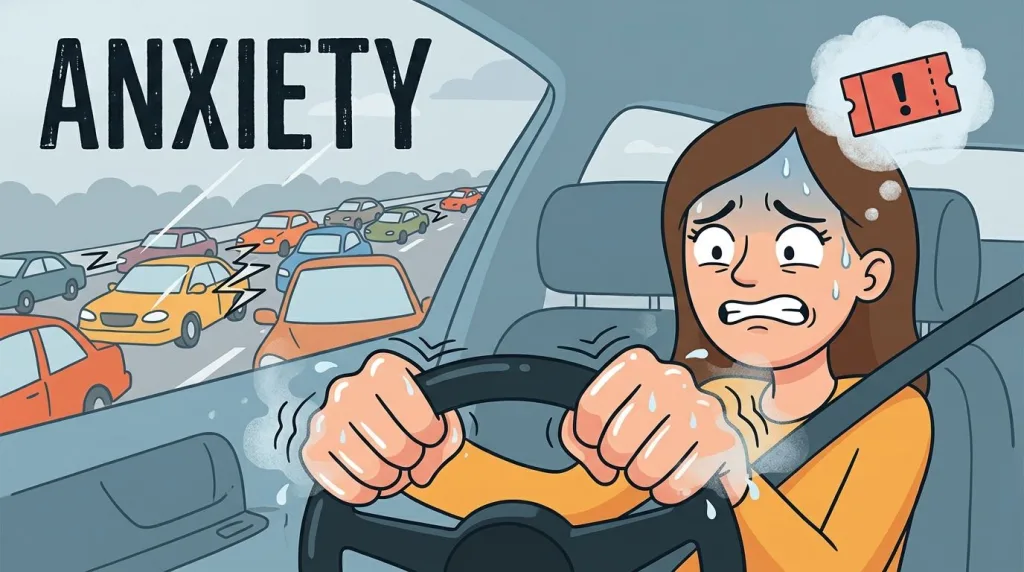
Why anxious drivers struggle
Most driving anxiety comes from uncertainty. You don’t fully trust your judgment, so every traffic light, blind spot, or fast-moving lane feels loaded with risk.
That’s why reassurance alone doesn’t work. You need repeatable skills.
If driving stress is already affecting your daily life, this guide on how to overcome driving anxiety is worth reading because it connects nervous system reactions with practical behind-the-wheel habits.
Confidence on the road isn’t a personality trait. It’s the result of knowing what to look for and what to do.
What actually builds confidence
Real driver confidence grows when you can predict what happens next. That starts with traffic laws, hazard awareness, right-of-way rules, and defensive habits that lower surprise.
A proper confidence building course for drivers teaches things like:
- Road pattern recognition: You start spotting problems earlier.
- Decision routines: You stop hesitating at the exact moment action matters.
- Error recovery: A small mistake doesn’t spiral into panic.
- Calmer repetition: Familiar situations stop feeling threatening.
The strongest shift is simple. You stop asking, “What if I mess this up?” and start thinking, “I know how to handle this.”
That’s learnable. It can be taught online. And for many Florida drivers, traffic school becomes the first structured step back to feeling steady behind the wheel.
What a True Confidence Building Course Teaches You
A real confidence building course addresses the source of low confidence, not just the symptoms. The useful model is straightforward. Confidence-building courses are structured programs that integrate coaching methodologies and psychological tools with practical behavioral exercises to address root causes of low self-belief, including self-criticism and social anxiety, by focusing on five core components: identifying challenges, managing self-criticism, setting meaningful goals, navigating social anxiety, and viewing agency as a continuous path, as described in this overview of how confidence-building courses transform personal and professional life.
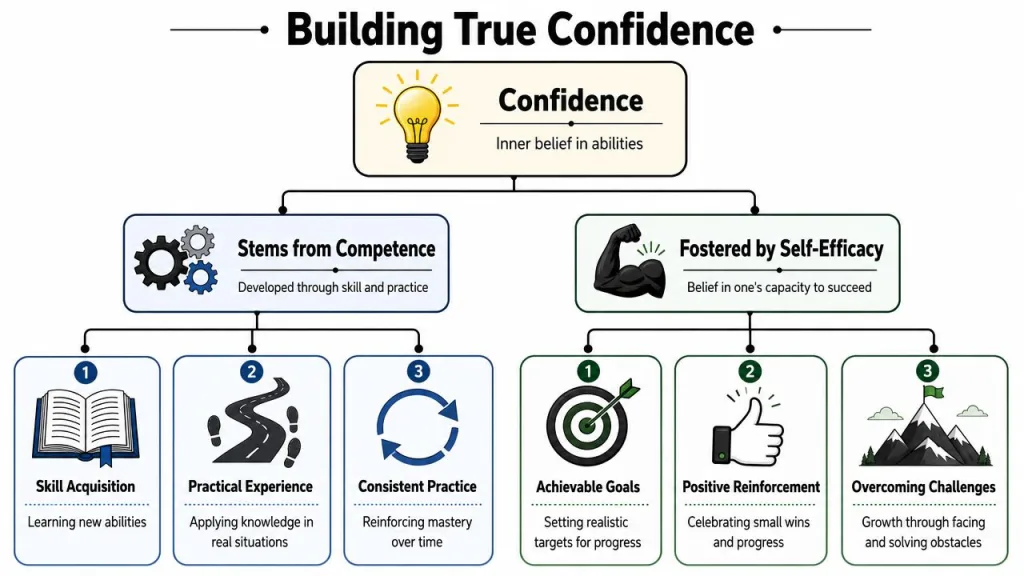
The five parts that matter behind the wheel
Driving turns those five parts into something concrete.
- Identifying challenges: Maybe you panic during merges, avoid night driving, or overreact when someone tailgates.
- Managing self-criticism: Many drivers talk to themselves harshly after one mistake. That makes the next mistake more likely.
- Setting meaningful goals: “Drive perfectly” is useless. “Complete three calm city trips this week” works.
- Navigating social anxiety: Drivers often feel judged by passengers, other motorists, or a police stop.
- Recognizing confidence as a continuous path: Road confidence isn’t earned once. You build it by repetition.
Process beats outcome
Individuals often chase confidence backwards. They want the feeling first, then the skill.
That doesn’t hold up in real driving. A better approach is process-driven. One major gap in confidence content is that many programs emphasize outcomes instead of the habits that create self-trust. The idea of keeping promises to yourself through small daily actions is highlighted in this discussion of process-driven confidence habits.
For drivers, that means consistent routines. Check mirrors. Scan ahead. Leave space. Slow early. Repeat.
Practical rule: Stop trying to feel brave before you act. Build a routine that’s strong enough to carry you through anxiety.
Some driving fears are deeper than nerves. If your mind jumps to catastrophic scenarios, this article on fear of losing control can help you understand why anxiety often feels so physical and immediate.
Driving skill is one of the best confidence builders
Generic motivation doesn’t help much when a truck moves into your lane. Skill does.
That’s why hazard training matters. When you know how to identify changing road conditions, distracted drivers, and timing risks, uncertainty drops fast. This primer on hazard recognition training is a good example of how competence lowers fear.
A true confidence building course teaches you to replace vague worry with specific action. That’s the entire game.
The Curriculum That Builds Confident Drivers
Drivers get calmer when the road feels more predictable. Curriculum matters because each topic removes one layer of uncertainty.
A weak course dumps facts on you. A strong course shows you how those facts protect you in motion.
Florida traffic laws remove guesswork
Knowing the rules isn’t just about passing a quiz. It gives you a mental map.
When you understand right-of-way, signal requirements, lane use, school zones, and violation triggers, you stop making split-second guesses. That’s a big deal for anxious drivers because guessing is exhausting.
Think of traffic law as your rulebook for predictable roads. Once you know it, other drivers make more sense too. You start reading behavior instead of reacting late.
Defensive habits create control
Defensive driving is where confidence becomes practical. You’re no longer just hoping other drivers behave. You’re building margin.
The most confidence-building topics usually include:
- Following distance: Space gives you time, and time reduces panic.
- Crash avoidance: You learn how to respond early, not dramatically.
- Distraction awareness: You catch your own bad habits before they become dangerous.
- Aggressive driver management: You stop taking other people’s mistakes personally.
- Scanning intersections: You start noticing conflict points before entering them.
This guide to defensive driving techniques is useful because it treats safe driving as a set of trainable decisions, not luck.
The calmest drivers aren’t fearless. They’re prepared.
Each module should change how you feel
That’s the standard I use when I evaluate a driving course. Every lesson should improve a specific mental state.
| Course topic | What it teaches | Emotional payoff |
|---|---|---|
| Florida traffic laws | Clear legal expectations | Less hesitation |
| Right-of-way rules | Who goes first and when | Fewer panic decisions |
| Defensive driving | Proactive safety habits | More control |
| Distracted driving prevention | Attention discipline | Better focus |
| Crash avoidance strategies | Early response patterns | Less overreaction |
| Attitude and behavior awareness | How emotions affect judgment | More self-control |
A course that builds confidence doesn’t just tell you what not to do. It shows you how to drive with intention.
Who Benefits From a Driving Confidence Course
The short answer is this. Almost any driver who feels uncertain benefits from structured review.
The better answer is more personal.
The teen driver who wants freedom but feels the pressure
A teen driver often wants independence and fears embarrassment at the same time. They don’t want to look inexperienced, so they may rush decisions or stay silent about what confuses them.
The right confidence building course gives them language, repetition, and a safer way to ask questions. That’s how nervous beginners turn into drivers who think ahead.
The adult who stopped trusting their own judgment
Some adults had a bad experience. Some moved to Florida and aren’t comfortable with local traffic patterns. Some haven’t driven much in years.
These drivers usually don’t need hype. They need a reset.
A structured course helps because it turns vague fear into named problems. Lane positioning. right-of-way. distractions. following distance. Once the problem is specific, the fix gets easier.
If you’ve been avoiding certain roads, times of day, or traffic conditions, that’s not a sign to quit driving. It’s a sign to rebuild your system.
The driver who got a ticket and now second-guesses everything
A citation can bruise your confidence fast. Even careful drivers start wondering if they’re less capable than they thought.
That’s one reason Florida traffic school can be so useful. It isn’t just about the record. It’s a chance to review habits, correct blind spots, and rebuild self-trust with a clear framework.
The driver who needs language access and cultural fit
Most confidence content still misses a major audience. A major gap in confidence building content is the lack of resources for non-English speakers, as many courses assume Western cultural norms and are English-only. That matters because limiting beliefs and anxiety can show up differently across cultures, which is why language-accessible training matters, as noted in this review of self-confidence courses and underserved language needs.
That’s also why Spanish and Portuguese course access isn’t a side feature. It’s practical support. Drivers learn better when the material speaks their language and respects how they process pressure.
How Florida Traffic School Is Your Confidence Course
Florida drivers often look at traffic school as a penalty. That’s the wrong mindset. In many cases, it’s the most practical confidence building course available because it combines legal compliance, structured review, and immediate application.
For drivers with a minor moving violation, the Florida Basic Driver Improvement course is a 4-hour program regulated by the FLHSMV, and completing it can dismiss the ticket, prevent points, and maintain safe driver status, which makes it a practical tool for reducing stress after a citation, according to this explanation of the Florida Basic Driver Improvement course.
Why the BDI course helps more than your record
A citation creates two problems. The official one is the violation. The hidden one is the drop in confidence.
The BDI course helps with both. You review rules, clean up decision-making, and leave with a sharper understanding of what caused the mistake in the first place.
That matters because confidence doesn’t come from pretending the ticket was unfair. It comes from knowing exactly how you’ll drive differently next time.
Which Florida driving course is right for you
Not every driver needs the same program. The right fit depends on why you’re there and what kind of reset you need.
| Course Type | Best For | Primary Goal | Confidence Benefit |
|---|---|---|---|
| Basic Driver Improvement BDI | Drivers with a minor moving violation | Dismiss a ticket and avoid points | Rebuild trust after a mistake |
| Intermediate Driver Improvement IDI | Court-ordered drivers or drivers needing deeper review | Meet court requirements and strengthen habits | Replace confusion with structured correction |
| Aggressive Driver Course | Drivers dealing with repeated risky behavior or road anger issues | Address behavioral patterns and responsibility | Improve self-control under pressure |
| Mature Driver Course | Older drivers seeking a refresher and safety review | Refresh knowledge and support safe driving | Restore comfort with current road demands |
The point isn’t just compliance. It’s stability. Each course gives drivers a reason to slow down, review the essentials, and return to the road with more discipline.
A short visual explanation can help if you prefer to see the options in action.
Florida traffic school works best when you treat it as training
Drivers who get the most from these courses don’t rush through them with resentment. They use them as a skills reset.
That means paying attention to the patterns behind common mistakes:
- Late decisions: Waiting too long to brake, merge, or yield.
- Attention drift: Missing signs, signals, or changing traffic flow.
- Emotional driving: Letting frustration set the pace.
- Knowledge gaps: Not being fully current on Florida rules.
A good course gives you one more thing besides a certificate. It gives you a calmer next drive.
Enrollment Certification and Measuring Your Success
Starting should feel simple. If enrollment feels complicated, many anxious drivers will put it off and keep driving with the same uncertainty.
That’s avoidable.
What the process should look like
Choose the course that matches your situation. Register online. Start when you’re ready. Study at your own pace.
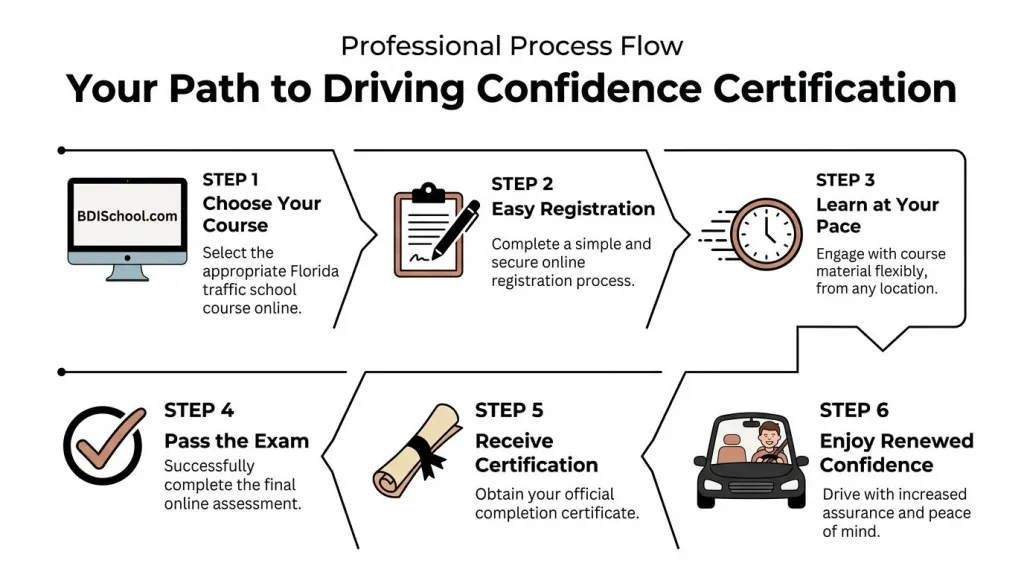
For Florida-approved driver improvement courses, the online format matters because it removes pressure. The FLHSMV-approved driver improvement course information described by Lowest Price Traffic School explains that approved courses such as the 4-hour BDI are online, self-paced, available in English and Spanish, and include an open-book final exam, while adjudication is withheld upon completion rather than a conviction and no points are assessed for the violation.
If you want a quick explanation of proof of completion, this page on an online driving certificate is a useful reference.
Measure the right outcome
Don’t judge success only by whether you finished the course. That’s too narrow.
Measure success by what happens on your next few drives:
- You scan earlier: Hazards don’t catch you off guard as often.
- You react less emotionally: A rude driver doesn’t throw off the rest of the trip.
- You make cleaner decisions: Braking, yielding, merging, and lane changes feel less chaotic.
- You recover faster: One imperfect moment doesn’t ruin your confidence.
Strong confidence shows up as better decisions under ordinary pressure.
There’s a broader reason this matters. Industry training providers report that people with high self-confidence achieve better professional outcomes, including stronger leadership effectiveness and career advancement, and that same principle applies to driving because confidence supports clearer decisions and safer handling of challenges, as described by Sprintzeal’s confidence building certification training.
Convenience matters more than people admit
Busy adults won’t stick with a course that fights their schedule. That’s why self-paced online access works so well for traffic school and refresher learning.
The goal isn’t to create one intense study session. It’s to make it easy for you to return, learn, finish, and carry that knowledge onto the road without adding more stress to your week.
Frequently Asked Questions About Driving Confidence
Can a traffic school really count as a confidence building course
Yes. If the course improves your judgment, sharpens your awareness, and helps you handle road situations more calmly, it is doing the work of confidence building.
I’m nervous after getting a ticket. Is that common
Very common. A citation can make careful drivers question themselves. The useful response is review, not avoidance.
Will an online course help if I hate classroom settings
Usually, yes. Online learning gives you control over pace, timing, and repetition. That lowers pressure and helps many drivers absorb more.
Is this only for drivers with violations
No. Refresher courses also help returning drivers, mature drivers, nervous beginners, and adults who want to update their road knowledge.
What if English isn’t my strongest language
Look for courses available in Spanish or Portuguese. Language access matters because confidence drops fast when a driver is trying to translate every rule in real time.
How do I know if my confidence is actually improving
You’ll notice fewer panic reactions, cleaner decisions, and less avoidance. The road won’t become risk-free, but it will start feeling more manageable.
Should I wait until I feel ready
No. Readiness usually comes after action, not before it. Start the course, finish the review, and let the competence create the confidence.
If you’re ready to turn driving stress into clear, steady skill, start with BDISchool. Choose the Florida-approved course that fits your situation, register online in minutes, and begin building the kind of confidence that holds up in traffic.