A Florida red light ticket starts at $158, but if you handle it badly, it can climb to $264.00 or $277.00 and put 3 to 4 points on your record. The good news is that this outcome isn’t automatic. What happens next depends on what kind of notice you got and what you do right now.
You open the envelope, see the city seal or court paperwork, and your stomach drops. That reaction is normal. Most drivers don’t know whether they’re looking at a simple camera notice, a real moving violation, or the first step toward higher insurance and a mess with the DMV.
That confusion is expensive.
The biggest mistake I see is drivers treating every red light ticket the same. They’re not the same. Some are civil notices tied to the vehicle. Others are moving violations tied to the driver. If you don’t know which one you have, you can accidentally turn a manageable fine into a much bigger problem.
That Unwelcome Letter What a Red Light Ticket Really Means
A lot of drivers first meet this problem at the mailbox, not on the roadside.
One day you’re going about your routine. Then an official-looking envelope shows up with a photo, a date, a location, and a demand for payment. You start wondering who was driving, whether this hits your license, whether your insurance company will find out, and whether you should just pay it to make it disappear.
That last impulse is where people get burned.
Why the paperwork matters more than the photo
A red light ticket isn’t just about whether your car crossed the line. It’s about what legal category the notice falls into. In Florida, that difference controls whether you’re dealing with a civil matter or something that can eventually affect your driving record.
Practical rule: Don’t pay anything until you confirm whether the document is a camera notice or a citation that can attach to your license.
I’ve seen drivers panic over a camera notice that was more limited than they thought. I’ve also seen drivers ignore a notice because they assumed “camera tickets don’t count,” then end up with a much worse outcome.
Your goal is simple
You need to answer three questions fast:
- What type of ticket is this: Is it a camera-based notice or an officer-issued citation?
- What deadline controls it: Missing the response window can take away your best options.
- What protects your record: The main issue usually isn’t just the fine. It’s whether this turns into points and insurance trouble later.
That’s the roadmap. Identify the ticket type, protect your record, and choose the least expensive path overall.
The True Cost of a Red Light Ticket in Florida
Florida’s red light ticket cost is rarely just the number you see first.
The starting point for a Florida red light camera violation is a $158 statutory base fine. But Florida doesn’t use one simple statewide total. Counties add court costs and surcharges, so the amount drivers pay often reaches $264 or more, and violations in school or construction zones can rise to approximately $449 or more according to this breakdown of Florida traffic ticket penalties and surcharges.
Why the total jumps
That extra cost catches people off guard because the first number looks manageable. Then county fees get layered on top, and the bill gets ugly fast.
Here’s a simple way to look at it:
| Fee Component | Typical Cost |
|---|---|
| Statutory base fine | $158 |
| County-added court costs and surcharges | pushes total to $264 or more |
| School zone or construction zone escalation | approximately $449 or more |
That table isn’t there to scare you. It’s there so you stop thinking in terms of “just a ticket.”
The bill you pay isn’t always the real bill
For many drivers, the first payment is only the visible part of the damage.
A red light ticket cost becomes much more serious when it triggers administrative consequences, court handling issues, or a license impact later. The smart move is to evaluate the total exposure, not just the amount listed in the notice.
Pay attention to the county, the deadline, and the wording on the document. Those three details usually tell you whether you’re looking at a limited civil penalty or the start of a bigger problem.
If your violation happened in a school zone or construction zone, assume the risk is higher and act faster. If the amount already looks higher than expected, don’t guess. Read every line and verify what type of case it is before you respond.
Camera Ticket vs Officer Citation The Critical Difference
This is the part most drivers miss, and it’s the part that matters most.
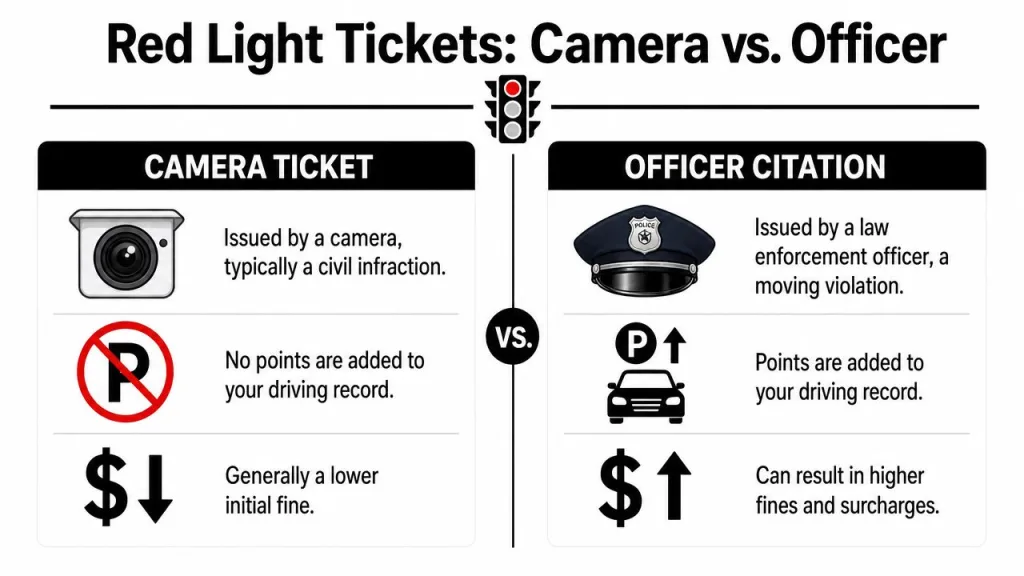
A camera ticket is generally a civil penalty. An officer citation is a moving violation. If you remember nothing else, remember that.
Think parking ticket versus moving violation
The easiest analogy is this:
A camera notice works more like a parking ticket attached to the vehicle owner. An officer citation works more like a speeding ticket attached to the driver’s license.
That difference changes everything.
Most content does a poor job of saying this clearly. Red-light camera tickets are civil penalties and should not affect insurance rates or driving records in most states. In Florida, Pensacola’s $158 citation is explicitly civil with zero points assessed, as explained in this guide on Florida traffic light camera tickets and supported by a legal discussion of Virginia and Florida camera ticket treatment.
How to tell which one you received
Look at the document itself.
- Camera notice signs: It usually references a notice of violation, includes still images, and is tied to the vehicle owner.
- Officer citation signs: It’s issued directly by law enforcement and functions as a moving violation.
- Record impact clue: If the paperwork is aimed at the driver’s license rather than just the registered vehicle, take it much more seriously.
A civil notice is annoying. An officer citation can follow you for years.
If you confuse one for the other, you can make the wrong choice on day one. That’s where drivers lose control of the situation.
Hidden Penalties Points and Insurance Hikes
The fine gets your attention. The points and insurance impact are the actual damage.
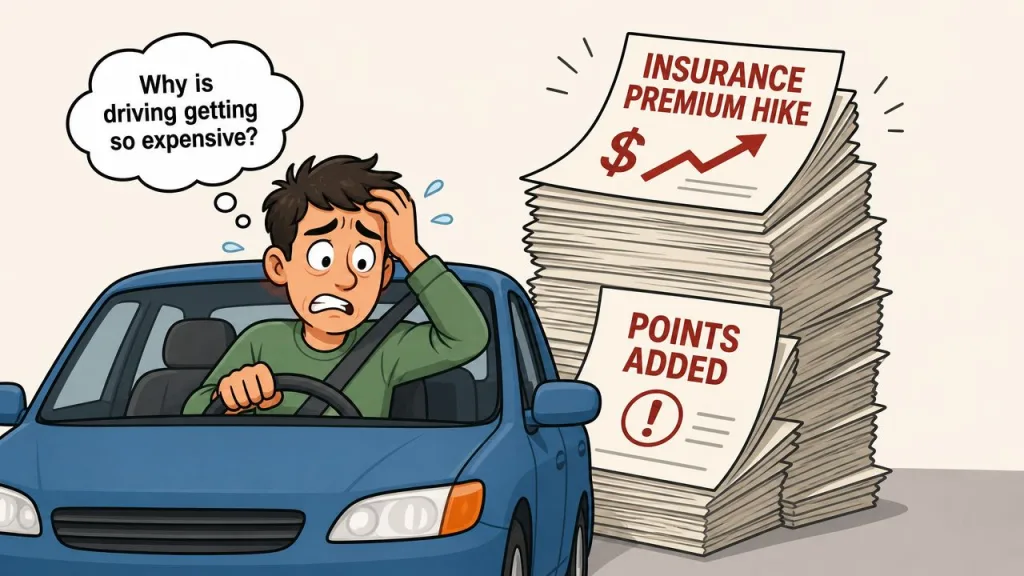
A Florida camera ticket is one thing. A moving violation is another. Across the country, the difference is obvious. A Florida camera ticket is a flat $158 fine, while an officer-issued red-light ticket in New York City adds three points and can lead to years of insurance increases, with a Driver Responsibility Assessment risk if the driver reaches over six points in 18 months, according to this comparison of red light ticket penalties by state.
Why points matter more than the ticket
Drivers fixate on the payment amount because it’s immediate. Insurance companies care about the record.
That’s why I tell people to stop asking, “How much is the ticket?” and start asking, “Will this hit my license?”
If you want a practical overview of how long violations can affect premiums, this guide on traffic ticket insurance rate changes is worth reading. It helps frame the issue the right way. You’re not dealing with a one-day expense. You may be dealing with a multi-year cost.
The insurance question drivers ask first
For camera tickets, the answer is often better than people expect. This explanation of whether a red light camera ticket affects insurance in Florida clears up the distinction many drivers miss.
For officer-issued citations or mishandled notices, the answer can be much worse.
Here’s the mindset shift you need:
- Short-term thinking: “I’ll just pay it and move on.”
- Smart thinking: “If I pay this the wrong way, what follows me afterward?”
- Best thinking: “What option protects both my wallet and my record?”
That’s the question that saves money.
A quick visual can help if you’re still sorting through the consequences.
Your Three Options to Reduce the Total Cost
Once you know what you received, you have three real choices. Pay it. Elect traffic school if you’re eligible. Contest it.
Those choices are not equal.
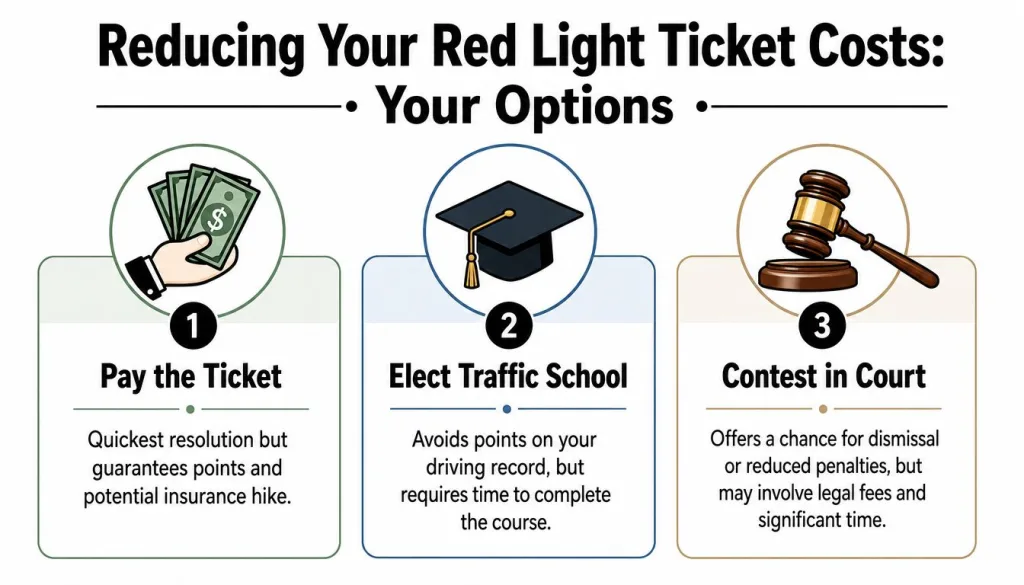
Option one pay and absorb the damage
This is the fastest option, and often the worst one if the case can affect your driving record.
Paying may close the file, but it can also lock in consequences you could have reduced. Convenience isn’t savings. It’s just speed.
This option makes sense only when you’ve confirmed the notice is limited in scope and won’t create a larger record problem.
Option two choose traffic school
For eligible moving violations, traffic school is often the safest middle path.
You still deal with the citation, but you focus on the part that matters most. Keeping points from hitting your public record and avoiding the insurance fallout that usually hurts more than the ticket itself. If you’re comparing programs, check the current Florida traffic school cost options so you can weigh course cost against the much larger price of a damaged driving record.
Instructor’s advice: If you qualify for traffic school and your main goal is protecting your record, this is usually the most practical choice.
Drivers fight this because they don’t want the inconvenience. That’s backwards. A short course is usually cheaper than years of consequences.
Option three contest the ticket
This path can work, but it requires attention to detail.
One issue many guides ignore is service and mailing compliance. Procedural mistakes matter. Some red-light tickets may be vulnerable if the notice wasn’t mailed within 14 days, which is why this discussion of service defects and mailing deadlines is worth understanding even though drivers rarely hear about it.
Contesting makes sense when:
- The notice was defective: Missing or late mailing can create a defense.
- The facts are weak: The images, timing, or driver identification issues raise questions.
- You’re protecting a fragile record: If points would create bigger consequences, review every procedural angle.
The downside is simple. Fighting a ticket takes time, organization, and sometimes professional help. If you’re not ready to do that well, don’t bluff your way through it.
How to Complete Florida Traffic School Online with BDISchool
If traffic school is the right move, keep it simple. Don’t overcomplicate a process that should be straightforward.
First, elect the traffic school option with the clerk or court handling your case if your ticket allows it. Do that before the deadline. Deadlines are where good options go to die.
The fastest path to completion
After you’ve elected the option, enroll in a state-approved course and complete it promptly.

The Florida BDI course online is built for drivers who need a practical, flexible way to satisfy the requirement without rearranging their lives.
What makes online traffic school workable
This is why online completion fits most drivers better than a classroom:
- Self-paced access: You can start, stop, and return when your schedule allows.
- State-approved format: The course follows Florida requirements for eligible drivers.
- Direct reporting: Completion is reported to the FLHSMV.
- Language access: English, Spanish, and Portuguese options make the process easier for more drivers.
You don’t need a dramatic strategy here. You need follow-through.
Register, complete the course, and keep proof of completion for your records. Busy professionals, parents, and anyone juggling work hours usually do better with online access because they can finish without losing a day in a classroom.
Frequently Asked Questions About Florida Red Light Tickets
What happens if I ignore a camera notice in Florida
It can get much worse. If the initial Notice of Violation is ignored, it can escalate to a Uniform Traffic Citation with a fine of $264.00 or $277.00 and add 3 to 4 points to your driving record, shifting it from a civil penalty to a criminal traffic misdemeanor, according to this explanation of Florida red light camera ticket escalation.
Is traffic school for every red light ticket
No. Traffic school is generally most relevant when you’re trying to protect your record from a qualifying moving violation. If you’re dealing with a pure civil camera notice handled on time, the issue may be different.
Can I just pay and be done with it
You can, but that isn’t always the cheapest decision. “Done” on the payment side can still mean trouble on the record side.
What should I do first
Read the document carefully. Confirm whether it’s a camera notice or an officer-issued citation. Then act before the deadline.
If you need to protect your record and finish your requirement without wasting time, enroll with BDISchool. Their Florida-approved online courses are self-paced, available in English, Spanish, and Portuguese, and designed to help drivers handle citations efficiently and move on.