Yes. In almost every state, especially Florida, you absolutely need proof of insurance to register your car, and Florida requires $10,000 in Personal Injury Protection and $10,000 in Property Damage Liability before registration or operation on public roads.
If you’re standing there with a title, a bill of sale, and a plan to get tags today, this is the part that trips people up. They think insurance and registration are separate errands. In Florida, they aren’t. Insurance comes first, then registration.
A lot of drivers ask this when they’ve just bought a car, moved to Florida, or let a policy lapse and are trying to get legal again. The good news is that the process is simple once you do it in the right order. Get the policy in place, make sure it meets Florida rules, bring the right proof, and then finish your registration without wasting a trip.
Your Guide to Car Registration and Insurance
You bought the car. Now you want the plate, sticker, and registration so you can drive it legally.
That’s where people get stuck and start searching Do I Need Insurance to Register My Car. In Florida, the answer is straightforward. Yes, you need insurance before you register a vehicle with four or more wheels.
The mistake most drivers make
Many drivers treat title work and registration like the same thing. They’re not the same step, and mixing them up causes delays.
You can handle ownership paperwork and still not be ready to drive the car. Registration is the point where the state expects the vehicle to be properly insured and road-legal.
Simple rule: If you want a plate and legal road use, get your Florida insurance set up first.
What matters most in Florida
Florida doesn’t leave this vague. The state requires insurance before registration, and that requirement ties directly into whether the vehicle can be operated on public roads.
If you’re also trying to figure out the agency side of the process, the Florida Highway Safety and Motor Vehicles guide from BDI School is a practical starting point for understanding the state system.
What you should do next
Use this order and you’ll avoid the usual confusion:
- Buy a Florida-compliant auto policy
- Get proof of coverage
- Go complete registration
That’s the roadmap. Not glamorous, but effective.
If you try to reverse the order, you’ll waste time. If you follow it, the process is much smoother and you can get on the road without guessing.
Why Insurance Is a Non-Negotiable First Step
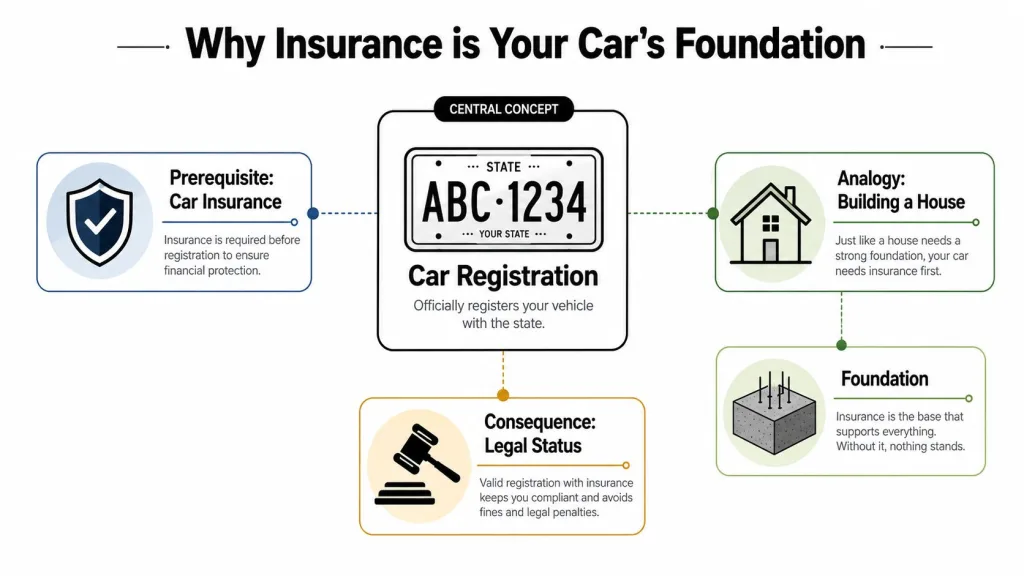
Insurance is the foundation. Registration sits on top of it.
That’s the easiest way to understand the rule. You wouldn’t build a house on bare dirt and hope it holds. A state won’t legalize your car for road use without proof that there’s financial responsibility behind it.
Why states care so much
Insurance isn’t just paperwork. It’s the system that makes sure there’s money available when someone causes damage or injuries on the road.
That’s why this rule exists nearly everywhere. Historically, since the genesis of automotive insurance schemes in 1925, nearly every U.S. state has adopted a compulsory liability insurance scheme, meaning proof of insurance is now a foundational prerequisite for registering a vehicle in most jurisdictions according to Wikipedia’s overview of vehicle insurance in the United States.
Some drivers keep looking for a workaround because they think this is just DMV bureaucracy. It isn’t. This is the legal gatekeeper that separates “I own a car” from “I can legally drive this car on public roads.”
Registration without insurance usually stops cold
States commonly refuse to process or renew registration without active coverage, and some jurisdictions suspend registration if insurance lapses after the fact. That pattern shows how direct the relationship is between insurance status and vehicle legality.
Here’s my advice. Don’t shop for the cheapest card that gets you through the counter and call it done. Shop for a policy you can keep active.
A canceled policy causes more trouble than a delayed registration ever will.
If cost is what’s making you hesitate, get smarter before you get desperate. Many Florida drivers start by comparing options and learning where savings may exist, including defensive driving and driver improvement paths. A useful starting point is this guide to the cheapest car insurance in Florida.
The practical mindset to adopt
Think like a responsible vehicle owner, not like someone trying to sneak through a form requirement.
- Insurance first: It enables registration.
- Continuous coverage matters: A lapse can create bigger legal problems later.
- Better driving habits help: Safer drivers usually put themselves in a better position when it’s time to deal with insurance costs.
That’s the adult version of car ownership. It’s less exciting than buying the car, but it’s the part that keeps your life from getting expensive fast.
Florida’s Specific Insurance Requirements for Registration
Florida is clear about what it wants before it will let you register and operate a car.
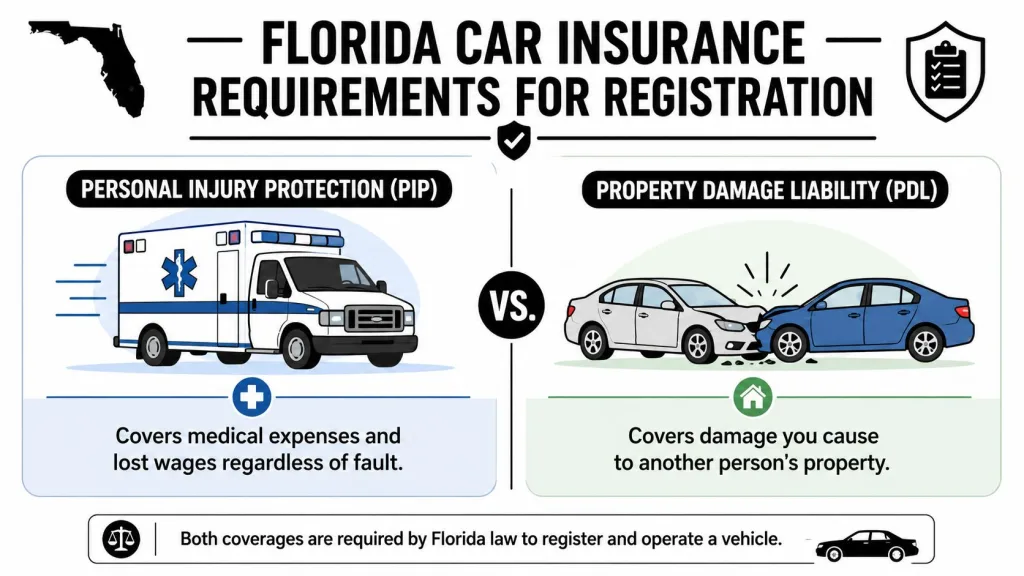
Florida state law mandates that all motor vehicle owners with at least four wheels must maintain Personal Injury Protection and Property Damage Liability insurance before registering or operating vehicles on public roadways, with minimum limits of $10,000 each according to FloridaLicensePlate.org’s explanation of insurance and vehicle registration.
The two coverages you need
Florida’s registration rule revolves around two specific coverages:
| Coverage | What it does | Minimum required |
|---|---|---|
| Personal Injury Protection (PIP) | Covers your own injury-related losses under Florida’s system | $10,000 |
| Property Damage Liability (PDL) | Covers damage you cause to someone else’s property | $10,000 |
Those are the legal minimums for registration. They are not automatically the best protection for your finances.
If you cause a serious crash, minimum coverage may leave you exposed. That’s why many drivers choose higher limits or extra protections after they’ve met the registration requirement.
What these coverages mean in plain English
PIP is about injury-related costs tied to you and your household under your policy structure.
PDL is about damage you cause to other people’s property, such as another car, a fence, or a building.
That second one matters more than many people realize. Even a relatively ordinary crash can turn into a major bill once vehicle repairs, towing, or property damage get involved.
To see a different state’s legal framework after a collision, this breakdown of Texas auto insurance minimums after a crash is useful for comparison because it shows how state rules can shape what drivers owe and what coverage needs to do.
A quick visual can also help if insurance terms tend to blur together:
My recommendation
Meet the minimums, then ask a better question. Can you afford the out-of-pocket risk if something goes wrong?
Practical advice: Buy the coverage that lets you sleep at night, not just the coverage that gets you a registration sticker.
And while you’re shopping, ask insurers whether driver education or mature driver training can help with discounts. That can make better coverage easier to afford, which is a smarter move than cutting corners.
The Correct Steps to Register Your Vehicle in Florida
There’s no secret shortcut here. There is a right order.
The biggest point of confusion is the gap between ownership paperwork and actual registration. Many drivers mistakenly believe they can register a car without insurance if they only transfer the title, but registration explicitly requires proof of coverage as discussed in this Reddit DMV discussion about title transfer versus registration confusion.
Step 1 gets everything moving
Start with the insurance policy.
Not tomorrow. Not after the plate appointment. First.
You need a Florida-compliant policy active before registration. When you call or apply online, make sure the insurer knows you need coverage that satisfies Florida registration requirements.
Then gather proof the smart way
Once the policy is active, collect your proof of insurance. Drivers usually use one of these:
- Insurance ID card: Digital or printed, depending on what your carrier provides
- Declaration page: Helpful if you want the full policy summary in hand
- Electronic reporting: Your insurer may report coverage into the state system
That last part matters because registration problems often come from mismatched records, not from the driver thinking they’re uninsured.
Bring more proof than you think you need. One extra document beats one extra trip.
Finish registration only after coverage is active
Now go handle the registration itself at the proper office and bring the rest of your required paperwork.
Use this simple sequence:
- Secure Florida insurance
- Confirm you have proof
- Complete registration and get your plate
If you’re trying to avoid a wasted DMV visit, this checklist for what to bring to DMV helps you tighten up the paperwork side before you leave home.
Don’t confuse “I own it” with “I can drive it”
That’s the trap.
A title proves ownership. Registration and insurance make road use legal. If you keep those roles separate in your head, the whole process gets easier.
This is why the answer to Do I Need Insurance to Register My Car stays so consistent. You may own the vehicle without insurance for a moment in the paperwork chain, but you can’t register it for legal driving without it.
Penalties for Driving Uninsured in Florida
Florida takes insurance lapses seriously, and it should. A registered vehicle without required coverage creates risk for everyone else on the road.
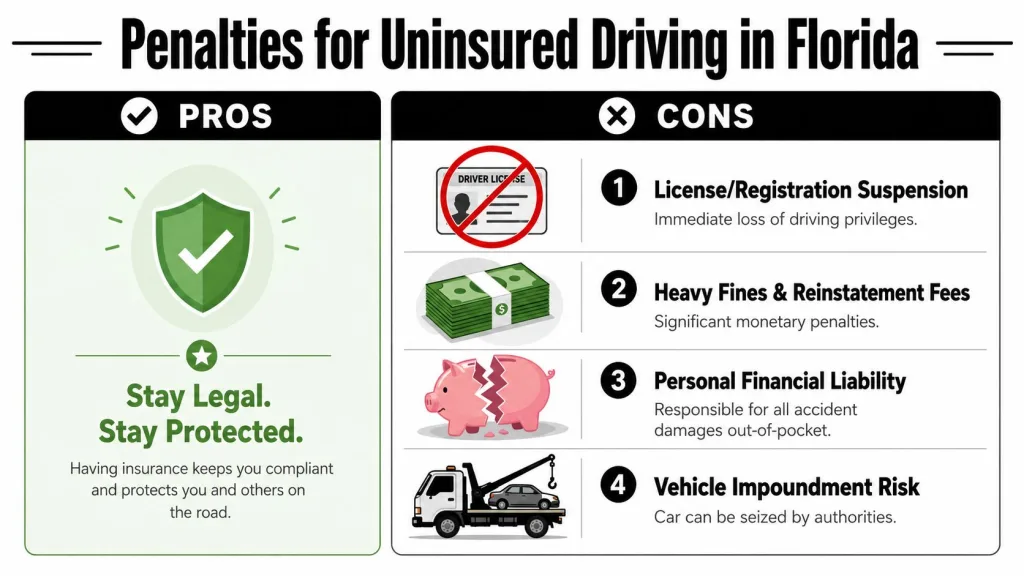
If you let required insurance lapse on a registered vehicle, you’re not dealing with a harmless clerical issue. You’re stepping into license, registration, and plate trouble.
What Florida can do
Failure to maintain required insurance for a registered vehicle in Florida can result in FLHSMV suspending driving privileges, license plates, and registration for up to three years, with reinstatement requiring proof of insurance and a penalty fee of up to $500 according to this Florida uninsured driving consequences summary.
That’s enough to derail work, school, family logistics, and your budget.
Here’s the short version of what’s at risk:
- Your driving privileges: Suspension can stop you from legally driving at all
- Your registration and plate: The vehicle itself can lose legal status
- Your money: Reinstatement costs pile on top of insurance costs
- Your stress level: Every future insurance conversation gets harder after a lapse
Why this becomes expensive fast
The legal penalty is only part of the damage.
If you’re in a crash without proper coverage, you can end up personally exposed for losses that insurance was supposed to handle. That’s the sort of problem that follows people around for a long time.
For a driver trying to understand the broader issue of uninsured collisions from the victim’s side, this piece on AutoProv accident claim advice offers useful perspective on why uninsured driving creates such messy claims problems.
Staying insured is cheaper than cleaning up an uninsured-driving mess. Every time.
My blunt recommendation
Don’t gamble with a lapse.
If money is tight, adjust your budget, shop carriers, or reduce optional expenses somewhere else. But keep the required coverage in force. Losing your plate and license over a preventable lapse is one of the worst “small savings” decisions a driver can make.
Become a Smarter Safer Driver Today
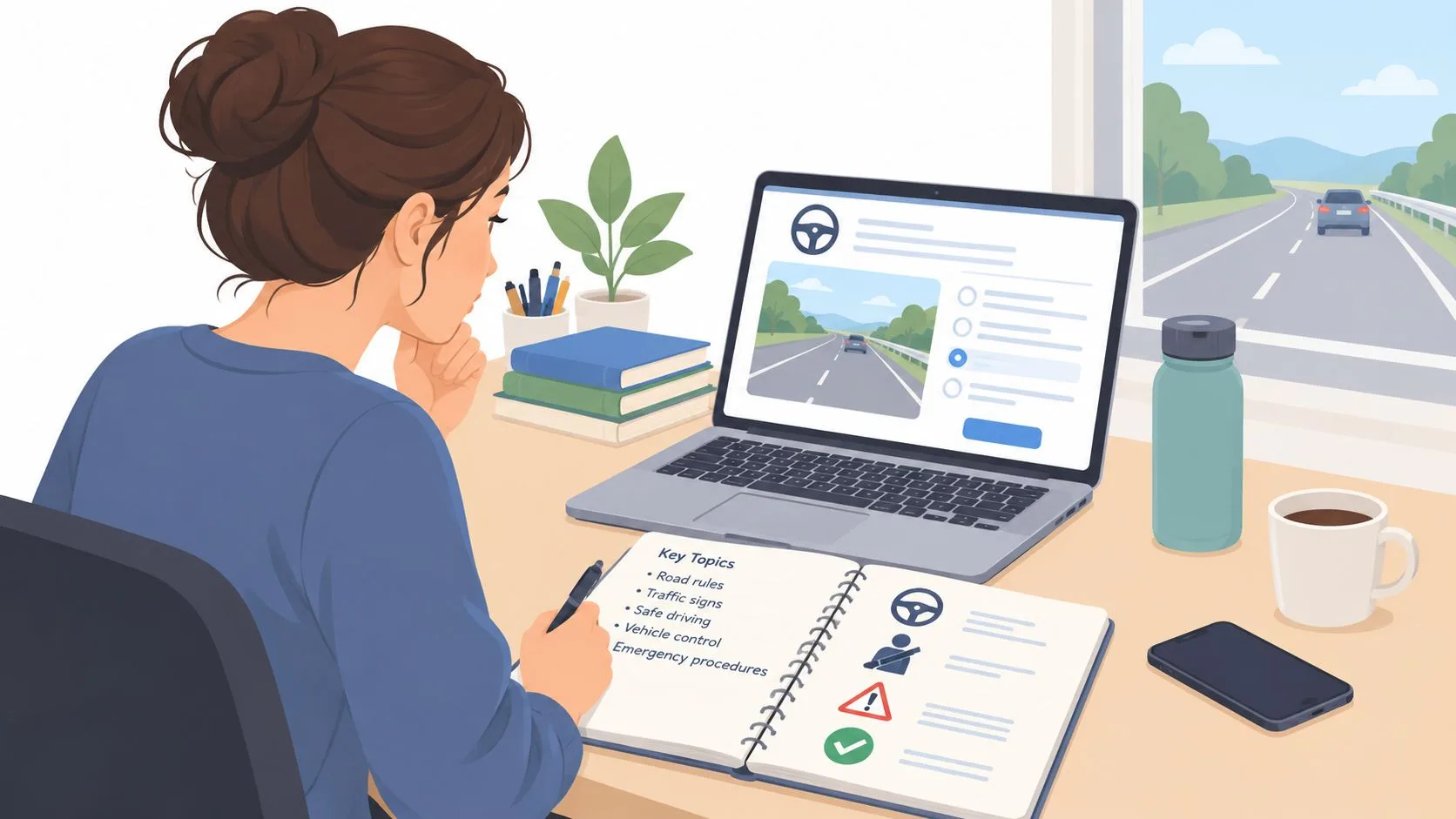
Insurance gets you legal. Education helps you stay out of trouble.
That’s the part many drivers miss. The best way to protect your registration, your wallet, and your record is to drive in a way that creates fewer problems in the first place.
Why driver education matters after registration
A good course does more than help with a ticket. It sharpens the habits that lead to lower-risk driving.
That includes things like:
- Following distance judgment: You stop creating rear-end situations
- Hazard awareness: You notice bad setups earlier
- Calmer decisions: You stop turning minor traffic friction into major mistakes
For many drivers, that also supports conversations with insurers about discounts or better pricing. Safer driving habits and a cleaner record are always better than trying to negotiate your way out of repeated violations.
If you want to improve the habits that most often lead to crashes, this guide on how to avoid car accidents is a strong place to start.
Flexible online options make this easier
Florida drivers don’t need another scheduling headache. Online traffic school works because it fits around work, family, and everything else.
BDI School and DriverEducators offer Florida-approved online programs for drivers dealing with tickets, court requirements, insurance discount goals, or simple skill refreshers. Their course catalog includes Basic Driver Improvement, Intermediate Driver Improvement, Aggressive Driver, and Mature Driver options, with self-paced access and support for English, Spanish, and Portuguese learners.

Quick FAQ
Do I need insurance to register my car in Florida
Yes. Florida requires $10,000 in PIP and $10,000 in PDL before registration or operation on public roads, as noted earlier from the Florida insurance requirement source.
Can I transfer title before getting insurance
Title work and registration are not the same thing. Drivers often confuse them, but registration requires proof of coverage.
What happens if my Florida insurance lapses after registration
Florida can suspend your driving privileges, plate, and registration, and reinstatement can require proof of insurance and a fee of up to $500, based on the Florida penalty source cited above.
Can a driving course help with insurance costs
It often can help qualitatively, especially for drivers seeking discounts or trying to protect their driving record. The smart move is to ask your insurer directly which Florida-approved courses they recognize.
If you’re serious about keeping costs down, don’t stop at “What’s the minimum I need?” Ask, “How do I become the kind of driver who pays less and deals with fewer problems?” That’s the better question.
If you want the fastest path from confusion to confidence, enroll with BDISchool. Their Florida-approved online courses can help you protect your driving record, meet court or insurance requirements, and build safer habits that make car ownership cheaper and less stressful.