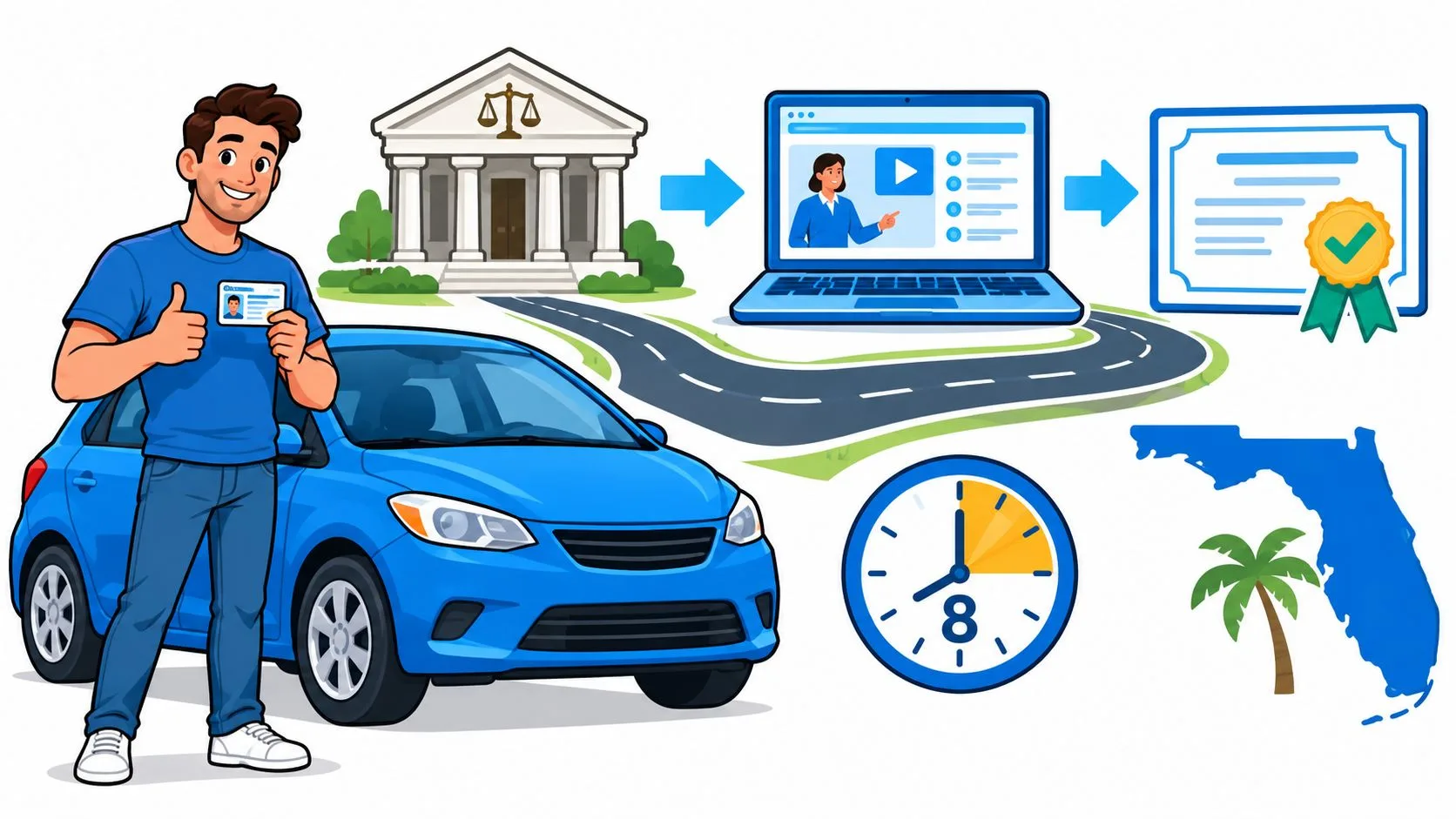
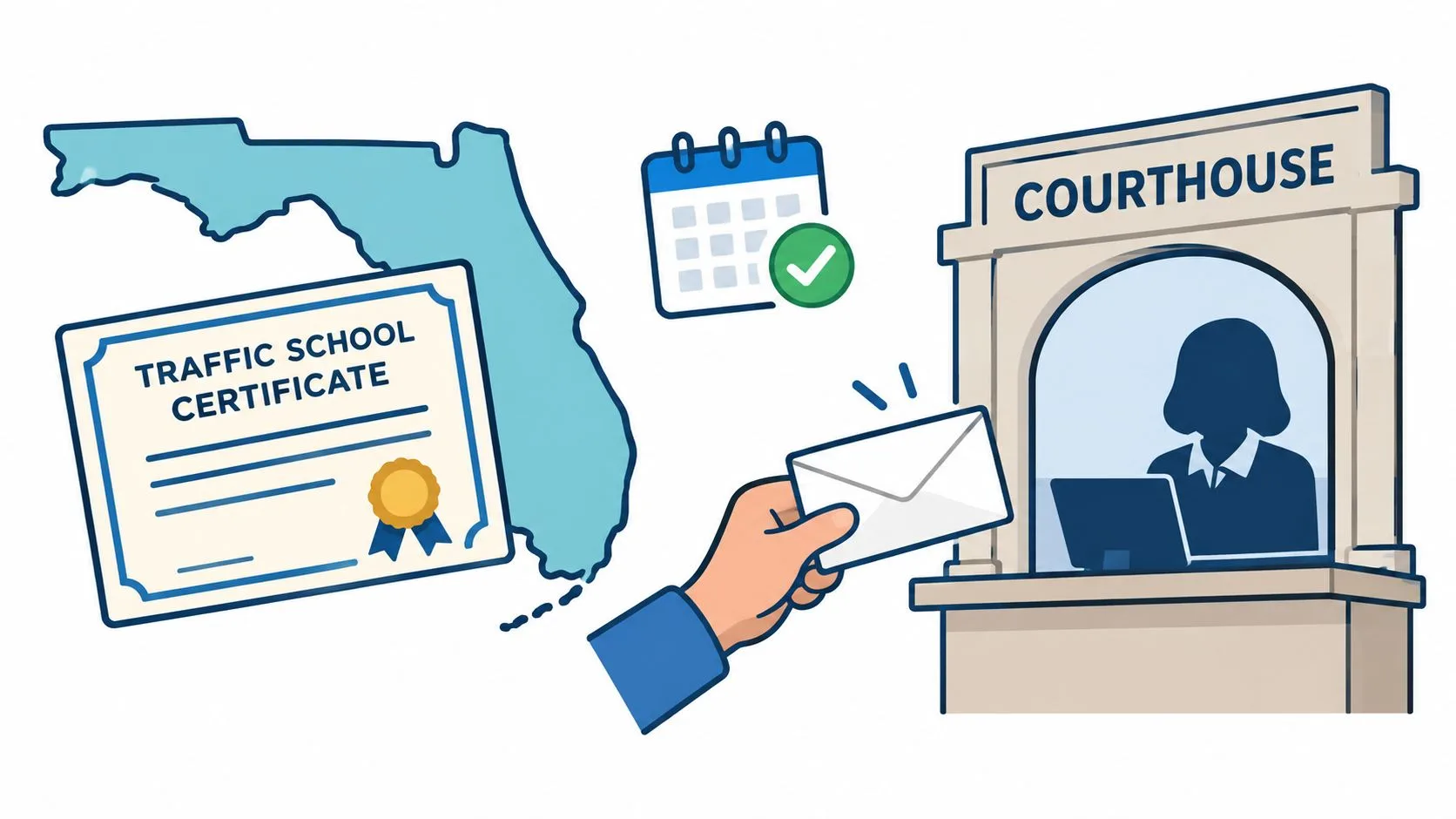
That letter, citation, or renewal notice from the Florida Department of Highway Safety and Motor Vehicles can spike your blood pressure fast.
Most drivers see Florida Highway Safety and Motor Vehicles as a wall of forms, deadlines, and penalties. That’s the wrong way to look at it. It’s a system. If you understand how the system works, you stop guessing and start making smart moves.
A lot of people make their worst decision in the first few minutes after getting a ticket. They pay it quickly just to make the stress go away. That feels efficient. It often isn’t.
If you’re dealing with a citation, a license issue, or a basic FLHSMV task, the goal is simple. Protect your record, finish the right requirement, and move on with as little disruption as possible.
Your Introduction to the FLHSMV
You open the mailbox and see an official envelope. Maybe it’s a license notice. Maybe it’s a registration reminder. Maybe it’s a traffic citation you were hoping would somehow disappear.
That reaction is normal. But panic doesn’t help, and neither does treating the FLHSMV like a mystery.
The Florida Department of Highway Safety and Motor Vehicles is the state’s central driver-and-vehicle system. It doesn’t just issue licenses. It connects credentials, citations, and enforcement actions through one coordinated pipeline with county tax collectors and law-enforcement partners, according to Florida program details from OPPAGA.
Why that matters to you
This matters because your driving life isn’t split into separate boxes.
Your license status, citation history, and related enforcement actions all live inside one administrative structure. If you get a ticket, renew a license, change an address, or deal with a suspension issue, you’re interacting with the same larger system.
That’s why random advice from a friend usually creates more problems than it solves.
Practical rule: Don’t guess your way through an FLHSMV issue. Match your problem to the correct state process and complete it cleanly the first time.
Think like a driver, not a defendant
Here’s the better mindset. You are not “fighting the government” every time you get a notice. You are navigating a rules-based process.
That shift helps immediately. A stressed driver asks, “Why is this happening to me?” A smart driver asks, “What action does this notice require, and what option protects my record?”
If you’re rusty on Florida rules, start with the Florida driver’s manual. It’s one of the fastest ways to stop feeling lost and start understanding what the state expects from you.
Most FLHSMV problems get easier once you identify three things:
- What triggered the notice
- What deadline applies
- What approved option clears the issue
That’s the whole game. Understand the system, choose the right response, and keep your record from getting worse.
What the FLHSMV Actually Does
Most drivers only think about the FLHSMV when something goes wrong. That misses the point. The agency handles the core records that define whether you can legally drive, what vehicle you own, and what official driving history exists under your name.
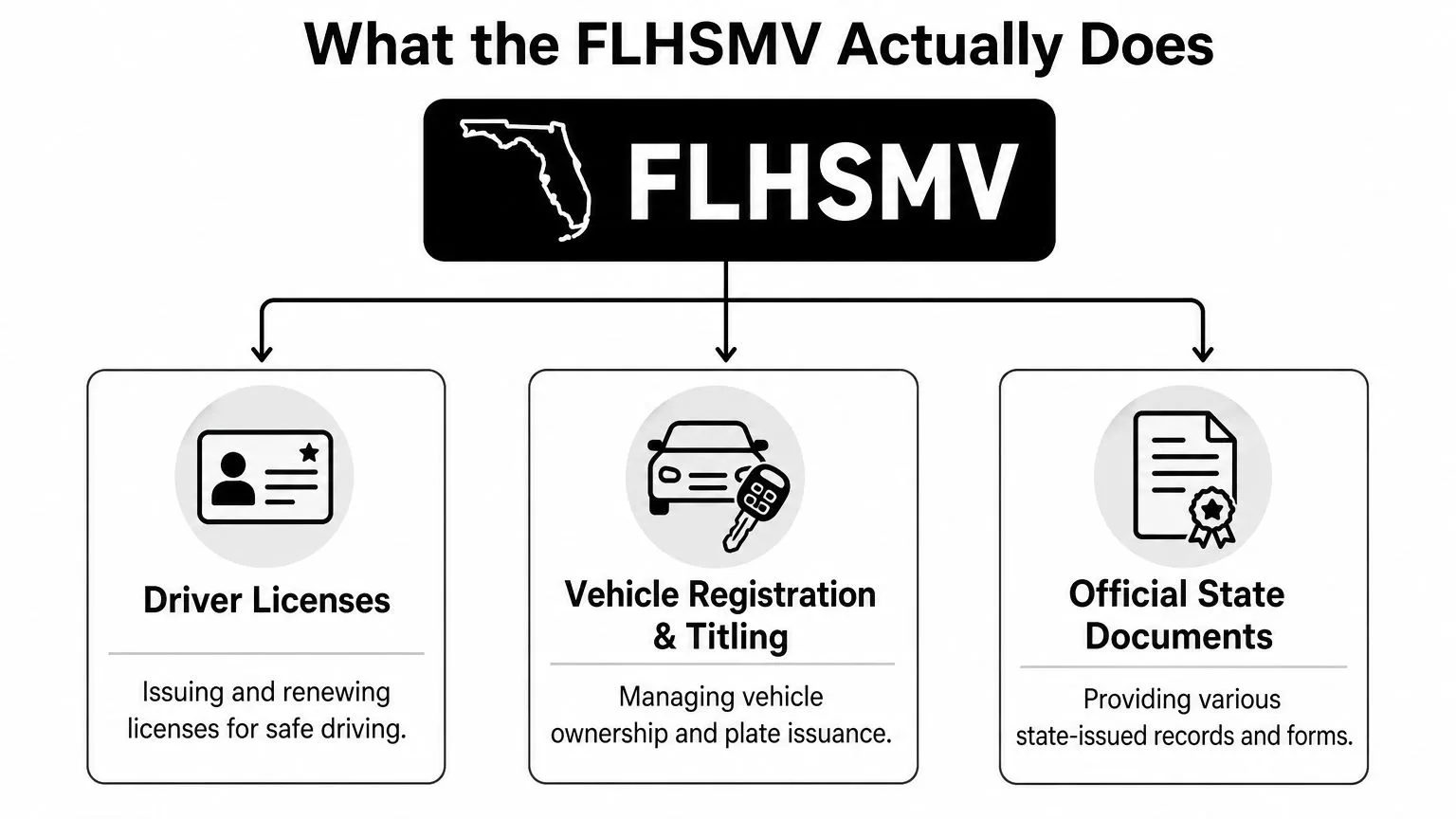
Driver licenses
This is the commonly known part.
It covers learner permits, driver licenses, renewals, replacements, state IDs, and status issues that affect your privilege to drive. If your license expires, gets suspended, or needs an update, these are the circumstances it addresses.
If you’re trying to understand the path from permit to full license, the Florida driver’s license guide gives a cleaner overview than most scattered forum answers.
Vehicle registration and titling
This side handles ownership and legal road use.
If you buy a vehicle, transfer ownership, renew registration, replace plates, or sort out title paperwork, you’re in this lane. Many drivers confuse vehicle paperwork with license status. They’re related, but they’re not the same task.
A simple way to understand this:
| FLHSMV area | What it controls | Common reason drivers need it |
|---|---|---|
| Driver licensing | Your legal authority to drive | Renewal, replacement, status issue |
| Registration | Your vehicle’s legal road status | Renewal, plate issue, ownership change |
| Titling | Proof of vehicle ownership | Sale, transfer, replacement title |
Official records and crash data
The FLHSMV becomes more than a counter service.
By law, the FLHSMV is the official custodian of crash reports in Florida. It collects crash data from law enforcement statewide and produces the official Traffic Crash Facts reports and Florida Crash Dashboard used for safety analysis and targeted countermeasures, as described in Florida’s FY 2023 Highway Safety reporting to NHTSA.
That tells you something important. The state doesn’t treat crashes, citations, and roadway safety as random events. It tracks patterns and uses those records to guide safety action.
If it happened on the road and generated an official record, assume it can affect more than one part of your driving profile.
That’s why accuracy matters when you deal with any FLHSMV process. A rushed response can create a record problem that lasts longer than the original issue.
Handling Traffic Citations in Florida
A traffic ticket feels small when it’s fresh. It rarely stays small if you handle it lazily.
Many drivers make the same mistake. They pay the fine right away because it seems faster. Sometimes that’s the most expensive choice in the long run, especially if you had options that would better protect your driving record.
To understand your decision points, start here:
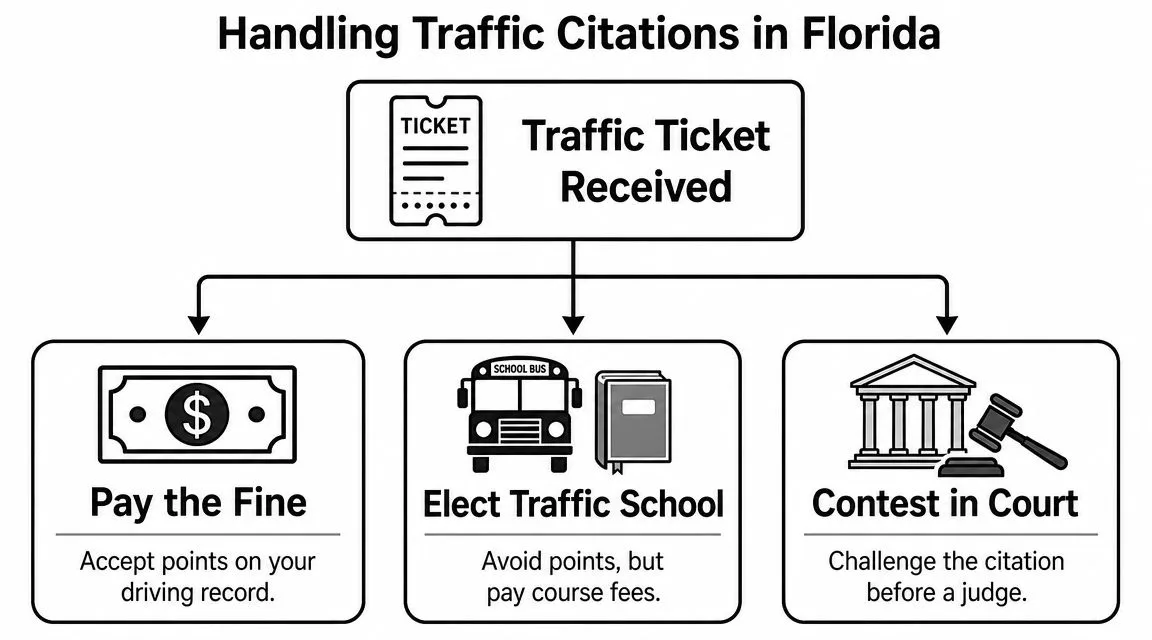
Your three basic options
When you receive a moving violation, your path usually falls into one of these buckets:
- Pay the fine: You resolve the ticket quickly, but you may also accept the record consequences that come with that choice.
- Elect traffic school: You use an approved course option when eligible to help protect your record.
- Contest the citation: You challenge the ticket through the court process.
None of these options should be chosen emotionally. Choose based on record protection, time, and what outcome you want.
A quick video walkthrough can help if you’re sorting through the basics:
Why records matter more than the fine
The fine is the obvious cost. The hidden cost is what gets attached to your record after the fact.
That’s why traffic school exists as a practical off-ramp for many eligible drivers. It isn’t just about “taking a class.” It’s about avoiding a chain reaction from one bad stop or one distracted moment.
If you’re comparing your options after a citation, the Florida traffic ticket course page is a useful starting point for figuring out whether a course fits your situation.
Florida uses standardized reporting
Florida doesn’t rely on each agency making up its own crash documentation style. The state uses the Florida Uniform Traffic Crash Manual, which standardizes how crash dates, roadway identifiers, and vehicle involvement are coded, according to the official Florida crash manual.
That standardization matters because official records are built to be consistent across agencies and over time. In plain English, your citation or crash-related paperwork isn’t floating around in some vague local format. It enters a structured system.
The cleaner your response to a ticket, the easier it is to close the issue without creating a second problem.
So here’s the direct advice. Don’t pay first and think later. Check eligibility, understand the consequence of each option, and pick the route that protects your record.
Turn a Ticket into an Opportunity with BDISchool
A ticket is annoying. It’s also a moment to fix sloppy habits before they cost you more.
The smartest move is usually the one that satisfies the requirement and improves how you drive afterward. That’s what these Florida course categories are for. They aren’t interchangeable, and picking the wrong one wastes time.
Match the course to the problem
Some drivers need a basic ticket course. Others need a court-ordered class. Others want a mature-driver refresher tied to safer habits and possible insurance-related benefits, depending on their insurer.
Here’s the simple breakdown.
| Course Name | Length | Primary Use Case | Key Benefit |
|---|---|---|---|
| Basic Driver Improvement (BDI) | 4-hour | Moving violation election | Helps eligible drivers address a ticket requirement and protect their record |
| Intermediate Driver Improvement (IDI) | 8-hour | Court-ordered driver education | Meets a more serious or specific requirement |
| Aggressive Driver Course | 8-hour | Drivers ordered into behavior-focused improvement | Addresses risky driving patterns and responsibility |
| Mature Driver Course | 6-hour | Refresher for older drivers | Supports safer driving habits and may help with insurance discounts depending on the carrier |
What to look for in an online course
Don’t overcomplicate this. If you need a course, judge it on a few practical points:
- State approval: If the course doesn’t satisfy Florida requirements, it’s useless.
- Self-paced access: Busy drivers need to log in, stop, return, and finish on their own schedule.
- Clear reporting: Completion has to get where it needs to go without you chasing paperwork.
- Language support: English isn’t every driver’s strongest language. That matters.
One option is the Florida Basic Driver Improvement course, which is offered online and self-paced for drivers handling a typical moving-violation situation.
Stop treating traffic school like punishment
Many drivers often get stuck mentally here.
They treat the course as the bad part. It isn’t. The bad part is the ticket and the record damage that can follow if you ignore your options.
A well-designed course is the cleanup step. You sit down, work through the material, satisfy the requirement, and leave with a sharper understanding of Florida traffic law and defensive driving habits.
That’s a fair trade.
If your goal is to get back to normal with the least friction possible, choose the course that matches your specific notice or court requirement and complete it promptly. Delay is what turns a manageable citation into a drawn-out headache.
How to Complete Common FLHSMV Tasks Online
A lot of FLHSMV errands don’t require a long line at a service center. Drivers waste time in person because they assume every official task has to be done at a counter.
It doesn’t.
License renewal and address changes
For routine updates, start with the official state portal and verify what the system allows for your status. Some drivers can renew online. Others may need an in-person visit because of eligibility, identity, or prior renewal history.
Use this checklist before you start:
- Check your current status: Make sure your license isn’t under a separate hold or sanction.
- Review your notice carefully: Renewal letters usually point you toward the proper path.
- Update your address promptly: If your mailing address is wrong, you can miss deadlines and replacement documents.
If your issue is simple, online completion is usually the fastest route. If the system stops you, that’s a sign to investigate the specific hold instead of clicking around in frustration.
Handle address changes early. A missed notice creates bigger problems than the original paperwork ever would.
Driving records and document requests
Drivers often need a copy of their record for work, court, insurance questions, or simple peace of mind.
Before ordering anything, decide what you need. Some people want to verify course completion. Others want to check whether a citation posted. Others need a record for an outside requirement.
A clean process looks like this:
- Identify the exact document
- Use the official FLHSMV channel
- Save confirmation details
- Review the record for accuracy
Registration and title tasks
Vehicle tasks often route through county tax collector offices working within the larger FLHSMV framework.
That means your registration renewal, replacement registration, or title issue may involve local processing inside a statewide system. Don’t treat those as random county quirks. Read the instructions for your county channel, then follow them exactly.
The practical rule is simple. If the task can be completed online, do it online. If the system blocks you, find the reason before booking an in-person appointment.
Your Florida Driving Questions Answered
Is taking a driver improvement course worth the time
Yes, if it helps you satisfy the correct requirement and avoid making your record worse.
The mistake is focusing only on the inconvenience of the course. Focus on the consequence of choosing the wrong response to the ticket.
How does the FLHSMV know a course was completed
Approved providers report completion through the required state process. You should still keep your own confirmation until the matter is fully closed.
That’s not paranoia. It’s basic record hygiene.
What’s the difference between electing traffic school and being court-ordered
Electing traffic school is a choice available in the right situation. A court-ordered course is not optional. The court directs you to complete a specific requirement, and your job is to follow that order exactly.
If you’re unsure which one applies, don’t assume. Check the notice or court paperwork.
Is road safety still mostly about personal responsibility
Personal responsibility still matters, but that’s no longer the whole story.
Recent safety research points toward a broader system-based approach that includes vehicle technology along with driver behavior. That same review notes that IIHS estimates widespread impairment-detection systems could save over 9,000 lives annually, as discussed in this road-safety research review.
What should you do right now if you’re stressed about a Florida driving issue
Slow down and get specific.
Figure out whether your problem is a citation, license issue, registration issue, or record request. Then complete the exact state-approved step that clears it. Drivers get in trouble when they react fast and think late.
If you need a practical next step, BDISchool offers Florida-approved online courses for drivers dealing with tickets, court requirements, and refresher training. Pick the course that matches your notice, complete it on your schedule, and keep your documentation until the requirement is fully resolved.