You saw the lights in the mirror. Then came the stop, the citation, the irritation, and the quick mental math about points, insurance, and wasted time.
Most drivers treat traffic school like a box to check. That’s a mistake.
The course you choose affects more than compliance. It affects how well you absorb safer habits, how calmly you move through the requirement, and whether you leave the experience more confident or just more annoyed. A safe learning environment matters in driver education for the same reason it matters anywhere else. If the course makes you feel rushed, confused, judged, or exposed, your attention goes to stress instead of learning.
That matters even more if you’re an anxious driver, a mature driver returning to course material after years off, or someone learning in English as a second language. The way you learn shapes what you retain.
Turn a Traffic Ticket into a Fresh Start
The first reaction to a ticket is usually defensive. You replay the stop. You question the officer. You tell yourself it was bad luck.
Then reality takes over. You need to decide what to do next.
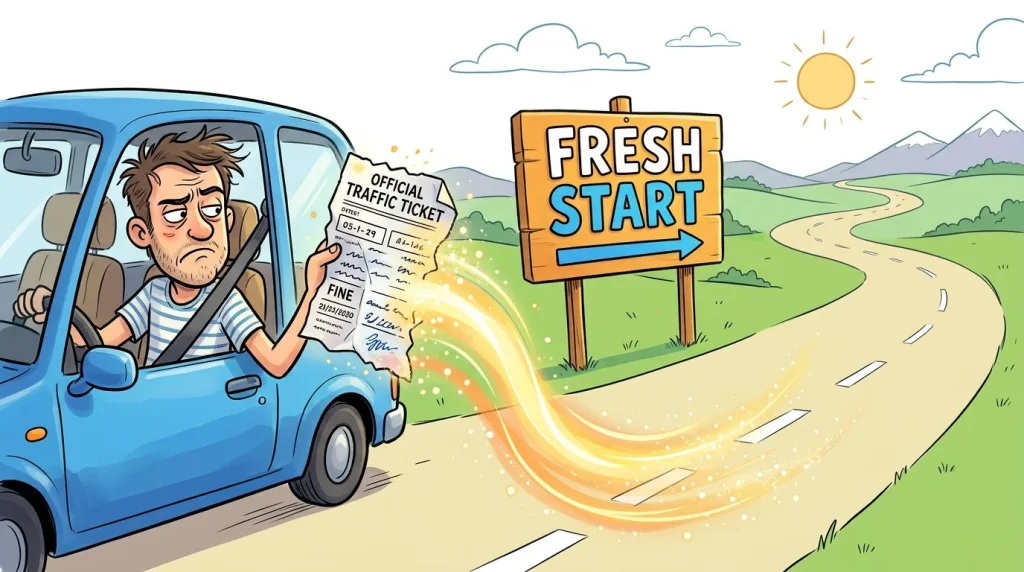
For many Florida drivers, traffic school is the smartest move. It can turn a frustrating moment into a practical reset. If you want the basic process laid out clearly, start with this guide on how to get a ticket dismissed.
Stop treating traffic school like punishment
A lot of people pick the first cheap course they see. They assume all programs are basically the same. They aren’t.
Some courses feel like digital bureaucracy. Confusing navigation, stiff language, little support, and a tone that makes you feel like you’re being scolded. That kind of experience pushes people to skim, click through, and forget everything the minute they finish.
A better course does the opposite. It gives you room to think, review, and connect the lesson to what happened on the road.
Practical rule: If a course increases your stress, it’s working against the reason you enrolled.
A fresh start should change behavior
The point of driver improvement isn’t just avoiding consequences. It’s learning in a way that sticks.
If you got cited because you were distracted, impatient, tired, or just careless for a moment, you need more than legal compliance. You need a setting where you can review your habits without feeling foolish for making a mistake. That’s where a safe learning environment changes the value of the course.
The right online class doesn’t just help you finish. It helps you slow down, understand your patterns, and drive differently the next time you’re in traffic, late for work, or frustrated behind the wheel.
What a Safe Learning Environment Really Means
Most drivers hear the phrase safe learning environment and think about physical safety only. In adult driver education, that’s too narrow.
A real safe learning environment has four distinct technical layers: physical, emotional, psychological, and digital. Protocols that reduce fear-related cognitive load help students engage in higher-order learning, and when students feel emotionally secure, they participate more actively in risk-taking learning behaviors that support academic growth, as explained by Managed Methods on safe learning environments.
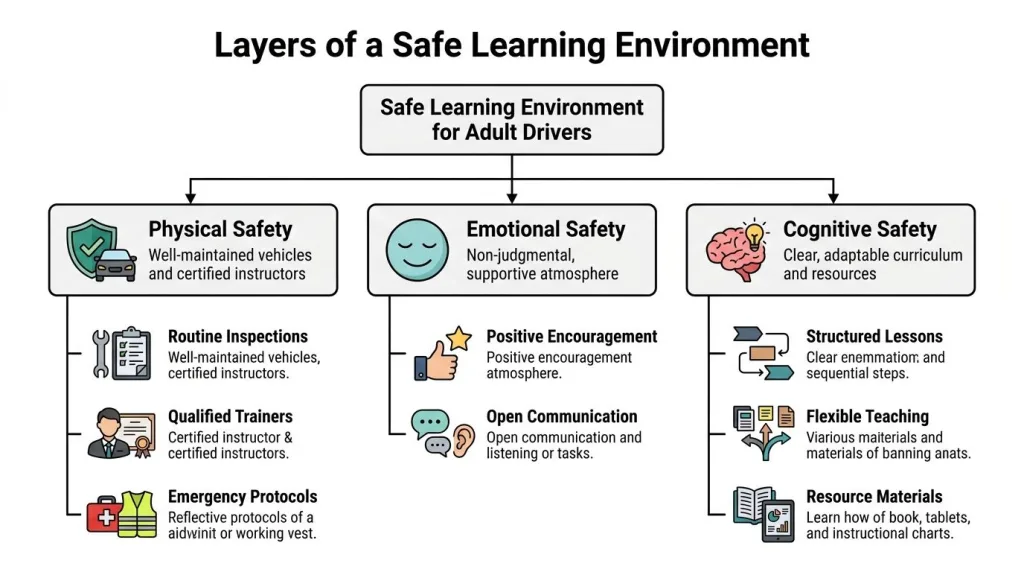
The four layers that matter
Here’s the simplest way to think about it. If any one layer fails, learning gets harder.
| Layer | What it means for adult drivers | What goes wrong without it |
|---|---|---|
| Physical | A calm place to learn, readable screens, accessible course design, no sensory overload | You get distracted, fatigued, or irritated |
| Emotional | A tone that doesn’t shame you for getting a ticket or needing review | You shut down or rush through the material |
| Psychological | Space to make mistakes, rethink assumptions, and learn without ridicule | You avoid engagement and retain less |
| Digital | Secure systems that protect your information and support safe participation | You lose trust in the platform |
Why adults need this even more
Adult learners bring baggage into a course. Some are embarrassed, some are angry, some are nervous because they haven’t studied anything in years.
That’s why building a psychologically safe climate matters beyond traditional classrooms. In driver education, psychological safety means you can misunderstand a rule, revisit it, and keep going without feeling judged.
A poor interface can break that trust fast. If buttons are confusing, text is cluttered, or the course feels hard to follow, your brain spends energy on the platform instead of the lesson. A cleaner experience like a user-friendly interface for online learning removes that friction.
Learning fails when the student is busy protecting their ego, their patience, or their personal data.
This isn’t softness. It’s design.
Some people hear “emotional safety” and assume it means making learning easier. It doesn’t. It means removing obstacles that have nothing to do with the subject.
Driver education should challenge bad habits. It shouldn’t humiliate the learner. When the environment is stable, respectful, and easy to use, adults can focus on the core task. Understanding risk, correcting behavior, and becoming safer on the road.
Why Feeling Safe Helps You Become a Safer Driver
A stressed learner doesn’t become a better driver faster. A stressed learner just tries to finish faster.
That’s the biggest weakness in a lot of online traffic school. The course may meet the legal requirement, but it ignores the emotional conditions that make real learning possible. If you feel tense, judged, or mentally overloaded, you won’t absorb much beyond “I need this over with.”
Anxiety blocks retention
Research confirms that emotional safety and wellness are directly linked to academic performance and skill retention, and a 2023 study showed that students feel safest when they can learn without fear of being judged for mistakes. That matters for adults in self-paced courses, especially anxious or mature drivers, as discussed in the Rochester Beacon’s analysis of safe learning environments.
That principle applies directly to traffic school.
If you’re worried about looking foolish, you stop engaging honestly with the material. If you’re nervous about your reading speed, language skills, or memory, you focus on surviving the course. Safe driving habits don’t grow well in that mindset.
Different drivers carry different pressure
Not every student enters the course with the same emotional load.
- Anxious drivers often replay mistakes and expect failure.
- Mature drivers may feel frustrated that they’re taking a course at all.
- Non-native speakers may understand driving perfectly well but still feel tension when legal or technical language gets dense.
- Busy professionals are often distracted, impatient, and tempted to click through instead of reflect.
A judgment-free course lowers that pressure. It gives the student room to review scenarios, connect laws to real behavior, and build stronger decision-making.
Choose the course that helps you learn calmly, not the one that makes you fight the platform.
Confidence is a safety skill
Defensive driving isn’t only knowledge. It’s applied judgment under pressure.
Drivers need to recognize risk, regulate emotion, and make better choices in ordinary moments. Merging, following distance, right-of-way, speed control, distraction. Those decisions improve when the learning environment supports recall instead of panic.
That’s why confidence-building matters. A course designed around review, comprehension, and steady progress can reinforce habits far better than one built around friction. For drivers who need that kind of support, a confidence-building course approach makes more sense than a bare-minimum compliance class.
The cheap, stressful option often wastes your time twice. First when you take it. Then again when the lesson doesn’t stick.
How We Build Your Safe Learning Environment
A safe learning environment doesn’t happen by accident. Someone has to design it.
That means choosing the right pace, the right language, the right structure, and the right data protections. Adult driver education works better when the course respects how adults learn. They need clarity, flexibility, and trust.
What course design should do
A good online traffic course should reduce friction from the first screen. The student should know where to start, how to progress, and what to expect.
That’s where self-paced learning matters. Adults don’t all learn well in one sitting, and they don’t all process traffic scenarios at the same speed. A self-paced online course format gives people room to pause, return, and stay focused instead of forcing rushed completion.
One practical example is BDISchool, which offers Florida-approved online courses in English, Spanish, and Portuguese. Those options matter because language access and pacing are part of safety, not extras.
The safety features that actually matter
Here’s how strong course design maps to a safer learning experience:
| Course feature | Safety function | Why it matters |
|---|---|---|
| Clear lesson flow | Psychological safety | Students don’t feel lost or behind |
| Self-paced progress | Emotional safety | Students can review without pressure |
| Multilingual access | Cultural and emotional safety | More learners can process content with confidence |
| Real-life driving scenarios | Instructional safety | Students connect rules to actual road behavior |
| Secure platform practices | Digital safety | Students trust the system handling their records |
Digital trust is part of learning
A traffic school collects personal information. That alone should make you picky.
Digital safety in learning environments requires safeguards such as encryption and role-based access controls (RBAC) to protect student data. Those protections help build a Trusted Learning Environment where safe participation can thrive, which matters for FLHSMV compliance and student record protection, as described in this overview of data privacy and security in trusted learning environments.
If a platform feels sloppy with data, students stop trusting the process. Once trust drops, attention drops with it.
What to look for before you enroll
Use this checklist before you register anywhere:
- Check course approval: Make sure the provider offers the Florida course you need.
- Check pacing: If the platform feels rushed, that’s a warning sign.
- Check language options: English-only design doesn’t serve every Florida driver well.
- Check usability: You should be able to proceed through the course without guessing.
- Check privacy expectations: A course handling legal and personal data should take security seriously.
The right course platform should feel calm, clear, and secure before you even begin the first lesson.
Choose Your Course and Protect Your Driving Record
You don’t need to overthink the next step. You do need to move on time.
To qualify for a moving violation dismissal and point prevention in Florida, you must voluntarily elect the traffic school option with the Clerk of Court within exactly 30 days of the citation date and tell the clerk before attending, according to the Florida BDI election requirements.
What to do now
Follow this order.
Confirm eligibility with the Clerk of Court
Don’t enroll first and hope it works out later. Make the election properly.Choose the course that matches your reason for taking it
If you received a moving violation, the Basic Driver Improvement course is the usual fit. If you’re older and focused on refreshing skills or insurance-related benefits, the Mature Driver course may be the better match.Register with a provider that supports real learning
Review the available options at BDISchool courses or Driver Educators courses.Start early, not at the deadline
Giving yourself breathing room creates a better learning experience. Waiting until the last minute turns a manageable task into unnecessary stress.
Don’t pick based on price alone
A weak course can cost less upfront and still be the worse decision. If the material is hard to follow, if the platform is irritating, or if the experience feels punishing, you’ll retain less and resent the process more.
Pick the course you can learn from. That’s how you protect your record and improve your driving at the same time.
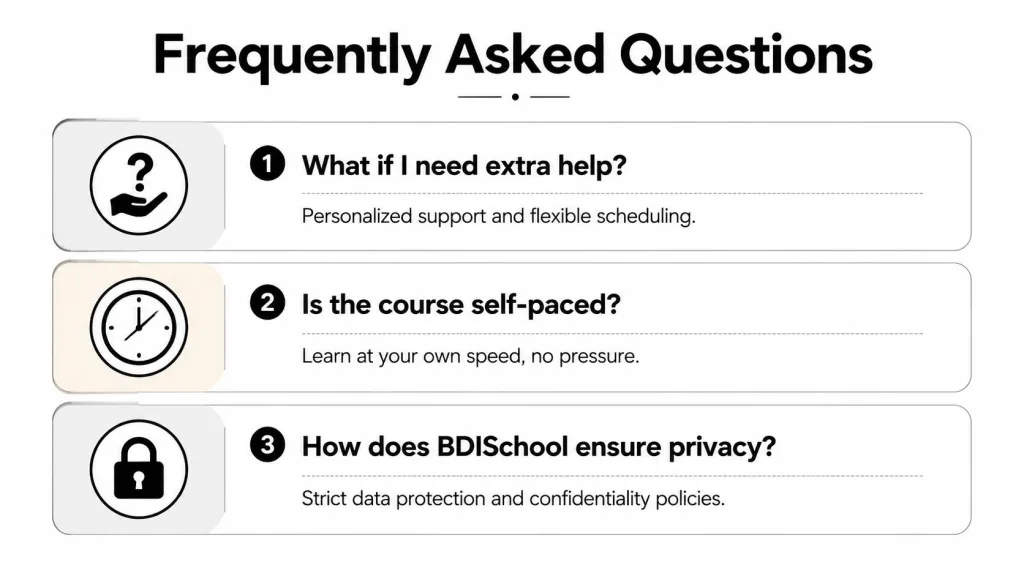
Frequently Asked Questions
People usually have the same final concerns. They want to know whether this helps with points, whether the course is manageable, and whether the online format is trustworthy.
Will traffic school keep points off my license
If you complete an approved driver improvement course for a violation, adjudication is withheld. That means you are not convicted, no points are assessed against your license, and insurance companies cannot legally add an additional premium solely because of that non-criminal traffic infraction, according to the Florida driver improvement course FAQ.
That’s the compliance benefit. The learning benefit depends on the quality of the course you choose.
Is an online course a good option if I get anxious easily
Yes, if the course is designed well.
An online course can be better for anxious drivers because it removes classroom pressure. You can read carefully, pause when needed, and revisit confusing material without worrying about other people watching you struggle. That’s a major advantage for drivers who need calm more than speed.
I’m older and haven’t taken a course in years. Will this feel overwhelming
It shouldn’t.
A well-built course uses clear language, logical navigation, and practical driving examples. Mature drivers usually don’t need hype or gimmicks. They need straightforward instruction and enough flexibility to move at a comfortable pace.
What if English isn’t my first language
That should affect your provider choice immediately.
Florida drivers deserve courses that don’t force them to decode every sentence under pressure. If you’re more comfortable in Spanish or Portuguese, use a provider that offers that support. Language access improves comprehension, and comprehension improves road decisions.
Is the required BDI course long
Yes. The Florida state-approved Basic Driver Improvement course is 4 hours long, which is the fixed duration required by the Florida Department of Highway Safety and Motor Vehicles, as stated on this page about the Florida 4-hour traffic school course.
That fixed length is another reason the course environment matters. If you’re going to spend that time learning, the platform should make the time useful.
Should parents care about safe learning environments too
Absolutely.
If you’re helping a teen or young adult choose a course, don’t focus only on whether it checks the legal box. Look for a platform that feels stable, respectful, and easy to use. Good driver education should build judgment, not just completion.
If you want a course that supports both compliance and real skill-building, start with BDISchool. Choose the option that fits your situation, register early, and use the requirement to become a calmer, safer, more informed driver.