You’re probably in one of three spots right now. You’re a teen trying to get on the road, a new Florida resident trying to swap your old license, or a driver dealing with a ticket and trying to keep points off your record.
All three problems fall under the same system, and that system can feel more confusing than it needs to be. Florida has a huge driving population, and the process is busy, bureaucratic, and full of little rules that trip people up if they show up unprepared.
That scale matters. Florida had 16,495,556 licensed drivers in 2022, making it one of the largest driver-license markets in the country according to the Federal Highway Administration Highway Statistics table DL-1C. When a state handles that many drivers, efficiency matters. So does knowing exactly what step comes next.
Your Guide to the Florida Drivers License
A Florida drivers license isn’t just a card you carry. It’s your permission to commute, work, run errands, travel across the state, and handle daily life without asking anyone for a ride.
The process is often made harder than it needs to be because it’s treated like one single task. It isn’t. It’s a chain of separate decisions. You need the right license type, the right documents, the right course if one applies to you, and the right preparation for the test or hearing window in front of you.
Who usually needs help first
Some readers are starting from zero. That usually means a permit path, a required education course, the knowledge exam, and then the driving test.
Others already know how to drive but just moved here. Those drivers usually don’t need a full beginner roadmap. They need a clean transfer plan and a simple checklist.
Then there’s the third group. They already have a license, but a traffic citation puts their record and insurance at risk. That’s where Florida-approved traffic school can save a lot of frustration.
Practical rule: Don’t guess which process applies to you. Identify your exact status first, then solve that one problem completely.
What makes Florida different
Florida’s licensing system touches teens, retirees, international arrivals, seasonal residents, and people moving from other states. That means generic DMV advice usually misses the specific pain points.
The smart move is simple:
- If you’re new: focus on eligibility and documents first.
- If you’re testing: practice the exact maneuvers Florida cares about.
- If you got a ticket: act quickly before points and insurance consequences follow you.
A good Florida drivers license guide should help you through the whole lifecycle. Get licensed, transfer smoothly, renew on time, and protect your record when something goes wrong. That’s the approach that saves time.
Choosing the Right Florida License Type
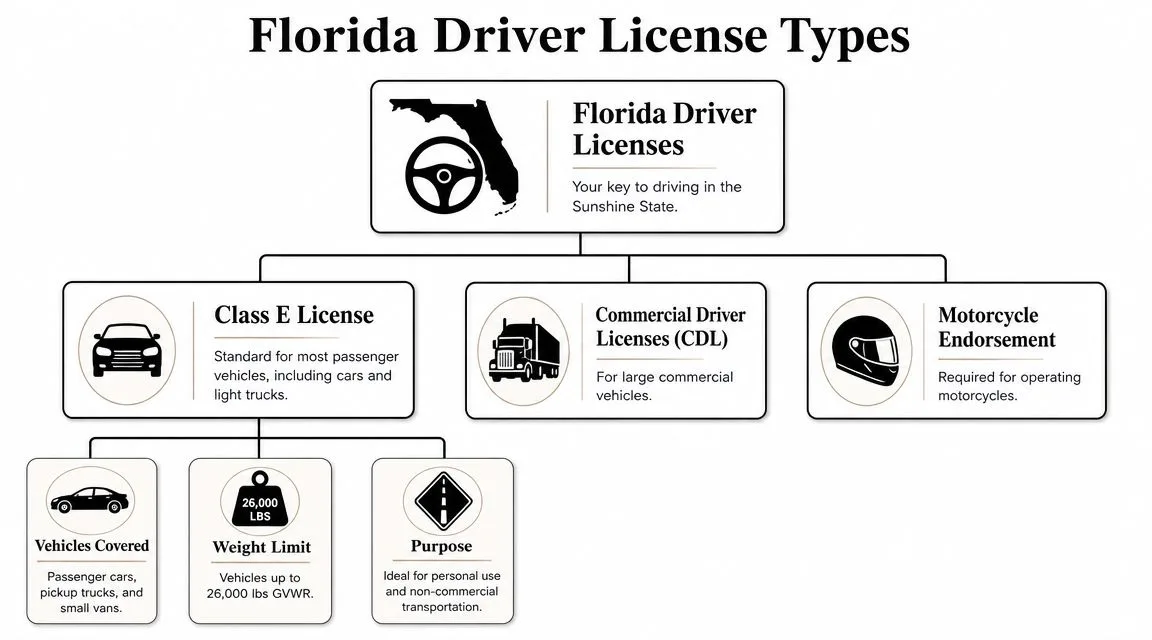
There’s no need to overcomplicate this. If you’re driving a normal passenger vehicle, your target is usually a Class E license.
If you’re a teen or first-time driver, you may start earlier with a learner path before moving into full Class E privileges. If you’re driving large commercial vehicles, you’re in a different lane entirely and should look at CDL requirements instead of standard driver-license content.
The standard choice for most drivers
A Class E license covers ordinary personal driving. Think cars, light trucks, and the daily vehicles most Floridians use.
If that’s your goal, stay focused on Class E requirements and don’t get distracted by commercial rules that don’t apply to you. People waste a lot of time reading the wrong material.
When a learner path applies
For brand-new drivers, especially teens, the process is staged. You don’t jump straight into unrestricted driving. You build toward it.
That staged approach matters because Florida separates learning, testing knowledge, and proving on-road skill. If you’re under 18, there are added requirements tied to education and supervised practice, so you need a more structured game plan than an adult first-time applicant.
When you actually need something else
A motorcycle rider needs the proper endorsement. A commercial driver needs a CDL.
If you’re driving for work in a larger vehicle, stop reading standard license advice and use a CDL-specific resource like this Florida CDL test guide. Mixing up Class E and CDL content is one of the fastest ways to study the wrong material.
A lot of DMV stress comes from solving the wrong problem. Match the license type first. Everything gets easier after that.
Don’t ignore REAL ID
REAL ID isn’t optional in practical terms. If your license doesn’t meet federal identification standards when you need it for travel or access, you’ve created a problem for yourself that should have been handled at issuance or renewal.
Treat that as a document issue, not a last-minute surprise. If you’re applying for a Florida drivers license now, get your paperwork in order so your card is compliant from the start.
Getting Your First Florida License Step by Step
You show up for your first Florida license appointment with half the right documents, no clear practice plan, and a vague idea of what the examiner wants. That is how people turn one license trip into three.
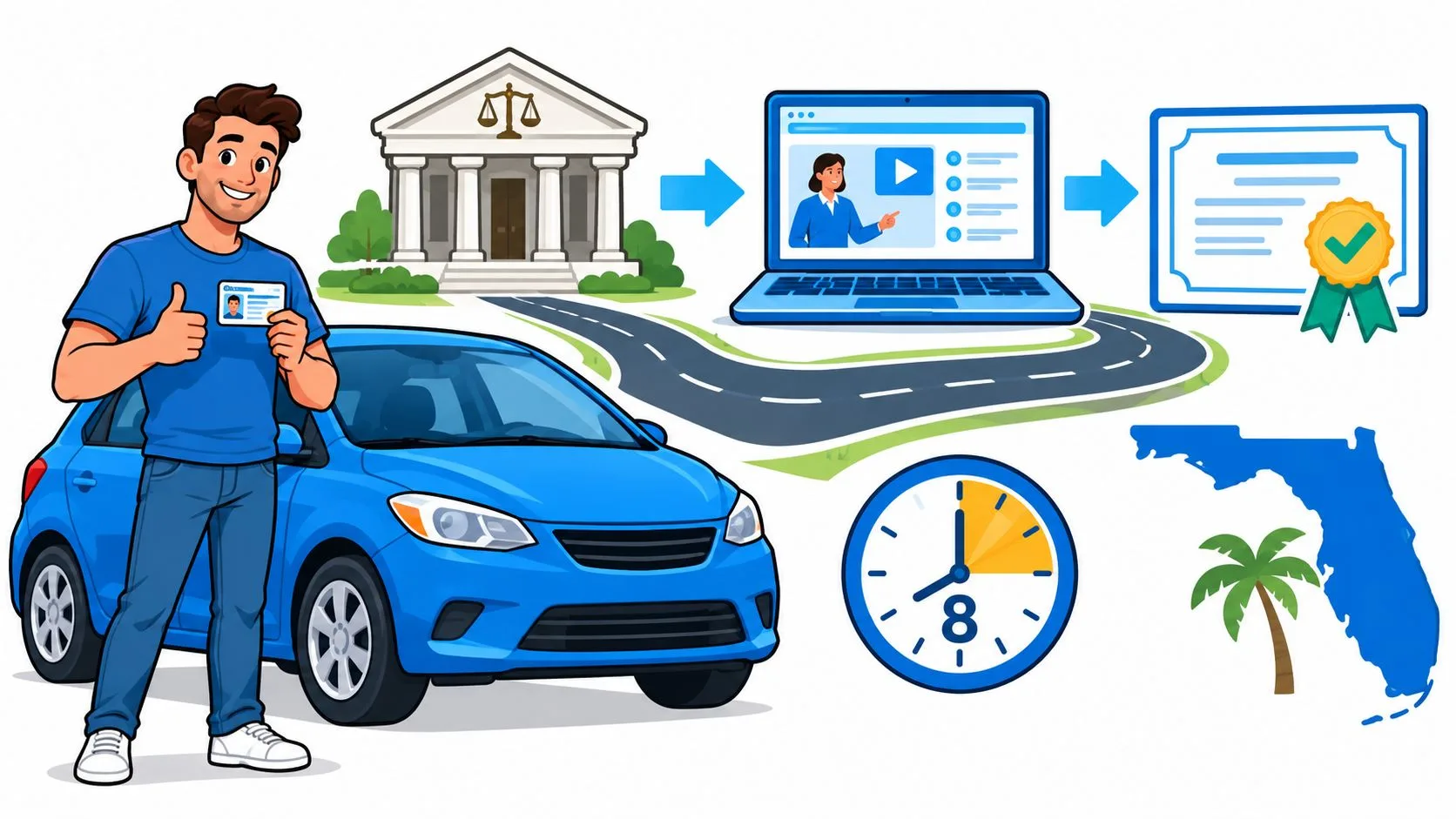
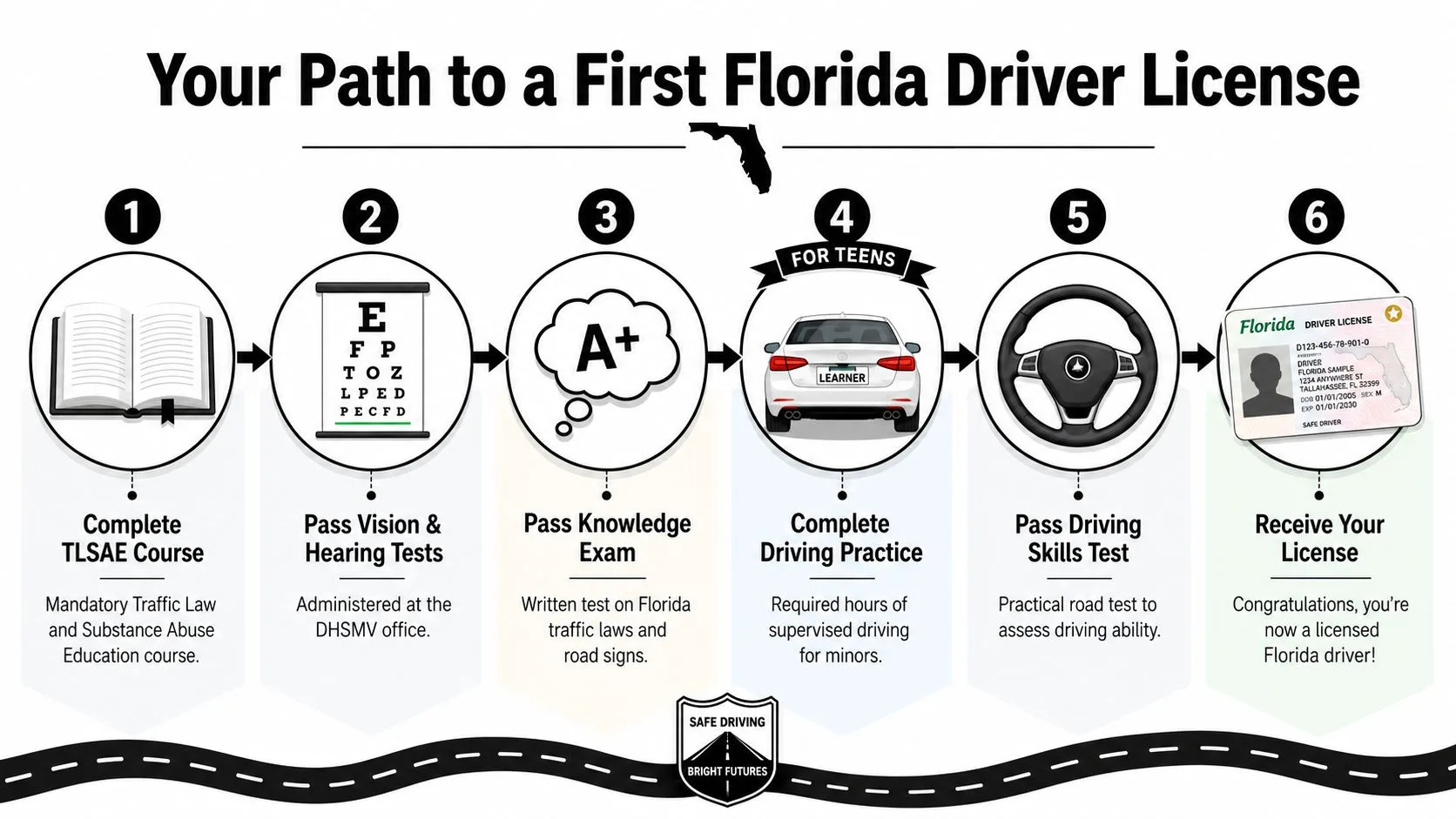
Florida’s first-license process is straightforward if you handle it in order. Finish the required course, pass the knowledge exam, practice with purpose, bring the right paperwork, and show up ready for the driving test.
Start with the required course
Many first-time applicants must complete a Traffic Law and Substance Abuse Education course before they can move ahead. Do that first. It removes one of the most common reasons people get stalled early.
State-approved online options, such as the courses at BDISchool, allow you to complete this step from home and keep the rest of your license plan on schedule.
Handle the permit stage correctly
Your first Florida license usually starts with the learner phase, not full driving freedom on day one. New drivers need to clear the written knowledge portion, complete screening at the licensing office, and build supervised experience before the road test makes sense.
If you are under 18, expect extra structure. Florida requires supervised driving practice, including night driving, before you move to the next step. Treat that practice time as test prep, not casual driving around the neighborhood.
Bring documents like you expect the office to say no
Most first-time applicants do not fail because they cannot drive. They fail because their paperwork is sloppy.
Bring original or otherwise accepted documents for identity, proof of Social Security number, and two proofs of Florida residential address.
| Document Type | Accepted Examples |
|---|---|
| Proof of identity | Original identity documents accepted by the licensing office |
| Social Security number | Social Security card or another accepted document showing your number |
| Proof of residential address | Two documents showing your Florida residential address |
If any of your identity documents are not in English, fix that before your appointment. It is smart to avoid immigration delays with certified translation so your paperwork does not stall at the counter.
Practice for the road test Florida actually gives
General driving practice is not enough. You need test-specific practice.
The examiner is checking whether you can control the car, follow traffic laws, park, turn properly, back up correctly, and stay disciplined the whole time. Florida examiners also expect you to reverse by looking through the rear window over your right shoulder, not by depending on a backup camera alone.
That detail matters. A lot of new drivers have built their habits around modern driver-assist tech, and the test does not grade that habit kindly.
Road test warning: Practice backing the Florida way before test day, or you risk losing points on a maneuver that should be easy.
This video gives a useful visual overview before you go to your appointment.
Use a checklist, not random advice
Do not piece together your prep from short videos and forum comments. Use a real plan and rehearse each maneuver the way the examiner expects to see it.
A focused prep resource like this Florida driving test checklist helps you catch the mistakes that usually show up only when the examiner is already watching.
That full-cycle approach is the smart way to handle a Florida drivers license. Get the course done, clear the permit stage, show up with proper documents, and train for the actual skills test instead of hoping your everyday driving habits are enough.
Transferring Your Out-of-State License to Florida
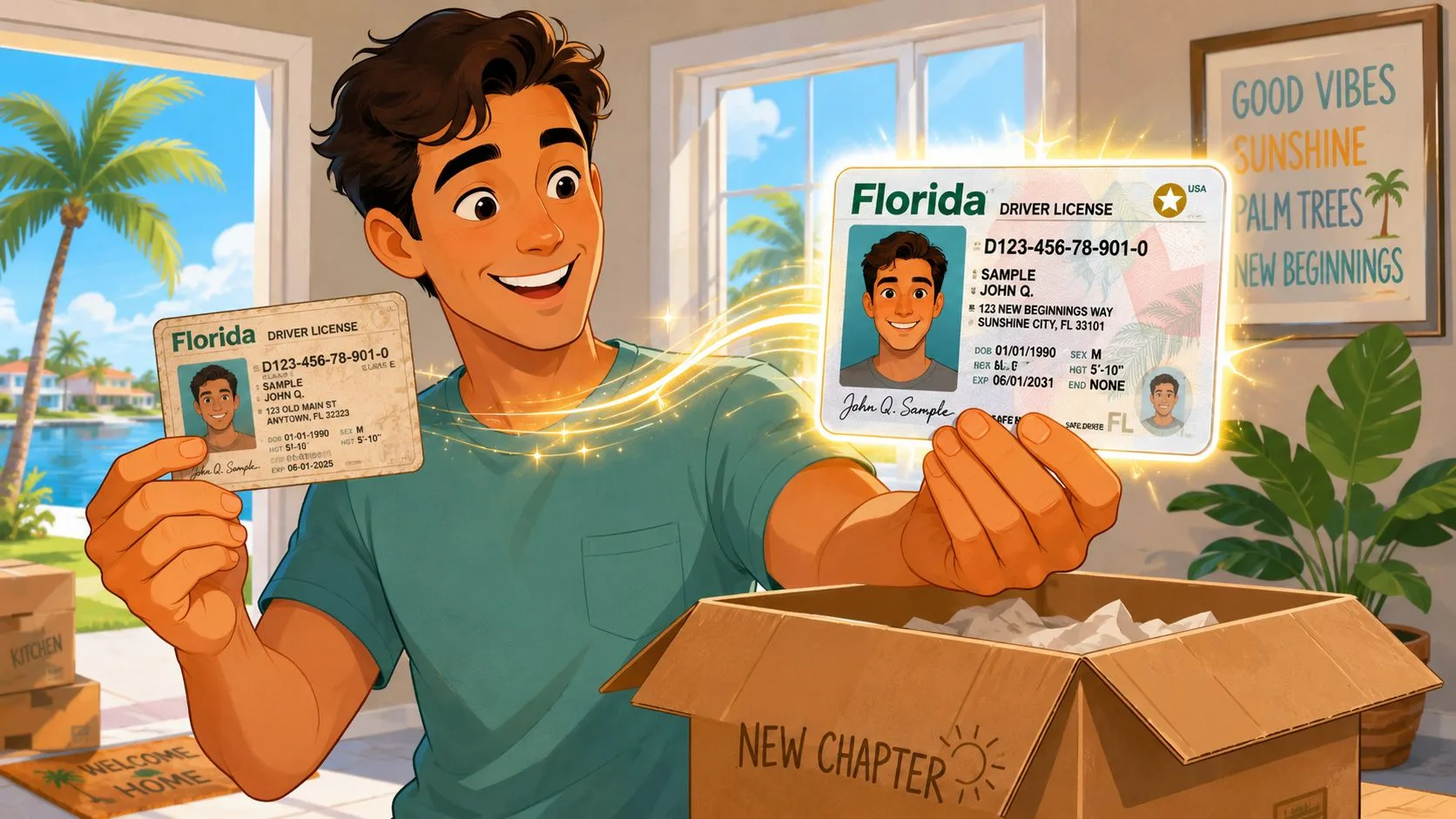
You unpack the boxes, change your address, and assume your old license can wait a few months. Florida does not treat it that casually. Once you become a Florida resident, the state expects you to get a Florida driver license within 30 days, according to the Florida Highway Safety and Motor Vehicles new resident guidance.
Why this trip goes wrong
The transfer itself is usually simple. The paperwork is what trips people up.
Florida wants a clean document set. That usually means proof of identity, proof of Social Security number, and two proofs of residential address. If your name is different across documents, your address proof is weak, or you bring copies instead of acceptable originals, expect a wasted appointment.
That is the pattern I see most often with new residents. They are licensed, experienced, and fully capable of driving. They still get turned away because they treated the office visit like a quick errand instead of a document check.
What to expect at the office
Drivers with a valid out-of-state U.S. license often spend more time at the counter than worrying about tests. The primary task involves proving identity, residency, and eligibility, then completing the in-person requirements Florida applies to new residents.
Go in prepared. Use a Florida DMV document checklist for license transfers before your appointment and match every name, date, and address line before you leave home.
Bring original documents, not guesses. Two strong address proofs and matching names solve most transfer problems fast.
The smart way to handle this part of the license process
A Florida drivers license is not a one-time task. It is a full cycle. You get legal in the new state, keep your record clean, and avoid small mistakes that cost time and money later.
That is why I recommend treating a transfer like the start of your Florida driving record, not just an administrative swap. If you are rusty on local rules, signs, or insurance-sensitive violations, a state-approved online course can help you fix bad habits early instead of learning the hard way after a ticket.
Renewing Your Florida License Online and In Person
Renewal is easy when nothing has changed. It gets slower when your identity details, compliance status, or documentation need review.
That’s why some drivers can renew online while others need an in-person visit. If your information is stable and the system allows online renewal, take the easier route. If you need a first compliant card, a name change, or document verification, expect to go in person and bring your paperwork.
When online renewal makes sense
Online renewal is the convenience play. It works best for drivers whose record and personal details are already in order.
If you qualify, don’t wait until the last minute. Renewal problems get much harder to fix when you’re close to expiration and suddenly need documents you haven’t looked at in years.
When an office visit is the smarter move
In-person renewal is usually the better path when there’s any doubt about your documents or status. It’s also the right move if you know you need updates that can’t be handled cleanly online.
Bring a careful document set and assume the clerk will inspect names, dates, and address consistency. That mindset prevents the sloppy mistakes that waste half a day.
A smart move for drivers age 55 and older
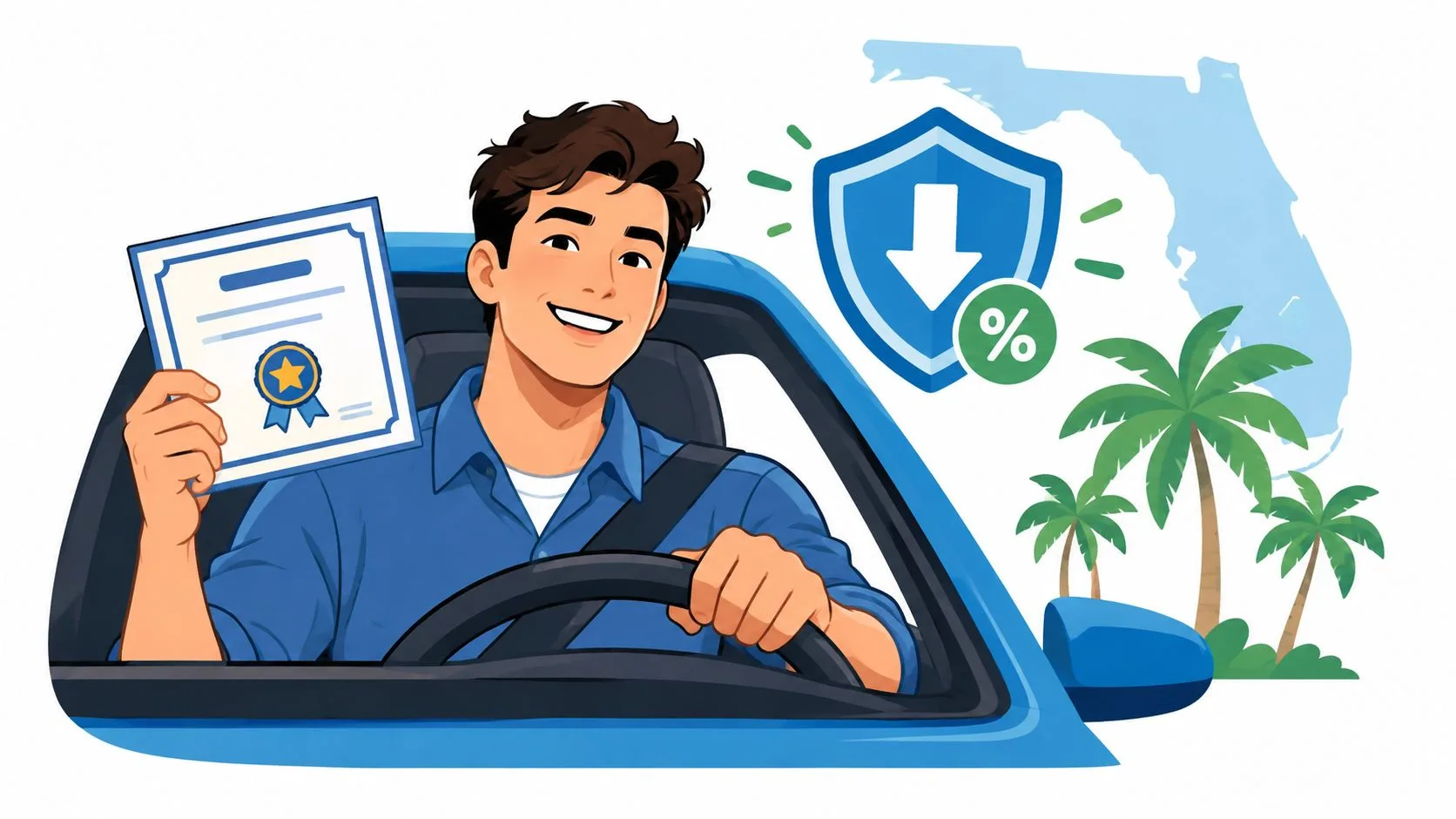
Renewal is also a good reminder to sharpen your driving habits. For drivers 55 and older, a Florida-approved Mature Driver Course can help with insurance discounts while refreshing judgment, awareness, and defensive-driving habits.
That’s a practical win. You handle a task you already need to think about, and you pair it with training that may help reduce insurance costs and keep your skills current.
Keep Your Record Clean and Insurance Low
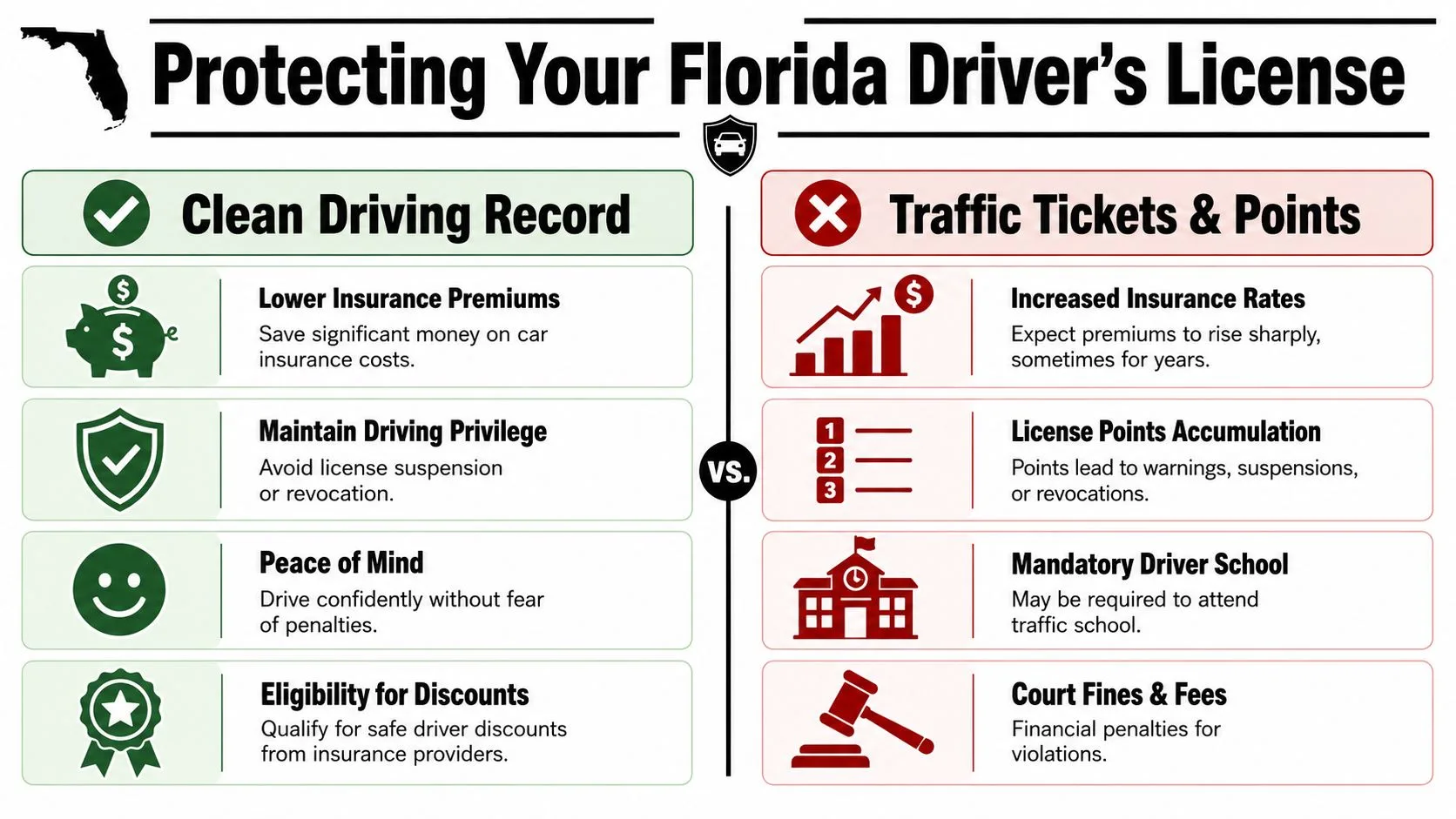
A traffic ticket is rarely just a ticket. It can follow your driving record, affect your insurance, and create bigger problems if you ignore it or choose the wrong response.
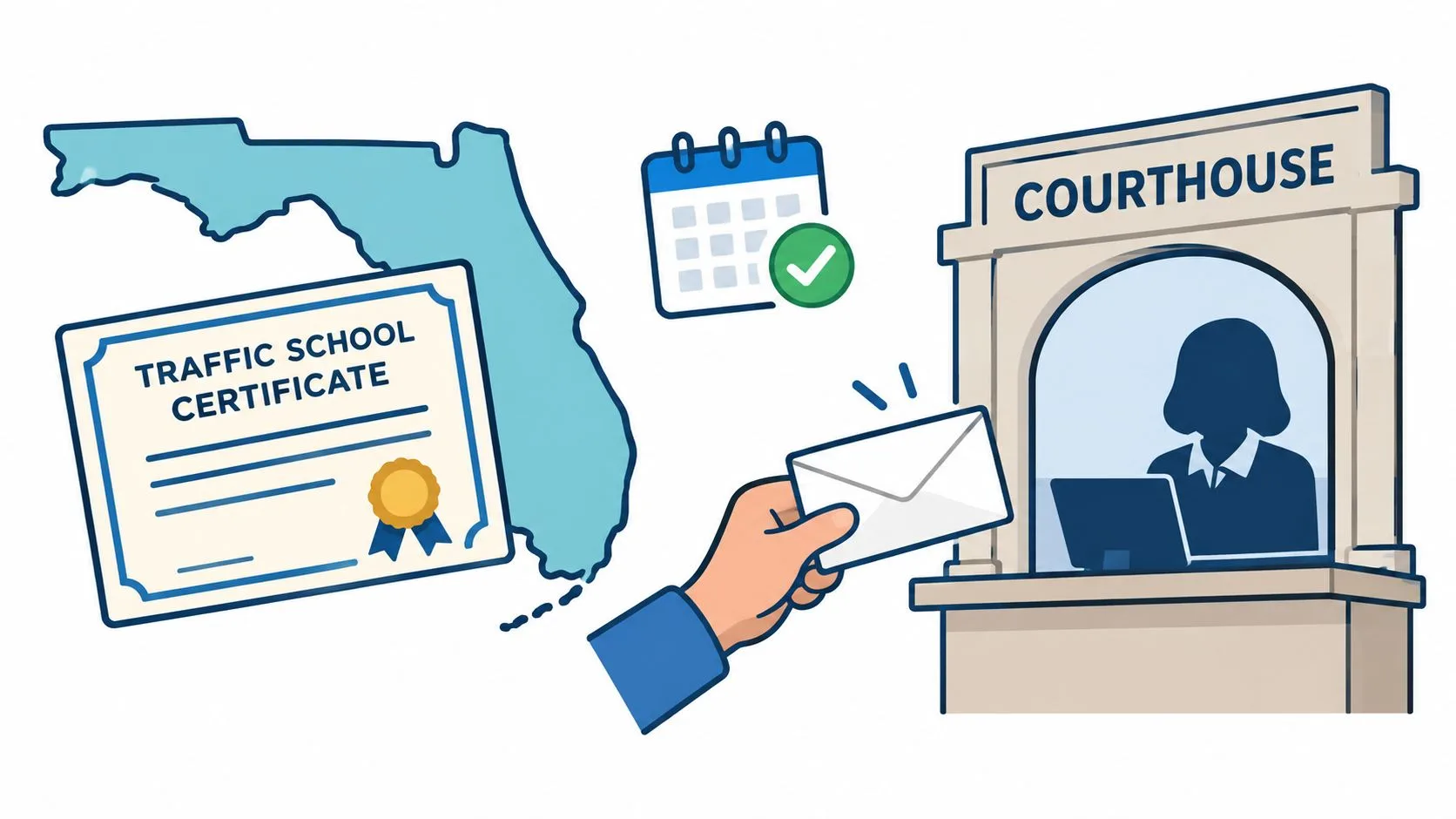
Florida drivers should treat citations as decision points. Sometimes paying and moving on is the expensive choice. A driver-improvement course can be the smarter one, especially when you’re trying to avoid points from a moving violation.
What to do right after a ticket
Act early. Waiting limits your options and creates stress you don’t need.
Start by figuring out what kind of violation you received and whether you’re eligible to elect a course. If you are, a Basic Driver Improvement course is often the practical move for a standard moving violation because it helps you deal with the citation without taking the full hit on your record.
Which course fits which situation
Not every driver needs the same course.
- Basic Driver Improvement: Often used after a moving violation when you want to handle the citation properly and protect your record.
- Intermediate Driver Improvement: Usually relevant when the court orders a deeper driver-improvement program.
- Aggressive Driver course: Fits situations involving more serious behavior patterns tied to unsafe driving habits.
- Mature Driver Course: A refresher option for older drivers who want safety review and potential insurance discounts.
If your main concern is points, study the rules before you elect anything. This Florida driver license points guide helps clarify how the record side works.
Why a clean record matters
A clean record gives you options. It helps you avoid piling consequences on top of a bad day.
It also keeps insurance from becoming a recurring penalty. Drivers often focus on the immediate fine and forget that the record impact can linger much longer than the ticket itself.
A defensive-driving course is cheaper than years of avoidable insurance pain.
Don’t forget the crash side of driving responsibility
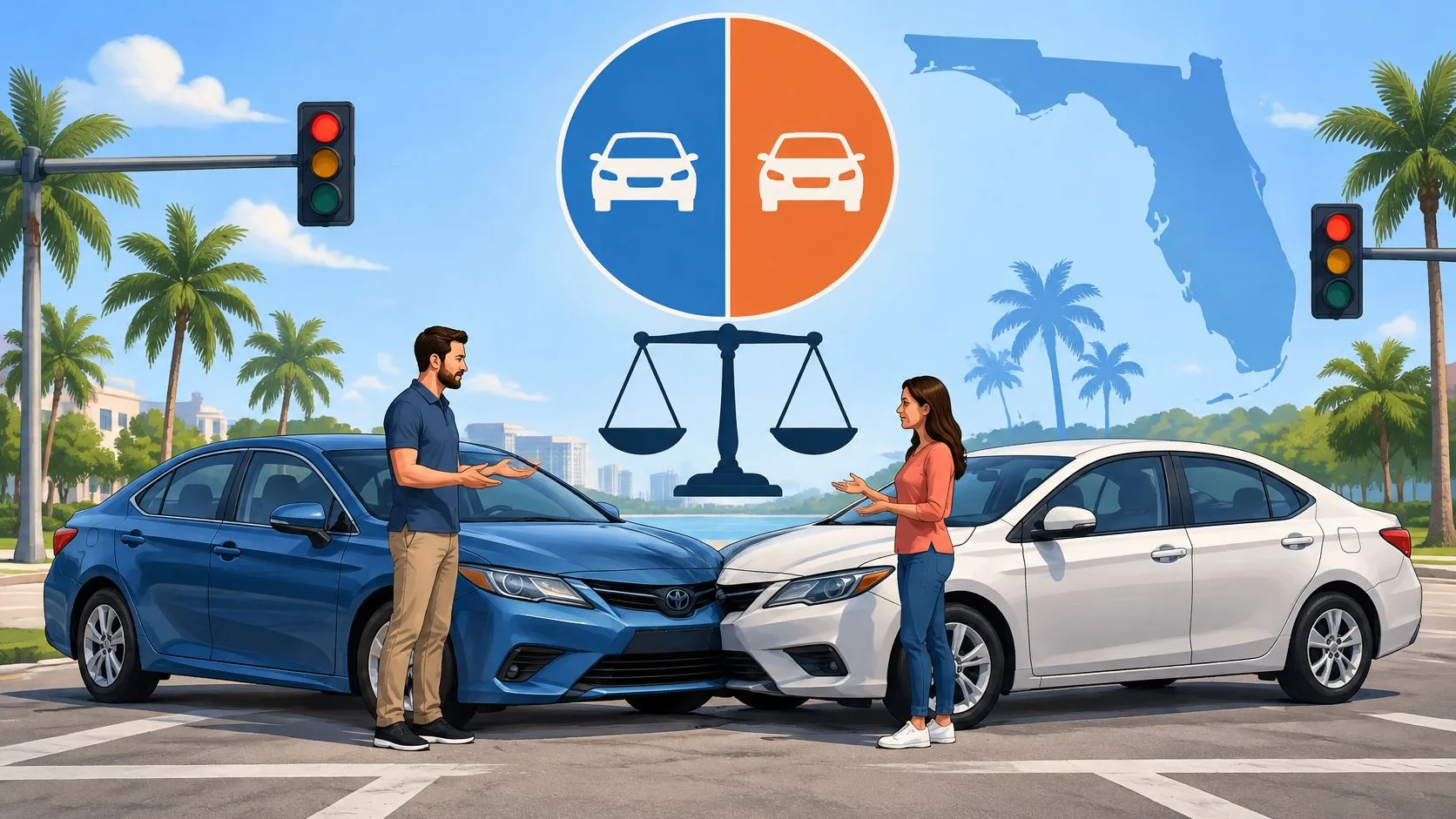
Tickets aren’t the only threat to your license situation. After a collision, what you do next matters for safety, documentation, and later claims.
If you’re unsure what immediate post-crash actions make sense, this guide to Deerfield Beach car accident steps is a practical local reference.
Florida Drivers License FAQ
A lot of Florida license problems show up after you get the card, not before. You lose your wallet. You get married and your name no longer matches your license. You realize your renewal date is close right before a trip. That is why a good license guide should cover the full lifecycle, not just the permit test.
What should I do if I lose my Florida driver’s license
Replace it quickly.
Driving without your physical license can turn a simple traffic stop into an unnecessary headache. Order a replacement if you qualify online. If your information has changed or the state needs fresh identity review, go in person and bring matching documents.
Do I need to update my license after a name change or address change
Yes.
Handle it right away so your license matches your legal records and insurance policy. Mismatched information creates problems during renewals, traffic stops, and title or registration transactions. If you changed your name, bring the legal document that supports it, such as a marriage certificate or court order.
Can I get a Florida license if my old one is expired
Usually, yes, but expect more scrutiny.
A recently expired out-of-state license is often easier to deal with than one that has been expired for a long time. Once a license sits too long, the state may treat you more like a new applicant than a simple transfer. If your status is messy, do not guess. Gather your documents first and plan for an in-person visit.
What if I need a motorcycle endorsement or a commercial license
Florida does not treat those like a basic Class E license.
Motorcycle riding and commercial driving come with separate testing and training rules. If that is your goal, check the exact license class before you schedule anything. Picking the wrong course wastes time and money.
Can I renew early if I’ll be out of town
Yes, and you should.
Do not wait until the last minute if you know you will be traveling, relocating, or dealing with a packed schedule. Early renewal is a smart move because DMV delays are easier to handle on your timeline than during an emergency.
What is the smartest way to avoid license trouble after I get licensed
Stay ahead of small problems.
Read every ticket carefully. Keep your address current. Renew early. If a court or citation gives you a course option, look at it before you pay anything. That is how drivers keep points from piling up and insurance from getting more expensive than it needs to be.
If you need a practical next step, start with a Florida-approved online course that matches your situation at BDISchool. Whether you’re getting ready for your first license, dealing with a traffic citation, or looking for a mature driver refresher, a self-paced course can help you handle the requirement without making your schedule worse.