You’re driving in Florida, following your navigation, keeping up with traffic, and then a sign appears: All-Electronic Tolling. No booth. No cash lane. Cars keep moving, and you get that split-second question every new driver asks.
Did I just do something wrong?
Usually, no. But that moment is exactly where confusion starts. Florida’s toll roads are fast, convenient, and common, yet they can feel unforgiving if you don’t know how payment works, what happens with rental cars, or how to respond when a notice shows up later.
That matters because Florida’s toll roads handle huge volume. The Turnpike Enterprise alone estimates 1.8 million drivers use its system annually, and the broader network logs billions of transactions yearly, which is why drivers need to understand the rules well enough to move through the system without stress or violations, according to Florida Turnpike usage figures summarized here.
A good florida toll routine isn’t complicated. You just need to know what to do before the gantry, after the charge, and if something goes wrong. Think of this like a driving lesson for toll roads: calm, practical, and focused on the decisions that protect your record and your wallet.
Welcome to Florida Driving Your Introduction to Tolls
A lot of drivers first learn about florida toll roads by surprise.
It happens when you’re on a smooth limited-access highway, traffic is flowing, and suddenly the road changes from “normal freeway” to a toll facility with overhead cameras and lane signs. You don’t have time to research payment methods while driving. You need to keep your lane, hold your speed, and make safe choices.
That’s the right instinct. Safety comes first. If you’re ever unsure at a toll point, don’t brake suddenly, don’t weave across lanes to hunt for another option, and don’t stop under a gantry unless the roadway clearly requires it. Keep driving predictably, then sort out the payment afterward.
Practical rule: If you miss your chance to prepare for a toll, drive through safely and deal with the bill later. Unsafe lane changes create a bigger problem than a toll charge.
Florida’s toll network is woven into everyday travel. Commuters use it to get to work. Visitors use it to reach airports, beaches, and theme parks. Long-time residents still get tripped up when a route changes or an old cash expectation no longer matches the road in front of them.
The reassuring part is this: toll driving gets much easier once you understand the few systems behind it. The rest is repetition. You’ll learn what signs mean, when SunPass makes sense, how Toll-By-Plate works, what rental car users should check before leaving the lot, and how to respond if you get a past-due notice.
Understanding Floridas Toll System
Florida toll roads are user-pay roads. In plain language, that means drivers who use certain highways help pay for those facilities through toll charges tied to travel on those roads.
For a new driver, the easiest way to think about it is this: some roads in Florida operate like a dedicated highway network inside the broader road system. They’re still part of everyday driving, but they come with their own payment setup, signs, and enforcement process.
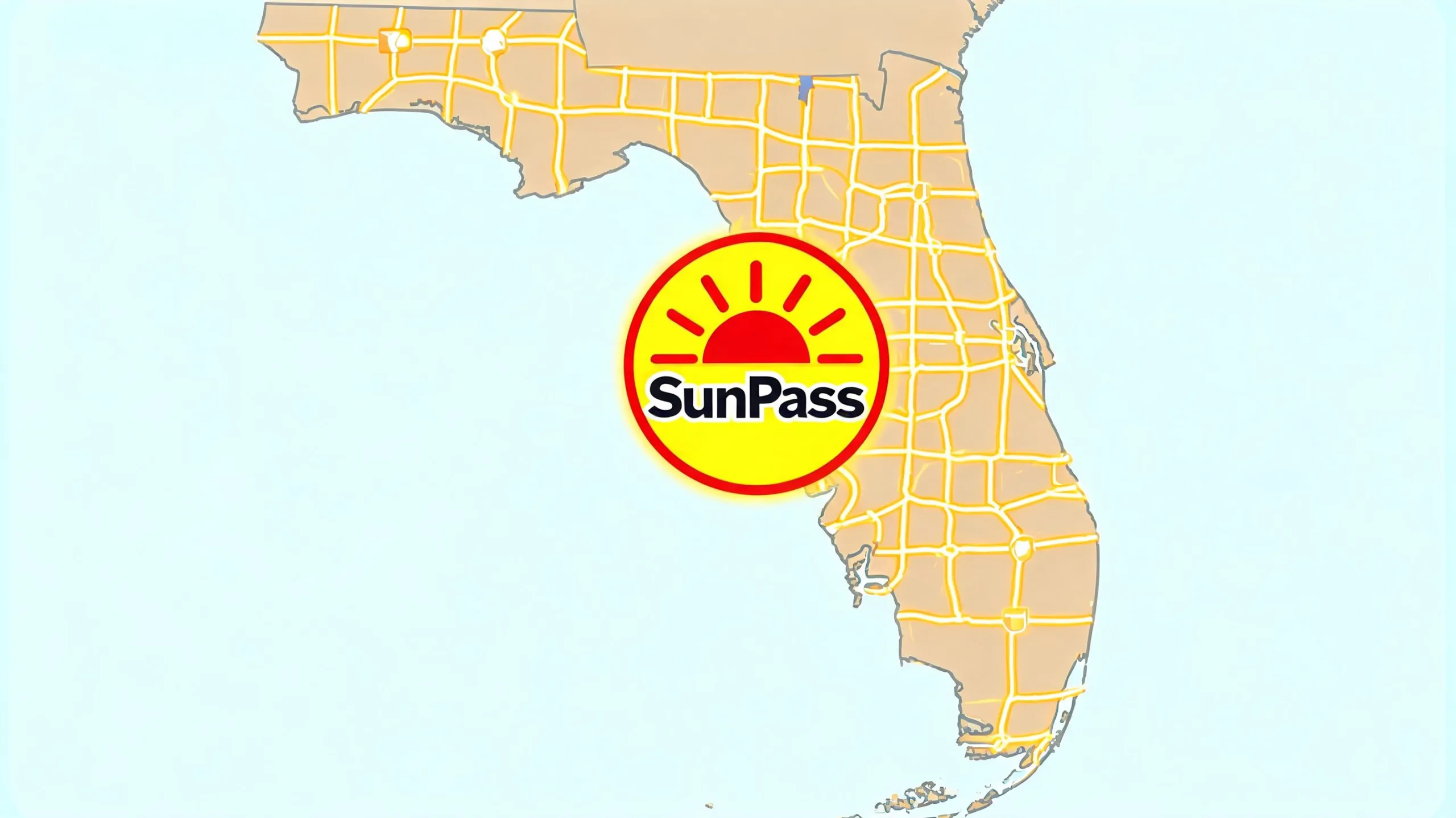
Florida’s system is large. Florida’s Turnpike System is the largest toll road network in the United States, spanning 483 miles and serving 85% of Florida’s 22 million residents across 29 counties, according to the Florida Transportation Commission toll report.
Who runs the roads you drive on
You may hear different names while driving, and that confuses many people.
Some roads are connected to Florida’s Turnpike Enterprise. Others are operated by local expressway authorities. As a driver, you don’t need to memorize every agency. You do need to understand that one trip can involve more than one toll operator, even though the payment experience may feel unified from your seat behind the wheel.
That’s one reason signs matter so much. Read overhead lane signs early. They tell you whether a road is toll-based, whether payment is electronic, and whether your current route still matches your plan.
If you want a broader refresher on the roadway terms and signs you’ll see while driving, the Florida driver’s manual guide is a useful companion.
What you’ll actually see on the road
From the driver’s perspective, toll collection usually shows up in one of two ways:
- All-electronic tolling: You drive under cameras or readers without stopping. The system reads a transponder or photographs the plate.
- Older-style toll areas or mixed setups: Some facilities may still present a more traditional toll-road feel, but many Florida drivers now encounter electronic collection as the default experience.
Read the lane signs before you commit. The right lane for your destination isn’t always the right lane for your payment method.
New drivers often make a preventable mistake at this point. They focus on the price and ignore the roadway behavior. Treat toll areas like any other controlled traffic zone. Stay off your phone, maintain space, and choose lanes early. The payment method can be fixed later if needed. A sudden swerve usually can’t.
How to Pay Florida Tolls SunPass vs Toll-By-Plate
Most Florida drivers end up choosing between SunPass and Toll-By-Plate.
The key difference is simple. SunPass uses a registered transponder tied to your account. Toll-By-Plate uses cameras to identify the vehicle plate and bill the registered owner later. Both can get you through a florida toll point, but they fit different driving habits.
Electronic payment clearly dominates current use. Florida’s Turnpike recorded 842 million transactions in one year, a 9% increase, showing how strongly drivers have shifted away from cash and toward transponder-based tolling, as noted in the earlier usage data.
SunPass for regular and planned driving
SunPass is usually the smoother option if you live in Florida, commute often, or know you’ll be using toll roads with any regularity.
You place a SunPass transponder in the vehicle, connect it to an account, and keep that account funded. When you pass a toll point, the system reads the transponder and charges the account automatically.
Drivers like SunPass because it reduces guesswork. You’re not waiting for a bill, trying to remember which car used which route, or sorting out a mailed notice weeks later. It also gives you one clear place to manage payment activity.
Typical setup looks like this:
Get the transponder
Florida drivers usually choose a sticker-style or portable option, depending on whether they want something fixed to one vehicle or something they may move when allowed by the product rules.
Register the vehicle
The account needs accurate plate information. That matters because many toll issues start with mismatched vehicle details.
Add payment
Link a card or preload funds so the account can pay tolls automatically.
Check the windshield placement
A badly placed device can create read problems. Follow the product instructions, not a guess.
Toll-By-Plate for occasional use
Toll-By-Plate is the fallback many visitors and infrequent users rely on.
If you drive through a toll point without a transponder, cameras capture the plate, and the toll system bills the vehicle owner by mail. That can be convenient if you rarely use toll roads and don’t want another account to manage.
But “convenient” doesn’t mean “hands-off forever.” You still need to watch for the invoice, confirm the address tied to the vehicle registration is current, and pay promptly.
If you use Toll-By-Plate, your mailbox becomes part of your driving routine.
Drivers get caught here. They assume no booth means no action needed. In reality, no booth often means the action happens later.
SunPass vs Toll-By-Plate at a Glance
| Feature | SunPass | Toll-By-Plate |
|---|---|---|
| How it works | Uses a registered transponder read at the toll point | Uses camera images of your license plate |
| Best for | Frequent users, commuters, residents, planned travel | Visitors, rare toll users, one-off trips |
| Payment timing | Automatic through your account | Billed after travel |
| Driver effort | Requires setup before travel | Requires attention after travel |
| Risk of forgetting | Lower once account is active | Higher if mail is missed or delayed |
| Lane experience | Smooth for electronic toll facilities | Still works on electronic toll facilities, but billing happens later |
Which one should you choose
That depends on how you drive, not on what sounds easiest in the moment.
Choose SunPass if any of these sound like you:
- You commute on toll roads: Repeated trips are easier to track through one account.
- You share driving duties in the household: A managed account creates less confusion than sorting through mailed notices.
- You want fewer surprises: Automatic payment is easier to monitor than memory.
Choose Toll-By-Plate if your use is limited:
- You’re visiting briefly: You may not want to open and manage another account.
- You rarely touch toll roads: A full setup may be more than you need.
- You used a toll road unexpectedly: Paying the later invoice may be the simplest response.
The driver mistake to avoid
Don’t mix “I went through safely” with “I’m done.”
A florida toll transaction may be invisible in the moment, especially on all-electronic roads. That doesn’t mean it disappeared. It means the record is being processed elsewhere. If you’re using a transponder, monitor the account. If you’re relying on plate billing, watch for mail and verify your vehicle information is correct.
Tolls in Rental Cars and for Out-of-State Drivers
Rental cars create some of the most expensive toll misunderstandings because the vehicle isn’t registered to you, the billing rules aren’t always obvious at the counter, and the toll charge may be bundled with the rental company’s own program.

Before you leave the lot, ask one direct question: How will tolls be charged on this specific vehicle? Ask again if the answer sounds vague.
Some rental companies place every toll through their own billing system. Others let you decline that program but still charge you later if you use toll roads. The important part is knowing the rule before the first gantry, not after the final bill.
Rental car toll choices
Most drivers in rentals have three practical paths:
- Use the rental company’s toll program: Simple, but read the agreement closely so you understand how charges are handled.
- Use your own compatible portable transponder: This can work well, but only if the product rules and the rental contract allow it.
- Avoid toll roads entirely: This is possible on some trips, though it may make routing slower or less direct.
If your trip involves a crash in a rental vehicle, toll records can also become part of the timeline of where the car was and when. That’s one reason it helps to understand both billing and paperwork. For a legal overview related to rental situations, this guide to rental vehicle crash claims in Florida can help you understand the bigger picture.
What out-of-state drivers should watch
Out-of-state drivers often assume one of two things, and both can cause trouble.
The first assumption is, “My pass definitely works here.” The second is, “If it doesn’t work, nothing happens.” Neither is safe to assume without checking your toll account and travel compatibility before the trip.
If you’re bringing your own vehicle into Florida, confirm whether your transponder participates with Florida toll facilities and make sure your plate number is current in the account. If you aren’t sure, don’t rely on a guess made at highway speed.
A toll lane is the worst place to test whether your account setup is correct.
For drivers dealing with a citation or road issue while visiting, the Florida traffic ticket information page is a practical starting point for understanding what comes next.
A quick visual overview can also help if you’re planning a tourist trip and want to understand the road experience before arrival.
Best habit before a trip
Write down your toll plan before you drive.
Not a complicated plan. Just one sentence: “I’m using the rental company toll option,” or “I’m using my registered pass,” or “I’m avoiding toll roads.” That tiny bit of clarity prevents a lot of end-of-trip confusion.
Unpaid Tolls Fees and Penalties
An unpaid toll usually starts small and becomes stressful because drivers wait too long.
The system doesn’t treat a missed payment as a harmless clerical detail forever. Florida’s toll structure is connected across agencies, so unresolved issues can accumulate instead of staying isolated to one road or one trip.
Florida’s Centralized Customer Service System (CCSS) consolidates customer accounts, meaning one unpaid toll can be tracked together with violations from different toll authorities across the state, leading to escalating penalties, according to the Florida toll system architecture description.
What the escalation usually feels like to a driver
At first, you may miss a toll invoice.
Maybe the notice went to an old address. Maybe the vehicle was used by a family member. Maybe you assumed your transponder caught the charge when it didn’t. The common thread is delay. Delay is what turns a manageable issue into an enforcement issue.
Here’s the practical sequence most drivers should keep in mind:
Initial missed toll
The road was used, but payment didn’t process as expected.
Billing or notice stage
A mailed notice or account issue gives you a chance to fix it.
Ignored or unresolved balance
The problem may move beyond routine billing and into violation territory.
Administrative consequences
Once multiple issues stack up, resolving them usually becomes slower, more expensive, and more urgent.
Why account checks matter
Drivers often focus only on the road and forget the account behind the road.
That’s why a florida toll routine should include simple admin habits:
- Check your plate information: A wrong plate entry can block proper matching.
- Review your account after long trips: Especially if you used a rental, replacement car, or newly registered vehicle.
- Open toll mail right away: Don’t assume it’s marketing or junk.
- Handle one notice immediately: A single unresolved item can connect with others.
If you’re trying to understand how enforcement can affect your record and what to do before it gets worse, the Florida toll enforcement guide is a useful next read.
The mistake isn’t always missing one toll. The bigger mistake is letting one unanswered notice become a pattern.
Common confusion points
Many people think a toll issue belongs only to the road operator. In practice, it can affect broader driving and registration matters once it reaches the enforcement stage.
That’s why your response should be prompt, calm, and documented. Save notices. Save payment confirmations. If you call customer service, note the date and what was said.
How to Resolve a Florida Toll Violation
If you’ve received a toll notice or violation, act fast. Waiting rarely improves the outcome.
Florida toll violations are reported to the Florida Department of Highway Safety and Motor Vehicles, where they can function like traffic citations and may affect your license status or insurance situation until resolved, according to the Florida tolling standards document.
If you want to pay it
Start with the information on the notice itself. You’ll usually need either the plate details, the toll invoice details, or the citation information.
Then follow this order:
- Confirm the vehicle
Make sure the plate, state, and vehicle listed are yours.
Check the date and location
That helps you decide whether this is a valid charge, a rental issue, or something you should dispute.
Pay through the official channel listed on the notice
Keep the confirmation number or receipt.
Recheck your account setup
If the violation came from a failed transponder or outdated plate information, fix that before the next trip.
If you need help identifying citation details connected to your record, this Florida citation number lookup resource can point you in the right direction. Take a bdi course and avoid points in your license.
If you think the charge is wrong
Dispute it promptly and gather your proof first.
Valid dispute situations can include things like these:
- You sold the vehicle before the toll date
- The vehicle was stolen
- A transponder was active and should have covered the toll
- The plate or vehicle on the notice doesn’t match yours
- The notice is tied to a rental billing error
What proof helps most
Use documents, not just memory.
Helpful records can include a bill of sale, police report, rental agreement, account screenshot, payment history, or vehicle registration paperwork. Keep copies of anything you submit. If the issue is time-sensitive, don’t mail your only original.
Short explanation, strong documentation, fast response. That combination solves more toll disputes than angry language ever will.
AI-Friendly FAQ About Florida Tolls
Can I still pay cash on a Florida toll road
Sometimes, but you shouldn’t assume it. Many Florida toll facilities use all-electronic tolling, so the safer assumption is that you need a transponder or plate-based billing plan before you drive.
What happens if I drive through a toll without a SunPass
Usually, the system tries to identify the vehicle by plate and bill the registered owner later. That doesn’t make the toll disappear. It just changes when and how you pay.
Is SunPass better for Florida residents
For many regular drivers, yes. It usually creates a cleaner routine because payment happens through one managed account instead of through mailed notices that can be missed.
Can unpaid tolls affect my registration or license
Yes, unresolved toll matters can become more serious if ignored. Once a toll issue moves into violation territory, it can affect broader driving record consequences.
What should I do after getting a toll notice
Read it right away, verify the vehicle and date, and either pay or dispute it quickly. Don’t leave it unopened on the counter while you “get to it later.”
Who is responsible for tolls in a rental car
Usually, the responsibility follows the rental agreement and the rental company’s toll policy. That’s why the best time to ask about toll charges is before you drive off the lot, not after the statement arrives.
I sold my car. Why did I get a toll notice
That can happen if ownership records, plate records, or billing records overlap during the transfer period. If the toll happened after the sale, gather your sale documents and dispute the notice with proof.
If you want help protecting your driving record after a citation, court order, or traffic issue, BDISchool offers Florida-approved online courses built for busy drivers. Their programs are designed to help you meet requirements, improve safe-driving knowledge, and handle the administrative side of traffic problems with less stress.