Yes, you can get your license at 16 in Florida. But for most teens, that license is the result of a longer process that starts at 15 with a learner’s permit, practice driving, and parent supervision.
If you’re reading this, you’re probably in one of two spots. You’re a teen counting down to your 16th birthday, or you’re a parent trying to figure out what Florida requires before handing over the keys.
The confusing part is that people ask one simple question, “can you get your license at 16,” but the answer involves timing, paperwork, practice, and restrictions. Florida does let many teens get licensed at 16. It just doesn’t happen overnight.
The Real Answer to Getting Your License at 16
A Florida teen can get a driver license at 16, but it isn’t a full adult-style driving license in the practical sense. It’s part of a Graduated Driver Licensing system, often called GDL, which means the state gives teens driving privileges in stages so they can build skill before gaining full freedom.
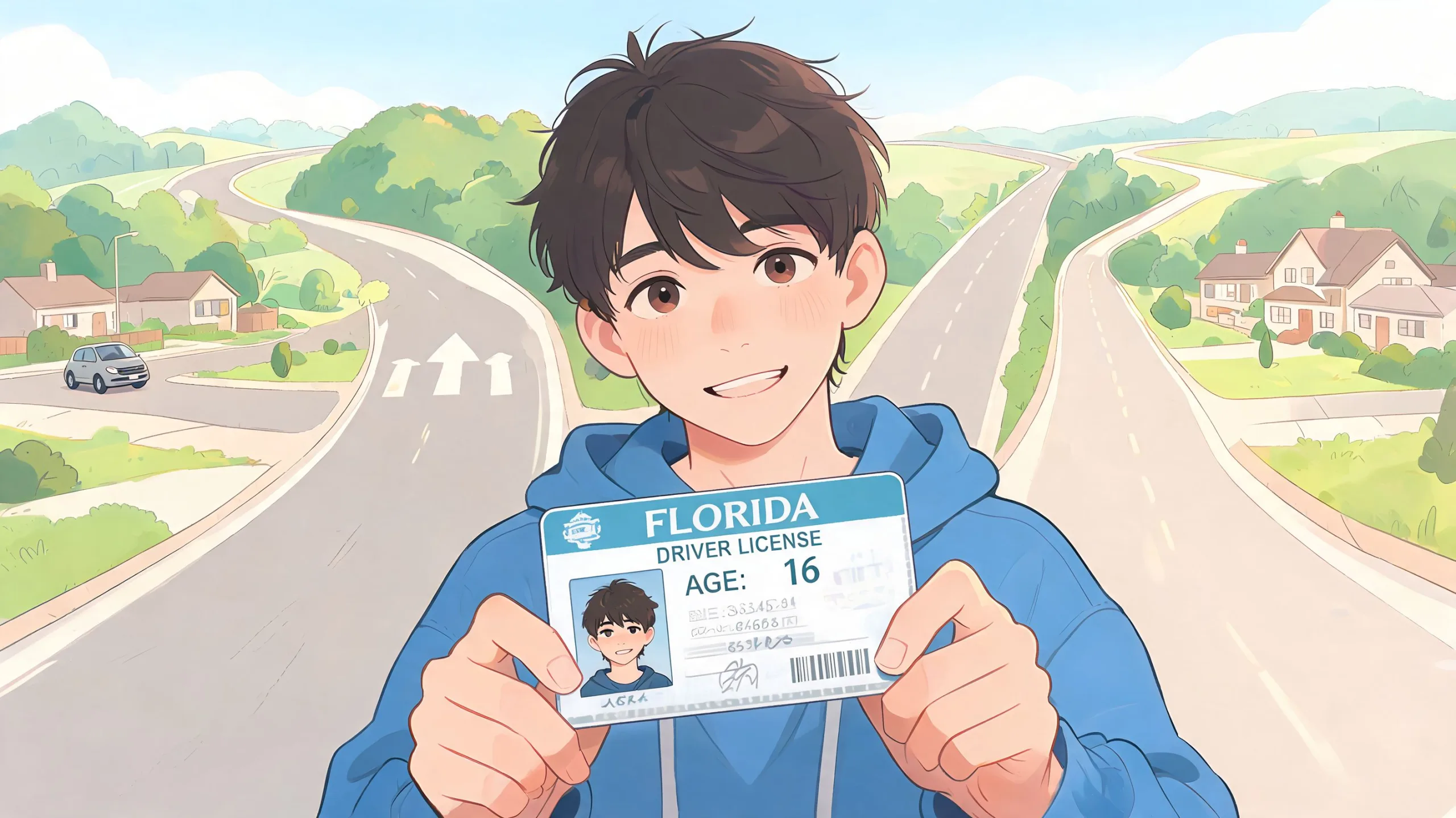
That matters because the day you turn 16 isn’t really the starting line. For most Florida teens, the process starts at 15, when they’re old enough to pursue a learner’s permit and begin supervised driving.
Nationally, teen licensing works the same way. Only 25.2% of 16-year-olds had a driver’s license in 2023, while 60.3% of 18-year-olds did, which shows how many teens move through licensing in phases rather than all at once, according to federal highway licensing data.
What that means in real life
A lot of families picture one big milestone. Birthday, road test, plastic card, done.
Florida is more structured than that. A teen usually has to:
- Get a learner’s permit.
- Practice with an adult.
- Complete the required supervised hours.
- Pass the driving test.
- Follow teen license restrictions until gaining full privileges later.
Practical rule: If you’re asking “can you get your license at 16,” the better question is “have I already started the permit process early enough to be ready at 16?”
This staged approach isn’t unique to Florida. If you want a simple explanation of how graduated licensing works in another place, G1ready.ca’s GDL explanation is a useful comparison because it shows the same idea clearly: beginners earn independence step by step.
For Florida families, the most useful mindset is this. Don’t think of getting licensed as one appointment. Think of it as a sequence with deadlines, documents, supervised practice, and safety checks. If you want a broader overview of the process, BDISchool also has a step-by-step guide to getting a license.
Your First Step The Florida Learner’s Permit
The first real milestone is the Florida learner’s permit. If your teen hasn’t done this part yet, they’re not close to a license, even if their 16th birthday is coming up fast.
For Florida teens, the permit is where the state begins checking two things. First, can the student understand the rules of the road? Second, does the family have the documents and supervision needed to start safely?
What you need before permit day
A Florida teen generally starts this process at age 15. Before going for the permit, make sure you’ve handled the education and testing pieces Florida expects for first-time teen drivers.
The usual checklist includes:
- Eligibility by age: The teen must be old enough to apply for the learner stage.
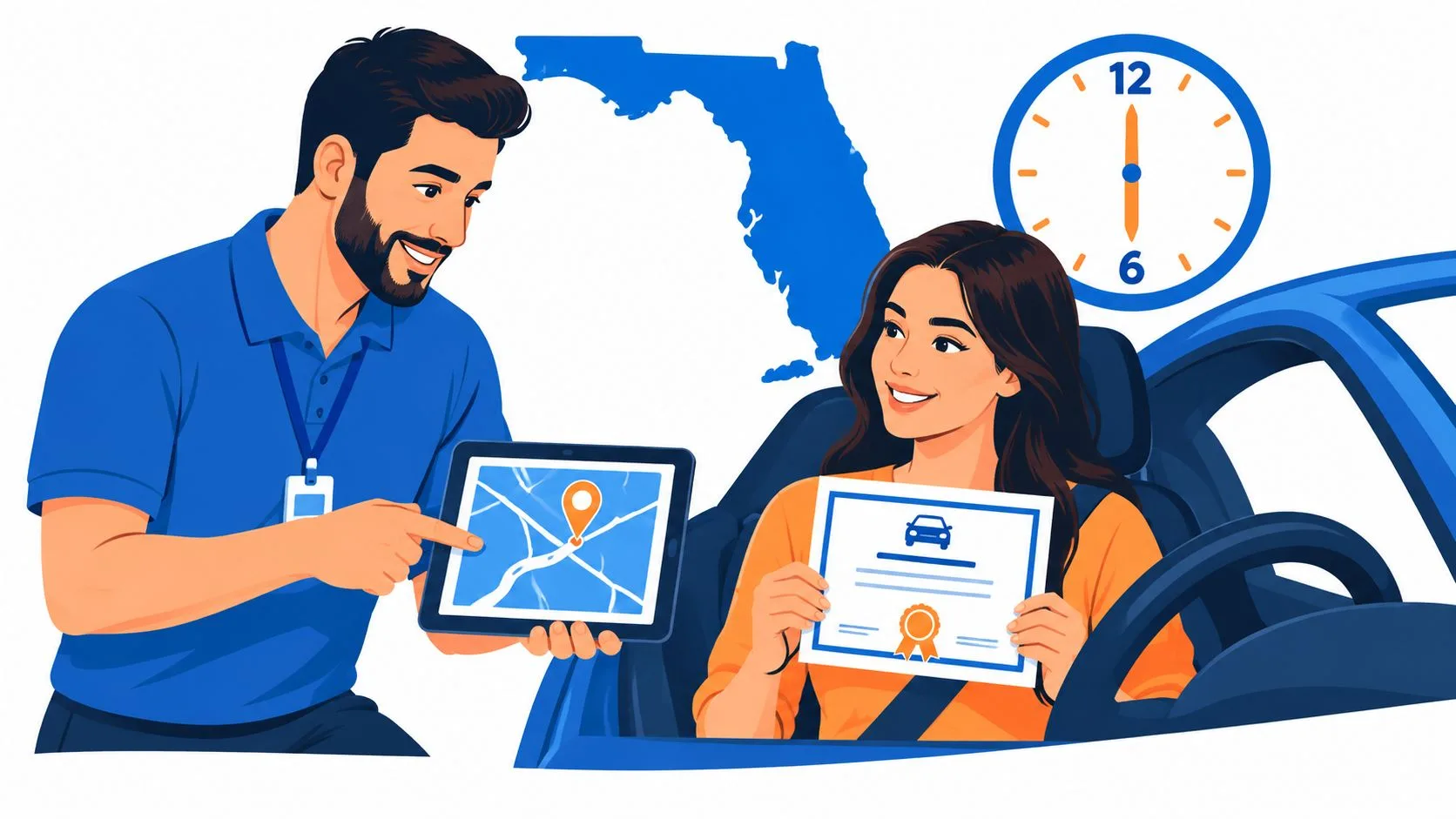
- Required education: Florida requires for teens a six-hour Driver Education Traffic Safety course before permit issuance.
- Vision and hearing screening: The state checks whether the applicant can safely perceive road conditions.
- Knowledge exam: The written test covers signs, traffic laws, and safe driving basics.
- Parent involvement: A parent or guardian typically needs to help with forms and identity documents.
If you’re trying to sort out the permit stage in plain English, BDISchool has a focused guide on the Florida learner’s permit process.
A lot of permit delays happen before the teen ever answers a test question. The family arrives missing one document, one signature, or one proof of identity, and the whole trip has to be repeated.
Florida Learner’s Permit Document Checklist
| Document Type | What It Is | Pro Tip |
|---|---|---|
| Proof of identity | A document showing who the teen is | Bring the exact original document the state accepts, not a casual photocopy unless the office allows it |
| Proof of date of birth | A document confirming the teen’s age | Check that the name matches other records exactly |
| Social Security documentation | Proof tied to the applicant’s Social Security record | Make sure the number and spelling match all other paperwork |
| Proof of Florida residential address | Documents that show the family lives in Florida | Bring more than one item if you’re unsure what the office will accept |
| Parent or guardian identification | ID for the adult helping complete the application | The adult’s name should line up with the documents being used for consent |
| Course completion proof | Proof the teen completed the required pre-permit education | Save the completion record digitally and on paper |
| Test completion records | Records for any exam completed in advance, if applicable | Print confirmations before the appointment instead of relying on a phone screenshot |
Where families get tripped up
The permit stage feels simple until details pile up. A teen may be academically ready, but the appointment can still go sideways if names don’t match, a document is expired, or the family assumes the school handled a requirement that still needs separate proof.
This is why I tell parents to build a folder before booking anything. Put every identity document, residency document, course record, and confirmation in one place. Then check it again the day before.
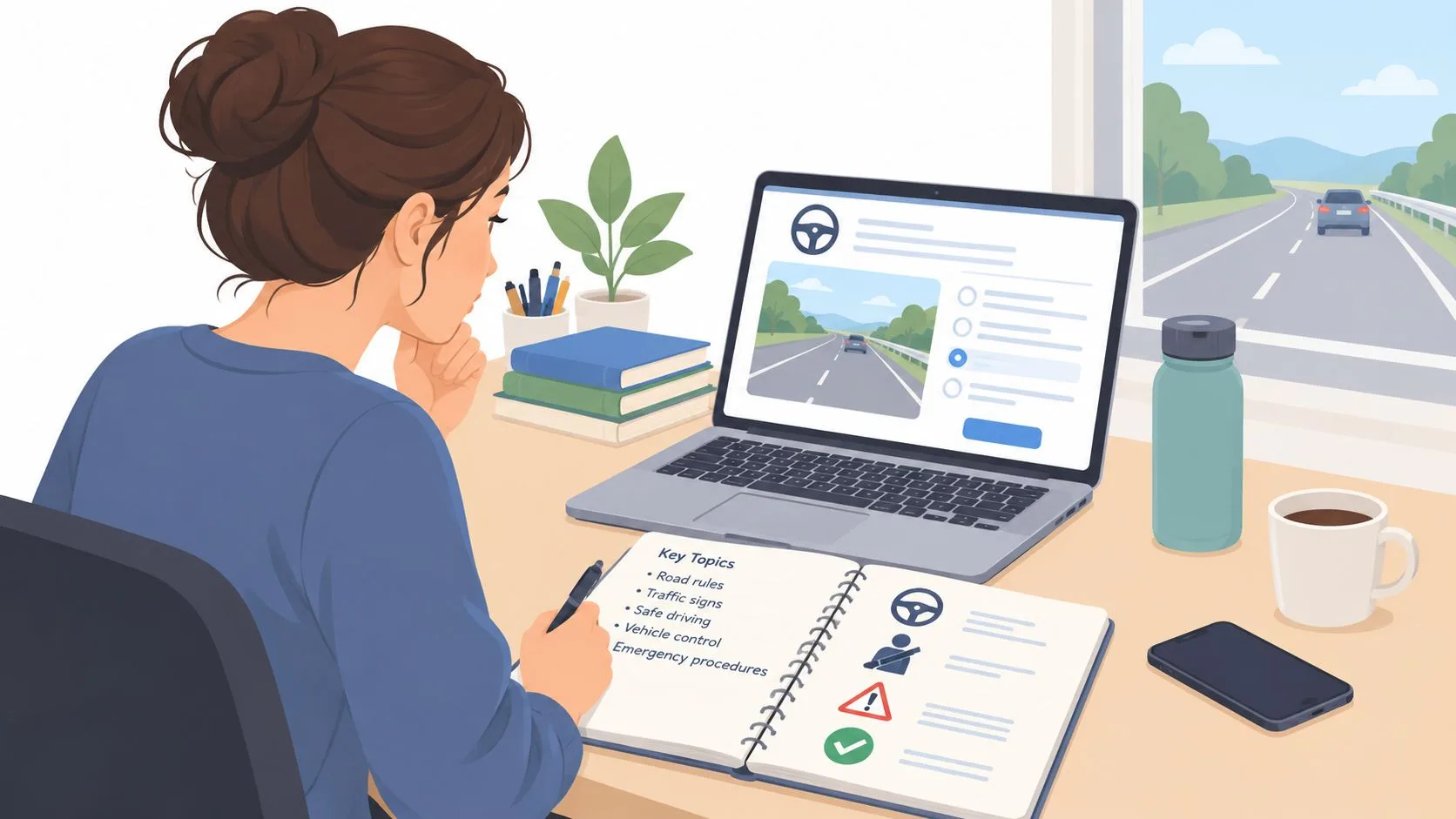
For teens, the main job is preparing for the knowledge side. Study signs, right-of-way, lane use, and basic Florida traffic rules until you can explain them out loud. If you can teach the rule, you usually understand it well enough to use it.
Mastering the Road With Supervised Driving
Getting the permit feels big. It is big.
But the permit is really permission to begin learning on the road, not permission to drive independently. This next stretch is where safe habits are built.
The hours aren’t just a formality
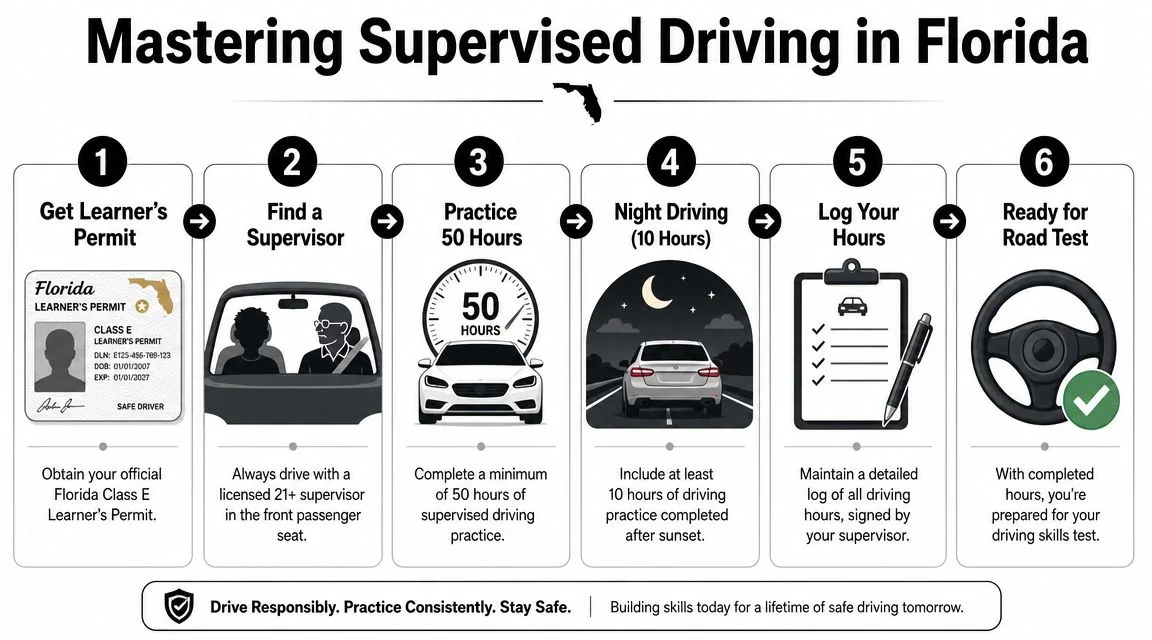
Florida requires 50 hours of supervised driving, including 10 hours at night. Families often focus on finishing the log. I want you to focus on what those hours are for.
To best track your practice, some tools like the Practice Tracker for New Drivers are available. These tools can create automatically a report log about your driving practice.
A new driver needs repeated exposure to normal driving situations before a test and before solo driving. That means turns, lane changes, parking lots, traffic lights, neighborhood streets, faster roads, rainy weather when safe to practice, and nighttime visibility changes.
For context, Pennsylvania’s supervised practice requirements are even more detailed at 65 hours, including specific night and adverse-weather driving. That’s a good reminder that states treat supervised driving as serious safety training, not busywork.
How to use the 50 hours wisely
Don’t wait until the last minute and then try to cram practice into a few weekends. Spread it out so the teen gets different road conditions and has time to reflect between drives.
A better practice plan looks like this:
- Start small: Use quiet neighborhoods first. Work on smooth stops, scanning, and turns.
- Add traffic gradually: Move to busier roads once the teen can stay centered, judge speed, and follow directions calmly.
- Practice parking often: Parking is where many beginners tense up. Short, repeated reps work better than one long stressful session.
- Include real errands: Drive to school, the grocery store, or practice. Familiar destinations reduce anxiety while still building skill.
- Protect the night hours: Don’t leave all nighttime driving for the end. Darkness changes depth perception, glare, and hazard spotting.
The log matters. The learning matters more. A teen can technically finish the hours and still not be test-ready if every drive was too easy.
What parents should watch for
Parents often watch the steering wheel and forget the bigger picture. The stronger signs of progress are mental, not mechanical.
Look for whether your teen:
- Scans ahead: They notice brake lights, crosswalks, and traffic signals early.
- Makes decisions sooner: They don’t drift into turns or lane changes at the last second.
- Recovers calmly: Small mistakes don’t spiral into panic.
- Understands commentary: When you ask, “What do you see developing up there?” they can answer clearly.
If practice at home feels inconsistent, professional instruction can help organize the learning. BDISchool offers Florida teen driver education options, and its tips for first-time drivers are a useful companion for families who want more structure between drives.
A simple practice pattern that works
Try rotating each week between three types of drives:
- Control drives in low-stress areas for steering, stopping, and turns.
- Traffic drives for lane choice, spacing, and intersections.
- Challenge drives at night or in more complex settings, once the basics are steady.
That rhythm keeps practice from getting repetitive. It also prevents a common problem, which is a teen who can drive one familiar route perfectly but struggles the moment the environment changes.
Passing Your Florida Driving Test
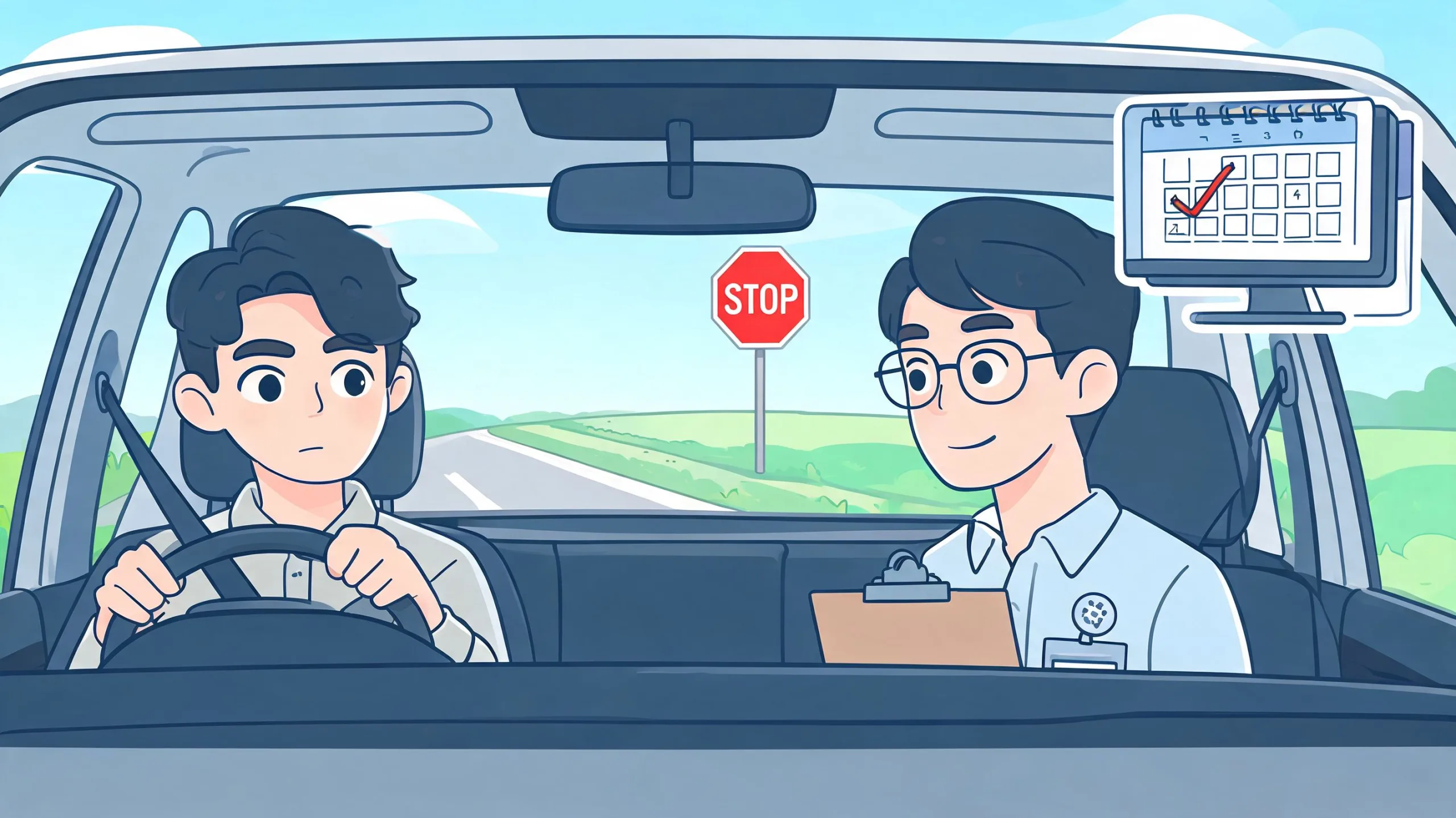
By the time a teen reaches the road test, the goal isn’t to impress the examiner. The goal is to show steady, safe, predictable driving.
That’s good news for nervous students. You don’t need to look advanced. You need to look prepared.
What the examiner is really watching
Examiners usually care less about flair and more about judgment. They want to see whether the teen follows directions, checks surroundings, controls speed, signals properly, and completes basic maneuvers without creating risk.
That means test prep should focus on repeatable habits:
- Mirror and shoulder checks: Make them obvious, not subtle.
- Speed control: Avoid rolling too fast into turns or parking maneuvers.
- Complete stops: Especially at stop signs.
- Lane discipline: Stay centered and choose the correct lane early.
- Composure: One minor mistake doesn’t automatically end the test if the teen stays calm and safe.
In many states, the pre-test process itself includes extra safety steps. For example, Texas requires the Impact Texas Teen Driver Program within 90 days of the road test, which shows how states treat licensing as a sequence of checkpoints rather than one isolated exam. Florida families should take the same mindset to every requirement before test day.
Maneuvers worth practicing again
Most teens don’t fail because they forgot a random obscure rule. They struggle because basic maneuvers get shaky under pressure.
Spend extra time on:
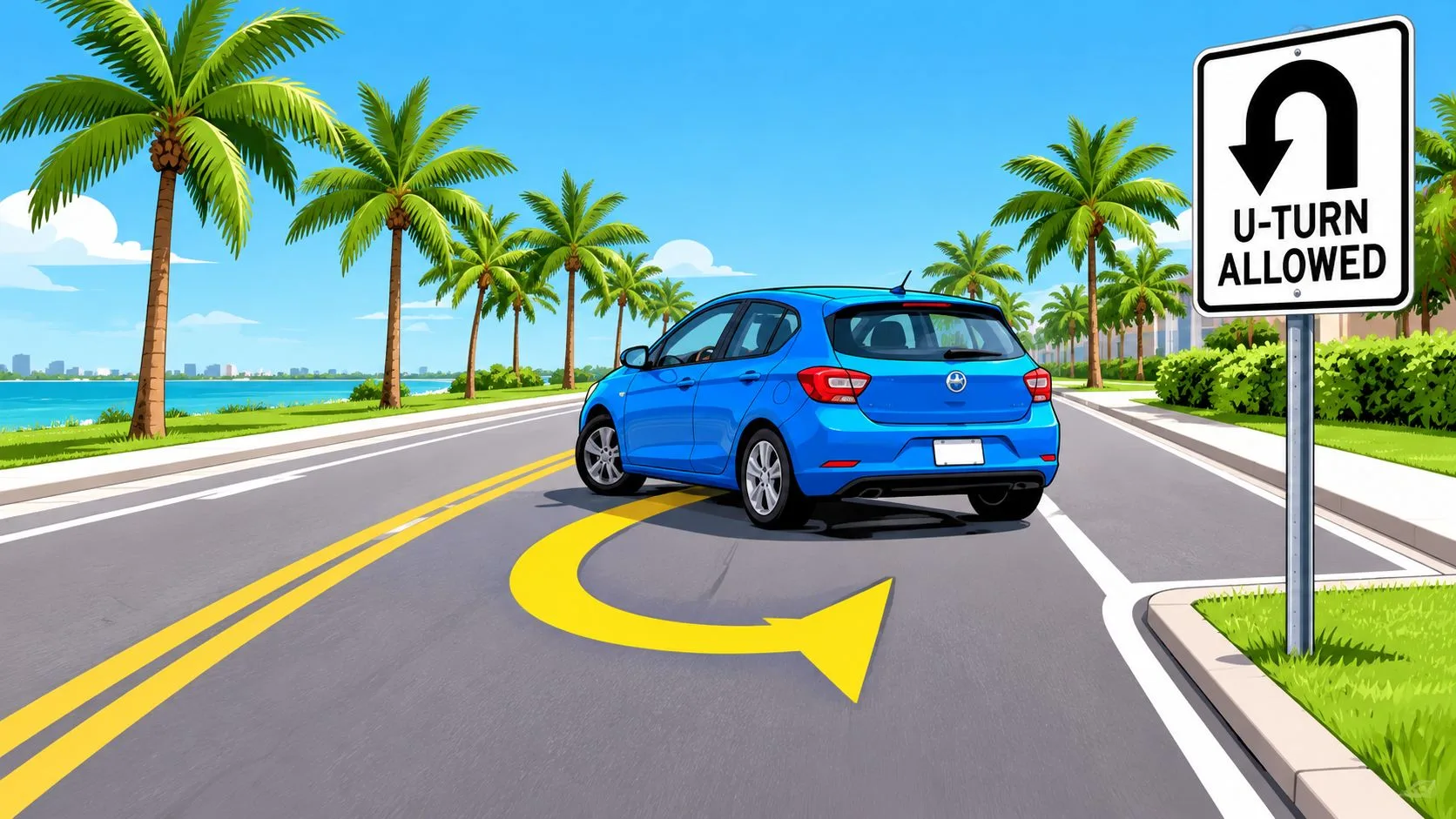
- Three-point turns
- Quick stops
- Backing up in a straight line
- Parking control
- Turning into the correct lane
Instructor note: Practice the exact skill after a normal drive, when the teen is already warmed up. Cold-starting the hardest maneuver often makes students feel worse than they actually are.
A printable Florida driving test checklist can help you verify the vehicle, paperwork, and common skills before the appointment.
What test day should feel like
The best road tests feel almost boring. That’s a compliment.
If your teen is calm, uses routine checks, and treats each instruction as one ordinary driving task, the test usually goes more smoothly. Don’t create a huge emotional build-up in the car ride over. Keep the morning simple. Eat, arrive early, and avoid adding five last-minute corrections in the parking lot.
This video is useful for seeing the flow and pace a student should be ready for:
Navigating Provisional License Rules and Restrictions
Passing the test doesn’t mean a 16-year-old can drive anywhere, anytime, with anyone. That’s the part many families misunderstand.
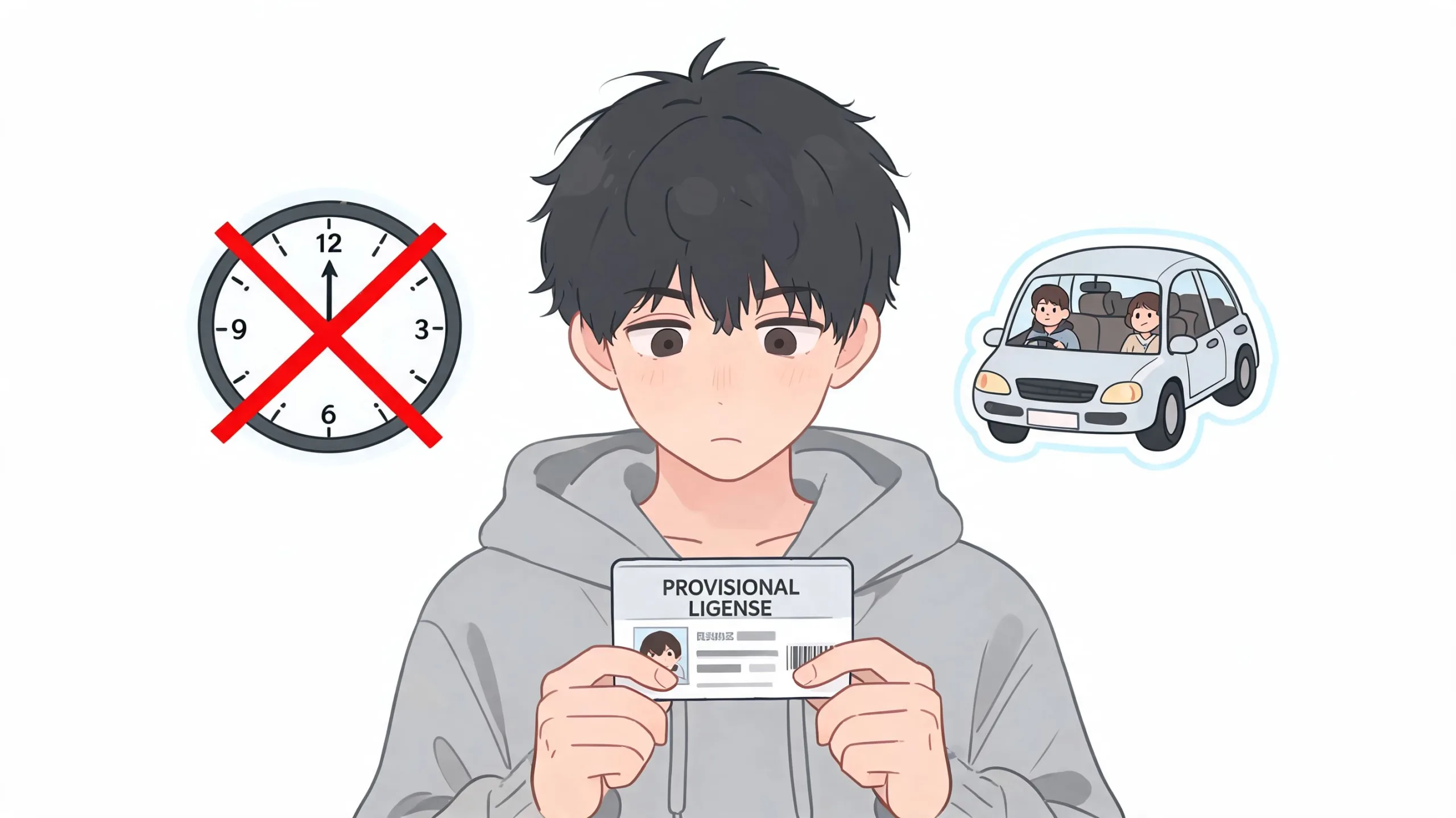
A teen license at 16 comes with restrictions. These limits are there because the first months of independent driving are where judgment still catches up to confidence.
What provisional really means
For a 16-year-old in Florida, the practical meaning is simple. You can drive, but not with full unrestricted freedom.
Common teen-driving restrictions in Florida include limits on late-night driving and other conditions tied to age. Families should check the current Florida rules carefully before assuming a teen can drive for social trips at any hour.
Here are the everyday situations to think through:
- Late night plans: If a friend wants a ride home late in the evening, the teen needs to know whether that falls outside permitted hours.
- School activities: Some exceptions may apply, but families should confirm the details before relying on them.
- Work schedules: A part-time job can create driving questions if shifts start early or end late.
The family conversation that should happen right away
The strongest teen-driver households don’t stop at “you passed.” They make a house plan for how the license will be used.
That conversation should cover:
- When the teen may drive
- Who may ride along
- Whether phones stay fully out of reach
- What happens after a ticket, warning, or close call
- How the family handles weather, fatigue, and pressure from friends
Restrictions only work if the teen knows them before the first independent trip, not after a police stop or a bad decision.
Why paperwork still matters after the test
Families often relax after the road test and assume the hard part is over. Keep paying attention to documents, dates, and any rule tied to the teen’s status.
That’s a smart habit because paperwork mistakes are common in teen licensing generally. In Pennsylvania, around 15% of applications are initially rejected due to expired medical forms or incorrect parental consent paperwork, according to this Pennsylvania teen licensing review. Florida’s forms are different, but the lesson is the same. Double-check every requirement and every document.
As the teen gets older, restrictions ease and full driving privileges come later. Until then, the safest mindset is this: treat the provisional period like advanced training, not graduation.
Frequently Asked Questions About Teen Licensing
Can my teen take the road test in a family car
Usually, yes, if the vehicle is legal and safe to use for the exam. That means current registration, valid insurance, working lights, good brakes, and basic equipment in proper order. A road test car works like a classroom desk. If the desk is broken, the student may know the material, but the test still cannot start.
Check the car a day or two before the appointment, not in the parking lot five minutes before test time.
How much does it cost to get licensed at 16 in Florida
The total can be higher than families expect because it is not just one fee. You may be paying for driver education, the permit process, the license fee, testing, and sometimes a retest or extra practice.
Fee amounts can change, so it is smarter to verify current Florida prices before you go than to rely on an old blog post. Parents should also budget for the first months after licensing, especially if the teen will be driving regularly.
Will insurance go up when my teen gets licensed
In many homes, yes. Insurers usually see a newly licensed teen as a higher-risk driver, so the family premium may rise.
That does not mean you should guess your next bill. Ask your insurer what changes once your teen moves from permit to license, which car the teen will be listed on, and whether good-student or driver-training discounts apply. Parents who want a plain-language overview can review this guide on protecting young drivers with proper coverage.
What happens if a teen gets a ticket on a provisional license
Treat it like a warning light on the dashboard. One ticket may seem small, but it can affect driving privileges, insurance costs, and the level of trust at home.
Read the citation carefully, watch the deadlines, and check whether a driver improvement course is an option. Families should also revisit house rules right away, especially around passengers, speed, nighttime driving, and phone use.
Can my teen use an out-of-state permit in Florida
Sometimes, but families should not assume the next step will transfer neatly. The answer can depend on where the permit was issued, the teen’s age, and whether Florida recognizes that permit for driving and testing purposes.
The safest move is to confirm the current rule before booking a road test or standing in line at an office. That quick check can save a wasted trip.
If your family is trying to turn a confusing Florida licensing checklist into a clear plan, BDISchool is a practical place to start. You can review teen driver education options, learn the permit and test steps, and get guidance that helps both teens and parents work through the process safely and with fewer surprises.