You’re probably here because one of two things is happening.
A teen in your house is ready to drive and wants a clear path forward. Or a parent is trying to sort through course names, permit steps, practice hours, and test rules without turning it into a family stress project.
That confusion is normal. A teen drivers license used to feel like an automatic milestone at 16. It doesn’t anymore, and that’s part of why the process can feel oddly unfamiliar even to parents who got licensed years ago.
Navigating Your Path to Driving Freedom
A first license still means freedom. It means driving to school, practice, work, or a friend’s house without waiting for a ride. It also means stepping into real responsibility, because every new privilege on the road comes with rules, habits, and decisions that matter.
That shift is happening in a different world than the one many parents remember. In the United States, the share of 16-year-olds with a license dropped from 46% in 1983 to 25% in 2021-2022, and the average age for getting licensed has risen to around 18 by 2026, as a projection noted by Progressive in its look at why teens are driving less (teen licensing trends and delayed driving age).

For some families, the delay is about cost. For others, it’s anxiety, packed schedules, or the simple fact that apps and rideshares make waiting easier than it used to be.
Why the process feels harder than expected
Most teens don’t struggle because they can’t learn. They struggle because the licensing journey mixes several different tasks at once:
- Course selection that depends on age
- Knowledge testing with road rules and signs
- Vision and paperwork at the licensing office
- Practice driving with an adult
- A final road test under pressure
Parents often get tripped up by the same thing. They know how to drive, but they may not know the current steps in the right order.
Practical rule: Treat the teen drivers license process like a sequence, not one big event. One completed step makes the next one easier.
Some families also need extra support around focus, anxiety, or executive functioning. If attention or overwhelm is part of the picture, this guide to adult ADHD driving difficulties can help families think through how learning challenges can affect road habits and confidence.
A simple starting point
Start with the first official decision. Choose the right Florida new-driver course before doing anything else.
If you want a broader step list in one place, BDISchool’s guide on how to get a license in Florida is a useful reference page to keep open while you move through each requirement.
The First Turn Learner’s Permit and Driver Ed
The first move is simple. Qualify for the correct course at Florida New Driver qualification.
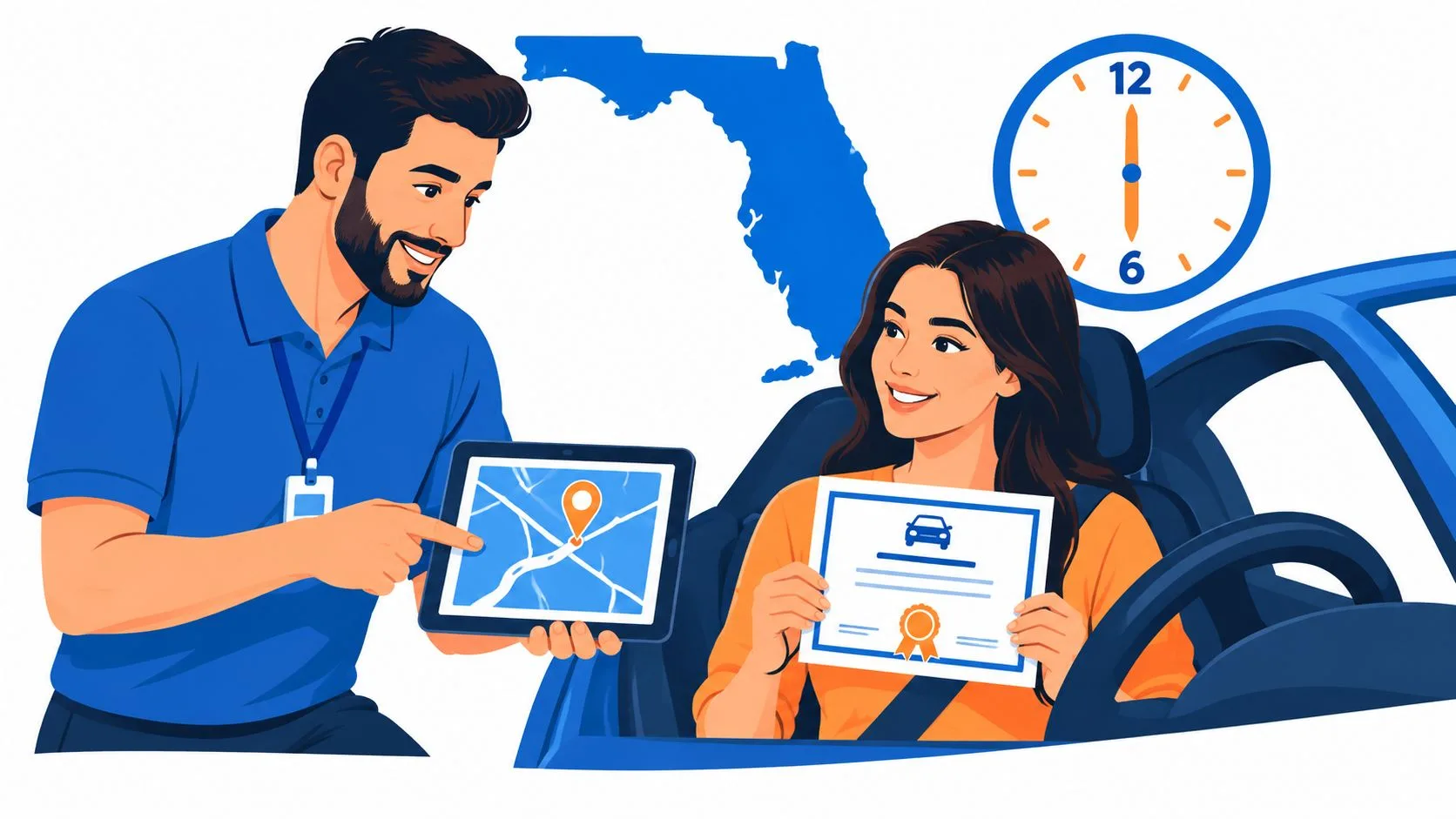
That step matters because Florida new drivers don’t all take the same class. If the student is under 18, the required course is the DETS 6-hour course. If the student is 18 or older, the required course is the TLSAE 4-hour course.
Many families try to jump straight to permit questions. Slow down and confirm the course first. It keeps the rest of the process clean.
Pick the right course first
The age split is where confusion starts.
- Under 18: Take the DETS 6-hour course.
- 18 and older: Take the TLSAE 4-hour course.
Once that’s complete, the student can focus on the licensing office requirements and testing. If you want a Florida-specific overview of the permit process, see getting a driver’s permit in Florida.
Why rules of the road feel hard
Most teens don’t get stuck on the idea of driving. They get stuck on rules of the road.
That usually means questions like these:
- Who goes first at a four-way stop?
- When do you yield on a left turn?
- What does a lane marking allow?
- When should you stop, slow, or continue?
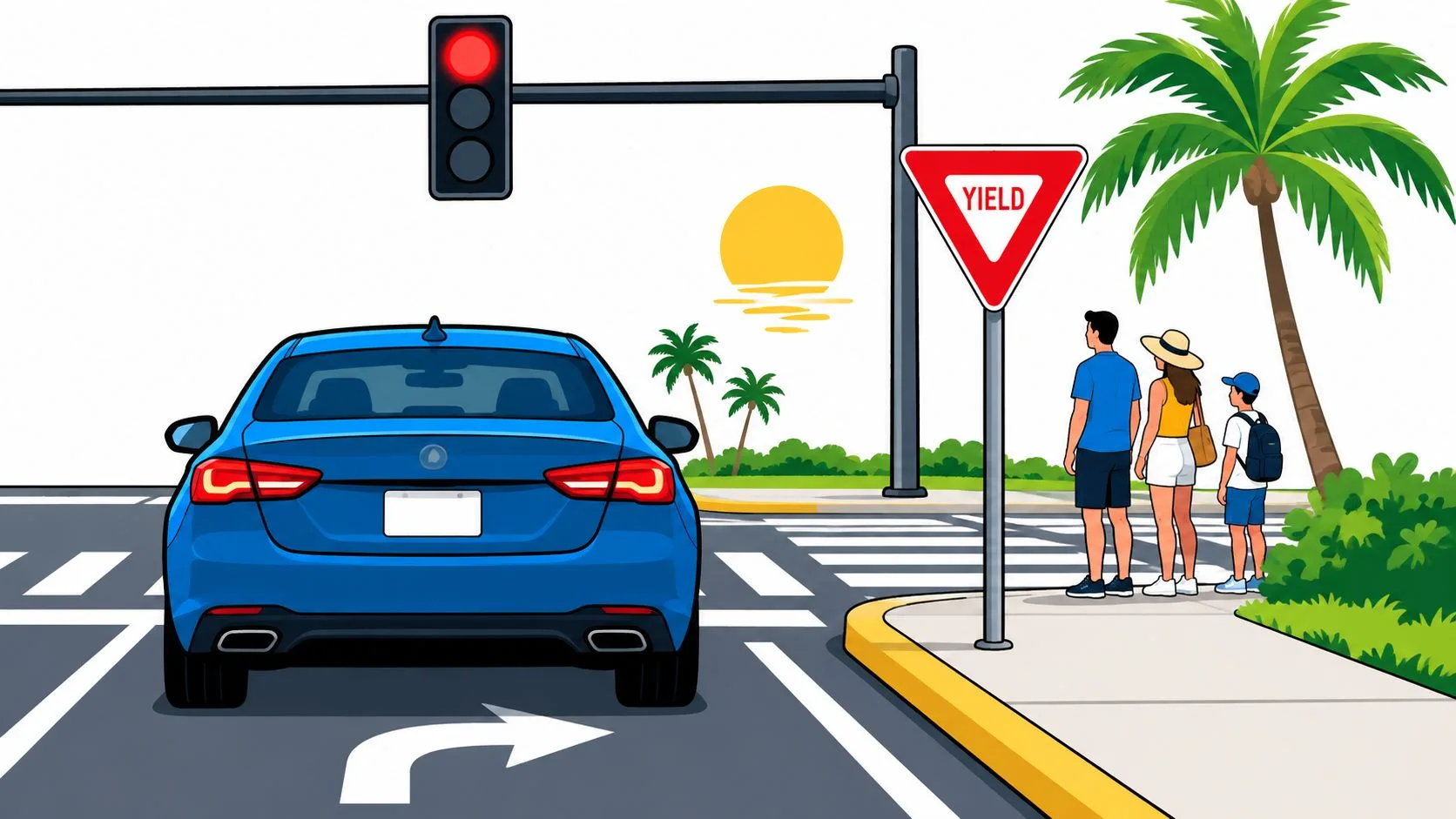
Those aren’t hard because the teen isn’t trying. They’re hard because road rules often depend on context. The best way to learn them is to tie each rule to a real situation, not just memorize words on a screen.
Learn the rule, then picture the intersection. If a teen can explain what they’d do in plain language, they usually understand it.
What happens at the licensing office
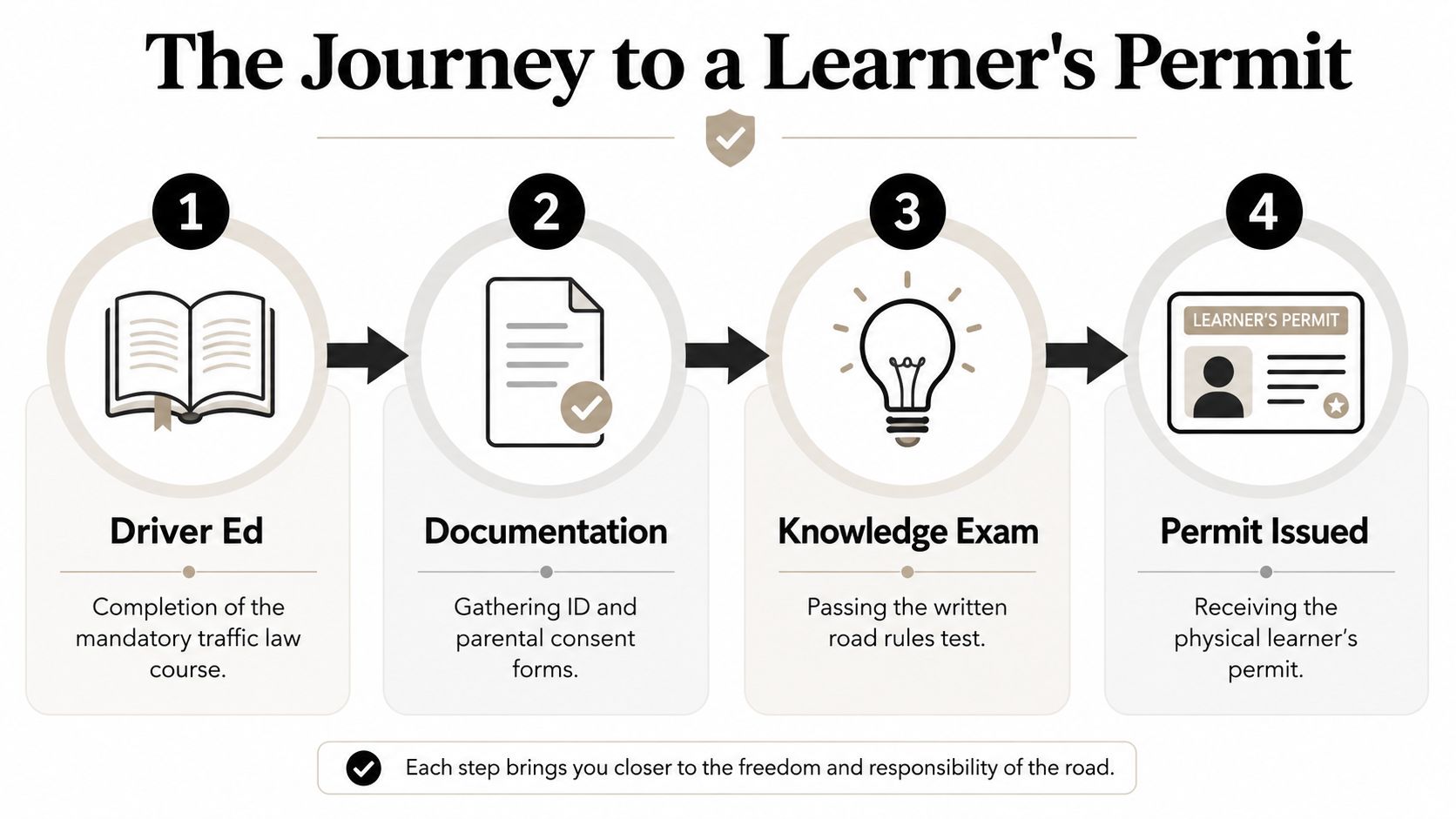
After course completion, the next stage includes identity documents, a vision screening, and the knowledge exam.
One number tells you why preparation matters. Teen knowledge exam fail rates can be as high as 39.5% on the first try, and the vision screening requires 20/40 acuity, according to The Weekly Driver’s review of testing outcomes and screening details.
Required documents checklist for Florida teen drivers
| Document Type | Examples and Key Details |
|---|---|
| Identification | Bring accepted identity documents such as an original birth certificate or other approved proof of identity. |
| Social Security proof | Bring a Social Security card or another accepted document that verifies the number. |
| Florida residency | Bring documents that show Florida residency. Check current state guidance so names and addresses match. |
| Parent or guardian paperwork | If the teen is under 18, a parent or guardian may need to be present or provide the required consent. |
| Course completion proof | Have proof that the correct state-required course was completed before the permit step. |
How to prepare without cramming
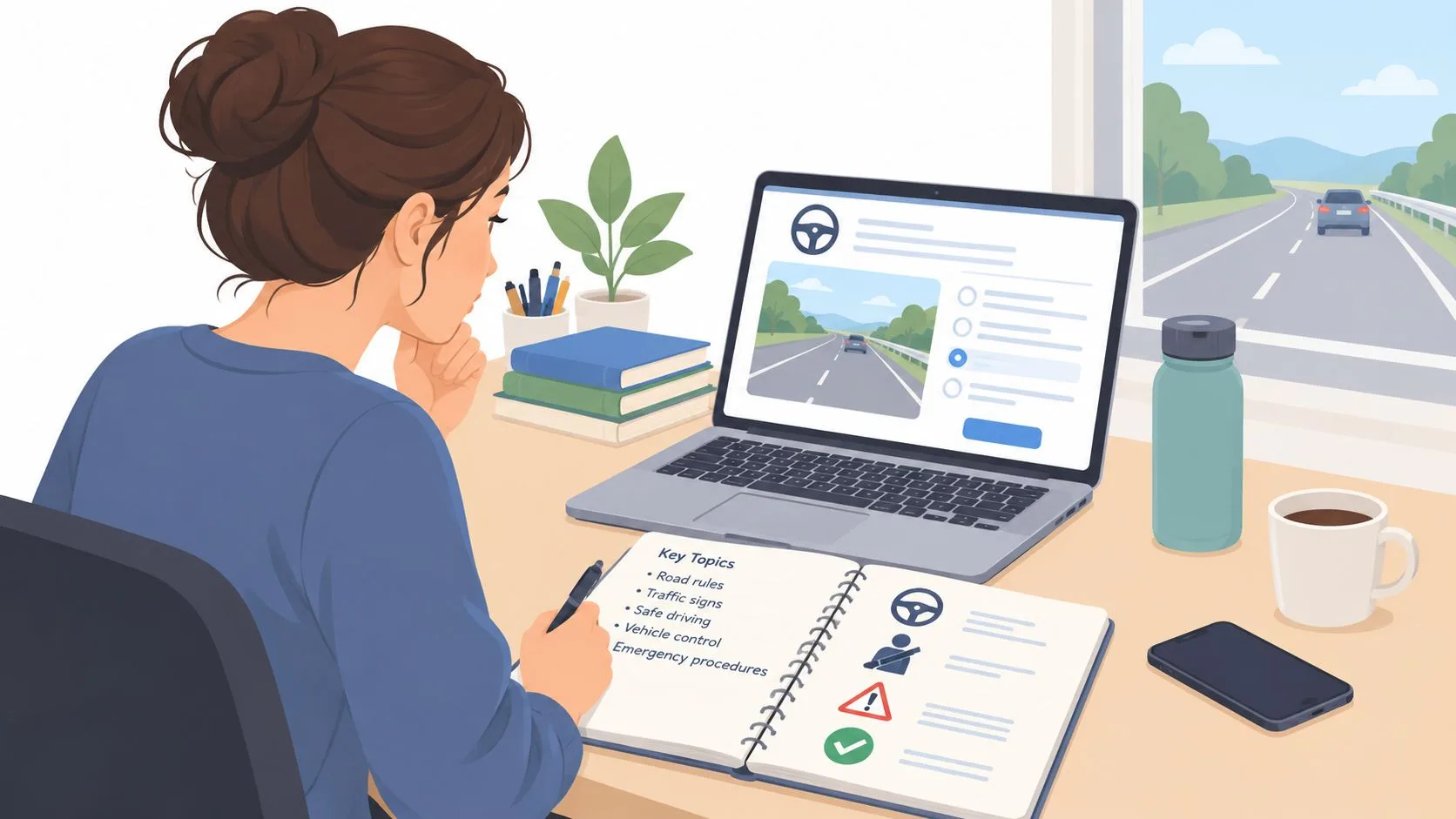
A rushed study plan usually backfires. A calmer method works better.
- Study in short rounds. Review road signs, right-of-way, lane use, and safe driving decisions in smaller sessions.
- Say answers out loud. If a teen can explain a rule clearly, they’re more likely to apply it correctly.
- Check vision early. Don’t let the first surprise happen at the office.
- Review weak spots twice. Most students need extra repetitions on signs and intersection decisions.
Mastering the Road with Supervised Practice
The permit is only the beginning. Real learning starts when the teen gets into the driver’s seat with a calm adult beside them and begins practicing consistently.
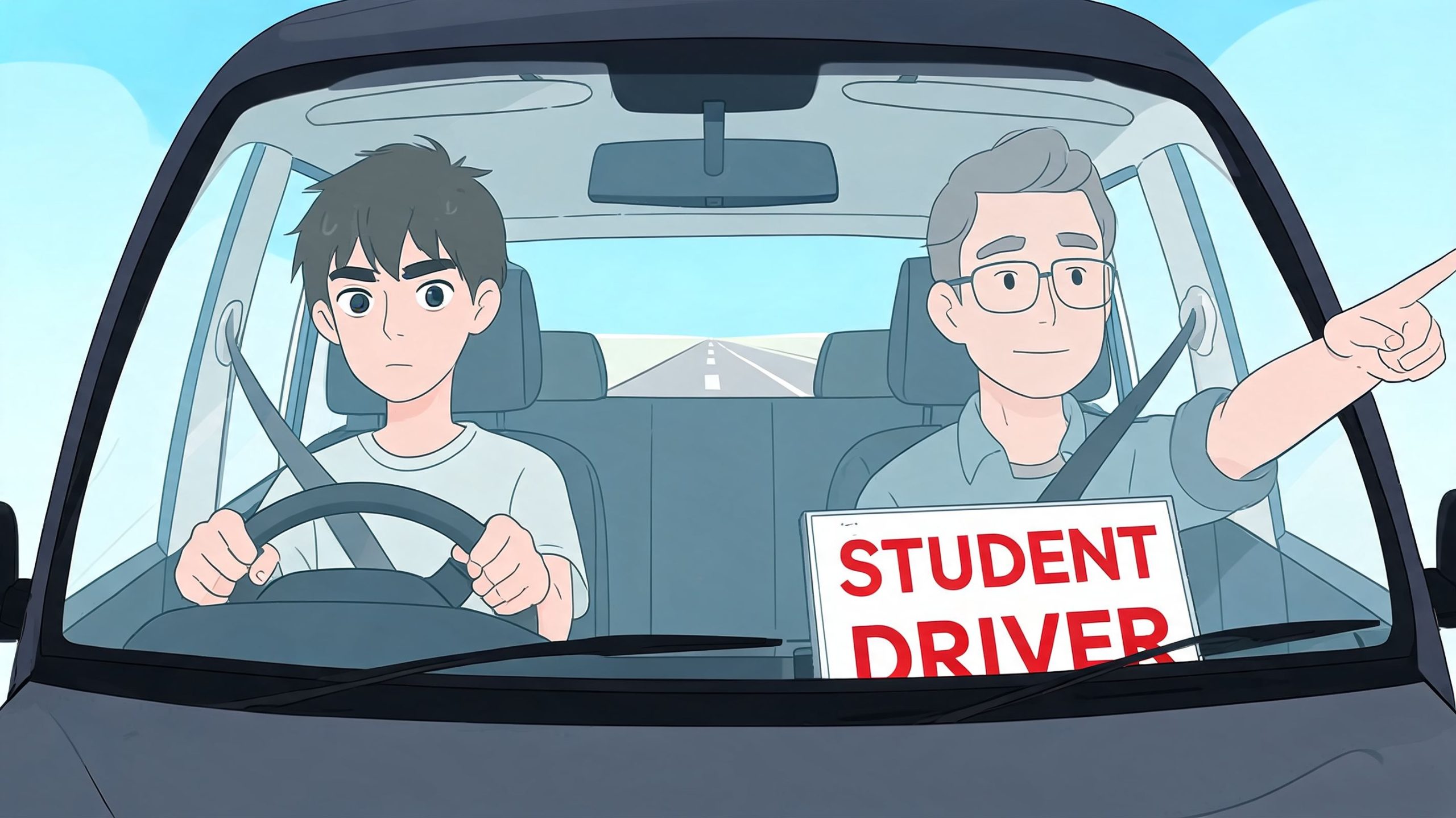
Florida requires 50 supervised hours, including 10 hours at night. But hours alone don’t create a safe driver. The quality of those hours matters more than families usually expect.
Why unplanned practice can go wrong
A parent knows the family car, local roads, and everyday driving. That helps. But it can also create blind spots if practice becomes casual and repetitive.
The strongest approach is usually a mix of parent supervision and professional instruction. One reason is consistency. As noted by the Ohio teen driving page, parent-taught practice can increase crash odds by 60% compared to certified schools, while professionally trained teens have 20% to 30% fewer violations in their first year of driving (parent practice compared with certified instruction).
That doesn’t mean parents shouldn’t teach. It means parents shouldn’t teach alone if the teen is building shaky habits.
The best way to use those practice hours
Don’t spend every session driving the same easy route. Build skill in layers.
Try this progression:
- Start quiet: Empty parking lots, low-speed neighborhood turns, smooth stops, and mirror habits.
- Add decision points: Four-way stops, traffic lights, lane changes, and moderate traffic.
- Move to complexity: Busy intersections, merge lanes, school zones, and nighttime driving.
- Repeat problem skills: Right-of-way, scanning, speed control, and checking before turns.
Instructor note: If rules of the road are the weak spot, pause after each tricky intersection and ask, “Who had the right-of-way there, and why?”
That one question forces thinking, not guessing.
How parents can coach without making it worse
Teens learn better when the adult in the passenger seat gives fewer, clearer directions.
A good practice session sounds like this:
- Before driving: Pick one focus, such as left turns or lane changes.
- During driving: Give short cues early, not panicked corrections late.
- After driving: Review two things that improved and one thing to clean up next time.
If a family wants structured online coursework plus official documentation, FloridaNewDriver course is one Florida-approved option that offers teen-focused modules and course pathways based on age. That kind of structure can help families who want a more organized learning rhythm.
Passing the Road Test with Confidence
The road test feels bigger than it is. It’s not there to catch tiny mistakes. It’s there to confirm that the driver can operate the vehicle safely, follow directions, and make sound decisions.
That said, first attempts don’t always go smoothly. Some road test data has shown a 67.7% pass rate, which means nearly 1 in 3 first-time teen applicants fail, and immediate failures can come from simple but serious errors like missing a blind spot check or hitting an object.
What the examiner is watching
The examiner is looking for safe habits, not flashy driving.
Focus on these core behaviors:
- Observation: Mirrors, blind spots, and awareness of signs, people, and vehicles
- Control: Smooth braking, steady steering, and proper lane position
- Judgment: Yielding correctly, choosing safe gaps, and following speed limits
- Compliance: Full stops where required, signal use, and obeying instructions
The most common issue I see isn’t lack of talent. It’s rushing. Teens know what to do, then skip one check because nerves take over.
A road test checklist that actually helps
Use a short pre-test checklist instead of trying to remember everything at once.
- Blind spots every time: Especially before lane changes, pulling out, or turning
- Stop completely: Rolling stops create problems fast
- Keep speed steady: Don’t creep too slowly and don’t surge
- Turn into the correct lane: Stay controlled through the full turn
- Scan constantly: Don’t stare only straight ahead
For a fuller prep list before test day, review this Florida driving test checklist.
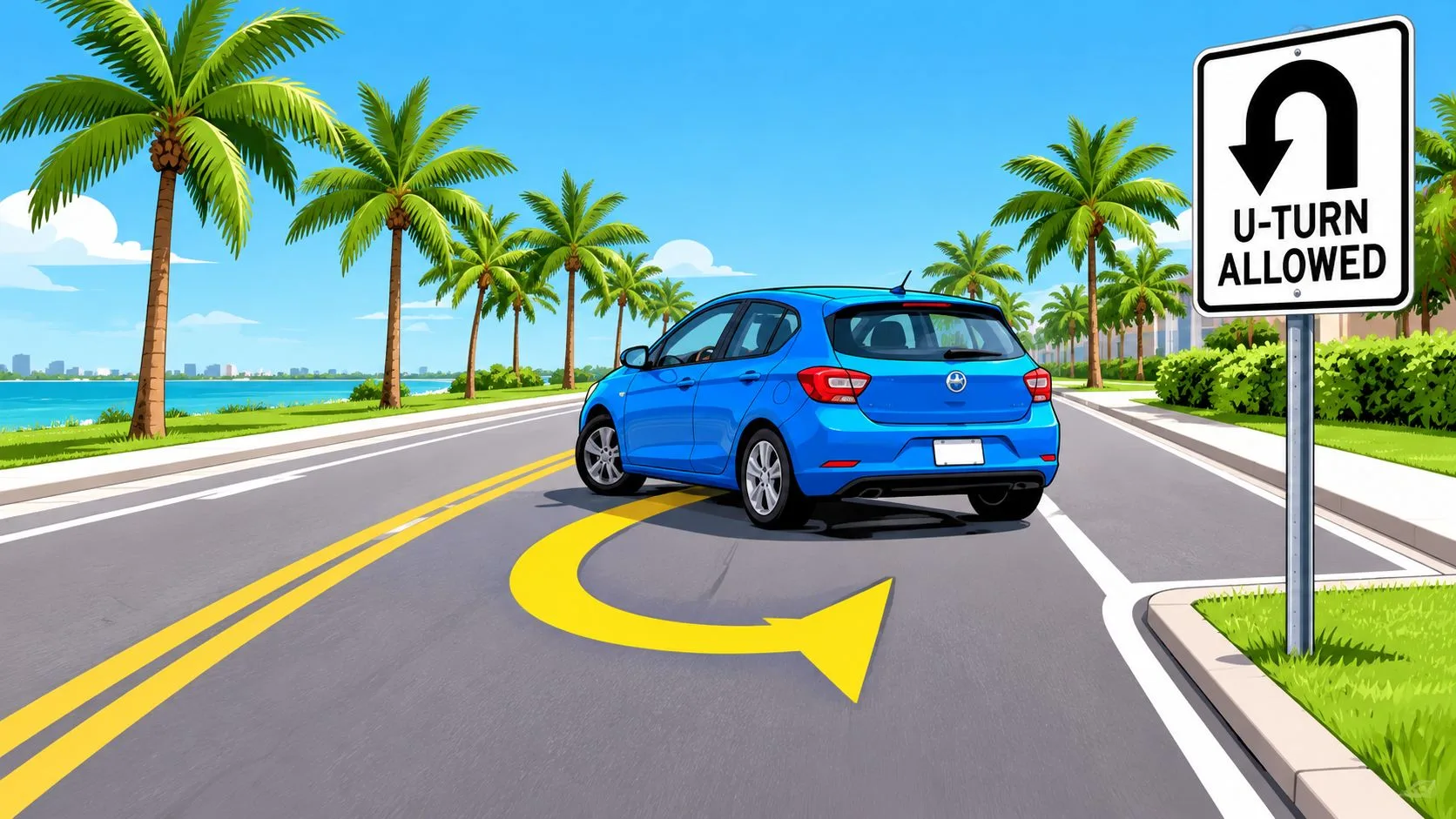
Here’s a helpful visual to study before practice or before the exam day drive:
What to do with test anxiety
Anxiety makes smart teens drive stiffly. They grip the wheel too hard, forget their mirror routine, or second-guess simple turns.
If overthinking is becoming a significant obstacle, this guide on how to stop overthinking and worrying gives families practical ways to calm the mental spiral before an important performance situation.
You don’t need a perfect drive. You need a safe, attentive one.
Your Provisional License and Driving Restrictions
Passing the driving test is a huge milestone. It also begins a stage where the teen has more freedom but still has legal limits.
Those limits matter because the first months of solo driving are when judgment, attention, and routine are still forming. Restrictions are there to lower risk while the driver gains experience.
What a provisional stage means in practice
A teen with a new license should treat the first year as an extension of training. The teen is licensed, but still learning how to handle independence, passengers, timing, and distractions without an adult in the seat.
That means families should keep discussing:
- Trip planning
- Night driving decisions
- Passenger choices
- Phone-free driving habits
Why night rules still matter
Night driving changes everything. Visibility drops, fatigue matters more, and decisions have to happen faster.
Even before full licensing, families should understand permit-related limits and supervised night driving expectations. This overview of driving at night with a permit is a useful reference when practice sessions start extending later into the day.
A new license isn’t the end of instruction. It’s the point where private choices start carrying public consequences.
How to help a teen keep the license
Parents can lower a lot of early mistakes by setting house rules that are stricter than the minimum legal standard.
Examples include:
- No extra teen passengers at first
- No unnecessary late-night trips
- No phone access while the car is moving
- No driving when upset, overtired, or distracted
The goal isn’t control for its own sake. The goal is to protect the learning curve while the teen builds dependable habits.
A Parent’s Guide and Licensing FAQs
Parents still shape the outcome more than they think. The teen may be the one taking the tests, but the adult controls the pace, the practice environment, and the tone around driving.
That matters even more today because some teens aren’t racing to get licensed. Recent data shows that 39% of U.S. 16-year-olds had licenses in 2022, and the decline is tied to factors such as cost barriers, safety fears, and the convenience of rideshare apps, as discussed in this video summary on delayed teen licensing and motivation.
What parents should do first
Begin by asking one honest question: “What is the actual reason you want to drive, or do not want to yet?”
For one teen, the issue is confidence. For another, it’s worry about making mistakes. For another, it may be simple convenience because someone else already handles transportation.
A useful parent role looks like this:
- Set a schedule: Put study sessions, office tasks, and driving practice on the calendar.
- Keep the car calm: Instruction works better without sarcasm, shouting, or rapid-fire criticism.
- Focus on motivation: Tie driving to independence, work, school, or family responsibility.
- Watch the hidden barrier: Some teens say they’re “not interested” when they feel scared.
Licensing FAQs parents and teens ask all the time
Which course should we choose first
Go to Florida New Driver qualification first. Teens under 18 take the DETS 6-hour course. New drivers 18 and older take the TLSAE 4-hour course.
What part is usually hardest for students
Rules of the road. Right-of-way, intersection decisions, lane use, and who yields often create the most confusion because those questions depend on the situation.
Should parents do all the driving practice
Parents should be involved, but unstructured teaching can lock in bad habits. A more organized approach works better, especially when the teen struggles with scanning, right-of-way, or confidence.
What if the teen fails a test
Treat it as feedback, not failure. Figure out whether the problem was knowledge, nerves, attention, or rushed preparation, then practice that exact weakness.
How can parents make practice more productive
Choose one skill per drive. Keep the route simple at first. Review mistakes after the car is parked, not in the middle of a stressful turn.
What if the teen keeps putting the process off
Don’t assume laziness. Ask whether cost, anxiety, scheduling, or fear is making the process feel heavier than it should.
The teen drivers license process goes better when families stop treating it like a single hurdle. It’s a chain of smaller decisions, and each one gets easier when the teen knows exactly what comes next.
If you want a clear, Florida-focused path from first course to license, BDISchool can help you sort out the right starting course, understand the road rules more easily, and move through each step with less confusion.