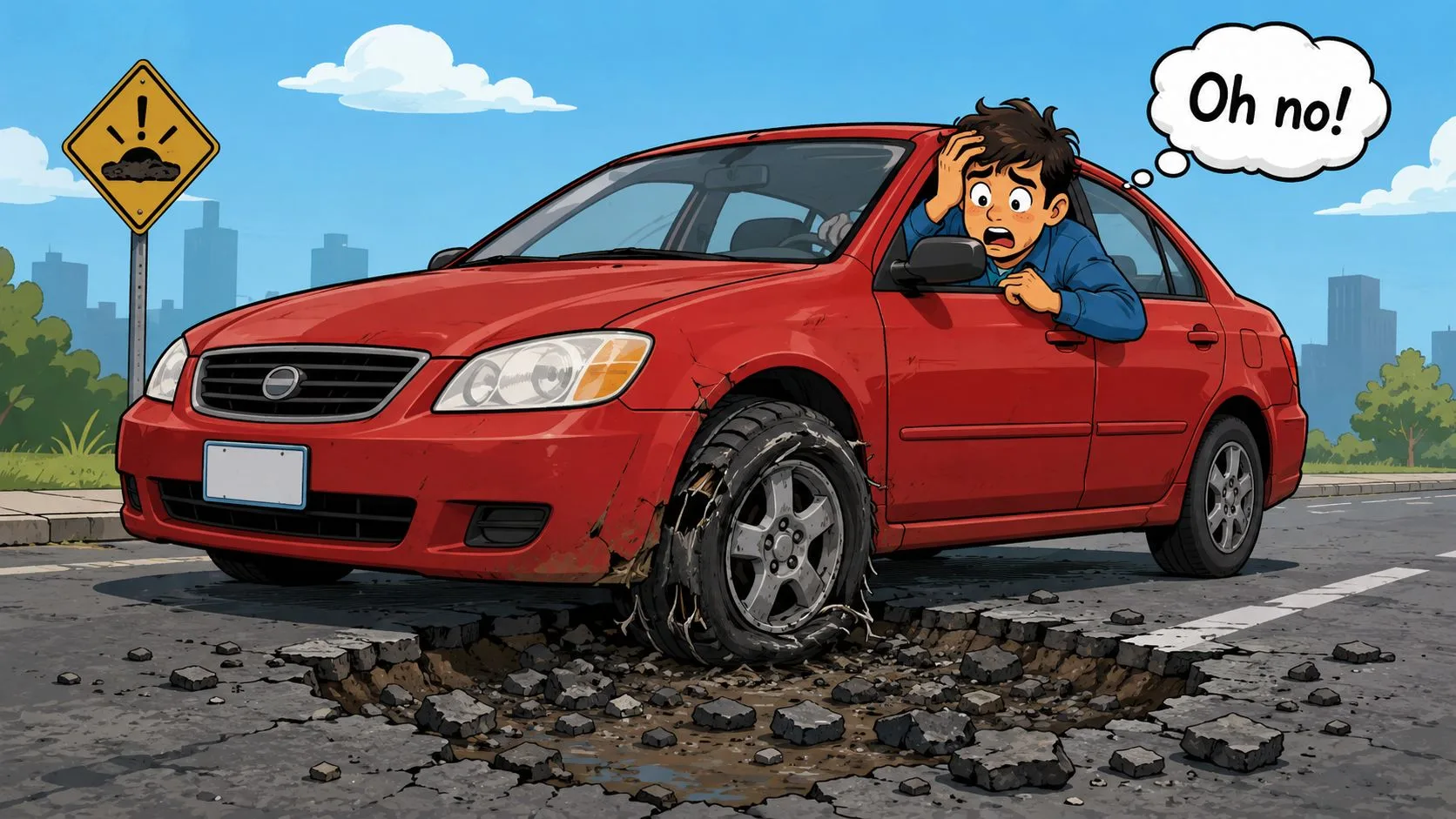
That bang under the car gets your attention fast. One second you’re driving normally. The next, the steering feels off, the tire warning light comes on, and you’re standing on the shoulder wondering whether you’re about to eat a repair bill that should’ve been someone else’s problem.
You’re not overreacting. Pothole damage is common and expensive. In the U.S., AAA-based analysis found that about 10% of drivers had vehicle damage requiring pothole repair in 2021, equal to nearly 24 million drivers, with total damage costs reaching $26.5 billion, or about $1,115 per driver. The same research reported an average pothole repair bill of $600 (AutoInsurance.com pothole damage analysis).
A pothole damage claim usually goes one of two ways. You either file through your own auto insurance, or you pursue the government agency responsible for the road. Both routes can work. Neither is automatic. And both are much easier when you handle the first hour correctly.
Hit a Pothole Here Is Your Immediate Action Plan
You hit the hole. The car shudders. Maybe the tire blows right away. Maybe the wheel seems fine until the vehicle starts pulling a few blocks later. Either way, your first job isn’t arguing with the city in your head. It’s protecting yourself, then preserving your options.
First protect the scene
Get off the travel lane if you can do it safely. Turn on your hazard lights. If the car feels unstable, don’t keep driving just to get home. A bad decision in the next minute can turn a pothole event into a crash.
If you’re shaken up, use the same disciplined mindset you’d use after any road incident. A practical guide on Philadelphia accident immediate steps is useful because the order matters. Safety first, documentation second, reporting third.
Practical rule: If the car doesn’t steer straight, brakes oddly, or sits low on one corner, stop trying to “push through it.”
Know your two claim paths
You generally have two realistic options:
- Use your own insurance: This is often the simpler path if the damage is serious and you carry the right coverage.
- File against the road authority: That could mean a city, county, or state agency, depending on who maintains that road.
Don’t confuse those paths. Insurance asks whether your policy covers the damage. A government pothole damage claim asks whether the agency was legally responsible and whether you can prove it.
The smarter long-term move
Claims are reactive. Driving skill is preventive.
If you want fewer repair bills, fewer roadside surprises, and fewer judgment calls under stress, sharpen your hazard awareness and vehicle care habits. This quick guide to Florida vehicle maintenance basics is a good reminder that road hazards and weak tires, worn suspension, or neglected inspections are a bad combination.
Building Your Case The Moment It Happens
A weak claim starts with weak evidence. If you leave the scene with one blurry photo and a rough memory of the location, don’t expect an easy payout.
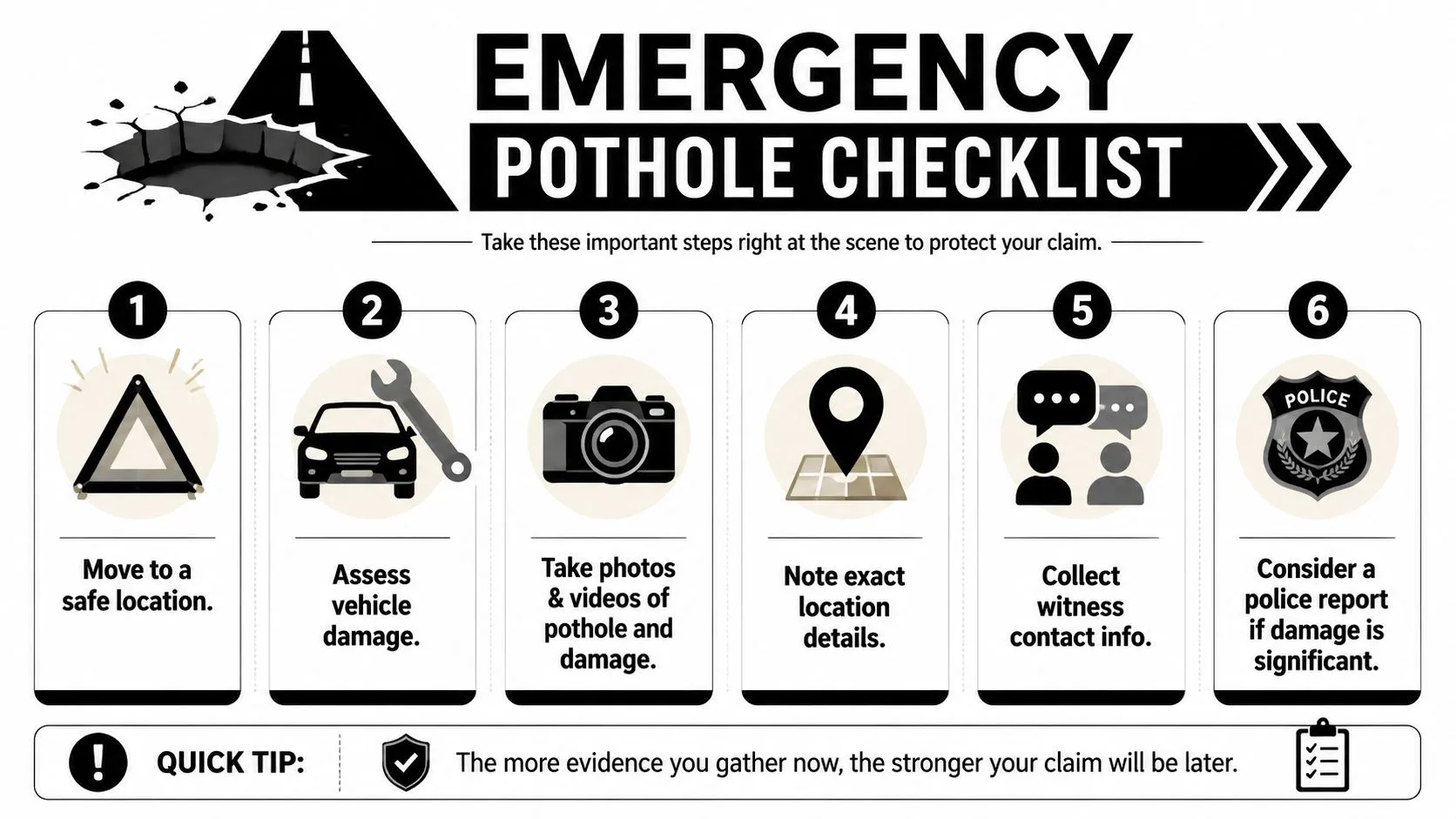
A strong pothole damage claim is built around immediate evidence capture. Close-up photos of the pothole and the vehicle damage matter. Wider shots that show the road context and landmarks matter. The exact date, time, and location matter. Witness contacts and itemized repair estimates also strengthen the link between the road defect and the damage (Select Attorney guide to pothole tire damage claims).
What to document before you leave
Your phone is your claim file. Use it like one.
Photograph the pothole clearly
Get a close-up. Then step back and shoot the full lane, curb, signs, and nearby landmarks.Photograph every visible part of the vehicle damage
Tire, wheel, bumper, undercarriage area if visible, and the dashboard warning lights if they appear.Record the exact location
Save the street name, nearest intersection, lane, direction of travel, and a screenshot of your map if needed.Write down the timing
Log the date and time immediately. Don’t trust memory after the tow truck arrives and the stress sets in.Get witness details if anyone saw it happen
A neutral witness can help if the agency or insurer questions causation.
Here’s a useful visual refresher before you start making calls.
What drivers forget too often
Some pothole hits damage more than the tire. Suspension and steering parts can take the hit, and the symptoms may show up later as vibration, clunking, uneven wear, or wandering steering. If you want a plain-English refresher on what to watch for, this guide to symptoms of bad ball joints is worth reading before you authorize repairs.
Don’t clean up the story. Capture it while it’s messy and fresh. That’s what makes it believable.
After you’ve secured the scene and collected evidence, handle the next steps the same way you’d handle any incident with potential property damage. This checklist on what to do after a car accident helps keep your decisions organized when you’re frustrated and in a hurry.
Filing a Claim With Your Car Insurance
If you carry collision coverage, that’s usually the insurance route that can pay for pothole damage. But filing isn’t always the smart move.
Insurers note that a pothole claim may not be worth filing if the damage is minor because your deductible can outweigh the payout (Progressive explanation of pothole coverage). That’s the part many drivers skip. They focus on whether they can file, not whether they should.
When filing makes sense
Use common sense, not emotion.
A claim usually makes more sense when the damage is clearly above your deductible, the vehicle isn’t safe to drive, or the repair involves more than a simple tire replacement. If the repair estimate barely clears your deductible, filing may create paperwork and hassle for very little practical benefit.
A simple decision filter
Use this checklist before you call:
| Question | Why it matters |
|---|---|
| Do you have collision coverage | Without it, this route may not help |
| Is the repair meaningfully higher than your deductible | A small difference may not justify a claim |
| Is there hidden damage likely | Wheels, alignment, and suspension can raise the total |
| Do you need faster handling | Your insurer may be quicker than a government agency |
If you’re still sorting out fault issues more broadly, it helps to understand how insurers classify incidents. This overview of what a no-fault accident means can clarify how claims get framed and why that matters for your record and expectations.
My advice as an insurance advisor
Don’t file out of anger. File because the math works.
If the damage is limited and your deductible absorbs most of it, paying out of pocket may be cleaner. If the damage is substantial, document everything and report it promptly. Be clear, factual, and specific. “I struck a pothole at this location and the vehicle sustained this damage” is better than a rambling story.
Bottom line: Collision coverage can save you from a painful bill, but a pothole claim isn’t automatically a good financial decision.
Pursuing a Claim Against a Florida Municipality
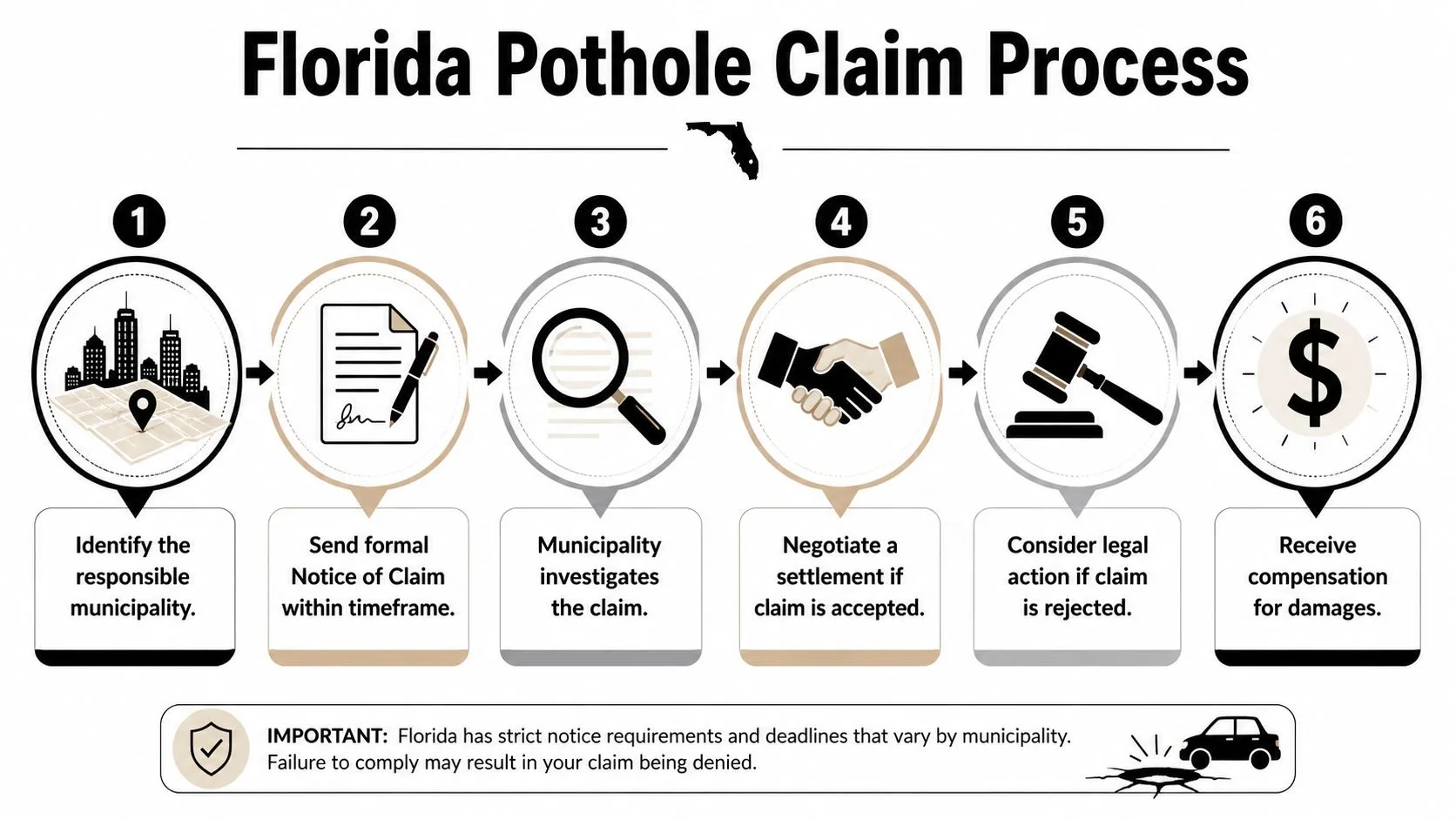
This is the route people talk about the most and misunderstand the most. A government pothole damage claim is not a customer service request. It’s a liability claim, and that means details decide everything.
Start with the road owner. In Florida, that could be a city, a county, or the state depending on where the incident happened. If you file with the wrong entity, you waste time and may miss a deadline.
What you actually have to prove
You don’t win just by showing your tire is ruined.
Successful claims often depend on showing prior notice or constructive notice. In plain English, that means proving the agency knew, or should have known, about the pothole and had a reasonable opportunity to fix it. The claimant also has to connect the road condition to governmental negligence, which is why requesting survey records or records of prior complaints can be so important (Los Angeles Times guide to proving pothole notice).
What to gather for the municipality
A solid submission usually includes:
- Your scene evidence: Photos, video, time, date, exact location
- Vehicle proof: Repair estimate, invoice, and any towing record
- Narrative: A short factual statement of what happened
- Agency-specific forms: Many road authorities publish claim forms online
- Notice evidence: Prior complaints, maintenance logs, or public records if available
The practical approach
Be precise and patient.
Search the city, county, or state website for claims or risk management pages. Read the instructions carefully before you upload anything. Some agencies want photos and estimates immediately. Others have a more rigid process.
Then follow up in writing, not by memory. Keep copies of every submission, every email, and every name. If the municipality asks for additional information, answer directly and fast.
A municipal claim is won on documentation, not outrage.
What to Do When Your Claim Gets Denied
Denial is common. Don’t take it personally, but don’t shrug and drop it either.
Claim outcomes often turn on strict deadlines and notice thresholds, with some jurisdictions requiring submission within 30 days. Comparative negligence can also wreck an otherwise valid claim. One legal guide notes that if a driver is found even 1% at fault, a municipality may pay nothing, which helps explain why many pothole claims get denied (New York City pothole claims guide).
Why denials happen
Most denials fall into a few buckets:
- Late filing: You missed a notice deadline.
- Wrong agency: You filed against the wrong road owner.
- Weak proof: Your photos or records don’t clearly tie the damage to that pothole.
- Fault arguments: The agency claims you were driving too fast, not paying attention, or could’ve avoided it.
Your next move
Read the denial letter carefully. It usually tells you more than people realize.
If the issue is missing documentation, fix that first. If the issue is notice, look for prior complaints, maintenance requests, or local reports that show the pothole existed long enough for the agency to respond. If the amount is modest and the facts are strong, small claims court may be worth considering.
Don’t turn an appeal into a rant. Keep it structured.
- State the denial reason clearly
- Answer that reason with evidence
- Attach your records in a clean order
- Request written reconsideration
A bad first claim can sometimes be rescued by a disciplined appeal. A sloppy appeal usually gets buried.
FAQ and The Shift to Proactive Driving
Those searching for a pothole damage claim want reimbursement. Fair enough. But the better question is how to avoid needing one again.
In the UK, the RAC recorded 53,015 pothole compensation claims submitted to local authorities in 2024, up from 27,731 in 2021, a 91% increase in three years (RAC pothole index statistics and projections). That’s not a Florida statistic, but it does show the wider pattern. Pothole damage is a growing and expensive problem, and prevention has real financial value.
Quick answers drivers actually need
What damage can a pothole cause?
Tires and wheels are the obvious ones. Suspension, alignment, and steering components can also be affected.
Should you file if the repair is below your deductible?
Usually no. If insurance won’t pay meaningfully more than your deductible, paying out of pocket is often cleaner.
Can you file with insurance and also explore a government claim?
Possibly, depending on the situation and policy handling. Keep your records straight and ask your insurer how they want the loss documented.
What’s the most important thing after the impact?
Safe stop, immediate photos, exact location, and repair documentation.
Why better driving matters more than better paperwork
A perfect claim still costs you time. It may cost you a deductible, a denied reimbursement, a tow, a missed workday, or weeks of follow-up.
Defensive driving reduces those risks before the impact happens. Better scanning, smarter following distance, smoother speed control, and stronger hazard recognition give you more time to spot rough pavement, avoid lane-edge traps, and choose the safest line. If you want a practical refresher, these defensive driving techniques are the habits that save drivers money long before any claim form appears.
If you’re serious about lowering your long-term driving costs, stop treating driver education as something you do only after a ticket. The best drivers don’t just know the rules. They spot trouble early, protect their vehicle, and avoid preventable losses.
If you want a practical way to become a safer, more alert, and more cost-conscious driver, take a course with BDISchool. Their Florida-approved online programs are built for real drivers, including Basic Driver Improvement, Intermediate Driver Improvement, aggressive driver education, and mature driver refreshers. They’re self-paced, available in multiple languages, and designed to help you protect your record, strengthen defensive driving habits, and put yourself in a better position to avoid the next pothole, claim, and repair bill.