You’re driving in the right lane on I-95. Ahead, you spot flashing lights on the shoulder. Maybe it’s a trooper on a traffic stop. Maybe it’s a tow truck. Maybe it’s a family with hazards on, standing beside a disabled car.
That moment matters more than many drivers realize.
A lot of tickets happen because people hesitate, guess wrong, or think the rule only applies to police cars. The Move Over law in Florida is broader than that, and since the law expanded at the start of 2024, the safest response is also the simplest one. Create space if you can. Slow down if you can’t.
If you’ve already gotten a citation, you’re not alone. If you haven’t, this is the kind of rule worth learning before one split-second decision turns into points, fines, and a harder conversation with your insurer. For many drivers, a structured Florida traffic safety course for all drivers is the easiest way to turn a confusing rule into a repeatable habit.
Why the Move Over Law Is a Life or Death Matter
You see lights on the shoulder. Traffic is moving fast. A car is half in the breakdown lane, half near the fog line. Someone is outside the vehicle.
That’s the danger zone.
Florida didn’t expand this rule just to make drivers more careful in theory. Failing to follow Florida’s Move Over law has been linked to more than 1,700 crashes, 128 serious injuries, and 8 deaths in the state, which is one reason the law was expanded in 2024.
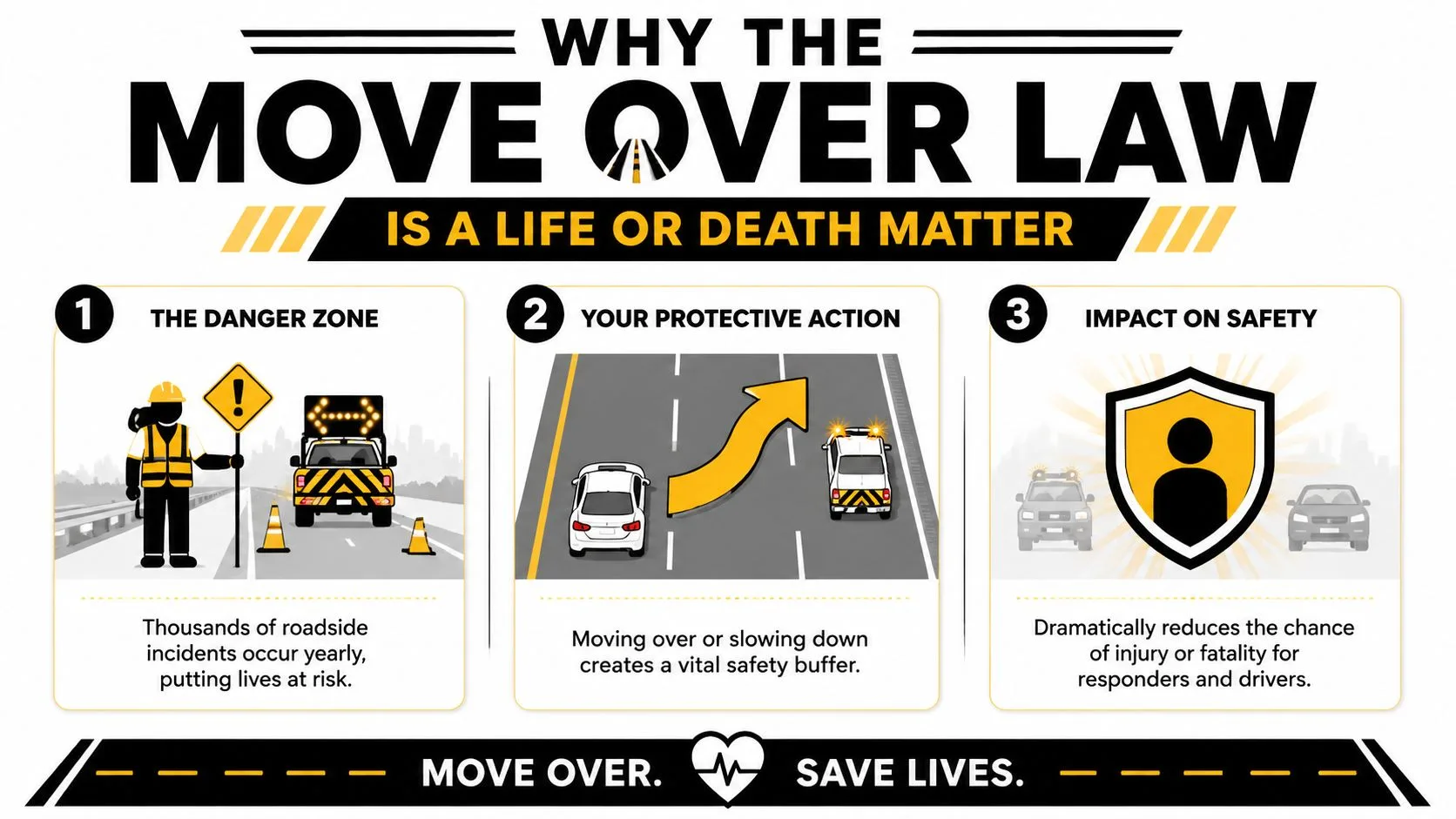
Why roadside stops are so dangerous
A stopped vehicle on the shoulder looks stationary and predictable. It isn’t.
Drivers passing at highway speed create wind force, noise, panic, and almost no margin for error. A roadside worker, tow operator, police officer, or stranded driver only needs one passing car to drift a little too close.
Practical rule: If someone is stopped at the roadside, your job is to increase the safety buffer before you reach them, not after you pass them.
That’s why the Move Over law in Florida is a safety rule first and a ticket rule second. It exists to reduce the chance of a side-swipe, mirror strike, panic swerve, or high-speed near miss at the exact point where people are most exposed.
The law protects more than first responders
Many drivers still think this rule means “move over for police.” That’s outdated.
The law now reaches beyond emergency scenes to roadside situations regular drivers see every week, including disabled vehicles under certain conditions. That change matters because plenty of serious roadside risks don’t involve a marked patrol car at all.
A driver changing a tire, a tow crew hooking up a vehicle, or a utility worker stopped near traffic all face the same basic threat. Passing traffic stays fast. Space disappears. A small mistake becomes a catastrophic one.
The move over decision happens in seconds. Drivers who know the rule ahead of time react earlier, signal sooner, and make smoother lane changes.
What Florida’s Move Over Law Now Requires
The easiest way to understand the move over law Florida drivers face is to think of it as a decision rule.
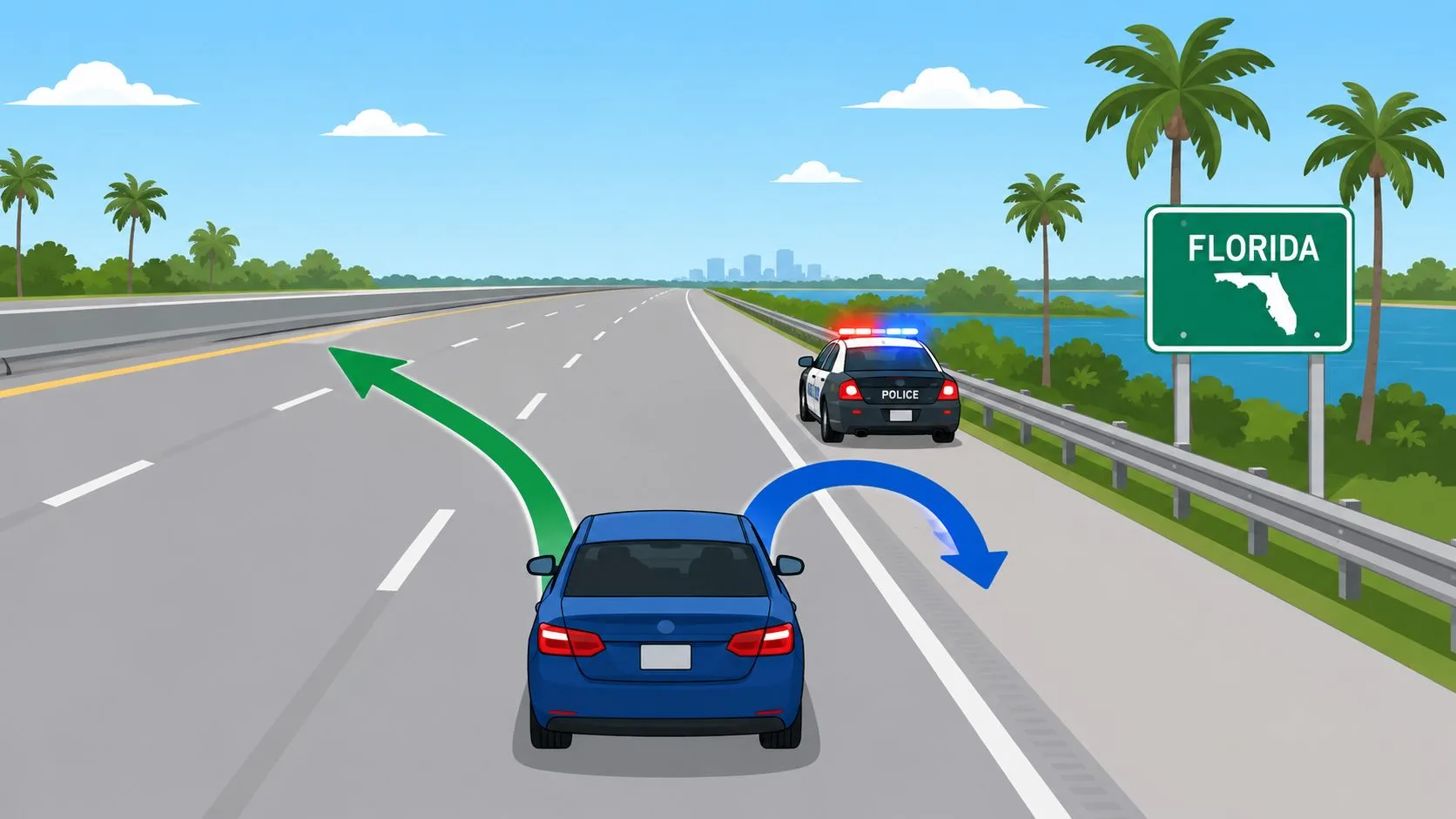
First, ask yourself whether you can safely leave the lane closest to the stopped vehicle. If yes, move over. If no, you must slow down according to the statute.
For drivers who want a quick refresher on emergency-scene driving, this guide to Florida emergency vehicle rules helps connect the Move Over rule with other roadway duties drivers often mix up.
Which vehicles trigger the law
The 2024 update expanded protection to disabled vehicles displaying warning lights or hazard lights, using flares or emergency signage, or involving one or more visibly present persons, as explained by Florida traffic safety guidance on moving over or slowing down.
That means the law is no longer limited to official responder vehicles in the way many people assume.
A practical checklist looks like this:
- Emergency vehicles: Police, fire, EMS, and similar responders stopped roadside.
- Service and work vehicles: Sanitation, utility, wreckers, maintenance, and road work vehicles when stopped in qualifying roadside situations.
- Disabled vehicles: A stranded vehicle with active hazard cues or visible roadside presence now matters too.
The two-part rule in plain English
Florida’s statute works like a two-trigger control rule.
- Trigger one: On a multi-lane road, leave the lane closest to the stopped vehicle when it’s safe to do so.
- Trigger two: If changing lanes isn’t safe, reduce speed as the law requires.
It removes the old excuse that moving over was just a courtesy. Florida law treats it as a measurable driving action. Either you created space by changing lanes, or you reduced risk by slowing down.
A safe lane change is required only when it’s actually safe. Drivers don’t have to force their way into another lane. They do have to take the lawful fallback seriously.
A short visual explanation can help if you’re more of a watch-and-learn driver:
Where drivers get confused
Most confusion comes from three mistakes.
| Common mistake | What the driver assumes | What the law expects |
|---|---|---|
| Only police cars count | “This doesn’t apply to a stranded driver” | Disabled vehicles can trigger the rule under the updated law |
| Moving over is optional | “I’ll stay in my lane if I’m careful” | You must move over when safe, or slow down if it isn’t |
| Slowing a little is enough | “I tapped the brakes” | The fallback is a specific speed reduction rule, not a vague gesture |
If you remember one sentence, remember this one. Move over when safe. Slow down when it’s not.
The Real Cost of a Move Over Violation
A Move Over ticket isn’t just an annoying roadside citation. It can follow you after the stop is over.
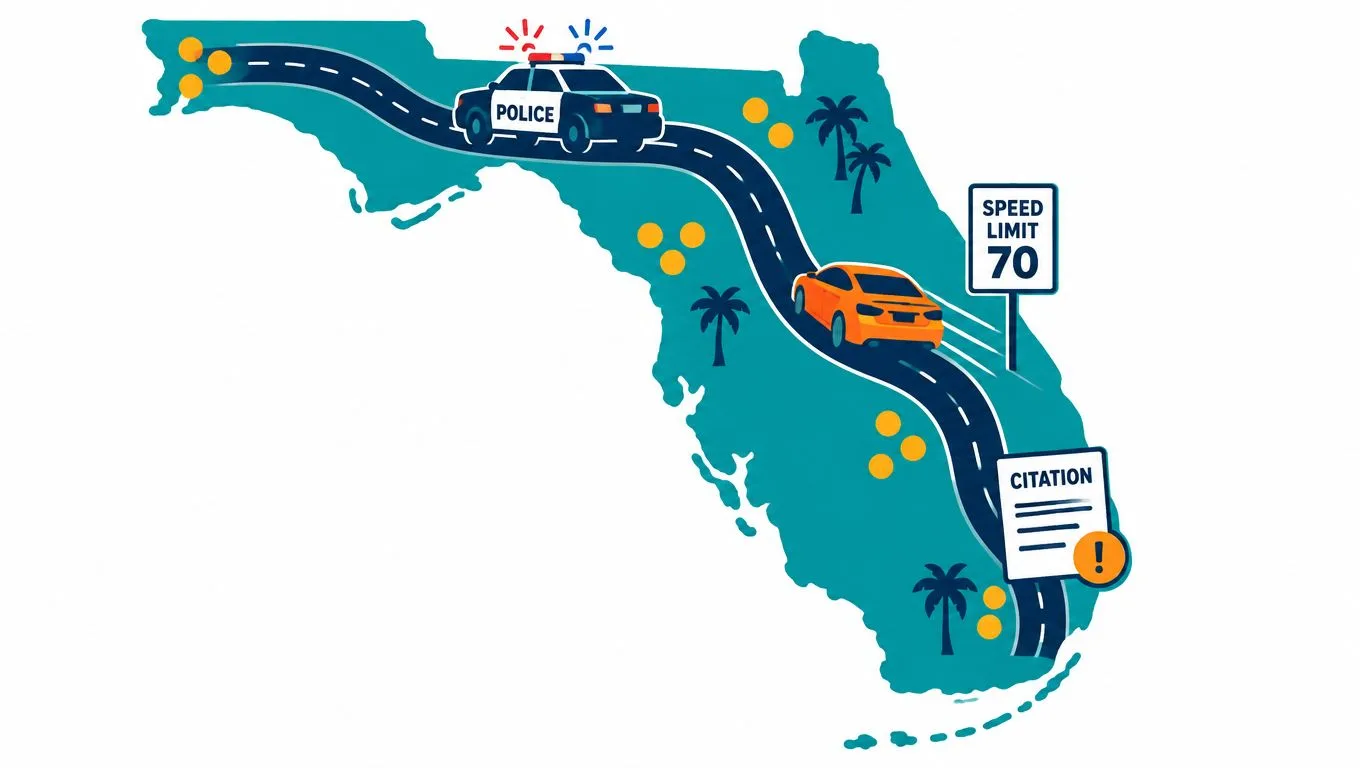
In 2022, Florida recorded more than 14,000 citations for Move Over violations, and a typical violation can cost about $158 and add 3 points to your license, according to most Florida citation and point-system overviews.
Why the points matter more than the fine
Most drivers focus on the ticket amount first. That’s understandable. But the license impact often matters more.
Those 3 points are not isolated. They stack with other moving violations already on your record. And because 12 points in 12 months can trigger a 30-day suspension, one Move Over ticket can become part of a much larger problem for someone who’s already had a rough year behind the wheel, as noted in that same Florida point-system explanation.
License reality: A single ticket feels manageable until it lands on a record that already has points on it.
The hidden cost drivers feel later
The fine is immediate. The pressure on your record lasts longer.
A moving violation can affect how you think about every future stop, every renewal notice, and every employer request for a clean driving history. Many drivers also worry about insurance consequences after points appear, even when they didn’t realize how serious the citation was at the moment they received it.
That’s what makes Move Over violations different from the way some people treat them. This isn’t a harmless technicality. It’s a safety offense tied to roadside risk.
Why waiting is usually the expensive choice
Some drivers put the ticket in a drawer and deal with it later. That’s rarely the smart move.
If a citation opens the door to points, insurance concerns, or court requirements, your best next step is usually educational and immediate. A state-approved traffic course can help many drivers respond in a structured way instead of hoping the violation won’t affect them much.
That approach doesn’t erase the seriousness of the rule. It shows that you’re treating the violation the way Florida does. As a real driving-safety issue, not just paperwork.
How to Comply in Real World Driving Scenarios
Most drivers don’t struggle with the idea of the law. They struggle with the timing.
You’re approaching a stopped vehicle. Cars are around you. You have seconds to decide. That’s why it helps to use a simple mental sequence instead of trying to remember legal language under pressure.
A five-step roadside decision process
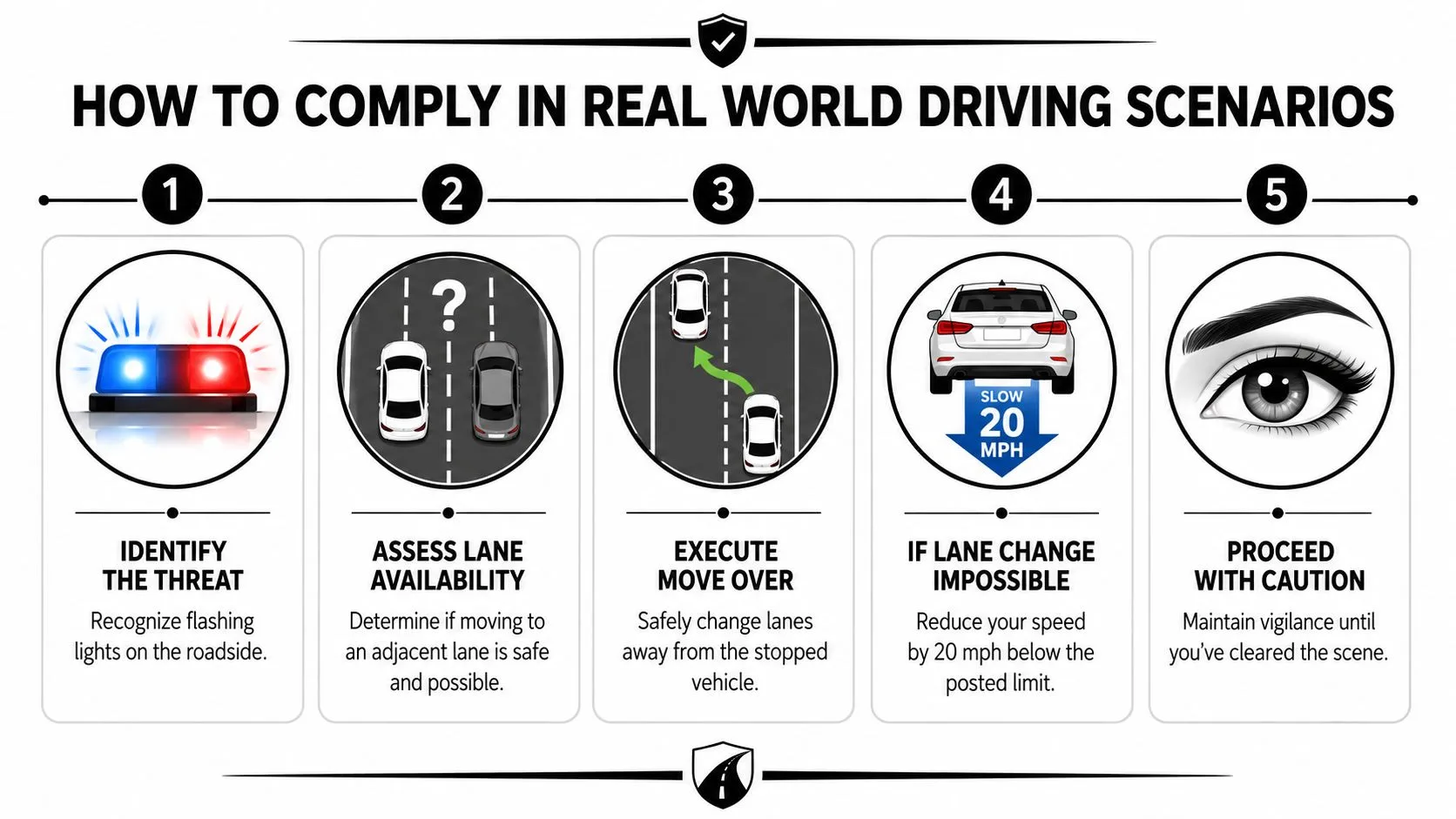
Use this pattern every time:
- Spot the roadside hazard early. Look ahead for flashing lights, hazard lights, flares, signage, or people near a stopped vehicle.
- Check your lane options. Is there an adjacent lane open enough for a smooth, legal lane change?
- Signal early and move over if safe. Don’t make a sudden last-second swerve.
- If you can’t move over, reduce speed as required. This is the legal fallback, not a backup suggestion.
- Stay focused until fully past the scene. Many drivers relax too soon while still next to the hazard area.
What to do on different road types
Florida’s guidance is specific here. On multi-lane roads, if a lane change is unsafe, drivers must slow to 20 mph below the speed limit. On two-lane roads, or roads with a posted speed limit of 20 mph or less, drivers must slow to 5 mph, according to municipal guidance explaining Florida’s Move Over rule.
That creates a practical split:
| Road situation | Best response |
|---|---|
| Multi-lane highway with room to merge | Move one lane away from the stopped vehicle |
| Multi-lane highway with heavy traffic | Stay out of danger, then slow to 20 mph below the posted limit |
| Two-lane road | Slow as required and proceed cautiously |
| Very low-speed road posted at 20 mph or less | Slow to 5 mph and pass carefully |
If traffic is too dense to change lanes safely, don’t force it. Slow down lawfully and keep a steady path.
Common real-world examples
A few examples make this easier to remember.
Example one. You’re on a three-lane highway. A tow truck is on the right shoulder with lights active. The center lane is open. Move left one lane, signal, and pass with space.
Example two. You’re boxed in on a busy expressway. There’s a disabled car with hazards on the shoulder, but vehicles in the next lane are tight and fast. Don’t jerk the wheel. Slow down according to the rule and continue cautiously.
Example three. You’re on a two-lane suburban road. A utility van is stopped ahead with workers nearby. You can’t “move over” into an extra lane because there isn’t one. Your legal tool is speed reduction and careful passing.
The key is consistency. Drivers who rehearse the rule mentally before they need it make better choices when the moment arrives.
Protect Your Record After a Move Over Ticket
If you already received a citation, deal with it quickly.
A Move Over ticket can become more expensive the longer you wait, especially if you’re already thinking about points, your driving record, or possible insurance consequences. Taking a Florida-approved course is often the practical next move for drivers who want to respond responsibly instead of letting the violation sit unresolved.
Why a course can be the smart response
A basic driver improvement course is often used by drivers who received a moving violation and want to protect their record. It can also help you understand the exact kind of roadside judgment call that caused the citation in the first place.
That matters because the goal isn’t only administrative. It’s behavioral. A good course turns vague rules into repeatable habits you can use on the road.
If you’re sorting out next steps after a citation, this guide on how to dismiss a traffic ticket in Florida gives a clearer picture of what drivers often do to limit the damage.
Think beyond the ticket itself
Many drivers focus only on court costs or the fine. That’s too narrow.
Your bigger concern may be what the violation does to your driving history and what happens after that. For readers trying to understand how insurers sometimes treat smaller violations, this explanation of auto insurance violation forgiveness adds useful context.
A course can fit into that broader strategy. Learn the rule. Address the citation properly. Avoid repeating the mistake.
What to look for in an online option
If you’re choosing a course, keep it simple:
- State approval matters: Make sure it satisfies Florida requirements.
- Self-paced access helps: Busy drivers usually need to start and stop on their own schedule.
- Clear instruction matters more than flashy design: You want examples, road scenarios, and direct explanations.
- Language access can make a difference: Some drivers learn better in Spanish or Portuguese.
One available option is BDISchool, which offers Florida-approved online courses for drivers handling moving violations, point concerns, and related court or record issues. The value is straightforward. It gives drivers a structured way to respond and a better understanding of traffic rules that are easy to underestimate until a ticket happens.
Florida Move Over Law FAQ
Does the law only apply to police cars
No. Florida treats it as a broader roadside-safety rule. Covered situations can include emergency, service, work, and qualifying disabled vehicles, not just law enforcement stops.
What if I want to move over but traffic won’t let me
You are not required to make an unsafe lane change. Florida’s statute uses a two-trigger rule. Drivers must first attempt to vacate the lane closest to the stopped vehicle, and if that is unsafe, the fallback is a mandatory speed reduction under Florida Statute 316.126.
Safe compliance doesn’t mean a panicked maneuver. It means making the correct choice the law allows under actual traffic conditions.
What does “safe to move over” really mean
It means you can change lanes without creating another hazard.
If another vehicle is occupying your blind spot, closing too quickly, or preventing a smooth lane change, don’t force it. Use the slowdown requirement instead.
Does the rule apply on two-lane roads
Yes. On roads without an extra lane to move into, the law still applies. Your compliance comes through slowing and passing cautiously.
Does it matter if someone is standing outside the disabled vehicle
Yes, roadside presence matters. If you see a stopped vehicle with visible people nearby, treat the scene as one that requires extra space and immediate caution.
What if the vehicle is on the shoulder or near the median
The safest habit is to respond to the roadside hazard early, assess where the stopped vehicle is, and create as much space as the roadway safely allows. Drivers get into trouble when they focus on labels and wait too long to act.
Is slowing down “a little” enough
No. The rule isn’t satisfied by vague caution. It requires either a safe lane change or the mandated speed reduction, depending on the road and traffic conditions.
Why do so many drivers still get this wrong
Because the rule arrives fast in real traffic. Drivers freeze, underestimate the risk, or assume the law applies to fewer vehicles than it does. That’s exactly why formal review helps. When you study these scenarios in a course, your response becomes automatic instead of hesitant.
If you got a Move Over ticket, or if you want to avoid one by learning Florida’s rules the right way, a Florida-approved online course through BDISchool is a practical next step. It gives you a structured review of current traffic laws, defensive driving decisions, and the point-related issues that can affect your license, all in a format you can complete on your own schedule.