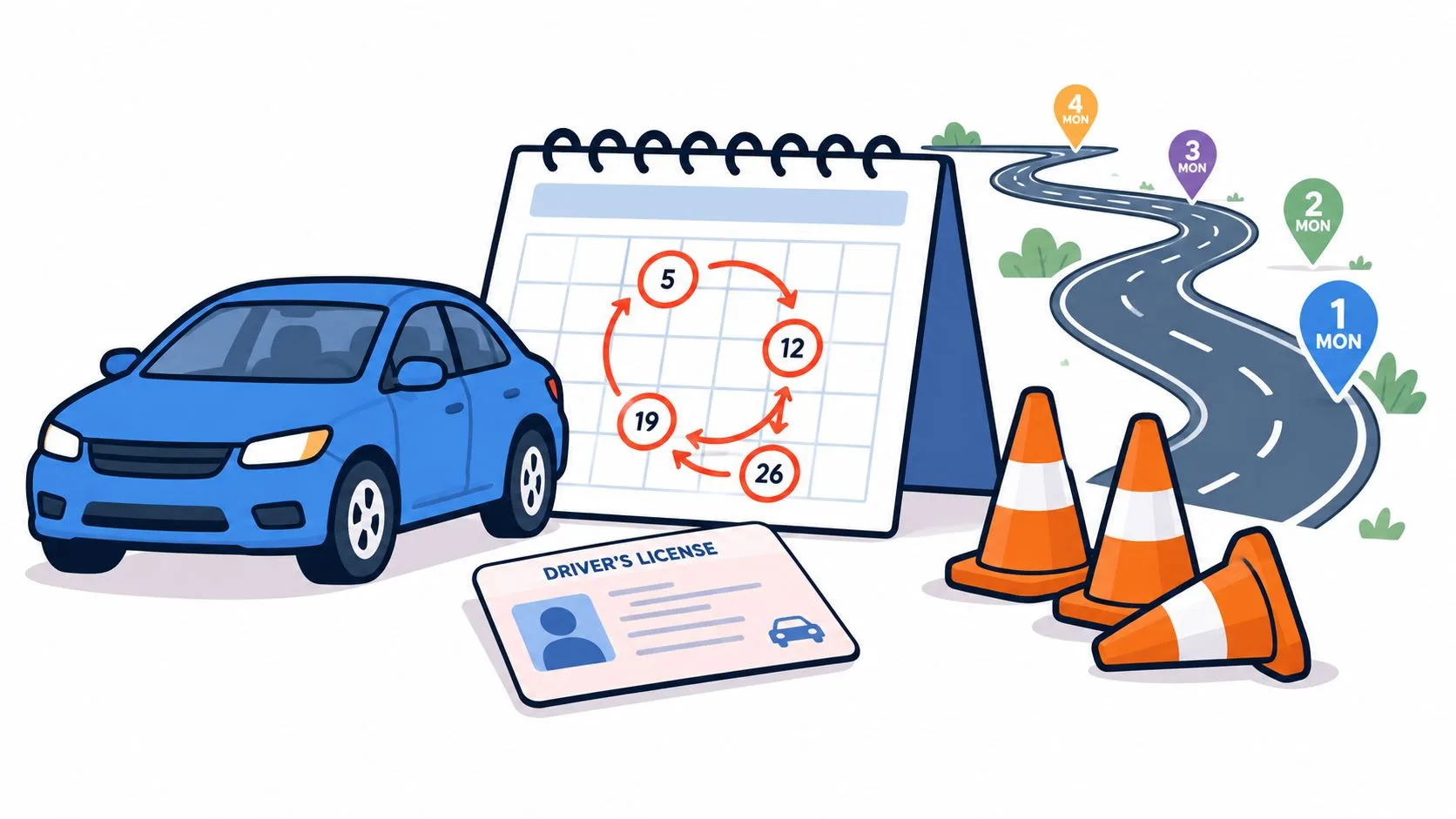
Florida suspends a license at 12 points in 12 months (up to 30 days), 18 points in 18 months (up to 3 months), and 24 points in 36 months (up to 1 year), and points stay on the record for at least five years. But an eligible driver can elect an FLHSMV-approved Basic Driver Improvement course within 30 days of the citation to keep those points from being assessed.
You may be looking at a fresh ticket between work appointments, wondering whether to pay it and deal with traffic school later. Don't pay first and assume you can fix the points afterward. Your immediate job is to confirm your election options with the clerk before taking an action that closes them.
What FL Points on License Really Mean
A new citation isn't just a bill. If you already have moving violations on your record, you need to consider the new ticket alongside those earlier violations before deciding how to handle it.
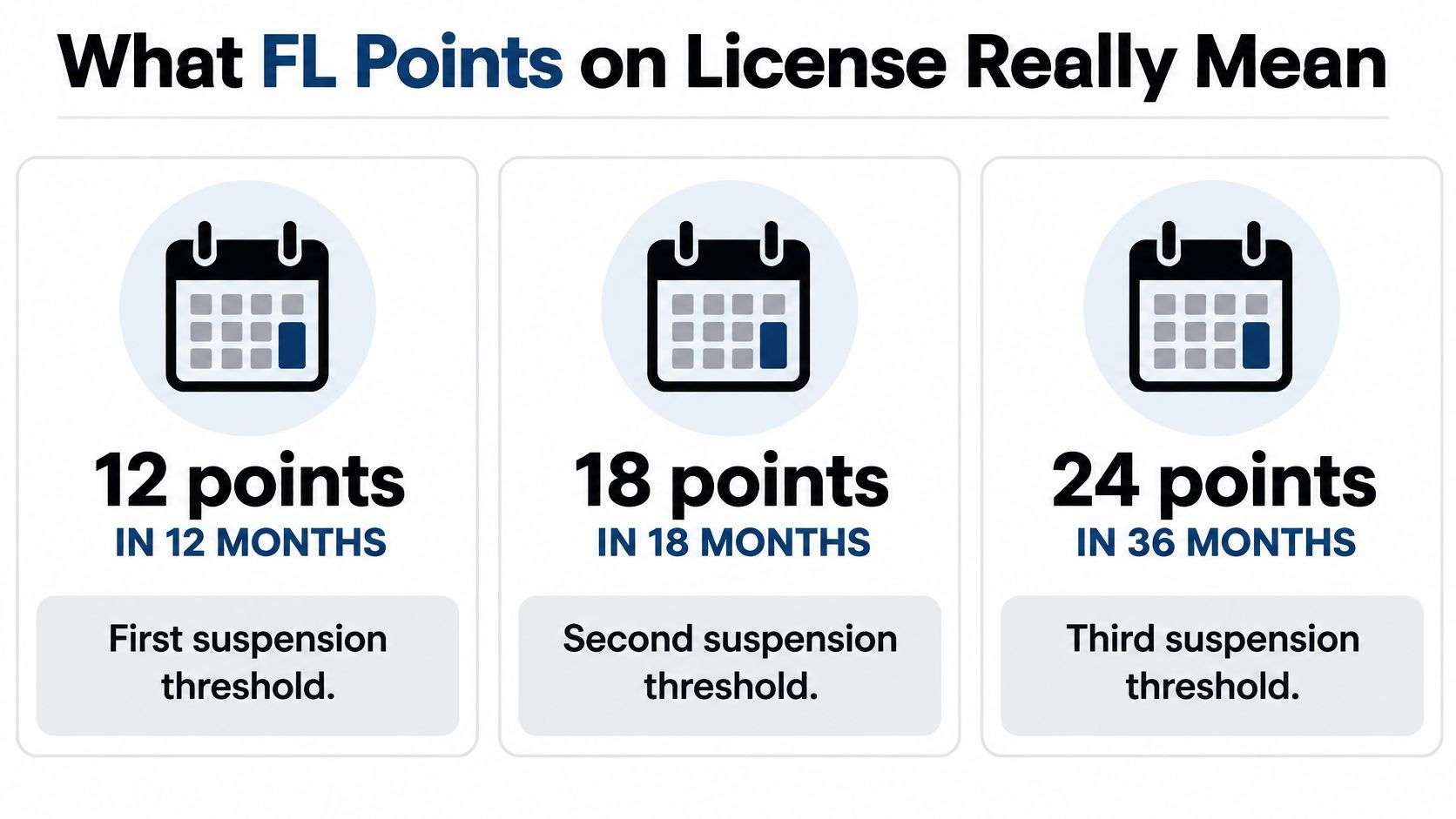
Florida evaluates accumulated points across rolling periods. Under Florida Statutes section 322.27, the suspension thresholds are:
| Points accumulated | Rolling period | Potential suspension |
|---|---|---|
| 12 points | 12 months | Up to 30 days |
| 18 points | 18 months | Up to 3 months |
| 24 points | 36 months | Up to 1 year |
The same statute includes points involved in an earlier suspension when evaluating the next accumulation threshold. Serving a suspension doesn't mean you should treat your record as a clean slate.
Start with your actual record
Don't estimate your point total from memory. Use this guide to check points on your Florida license, then verify your current record and license status directly with the Florida Department of Highway Safety and Motor Vehicles, or FLHSMV.
That matters even when the newest ticket seems minor. Several lower-level moving violations close together can create a suspension problem that no individual ticket would have created alone.
Practical rule: Make your decision using your driving record and the citation deadline, not just the amount printed on the ticket.
The point-prevention option is time-sensitive. An eligible driver must elect an approved Basic Driver Improvement course, usually called BDI, within 30 days of the citation, following the FLHSMV election requirements.
My recommendation is straightforward: check eligibility immediately. Don't wait until you've found a convenient evening for the course to find out whether you can still elect it.
How Points Accumulate on Your Florida Record
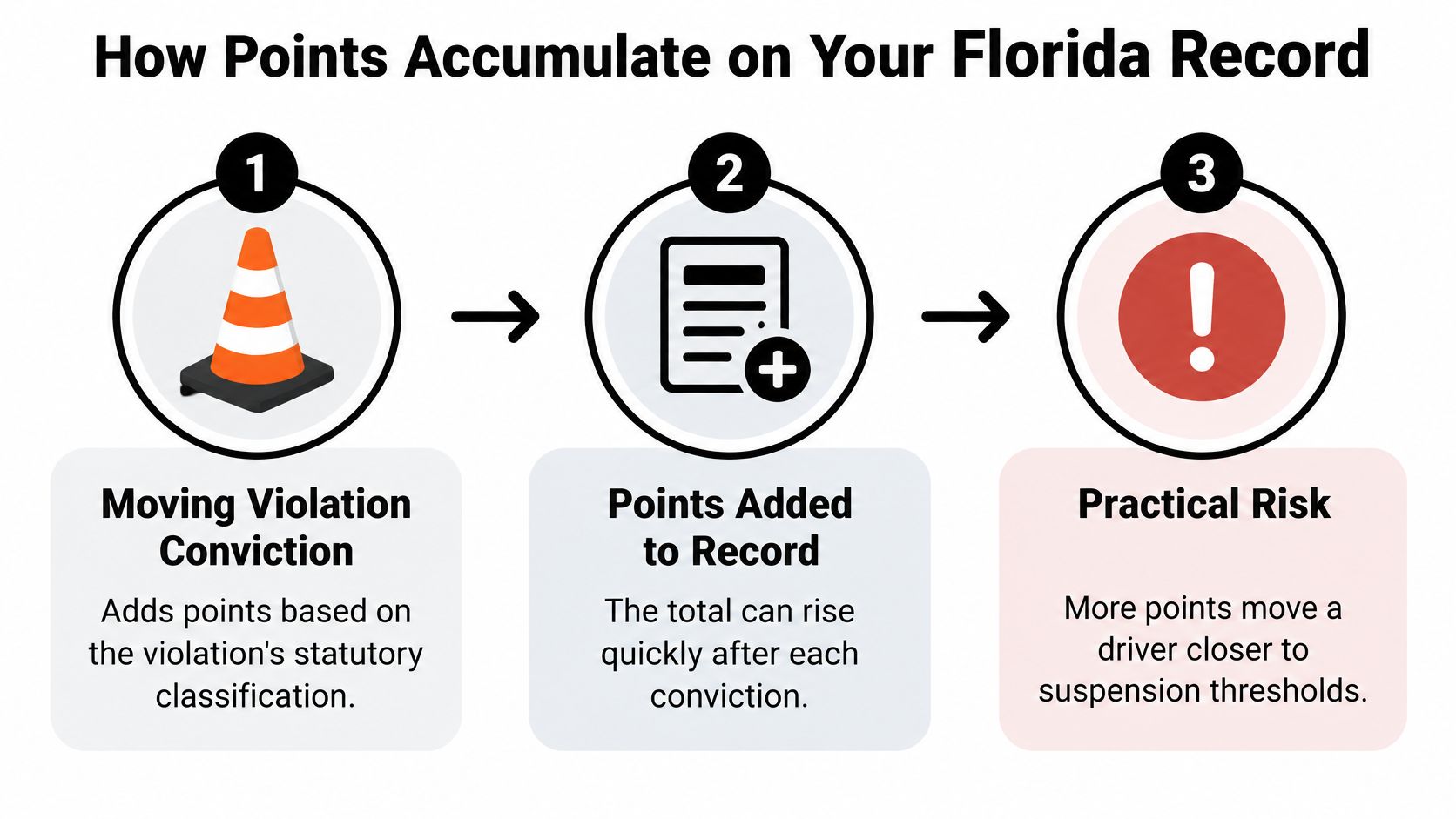
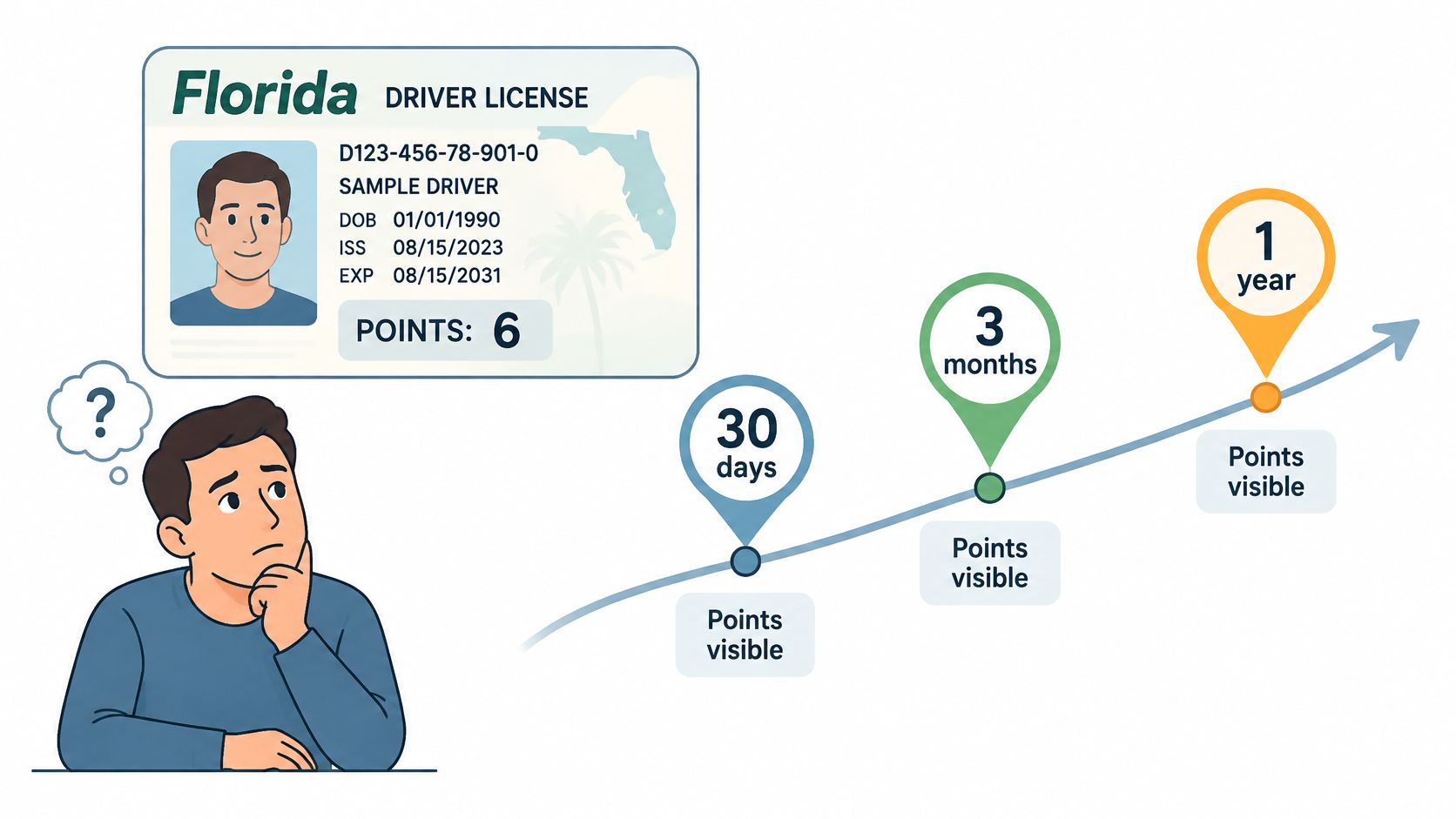
A moving-violation conviction generally adds points according to the violation's statutory classification. Florida's statutory point-system provisions also establish that points remain on the record for at least five years from the disposition date.
Those are different issues: whether points fall within an accumulation window and whether they remain visible on your record. Don't confuse the end of a suspension-calculation period with the disappearance of your driving history.
Review the dates, not just the total
Think of a driver who resolves an earlier moving violation and then receives another citation months later. The important question isn't how many points the newest violation carries.
The driver needs to know whether the earlier violation falls within a relevant accumulation period. If it does, treating the newest ticket as an isolated expense understates the risk.
Use this review process before making your election decision:
- Identify each citation: Match the violation to its disposition and any points assessed.
- Compare the timing: Review the relevant dates across the rolling periods, rather than grouping tickets only by calendar year.
- Resolve discrepancies: Ask the clerk about the citation's disposition and FLHSMV about your driving record.
- Keep documentation: Save election confirmations, payment receipts, and completion records together.
A useful working habit is to maintain a citation folder instead of scattered screenshots. That makes it easier to explain a discrepancy without relying on memory.
Keep state-specific advice separate
Don't apply another state's point rules to a Florida citation. The Law Offices of Attorney Angel Lugo offers a separate resource for drivers trying to avoid a Connecticut license suspension; use that for Connecticut questions, not as a substitute for Florida guidance.
For your Florida record, focus on what FLHSMV shows and what the issuing county requires. A course advertisement, a friend's experience, or an old ticket receipt isn't enough to confirm your current position.
What Points Cost You Beyond the Ticket
The ticket amount is only the immediate expense. A point suspension can also force you to rearrange work travel, school pickups, medical appointments, and ordinary household errands.
FLHSMV's points and point-suspensions guidance confirms that suspension consequences escalate as accumulation increases. That makes avoiding eligible points a practical transportation decision, not just a paperwork preference.
Separate license consequences from insurance questions
Insurers review driving records, and a record carrying violations can affect premiums. The effect depends on your carrier and policy, so don't accept a universal premium-increase estimate or assume a course guarantees that your price won't change.
Use the guide to insurance rate increases after a ticket to prepare for that conversation. Then ask your insurer how it treats your particular citation and a properly completed BDI election.
- Ask about the violation: Will the citation affect your policy if adjudication is withheld?
- Ask about timing: When would any policy change appear?
- Ask about documentation: Does the insurer need your completion certificate or updated record?
Keep the insurer's response with your citation paperwork. That gives you something concrete to reference if your renewal raises questions.
Don't budget around a promised insurance saving. Protect your election option first, then confirm the policy consequences with your insurer.
Count the inconvenience honestly
Consider who would handle your commute or family driving if you couldn't drive. You don't need an invented dollar estimate to recognize the disruption.
My advice is to compare the work required to complete the election with the disruption you're trying to avoid. A clerk call, an approved course, and properly submitted proof deserve attention before the ticket becomes a larger problem.
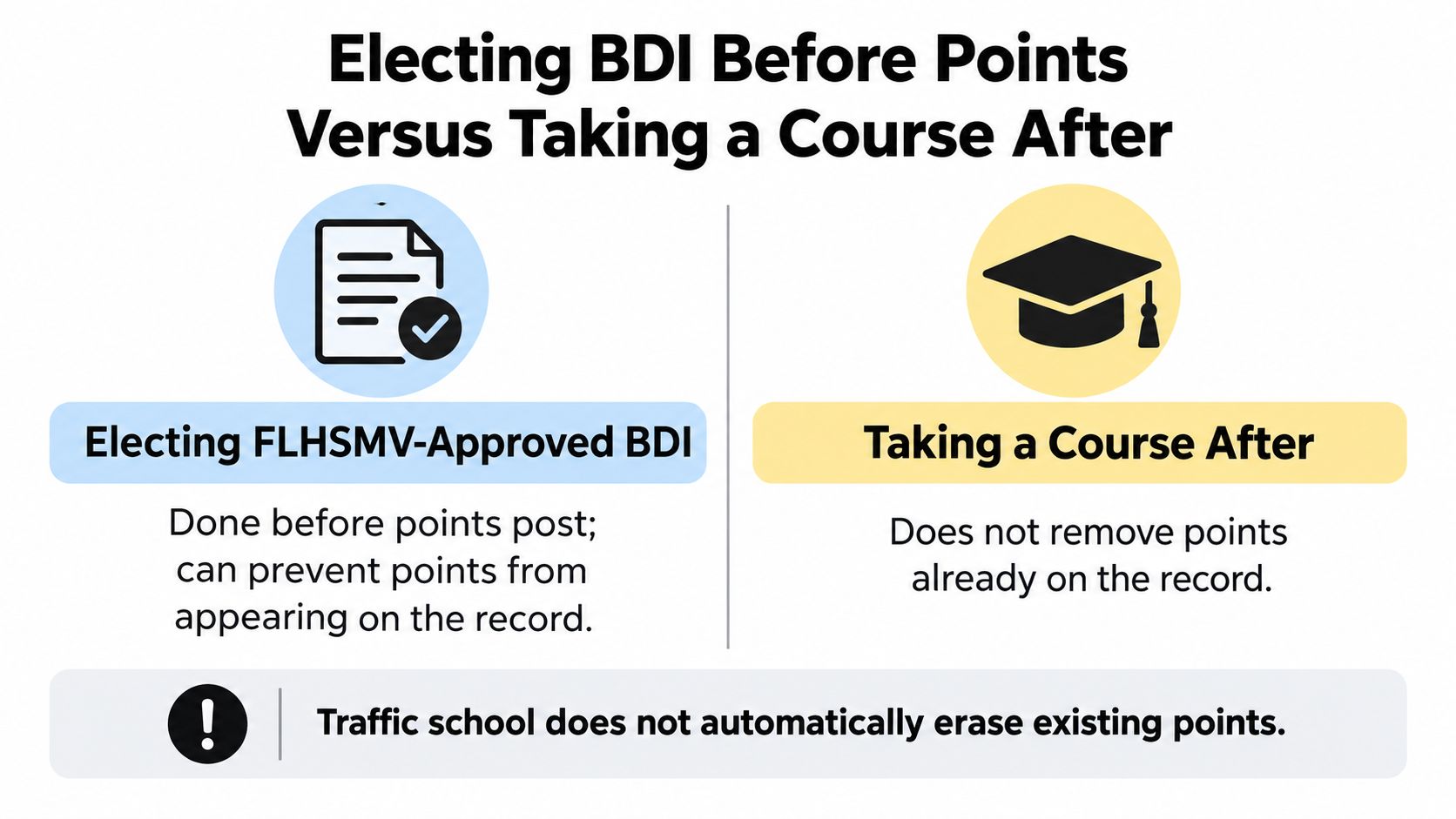
Electing BDI Before Points Versus Taking a Course After
BDI prevents eligible points; it doesn't automatically erase existing points. FLHSMV's driver-education course guidance distinguishes elective BDI from Advanced Driver Improvement, or ADI, which applies to certain point-suspension situations.
That distinction should determine what you register for. Don't buy an ordinary traffic-school course because its title sounds close to the requirement on your notice.
Use this comparison to separate prevention from post-suspension compliance.
Match the course to your situation
| Your situation | Recommended action |
|---|---|
| Recent eligible noncriminal moving citation | Confirm the BDI election with the issuing county clerk |
| Points already assessed | Don't assume voluntary BDI enrollment removes them |
| Point-suspension notice | Ask FLHSMV whether ADI applies and confirm the remaining requirements |
| Specific court order | Follow the course named in that order |
Your prior elections also matter. Check how often you can take traffic school before assuming you're eligible again.
Understand the case sequence
Think in terms of citation, election, adjudication, course completion, court reporting, and record update. These are separate parts of the process, not different names for finishing a class.
For an eligible violation handled through the proper driver-improvement process, adjudication is withheld, meaning you're not convicted of that violation and no points are assessed. The FLHSMV driver-improvement FAQ explains that benefit and the requirement to present completion documentation.
Keep the distinction between course completion and case handling in mind when watching this explanation.
If you've already received a suspension notice, address that notice directly. Completing a course without confirming why it is required can leave the actual license-status issue unresolved.
The 30-Day Election Sequence That Keeps Points Off
A course alone does not keep points off your record. You need to elect traffic school through the county handling your citation, meet the court's requirements, and submit proof of completion on time.
Under FLHSMV's traffic-school election guidance, a Class E driver may elect traffic school once in any 12-month period and no more than five times in a lifetime. Contact the clerk in the county where the citation was issued before enrolling. A course registration or payment receipt does not confirm that the clerk accepted your election.
Follow the order that protects the election
- Confirm eligibility with the clerk. Have your citation ready. Ask whether the violation qualifies and whether your prior elections leave you eligible.
- Make the election before enrolling. Use the clerk's accepted process and save confirmation that your election was received.
- Confirm and pay the required amounts. Ask about the election fee, citation payment, and any court costs. The course price may not cover court charges.
- Enroll in an FLHSMV-approved course. Choose the course that matches the accepted election or a specific court requirement.
- Complete the course and submit proof by the deadline. Follow the clerk's instructions for completion and certificate delivery.
The election deadline and course-completion deadline are separate. Record both, because meeting one does not satisfy the other.
Get the court's dates in writing
Ask the clerk to confirm the completion deadline and how to submit your certificate. Save the instructions, then set reminders early enough to resolve a missing certificate, upload issue, or rejected submission.
Keep this distinction clear: The school's fee pays for instruction. The clerk's requirements determine whether you have completed the citation process.
Before you finish the course, check that you have:
- Election confirmation: Saved with the citation.
- Payment receipts: Court payments and course payment identified separately.
- Completion deadline: Recorded from the clerk's instructions.
- Proof instructions: Submission destination and acceptance requirements confirmed.
Handle these administrative steps before starting lessons. The sequence, especially the accepted election and proof reaching the court by its deadline, is what protects your record.
Choosing a Florida BDI Course That Fits Your Schedule
Choose the course your citation requires, then compare convenience. A flexible schedule matters, but it won't help if you enroll in the wrong program or misunderstand who receives the certificate.
Start with FLHSMV approval, the course category, available languages, and the reporting process. Ask specifically whether electronic reporting reaches the state, the court, or both.
Compare the course purpose before the price
BDISchool's course catalog is one option alongside DriverEducators' available courses. The published course options include:
| Course | Intended use |
|---|---|
| 4-hour Basic Driver Improvement | Drivers handling an eligible moving violation |
| 8-hour Intermediate Driver Improvement | Court-ordered drivers or drivers seeking additional instruction |
| 8-hour Aggressive Driver Course | Instruction focused on aggressive driving and behavioral change |
| 6-hour Mature Driver Course | A refresher for drivers 55 and older |
These programs are online and self-paced, with English, Spanish, and Portuguese options. Certificates are issued electronically, and completion is reported to FLHSMV.
That reporting is useful, but don't assume it satisfies your county's separate certificate requirement. Confirm the clerk's instructions even when the provider reports completion directly to the state.
Compare the full cost, not just tuition
Choosing BDI can reduce the citation fee by 18%, while properly elected and completed traffic school may prevent point assessment, according to FLHSMV's traffic-citation guidance. That isn't a promise that your entire court balance or combined expense drops by the same amount.
The same guidance warns that paying a citation can count as a conviction and result in points. That's why you should confirm your election before treating the payment screen as the easiest way out.
- Check the course total: Understand what you're paying the provider.
- Check the court balance: Confirm the remaining citation amount and applicable costs.
- Check access and language: Choose a format you can realistically finish before the deadline.
- Check certificate handling: Know what you'll receive and what you must submit yourself.
My recommendation is to choose a course you can start promptly after the clerk accepts your election. Don't spend your remaining deadline comparing minor conveniences while leaving the required action unfinished.
Deadlines and Reporting Failures That Trigger Suspensions
Finishing the lessons doesn't automatically close the citation. You still need to satisfy the court's payment, completion, and reporting requirements.
Under Florida Statutes section 318.15, failure to attend required driver-improvement school, appear, or comply with required penalties can trigger suspension after notice. A driver who elects school but doesn't complete it within the permitted period may be adjudicated guilty.
Treat the certificate as a required filing
A provider's completion confirmation and a court's acceptance of proof aren't the same event. Don't stop at an email saying you've passed.
Use the instructions for submitting a Florida traffic-school certificate, then follow the issuing clerk's specific submission method. Save evidence of delivery and check whether the clerk accepted the document.
| What you have | What still needs checking |
|---|---|
| Course completion email | Whether the certificate was issued |
| Electronic certificate | Whether it reached the required recipient |
| Submission receipt | Whether the clerk accepted and processed it |
| Updated citation status | Whether your license has any separate unresolved issue |
Verify the result instead of assuming it
Ask the clerk whether completion is recorded, all required payments are satisfied, and the citation has reached its final disposition. If something is missing, identify the missing item rather than repeating the entire process without direction.
A completed lesson isn't the same as an accepted court filing.
This is particularly important if you're managing the ticket from outside the county or fitting an online course around work. Convenience doesn't remove your responsibility to verify the case.
Completing the course also doesn't cure unrelated suspensions. If FLHSMV still shows a license-status problem, ask what separate requirement remains instead of assuming your certificate should resolve everything.
Your Next Step to Protect Your Florida License
If you have a recent eligible citation and your election deadline hasn't passed, contact the issuing county clerk and secure the election before registering. That's the action that turns course enrollment into a point-prevention process rather than an unrelated purchase.
Keep the sequence simple: clerk acceptance, required payment, correct course, timely completion, accepted proof. Put the court's instructions beside your course login details so you don't finish the education and overlook the filing.
Make the next action manageable
You don't need to solve every insurance or driving-record question before making the initial clerk contact. You do need to protect the election option while it's available.
- Have the citation ready: Use the citation details when contacting the clerk.
- Ask for the requirements: Confirm eligibility, payment, completion, and proof submission.
- Choose a workable course: Use online, self-paced access and your preferred language to fit study around work and family responsibilities.
- Keep the case open on your checklist: Mark it complete only after verifying the final status.
Frequently asked questions
Does BDI remove points I already have?
No, elective BDI isn't a general record-erasure tool. Its benefit is preventing assessment for the eligible citation handled through the proper election process.
What happens if my election deadline has passed?
Don't assume enrolling late restores the option. Contact the clerk about the citation's current status and available next steps before purchasing a course.
How do I confirm the citation is finished?
Ask the clerk whether your certificate was accepted, required payments were satisfied, and final disposition was entered. Separately verify your driving record or license status with FLHSMV if you have a suspension concern.
Should I register before speaking with the clerk?
No. Confirm the election and required course first, then enroll with clear deadlines and reporting instructions.
BDISchool offers online, self-paced driver-improvement courses in English, Spanish, and Portuguese, including BDI for eligible moving violations. After confirming your election with the clerk, visit BDISchool to choose the required course and start working toward your completion deadline.