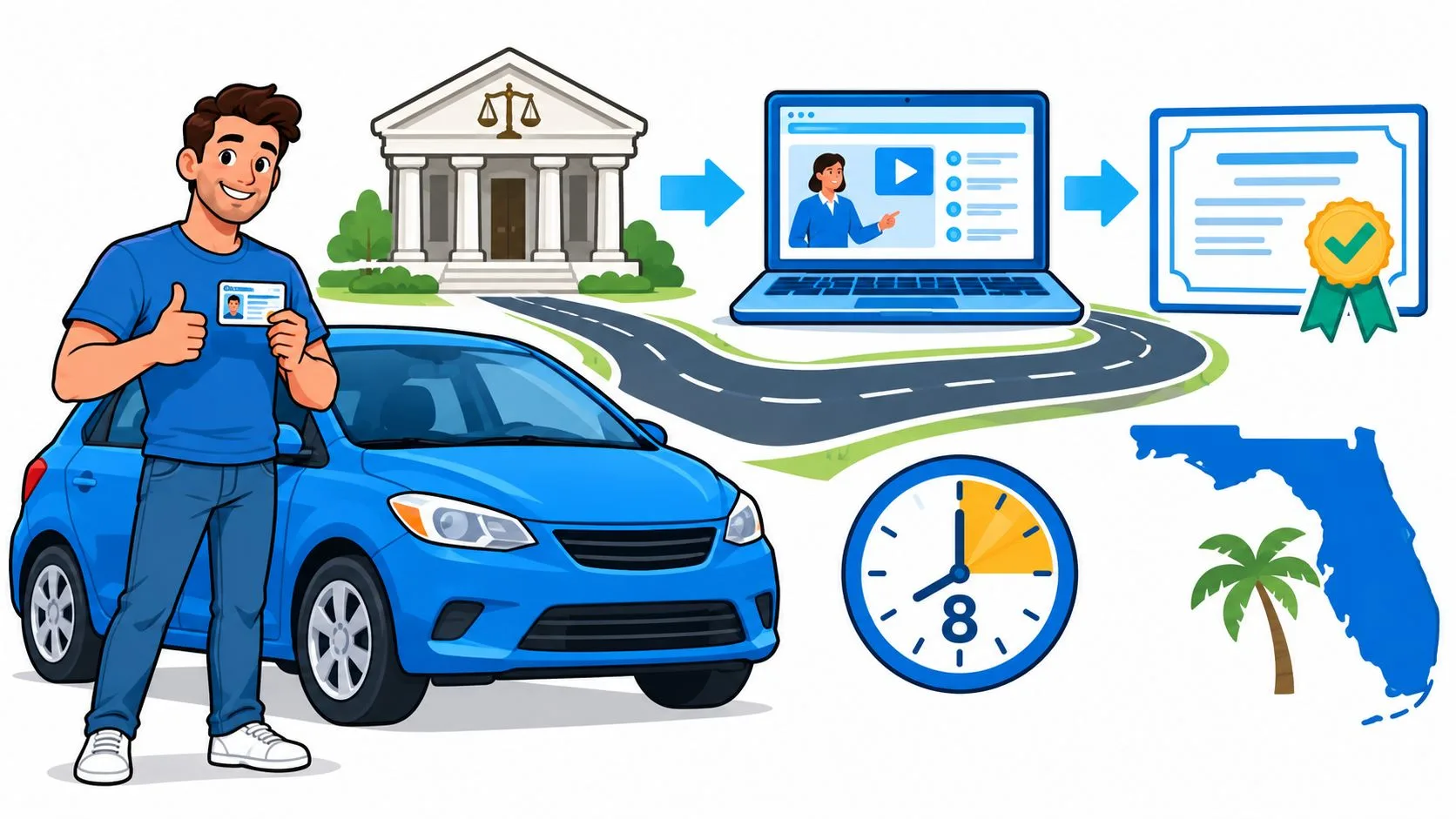
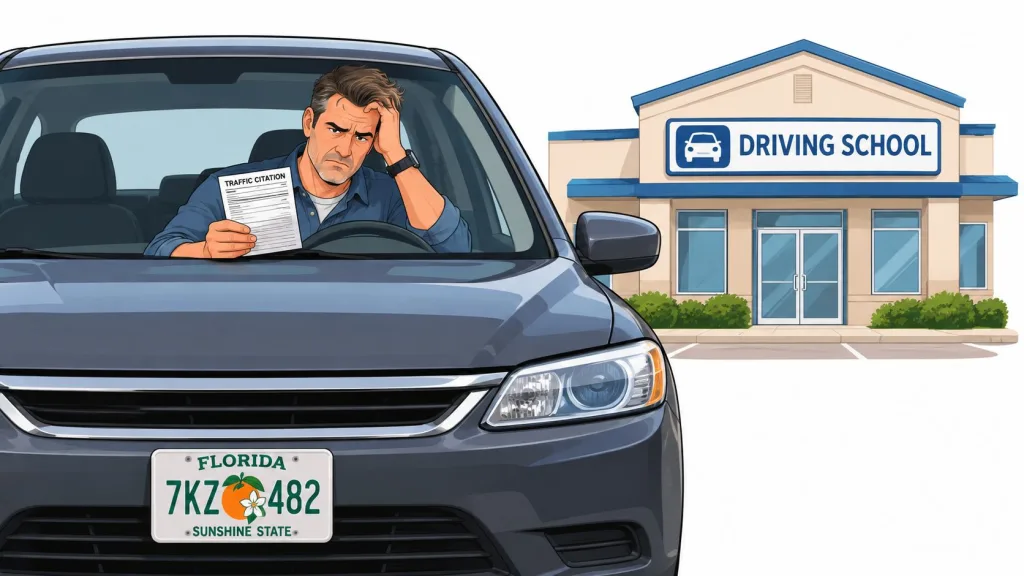
A traffic citation is in your glove box, a court notice is on the kitchen counter, or you’ve realized that busy intersections feel less familiar than they used to. The right adult driver education course depends on why you’re enrolling. A citation, a court order, a desire to refresh rusty skills, and an insurance question can point to different courses and different next steps.
In Florida, start by checking what the citation, court, or insurer requires. Then choose training that fits your goal, rather than assuming every driver needs the same course.
Why Adult Driver Education Matters
A Florida driver who receives a moving violation may want to take a course to avoid points. Another driver may have been ordered by a court to complete a specific program. Someone else may want to feel more capable merging onto a busy road. Those drivers shouldn’t automatically enroll in the same class.
Adult driver education has a long history, but it developed through broader driver-training systems rather than one global standard. Early programs appeared between 1910 and 1920, and formal courses became available in the 1930s. By 1949, a widely used U.S. model combined 30 hours of classroom instruction with 6 hours behind the wheel. This historical account of driver education describes how organized instruction grew to serve both new drivers and adults.
The useful promise of a course is practical, not magical:
A good course can refresh knowledge and help you practise safer decisions. It can’t make those decisions for you on the road.
Consider a driver who’s received a citation and wants to protect their record. Their first step is to check whether the violation is eligible for Basic Driver Improvement and whether they’re still within the election window. A driver who feels anxious at intersections may instead benefit from targeted learning and, if the difficulty persists, an in-car evaluation. For learners whose main goal is confidence, a confidence-building driving course may be a more relevant starting point than a citation course.
The reason for enrolling should guide the course choice. Completion is one step in a learning process that continues every time you drive.
What an Adult Driver Education Course Teaches
An adult driver education course should build more than recall of traffic laws. A driver needs to recognize what’s developing around the vehicle and choose a safe response.
Remembering a right-of-way rule is useful. Noticing a pedestrian who may step into your lane, anticipating where they could move, and slowing in time requires hazard perception and judgment. The systematic review of adult driver training describes effective hazard-perception instruction as a combination of clear explanations, expert demonstrations, practice, and feedback. That is a stronger learning model than memorizing answers.
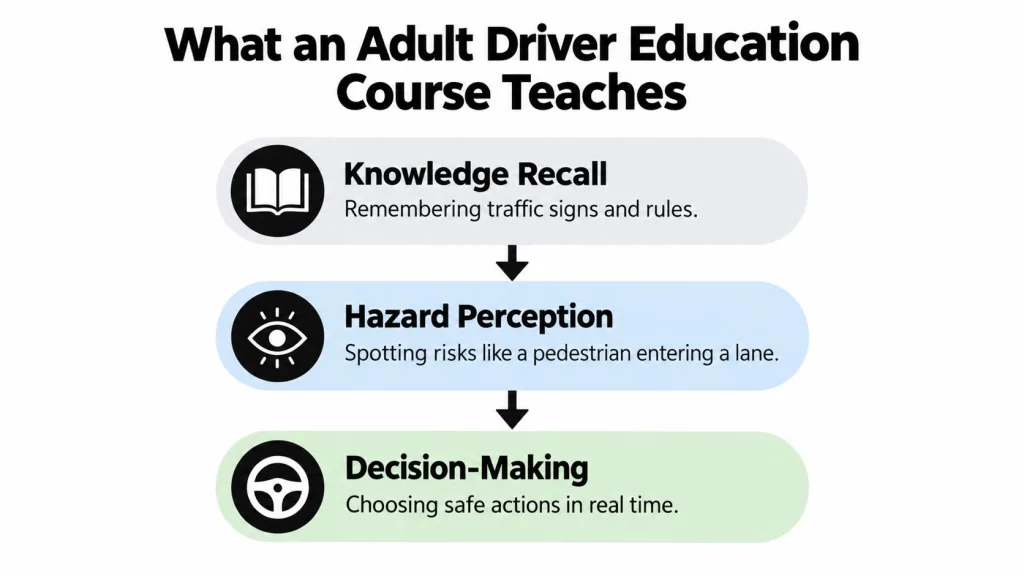
Florida-approved programs cover traffic laws and practical safe-driving topics. Depending on the course, lessons can address defensive driving, following distance, right-of-way, crash avoidance, impaired-driving prevention, and the effect of attitude and behavior on decisions.
Turn advice into a repeatable routine
When you approach an intersection, look for more than the signal. Scan for people near the curb, vehicles that might turn across your path, and gaps that may close. Then decide whether to proceed, slow, or wait. Practising that sequence helps turn broad advice about defensive driving into a routine you can use.
Realistic examples can help learners practise detecting a developing hazard and predicting what may happen next. Feedback matters because it shows whether the learner spotted the important cue and chose an appropriate response. Better test performance, however, doesn’t guarantee fewer crashes; what happens later depends on choices, practice, and real-world conditions.
The video below offers additional driving-safety context.
Online lessons can support knowledge and judgment, but they can’t replace safe behaviour behind the wheel. If a particular manoeuvre still feels difficult, supervised practice or an in-car evaluation can address a gap that online study can’t observe.
Compare the Main Course Options
Choose a course by matching its purpose to the requirement or skill you’re trying to address. Florida course names matter: a program that sounds suitable may not satisfy a citation, court order, or license-status requirement.
| Course | Duration | Primary Audience | Best Fit |
|---|---|---|---|
| Basic Driver Improvement (BDI) | 4 hours | Drivers with a qualifying moving violation | Drivers checking whether they can elect a course instead of points |
| Intermediate Driver Improvement (IDI) | 8 hours | Court-ordered drivers or adults seeking more extensive instruction | A specified court requirement or a deeper safe-driving review |
| Aggressive Driver Course | 8 hours | Drivers directed to address aggressive driving | Study focused on road rage, responsibility, and behaviour change |
| Mature Driver Course | 6 hours | Drivers aged 55 and older | A refresher on driving knowledge and safety awareness |
These durations and course descriptions distinguish the options, but they don’t establish that a particular course will satisfy your individual requirement. Read the paperwork before registering.
A driver who has received a moving violation should check the citation and confirm whether BDI is appropriate. A driver who’s been ordered to attend a course should follow the order’s exact wording instead of choosing a different option based on duration or convenience. If the requirement relates to a point suspension or another license status, confirm the correct course with the relevant authority before enrolling. Florida distinguishes BDI from Advanced Driver Improvement, which can apply in cases such as a point suspension or non-DUI Habitual Traffic Offender status. FLHSMV’s driver-improvement information outlines those different course purposes.
For a mature driver who wants an online refresher, the Mature Driver Course details can help clarify the course’s intended audience. Don’t treat a general refresher as an in-car skills assessment.
Choose a Course for Your Driving Goal
A first-time or recently relocated driver may need to become familiar with current Florida traffic laws and practise making decisions confidently. Adults planning to get a Florida license can also review the steps for getting a Florida driver’s license over age 18, then check which requirements apply to their circumstances.
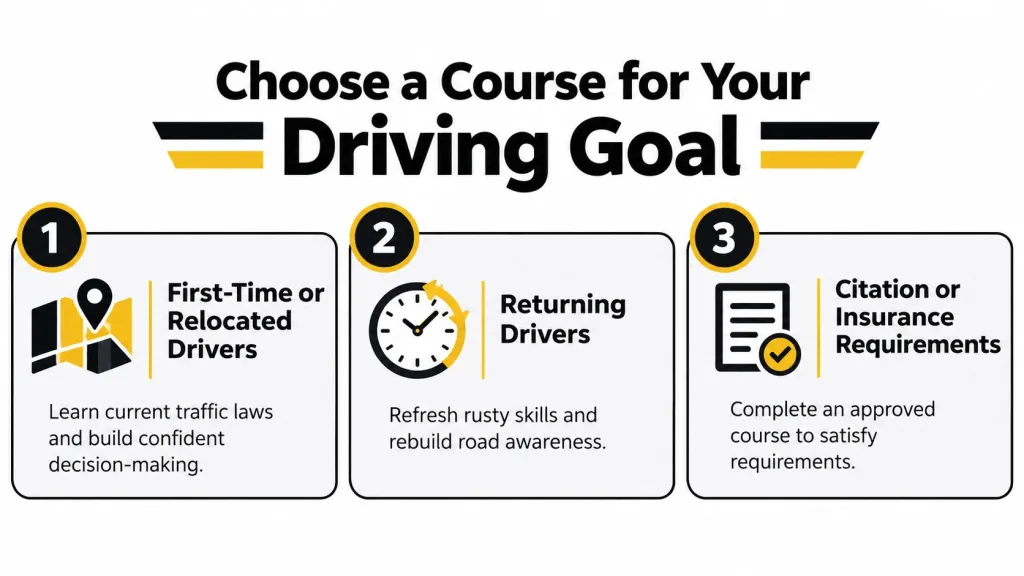
If you’re returning to driving, name the situations that feel hard. Intersections, right turns, lane changes, glare, and merging call for different kinds of attention. An online course can help refresh relevant rules and ideas, but if you’re unsure how to perform a manoeuvre safely, arrange supervised practice or an in-car evaluation.
An anxious driver should look for instruction that uses realistic situations and feedback, not just rule summaries. Practise identifying what might become a hazard, predicting what could happen next, and choosing a response. Repeating that process can make defensive-driving advice more concrete.
For citations and court orders, the decision is less about preference and more about compliance. Verify the required course before you enrol. A driver who picks the wrong course may finish lessons without meeting the actual requirement.
Mature drivers should also separate knowledge review from specific skill development. If glare, turns, or lane changes are a concern, an online refresher can be a starting point, but it won’t show an instructor how the driver handles those situations. Consider an optional in-car evaluation when a specific difficulty remains.
Understand the Benefits and Limits
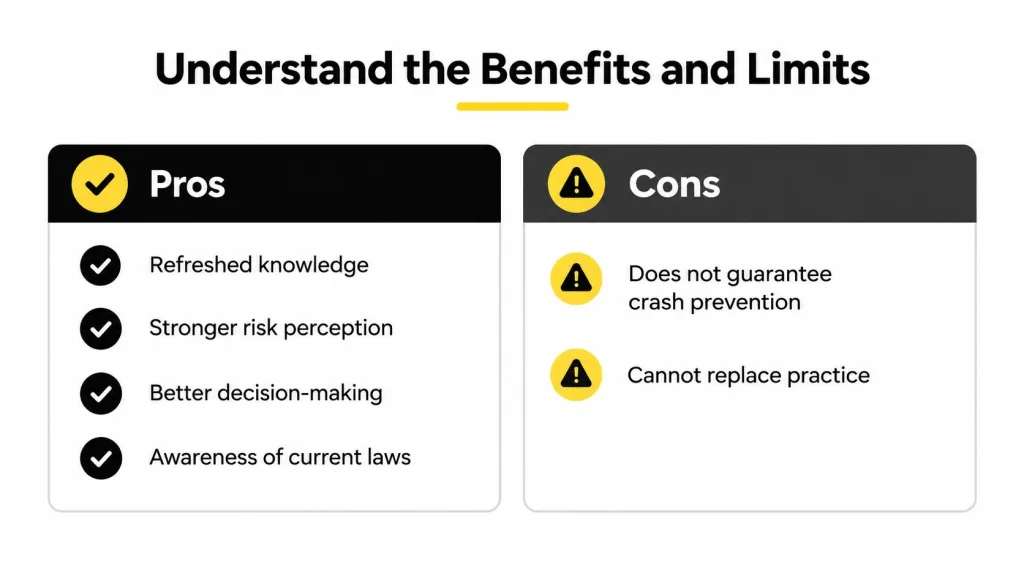
Does completing a course automatically make you safer? No. Education can refresh what you know and help you recognize risks, but the evidence doesn’t support treating course completion as a guarantee against crashes.
A review of adult road-safety training examined 22 studies and found that outcomes were generally mild to moderate, with stronger results when programs addressed risk perception and decision-making rather than mechanical skills alone. A separate overview of systematic reviews found no statistically reliable reduction in traffic crashes from post-license education. It did identify a small reduction in traffic offenses. The evidence review on adult road-safety education supports a balanced claim: courses can help improve knowledge and judgment, but safe habits and practice still matter.
What a course can do
A thoughtfully designed course can refresh traffic-law knowledge, support stronger risk awareness, and help a driver think through decisions before acting. Hazard-perception training can build skills in spotting and anticipating developing risks, though improved skill on an assessment doesn’t automatically prove a change in real-world crash outcomes.
Online, self-paced lessons also suit busy adults. You can study from a suitable device at a convenient time, and available materials include English, Spanish, and Portuguese. Those features make it easier to complete training, but they don’t make the course a substitute for practice.
What a course can’t promise
An insurer decides whether a course qualifies for a discount and what discount applies. Don’t assume that finishing a course automatically lowers your premium.
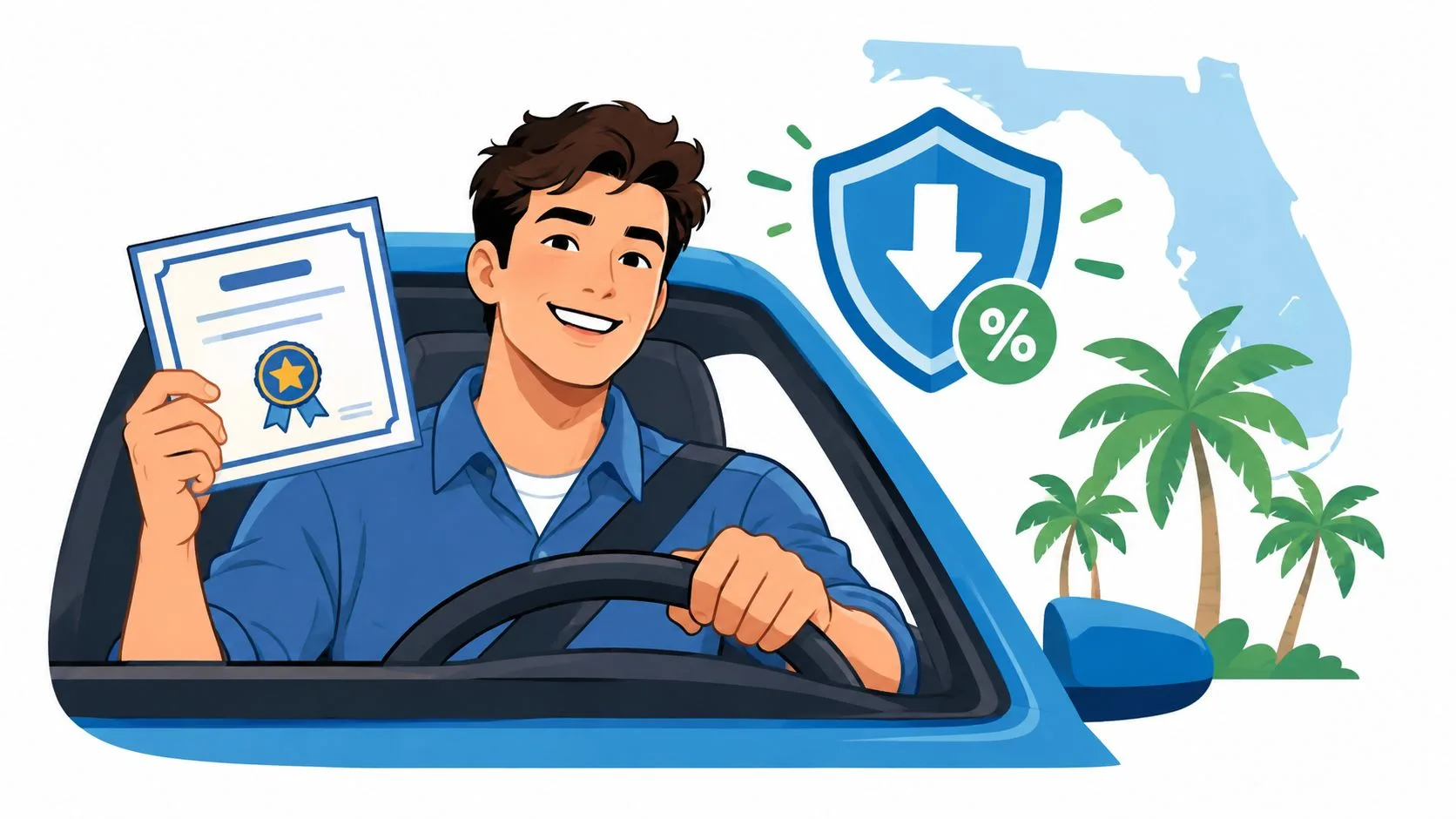
Florida drivers aged 55 or older may complete an FLHSMV-approved Mature Driver Discount course and send the certificate to their insurer. The insurer sets the discount amount, which typically lasts three years if the driver isn’t involved in a crash for which they’re cited and isn’t convicted of, or pleading guilty or nolo contendere to, a moving violation during that period. FLHSMV’s mature-driver insurance-course guidance explains the conditions. Check directly with your insurer before counting on savings.
Enroll and Complete the Right Course
A clear enrollment process helps prevent the most frustrating mistake: finishing a course that doesn’t meet your actual need.
- Identify your reason. Decide whether you’re responding to a citation, court order, insurer request, or personal goal.
- Read the paperwork. Check the citation, court documents, or insurer instructions for the required course and any deadline.
- Confirm the course fits. Compare purpose, duration, delivery format, and language. If approval is required, check that the course appears on the official FLHSMV education-course information.
- Choose a provider and register. You can compare available courses through BDISchool’s course directory or DriverEducators’ course directory.
- Plan how you’ll complete it. Set aside time to work through the online material on a device you can use comfortably, in the language that suits you.
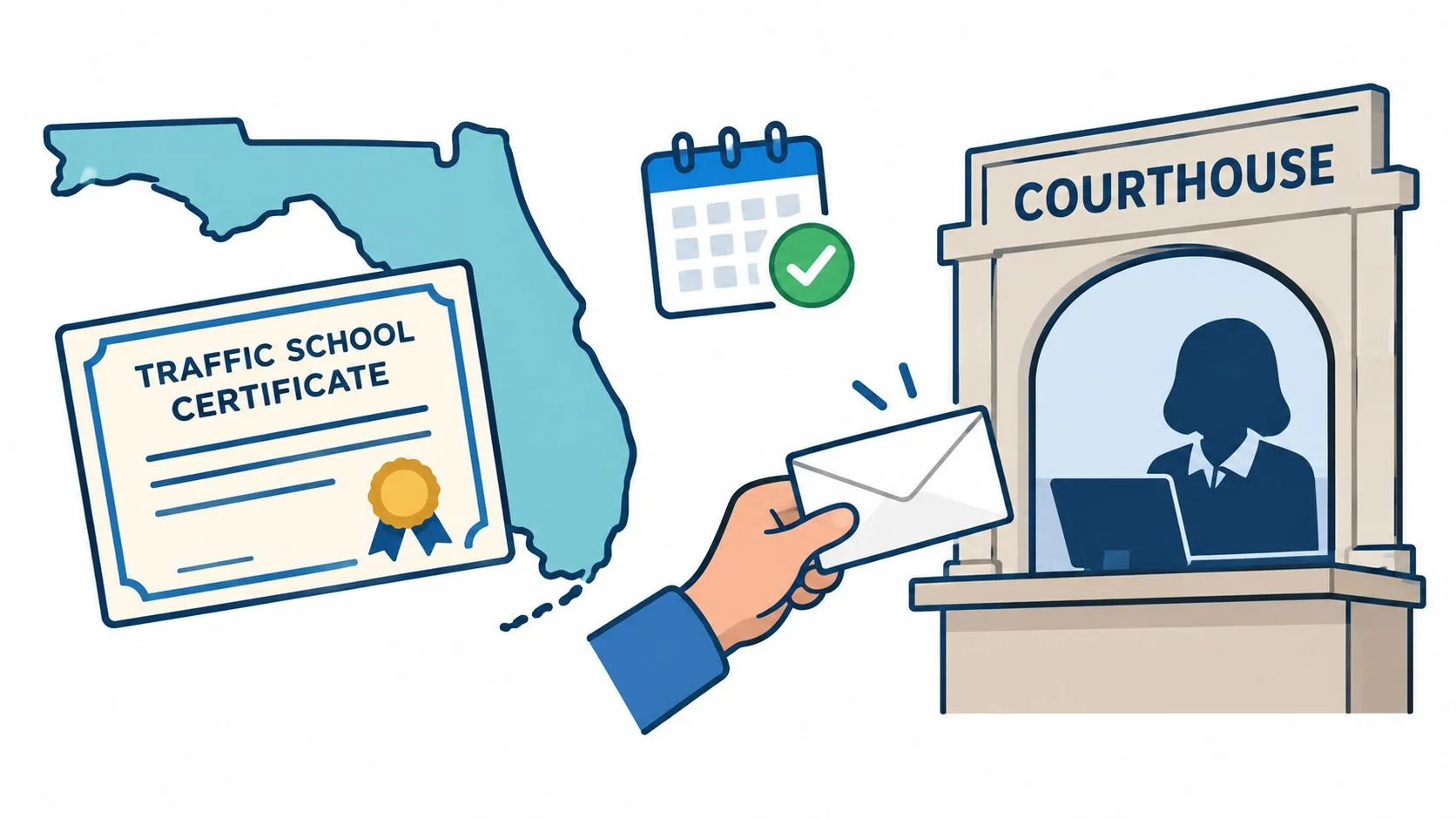
BDISchool offers online courses in English, Spanish, and Portuguese. Its course information says completion certificates are issued electronically and reported directly to FLHSMV. Keep your enrollment confirmation and completion records, and check that the information is correct before you rely on it to satisfy a requirement.
If you’re enrolling because of a citation, don’t treat registration as the finish line. Confirm that you chose the right course and understand any deadline or follow-up needed for your case.
Make a Confident Course Decision
The best choice is the one that matches your reason for enrolling and satisfies any official requirement. Compare the options against your situation before you pay or begin.
| Your situation | Practical next move |
|---|---|
| Qualifying moving violation | Check whether BDI is available and act within the applicable deadline |
| Court order or license-status requirement | Verify the exact course specified before registering |
| Mature-driver insurance interest | Confirm eligibility and discount terms with your insurer |
| Returning to driving with a specific skill concern | Study the relevant material, then consider an in-car evaluation |
For an eligible Florida driver choosing BDI instead of receiving points, the election must be made within 30 days of receiving the citation. The course must be FLHSMV-approved. When an eligible violation is handled through an approved course, adjudication is withheld and no points are assessed for that violation; an insurer may not impose an additional premium or refuse renewal solely because of that noncriminal traffic infraction. FLHSMV’s BDI provider and course information explains the requirement.
Before deciding, check course purpose, duration, language, approval, and how completion is documented. A course can support your next step, but it won’t replace an in-car assessment when you need feedback on how you drive.
Answer Common Adult Course Questions
Does Florida receive proof when I finish an online course?
For the courses described by BDISchool, completion certificates are issued electronically and reported directly to FLHSMV. Keep your confirmation and completion records, and check the paperwork for any additional step your court or other authority requires.
What should I do if online lessons don’t address my driving difficulty?
Use the course to refresh knowledge, then seek practice or an in-car evaluation focused on the specific situation. An online lesson can’t observe how you handle a difficult turn, merge, or lane change.
Is an insurance discount automatic after completing a course?
No. The insurer determines whether the course qualifies and whether a discount applies. Drivers aged 55 or older can check whether an FLHSMV-approved Mature Driver Discount course meets their insurer’s requirements.
How should an older driver choose a useful refresher?
Start with the driving situations that feel challenging, and choose training that addresses those needs. A general online review can refresh knowledge, while persistent concerns about manoeuvres may call for an in-car evaluation. Course completion and improved knowledge don’t guarantee fewer crashes or replace practical assessment.
If you’re also arranging a separate theory-test appointment, find theory test appointment info for guidance on that process. Florida requirements differ, so don’t treat appointment advice from another jurisdiction as a substitute for checking your local instructions. For more on how course requirements relate to licensing, review whether driver’s education is required.
BDISchool offers online Florida driver-improvement courses for citation, court, mature-driver, and safe-driving needs, with self-paced study in English, Spanish, and Portuguese. Compare the available options and visit BDISchool to choose a course that fits your goal and begin enrollment.