Yes, a red light ticket written by an officer for entering an intersection against a steady red signal while operating a vehicle is a moving violation in Florida. A camera-issued notice follows a separate civil process, with an initial $158 penalty, and isn’t handled the same way.
That distinction can matter more than the amount printed on the document. The same alleged driving mistake can produce different payment options, driving-record consequences, and traffic-school eligibility.
Don’t pay first and investigate later. Identify the document before choosing how to resolve it.
The Short Answer for Officer Tickets and Camera Notices
The paperwork determines which process applies. An officer-issued citation for driving through a steady red signal is a moving violation; an initial camera notice follows a civil process.
Red light ticket type and what it means in Florida
| Ticket type | Moving violation? | Points if convicted | Traffic school option | Main deadline |
|---|---|---|---|---|
| Officer-issued red light citation | Yes, a moving violation | Yes, set by statute; verify the citation | Often available if eligible | Court or clerk date printed on citation |
| Camera-issued red light notice | Handled as a civil matter, not a moving citation | Generally none | Generally not offered, according to the Miami-Dade Clerk’s civil traffic guidance | Response deadline printed on the notice |
The officer citation concerns the driver’s alleged conduct and possible conviction. The camera row describes the initial notice, not every document that may follow.
Read the paperwork, not just the allegation
For background on the alleged conduct, see the red light citation guide from Ticket Shield. If you’re unsure whether a camera captured the event, this explanation of whether red light cameras flash addresses the question.
Practical rule: A flash doesn’t determine your legal options. Check who issued the document and what it says.
The same alleged red-light event can lead to different payment, record, and course options depending on how it was documented. Identify whether you have an officer citation or an initial camera notice before choosing how to respond.
Why Florida Treats a Red Light Ticket as a Moving Violation
Florida treats running a red light as a moving violation because the law addresses a driver’s conduct while operating a vehicle. The signal rule requires stopping before the crosswalk, or before entering the intersection if there is no crosswalk, and staying stopped until the light turns green, subject to lawful exceptions.
A parking ticket concerns where a vehicle is left. A red light allegation concerns what the driver did on the road.
Under Florida Statutes section 316.075(4), violating the signal rule is a noncriminal traffic infraction punishable as a moving violation when it results from vehicle operation.
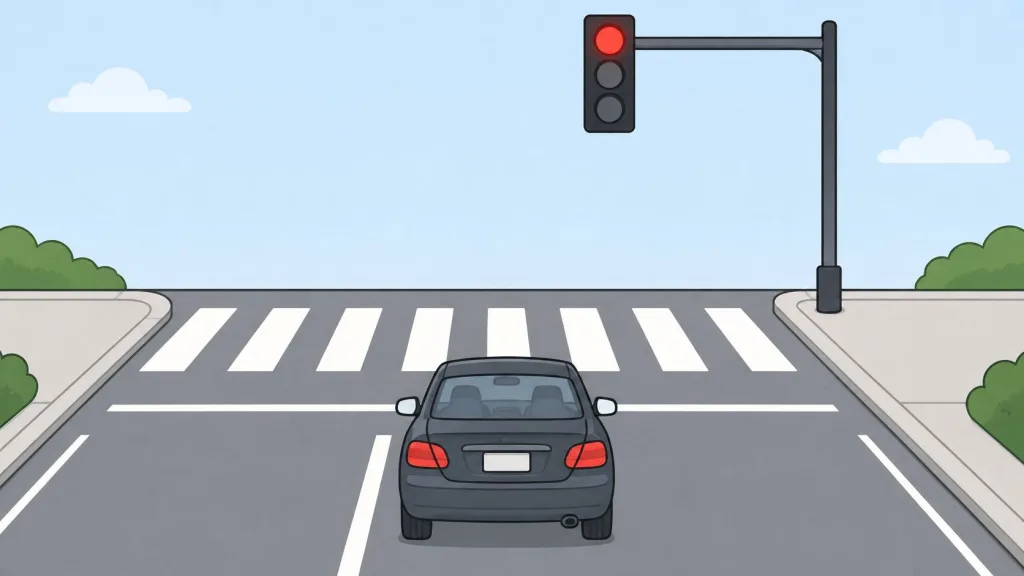
Apply the rule to the alleged conduct
- Check the signal. The allegation should involve a steady red signal, not uncertainty about when the yellow light ended.
- Check the stopping point. Compare the vehicle’s position with the crosswalk or intersection.
- Check vehicle operation. The moving-violation classification concerns driving conduct, not just ownership of the vehicle in a photograph.
These checks clarify what the allegation concerns. Review the citation and evidence, and consider whether a turning exception applies.
The signal rule is established in the current Florida Statutes section 316.075(4). It applies to conduct involving a driver operating a vehicle, rather than a car’s stationary status.
The legal classification is separate from the consequences. The same red-light event may lead to a moving violation, a civil camera penalty, or both, depending on how it was documented. Check the document you received before deciding how to respond.
Points, Driving Record and Insurance After a Conviction
An officer-issued red light conviction can carry license points. Confirm the exact assessment against the charge code rather than trusting a generic answer about “red light tickets.”
According to FLHSMV’s points and suspensions guide, points are assigned by conviction type and remain on the driving record for at least five years from the disposition date.
That record period isn’t a promise about how long an insurer will charge more. Insurance underwriting and license-point administration are different processes.
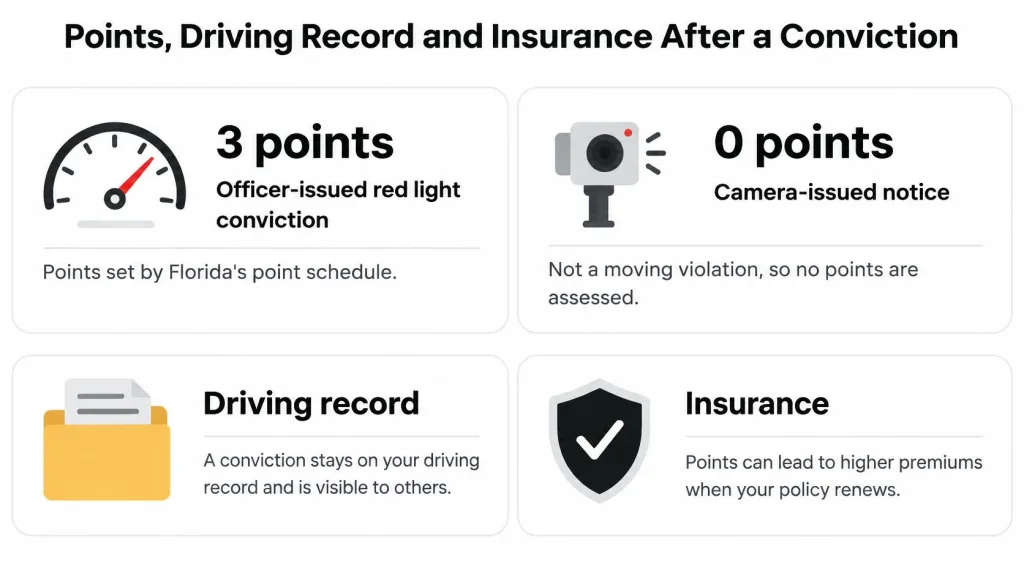
Separate the record from the premium
Use the charge printed on your citation to confirm the point assessment; don’t treat a general graphic as a substitute. Our guide to Florida points on your license explains how to approach that check.
Outcomes of a red light ticket and their record and insurance effects
| Outcome | Points | Driving record | Insurance effect |
|---|---|---|---|
| Officer citation paid as a conviction | Assessed under statute; verify the charge | Conviction entered | Possible premium increase at renewal |
| Officer citation resolved through eligible traffic school | Withheld when approved | Completion recorded with court or clerk; confirm disposition | Violation-related increase typically avoided when protection applies; confirm with insurer |
| Camera notice paid as a civil penalty | Generally none | Generally no conviction entry at the initial notice stage | Ask insurer how it treats the disposition |
| Unpaid citation or notice | Determined by eventual disposition | Unresolved matter may escalate | Cannot predict without the final disposition and insurer’s rules |
Paying an officer citation commonly resolves it as a conviction. An approved school election can produce a different result, but completing a course without making the required election isn’t enough.
Protecting your record requires the right election, timely completion, and the correct disposition. A course receipt alone doesn’t establish all three.
A conviction may become relevant when you renew coverage or change insurers. A later violation can also make an existing record more important.
Before assuming the matter is finished, obtain your driving record and confirm the clerk’s disposition. Then ask your insurer how that specific outcome affects your policy, rather than asking only whether “red light tickets” raise rates.
Three Red Light Cases and How Each One Resolves
Maria receives an officer citation
Say Maria crosses the required stopping point against a steady red signal during an afternoon drive. An officer observes the event and hands her a citation at the window.
Maria shouldn’t treat payment as a neutral administrative step. She needs to decide whether to accept the charge, contest it, or make an eligible school election before resolving it.
Outcome: This is a moving-violation citation, with points and the final court disposition at stake.
Devon receives a camera letter
Devon opens a mailed notice containing photographs of his license tag and the signal. He checks the issuing agency, reviews the available images, and records the response deadline.
The Miami-Dade Clerk’s civil traffic guidance distinguishes moving and nonmoving infractions and specifically excludes camera-issued red light violations from its traffic-school option.
Outcome: Devon starts in the camera-notice process; ignoring it can lead to a formal citation, not an automatic right to attend school.
Lena stops before turning right
Lena crosses the stop line, stops before turning right, and makes the turn where right turns are permitted. A camera records the sequence.
Her strongest next step is reviewing the complete evidence against the statutory right-turn protections. A still photograph may not tell the whole story, and protection requires satisfying the relevant conditions.
Outcome: A qualifying right-turn exception may prevent issuance of the notice or citation.
These examples aren’t interchangeable. Maria’s school election, Devon’s civil response, and Lena’s evidence review address different procedural situations.
If the clerk discusses withholding adjudication, understand what adjudication withheld means before assuming the ticket has disappeared. The light is the same, but the paperwork decides the path.
Identify Your Ticket and Choose How to Resolve It
The document controls your next step. An officer citation and a camera notice can concern the same red light, yet follow different procedures and carry different consequences. Check the issuer and charge before you pay or elect a course.
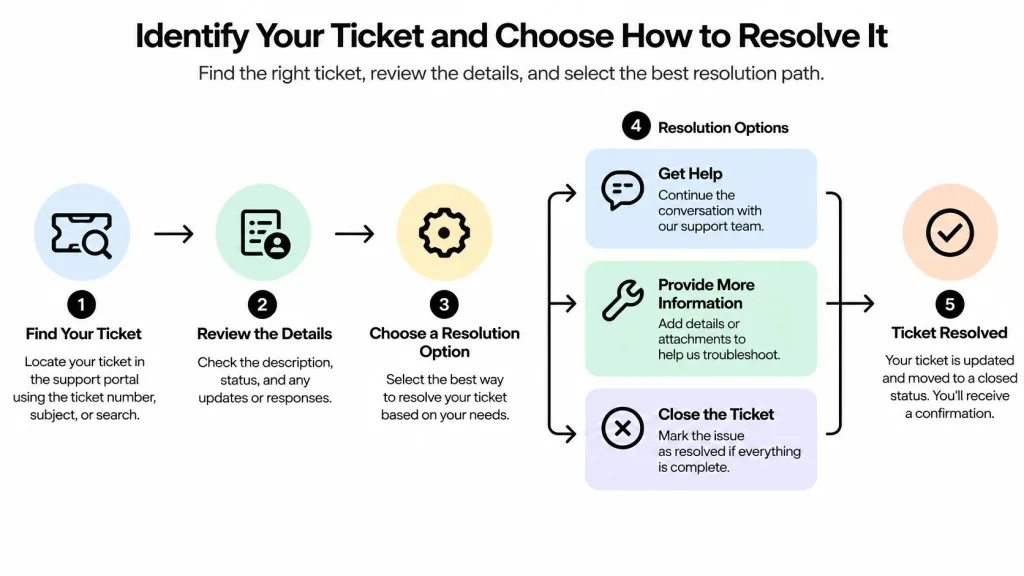
Check the issuer, charge, evidence, and clock
- Identify the issuer. Check the agency, document title, citation number, and response instructions. An officer citation may be handed to you or otherwise served; an initial camera notice commonly arrives by mail.
- Read the statute listed on the document. The official Uniform Traffic Citation schedule lists conventional signal violations under section 316.074(1) separately from camera-only violations under section 316.0083.
- Review the images. Florida’s traffic-enforcement provisions specify camera documentation that includes an image of the license tag and the traffic-control device allegedly violated.
- Write down the deadline. Under Florida’s camera-enforcement statute, notification is generally required within 30 days. To avoid issuance of a traffic citation, respond within 60 days by paying $158, submitting an authorized affidavit, or requesting a hearing.
Review the vehicle, signal, and sequence of movement shown. For a right turn, check whether the careful-and-prudent-turn protection or the stop-before-turning protection applies.
Choose a resolution you can complete
Options for resolving a red light ticket in Florida
| Option | Best fit | Points effect | Cost effect | Deadline or check |
|---|---|---|---|---|
| Pay as directed | Officer citation you accept | Points assessed on conviction | Full citation fee | Date printed on citation |
| Elect driver improvement course | Eligible officer citation | Points withheld when approved | Eligible citation-fee reduction; course cost is separate | Elect before the court or clerk date |
| Pay the camera penalty | Camera notice you accept | Generally none | Statutory civil penalty described above | Notice response deadline |
| Request a hearing or contest | Wrong vehicle, wrong signal, or qualifying right-turn exception | Controlled by the final outcome | Possible court costs if unsuccessful | Before the applicable deadline |
For eligible driver-improvement elections, Florida law provides for points to be withheld and a reduction in the citation fee. The federal red-light-camera guidelines address camera programs, not Florida citation-fee reductions.
A reduced citation fee does not mean every expense is reduced. Confirm the clerk’s amount due, course cost, election requirements, and completion deadline separately.
Before paying: Ask the clerk whether your exact charge allows a school election and what you must submit to receive the intended disposition.
Contest a notice when you have a specific factual or legal basis, such as a vehicle mismatch, conflicting signal evidence, or a qualifying turning exception. A hearing request should address a real issue, not merely delay a decision.
BDI School is a Florida HSMV Approved Basic Driver Improvement School. Confirm with the issuing clerk that your document and charge qualify before registering for Florida’s Basic Driver Improvement Course, also called Florida Four-Hour Traffic School.
Myths That Cost Florida Drivers Money
Frequently Asked Questions About Red Light Tickets
Is every red light ticket the same?
No. An officer citation concerns an alleged moving offense, while an initial camera notice follows a separate enforcement process with different response options.
Does a camera notice always add points?
No. An initial camera notice is generally a civil penalty, not a conviction carrying license points; review any later citation separately.
Does paying mean there are no further consequences?
No. Paying an officer citation commonly accepts a conviction, so the payment can affect more than your bank balance.
Can I ignore a notice because it’s only a photograph?
No. An unanswered notice can progress toward a formal citation, and you can lose the simpler response options available at the notice stage.
Is stopping after the line always acceptable?
No. Stopping beyond the required point isn’t automatically lawful; the right-turn protections are specific exceptions, not permission to roll through a red signal.
A rule of thumb isn’t a resolution plan. Match your response to the document you actually received.
Avoid the expensive shortcut
The tempting shortcut is to choose whichever option requires the fewest clicks. That can be the wrong choice when a payment closes off an eligible school election or when a course doesn’t apply to the charge.
Keep the notice, citation, election confirmation, payment receipt, and completion certificate together. Those records help you establish what you submitted if the court or clerk needs clarification.
Check the document before trusting any rule of thumb.
Confirm Your Ticket Type and Register for Traffic School
Confirm that you have an officer-issued citation, check eligibility, and act before the court or clerk deadline. Don’t enroll on the assumption that a camera notice qualifies.
Make the election before starting
Our Florida’s Basic Driver Improvement Course, also called Florida Four-Hour Traffic School, is aimed at drivers who recently received a moving violation. For eligible drivers who make the required election and complete it on time, the course helps avoid license points and prevents an insurance rate increase due to that moving violation.
The course is Florida HSMV-approved and state-approved. It runs fully online and self-paced, in English, Spanish, or Portuguese, on any device, with completion certificates issued electronically and reported to FLHSMV.
Before enrolling, review how traffic school works in Florida and keep the clerk’s completion instructions alongside your registration.
- Confirm eligibility first. Check the charge, license status, and election requirements.
- Keep both deadlines. Enrollment doesn’t replace making the election or completing the course on time.
- Register through an offered course page. Use BDISchool course registration or DriverEducators course registration.
Once your officer citation and eligibility are confirmed, register and start the course. Points and insurance advantages apply only when you qualify and meet the court or clerk requirements.
BDISchool offers Florida-approved online Basic Driver Improvement for eligible drivers handling a moving violation. If your red light ticket qualifies, visit BDISchool, register, and start your course before the clerk’s deadline.